|  |
           |  |  | |  
 Tier one - ground cover plants Tier one - ground cover plants
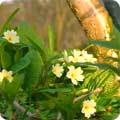
Earlier we mentioned the three different tiers of planting. To start with we’ll look at ways of planting low-growing plants as ground cover.
Waldsteinia ternata and Ajuga reptans ‘Braunherz’ both work well together as they are similar in height, but contrast in colour and texture. They brighten up a shady spot, even in winter and create a wild woodland look.
Another way to use low-growing plants is as flowering lawns or meadows. Natural gardens don’t normally have immaculate lawns; a few wildflowers make a more realistic effect. But don’t just throw handfuls of seed about randomly - it doesn’t work.
If you already have grass, sow wildflower seeds in spring or autumn in ‘cells’ and remove the young plants complete with a wedge-shaped ‘plug’ of roots. Then cut matching shaped holes in your turf in spring and slot the ‘plugs’ into place. They soon take, and, as long as you let them set seed before cutting the grass, they are self-perpetuating. If you are sowing new grass seed with the sole purpose of creating a natural garden, it’s easier to mix suitable wildflower seed in with the grass seed and sow both together.
For a hay meadow effect, good wildflower choices to grow in long grass include ox-eye daisy, corncockle and field poppy. For short grass, compact species like primrose, violet and speedwell work well.
|
 Tier two - mid-height plants Tier two - mid-height plants
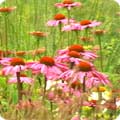
For mid-height plants choose shrubs or flowers that add to the natural effect. Choose varieties that won’t take over in order to keep work to a minimum: honeysuckle, cut-leaved elder, fern and geranium species all work well together, providing interest over a long period and all require similar growing conditions.
|
 | Tier three - trees
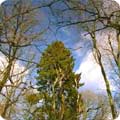
The top storey of your natural planting scheme will need height in the form of trees: hornbeam, with its russets leaves during winter and silver birch with its shining white bark both make striking year-round additions to the natural garden.
|
| |  | |
| 
|
|







