|  |
           |  |  | |  
Soil care for hot spots
Your average hot spot plant needs well-drained soil, which isn’t too rich.
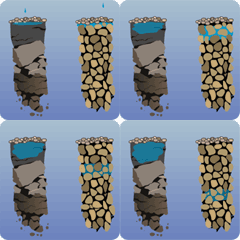
Sandy, stony or gravelly conditions are ideal. If puddles don’t run away within an hour of rain, work in sand, gravel or coarse bark chippings to open up the soil texture and help water run away more quickly.
|
 Soil care for hot spots Soil care for hot spots
On heavier soil it is better to make raised beds, filled with good topsoil mixed with up to 25 per cent sand or gravel. But even drought-tolerant plants appreciate some organic matter in the ground, especially at planting time when they often have a struggle to establish themselves.
For containers use equal quantities of John Innes potting compost and any good peat-free multipurpose mixture. Add ten per cent small, polystyrene granules, perlite, horticultural potting grit or pea shingle to improve the drainage for drought-tolerant plants. The same mixture can be used to fill raised beds if you don’t have suitable topsoil.
Important tip:
Keep everything well watered after planting. Drought-tolerant plants can only withstand drought once their roots are well established.
|
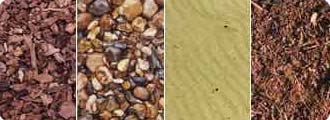
Sand
Don’t use building sand as it contains too much lime. Ask for washed or lime-free, sharp (gritty), horticultural sand.
|
Gravel
Crushed gravel is cheapest, but pea shingle and decorative stone chippings are also suitable. Avoid gravel that has been dredged from under the sea because it’s too salty. |
Bark
Use the largest pieces of uncomposted bark. Unlike sand or gravel that last forever, bark slowly decomposes so you’ll need to work more into the ground after three to five years.
|
Organic matter
Compost and other organic matter decompose very quickly on dry soil, so you need to work it in in both spring and autumn. Bark is a good alternative as it lasts longer. |
| |  | |
| 
|
|