|  |
           |  |  | |  
Pathside planting
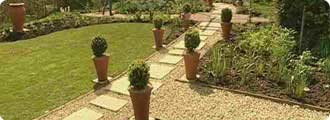
Cottage gardens are full of detail, and one of the best ways of adding interest to a cottage garden path is by outlining it with a formal or informal row of plants. It also makes a good contrast with whatever is on either side of the path, whether it’s a lawn or a jumble of flowers.
There are many different plants you can use, including:
Box balls
Box balls, being evergreen, give the garden year-round detail. Plant them in a border or better still grow them in classy terracotta ‘long tom’ flowerpots and stand them in position. This way you can move them around the garden.
Forsythia
Forsythia makes a solid, late spring-flowering hedge that grows just tall enough to stop you seeing over the top, so it’s good for dividing the garden into smaller ’rooms’.
Lavender
Lavender create a fragrant, evergreen, dwarf hedge which can be upright and clipped or allowed to spill gently over the path for a more romantic effect, depending on the variety you choose.
|
Planting distance
The next decision to make is how far apart you want to put these plants.
Box balls
Clipped balls of box, about 45cm (18in) in diameter and spaced six feet apart, add a formal note to the edge of a riotous, cottage flower border. They also look good where a path runs along the edge of a lawn.
When a row of box balls are planted very close together the ‘topiary’ effect disappears and they look like a low hedge that didn’t quite turn out right. Besides looking over-fussy, they are difficult to trim. A row of clipped dwarf box edging might be worth considering instead.
Forsythia
A row of forsythia bushes adds a slight air of mystery to a path, as you need to look around them to see the garden beyond. When space is short you have room to grow flowers in-between them. Trim them into conical shapes after flowering each year to keep them looking tidy.
Planted roughly 60-90cm (2-3ft) apart, forsythia makes a superb formal, clipped, flowering hedge that suits a cottage garden perfectly. It will look less strident if you cut an occasional arch or peephole so you can see through into the next garden ‘room’.
Lavender
Repeating the same plant regularly at intervals along a narrow pathside border creates a ‘link’ that pulls a typical random mixture of cottage garden plants together, adding a sense of order to apparent chaos.
A continuous row of lavenders planted 30cm (1ft) apart makes a classic, scented cottage garden, path edging, and attracts bees in droves. Trim the plants lightly each year in late summer as soon as the flowers have faded, to stop plants from becoming woody.
|
| |  | |
| 
|
|