|  |
           |  |  | |  
Path basics
You need two kinds of paths in a cottage garden. The practical sort that are used for getting people from A-B, such as from the garden gate to the front door. These paths need solid foundations, a generous width, and they should take the shortest possible route.
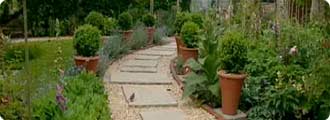
The second type of path are the frivolous kind. These are designed to slow you down, allowing you to dawdle and enjoy the flowers. They need be narrower, winding and more decorative.
|
Choosing a surface
There are many different surfaces that you can use for paths, including:
|
Gravel
Gravel is a popular choice for front paths, drives and seating areas as it’s cheap and quick and easy to lay. Rake gravel over a base of pounded-down rubble.
|
Cobbles
Cobbled setts need cementing in place and can be quite difficult to walk on so they make a good surface for paths that aren’t designed for those in a hurry.
|
York stone
York stone is beautiful-looking paving for seating areas, but don’t use it where you need to walk regularly in winter as it’s dangerously slippery when wet.
|
Bark
Bark is ideal for temporary paths and it’s a good alternative to lawn or paving in shady spots where other surfaces grow green slime.
|
Wood
Wooden decking or sleepers make good paths near a pond or bog garden, or as an informal ‘bridge’ over a stream or ditch. Tack wire netting over the decking to make it non-slip or alternatively power wash the timber twice a year to prevent slipperiness. |
Paving slabs
Paving slabs are a good all-round choice. Use them for seating areas and practical paths, or sink them in grass or gravel as stepping stones.
|
| |  | |
| 
|
|