|  |
           |  |  | |  
When planning a patio think about:- Position - most people want to sit in the sun, but you might prefer a cool, shady spot. Privacy and shelter are essential.
- Size - a patio needs to be big enough for what you want to use it for, but if it takes up more than a quarter of the garden it will appear too dominante.
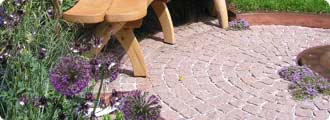
- Materials - use materials that complement the construction of your house. For example if you have bricks around the windows you might use the same style kind within the patio. Vary the patio surface for variety but try to use no more than three materials eg paving slabs, cobbles and gravel.
- Shape - be practical but adventurous; irregular shapes can often work well.
|
Choosing your patio location
Front, middle or back?
The front of the garden is the usual place for a patio, as people like to step straight outside onto a hard surface, and it’s a convenient place to sit … as long as it’s sunny.
The middle of the garden is great for a modern garden, or a paved courtyard-style garden, where hard surfaces replace the usual grass.
The rear of the garden is an unconventional spot, but good for a patio if the far end gets the evening sun so you can sit outside until late.
|
Choosing your patio surface
Gravel
Gravel makes a good path, an attractive surface for a ‘gravel garden’ where it’s used between plants, and a useful decorative surface around paving, but it’s not ideal for an entire patio as furniture sinks into it. |
Stone
Stone looks superb, but natural stone is very expensive and can often be slippery in wet weather. It’s often best reserved for small areas where it will look decorative but will be used less frequently. |
Paving slabs
Paving slabs are the most practical patio surface for the majority of people, and are available in a range of colours, textures and effects, such as fake brick, stone or tile.
Vary a large expanse of paving by missing out the occasional slab and using a ‘panel’ of cobbles, gravel or plants in its place.
|
| |  | |
| 
|
|