|  |
           |  |  | |  
Creating mystery
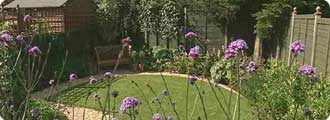
A garden isn’t two-dimensional like a painting so don’t plan it so you can see it all from your living room windows. It should tempt you outside to explore.
Here’s how:
Trellis
Use screens of living bamboo or espalier trees, or tall borders so you can’t see the whole garden all at once.
Visual ‘teases’
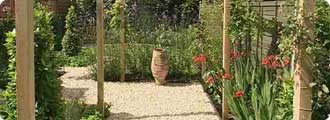
Plant chunky evergreen pillars or climber-clad obelisks on bends in a winding path so you can’t see straight down to the end.
Visual hints
Create the illusion that there is more to the garden than you can first see; cut peepholes in hedges, leave a gap so you can enjoy a distant view and use mirrors to add space and detail to a small area.
|
 |
Creating relationships
A garden only works if all the ingredients look as if they belong together.
Here are some tips:
Themes
Stick to a specific theme in any area of the garden ie Victorian, Mediterranean, wild. Avoid mixing styles. You can have several different areas within the garden, but if it’s small, three is usually enough.
Linear features
Use paths, streams, rills, borders and dwarf hedges.
Block features
Lawns, patios, water gardens, blocks of planting or garden 'rooms' can be used to link things together.
Focal points
Gazebos, summerhouses, sculptures, fountains, perspective trellis on a wall, or a dramatic architectural plant at the end of a view are all great ideas for attracting attention to a distinctive area of the garden.
|
Summary
In this section you have learnt how to create a multi-purpose garden from scratch, you should now know how and where to lay a patio, which basic plants to use in your garden and how to create mystery in the garden using a few simple tricks.
Now find out how to create a cottage garden.
|
| |  | |
| 
|
|