There's a whole range of exotic New Zealand plants that suit the English gardening climate. Kiwi plantsman James Fraser enthuses about his native flora. | 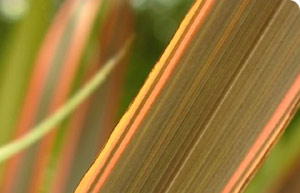 |
Horticultural heritage With no predators or ice ages to contend with, and only birds to accommodate, plants in New Zealand flourished in glorious isolation for 250 million years. In this rariefied temperate zone, it was party-time for the flora of the North and South Island and the after-effects were spectacular. Today, a country that is surrounded by ocean, not far from the Antarctic and is roughly the same size as the UK, provides a habitat diversity for an incredible variety of plants. They range from primitive mosses, tree ferns and exotic conifers to advanced flowering communities where different groups support each other. The plants have evolved to deal with the vagaries of the southern Pacific climate - intense sun, heavy winds and pelting rain. This may not be so unique in weather terms, but combined with birds that had forgotten how to fly and no native grazing animals, New Zealand flora has evolved into some bizarre forms. Trees with weird and wonderful trunks, plants with reduced leaves, juvenile and adult forms which are totally different, and flowers and berries designed to attract flightless birds, make these plants as unusual as they are beautiful. The journey to Europe Tree ferns, now a luxury plant, were first brought back as ballast on the mail boats. Tree ferns, now a luxury plant, were first brought back as ballast on the mail boats. 
It was the tougher coastal characters such as phormium, hebe, and cordyline that first interested the Victorian plant collectors of Europe. Tree ferns, now a luxury plant, were first brought back as ballast on the mail boats. South Island tussocks such as Stipa arundinacea, are believed to have escaped from wool bales into the canal tow paths of the Midlands. From these footholds, New Zealand natives spread to collections all over the UK and Ireland. With mild winters, cosseted by the gulf stream and cool, moist summers, just like back home, they thrived. The only periodic setback was the occasional deep freeze; so most of these Victorian survivors are on islands like Tresco in the Scilly Isles or in coastal and urban refuges. New importsContemporary interest in antipodean flora and the increasingly noticeable effects of global warming have led to a new wave of imports into the UK. Some plants, like pseudopanax and astelia are strong and masculine, with bold foliage and striking colouring; others such as smaller-leaved muehlenbeckia and sophora are much softer and more feminine. The small trees of the pseudopanax group are fascinating, as the young plant is quite different to the adult. It grows from a vertical single stem with long, lance-like leaves, to a multi-stemmed specimen at 3m (9ft) and above, with a candelabra of broad leaves. Quite a few New Zealand trees have this characteristic. A popular theory puts this down to a defence mechanism developed to prevent the young trees being eaten by moas - giant, ostrich-like, flightless birds that used to roam the forest floor. Recommended plants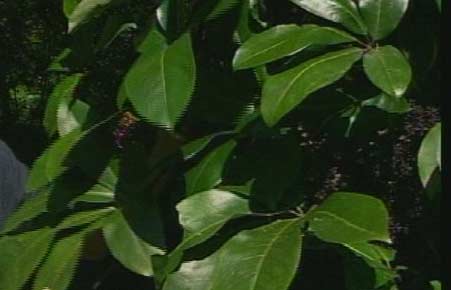 One of these, Pseudopanax crassifolius, would top my list of the hot 'must-haves' of the current crop of New Zealand flora available in the UK. I would also include a divaricate (plants with reduced leaves on wiry stems) such as Muehlenbeckia astonii, which is a very appealing electric shock of a small tree. For an architectural statement at ground level, Astelia nervosa is a much better bet than its more trendy cousin A. chathamica. Any variety of the long-flowering chionochloa would be the ornamental grass on the list, with the silver fern, Cyathea dealbata, the toughest of the tree ferns; while Rhopalostylis sapida, the world's most southerly palm is a slow-growing, but graceful addition to any collection. This is a good cross-section of the range available from UK nurseries, but there are many others to excite gardeners, once hooked. Growing conditionsAs a rule New Zealand plants insist on well-drained, moisture-retentive soil, and they prefer a cool, moist climate. They tend to grow in spring and autumn and don't like extreme cold or heat. Sitting in winter wet with cold temperatures is a definite no-no., but during the first year of planting don't allow them to dry out completely. Tree ferns insist on moisture all year round and require frost protection in colder areas.
 Good advice is to grow different plants in small communities, as opposed to using them as solo specimens. The range of small trees are great for creating foliage at different heights through the garden, without the headaches provided by more common, aggressive trees and shrubs. Hardiness can be an issue, but there is something for everyone, from alpines and divaricates for colder climes to fluffy tree ferns for urban gardeners. This just scratches the surface of the incredible variety on offer to gardeners in 21st century Britain. But there is no reason, wherever you are in the UK, for not including a green piece of Middle Earth in your back garden. About James FraserJames Fraser is an expatriate New Zealander. He set up his own design and build company, Avant Gardener, in the mid 1980s and uses a unique collection of around 400 species, grown in his own nursery. He has created gardens in and around London and at the International Festival of Gardens at Chaumont-sur-Loire in France and at this year's Chelsea Flower Show, he is working with Xanthe White on the 100% New Zealand Garden.

| | |








