
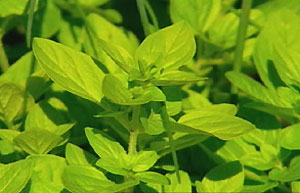
Those of you who think of herbs as just parsley, sage and thyme, think on. Herb expert Jekka McVicar explains just how to grow and use them.
Those of you who think of herbs as just parsley, sage and thyme, think on. Herb expert Jekka McVicar explains just how to grow and use them.
Herbs are the quintessential plant: they look good, smell good and do you good. They have been used ever since humans have been on the earth, as medicines, perfumes, insect repellents and, of course, in food and flavouring. This huge group of plants includes trees, shrubs, annuals and even cacti, to name but a few.
 The most important thing to remember when growing herbs is that they are the foundation of all modern medicine. They are not the gentle namby-pamby things some would like you to think. They are healers, therefore they should be treated with respect, and if you are considering them for specific medicinal use always consult a doctor or qualified herbalist. If you are growing herbs for use in the kitchen then you need to learn about their flavour and how they can aid digestion.
Herbs, in most cases, are tough wild plants which, when spoilt by the lush conditions of a garden, will thrive and romp away. It's a myth that all herbs like full sun, even good old basil likes partial shade at midday. So when planning your garden, you can divide your plants into two sections, those like thyme, sage, rosemary, french tarragon and oregano that like full sun; and those that like partial shade, such as rocket, sorrel, mizuna, mustard, parsley and chervil.
If I had to choose some 'must haves' to put in a window box on the sunny side of the house I would include chives, oregano, lemon thyme and a creeping rosemary to drape over the edge. However, on the shady side of the house I would have a salad herb window box which would include wild rocket, chervil, French parsley and red mustard.
 When growing herbs in containers, I have two important tips. The first is to use a soil-based compost, either organic or something like John Innes potting compost. This is because there are very few herbs that grow in peat, and a soil-based compost retains moisture which is a must to stop containers drying out. I also advise watering in the morning rather than the evening because this gives the plants a chance if the temperatures are hot during the day, especially for containers grown in full sun. The second tip is to feed container plants weekly from March until September. This keeps the plants healthy, helps them produce leaves, especially on cut and come again salads. I use a seaweed-based feed, however you can use any proprietary feeds that boost leaf production.
One of the easiest and best ways to extract the medicinal properties of the herbs is to make a tisane, or herb tea, which can be drunk just like ordinary tea, and can provide a helpful supplement to the daily diet. To obtain the best flavour I always recommend using fresh herbs, but remember that they are less concentrated than dried herbs, as they still contain all their moisture. One of my favourite teas is lemon verbena, which has a lovely flavour and aroma, and is refreshing served hot or cold either on a summer's day, or last thing at night to help me get a good night's sleep.
Generally you need either five fresh leaves or a sprig, 5cm (2 in) in length or 2 tsp of dried herb or 1 tsp of seed per cup of boiled water. Place them on a clean piece of kitchen towel, lightly crush, and then add to a cup or teapot. Pour over the boiled water that has been cooled to just below boiling and cover.
Covering is especially important as this stops the essential oils, which are medicinally beneficial, evaporating off in the steam. Leave to brew for five minutes. Strain if necessary into a cup. Herb teas rarely require milk, but may be sweetened with honey to taste.
Herb teas to try:
By mid-May the elderflower will be coming into blossom and while not strictly a herb, it is a refreshing summer drink you can make yourself. My mother's recipe is best made with fresh flowers, which have been picked on a sunny day when they are still creamy in colour before they fade to white. At this time they have the highest amount of pollen, which contains the yeast.
Method: Bring the water to the boil and pour into a sterilised container. Add the sugar, stirring until dissolved. When cool add the lemon rind and juice, also the vinegar and elderflowers. Cover with several layers of muslin and leave for 24 hours. Filter through muslin into strong glass bottles. The drink is ready after two weeks. Serve chilled, diluted with still or carbonated water to taste. Use within three months.
If you're inspired to grow herbs and wish to see them growing, you'll find excellent displays at the Chelsea Physic Garden, London, www.chelseaphysicgarden.co.uk where you can find out more on the medicinal uses of herbs.

BBC © 2014The BBC is not responsible for the content of external sites. Read more.
This page is best viewed in an up-to-date web browser with style sheets (CSS) enabled. While you will be able to view the content of this page in your current browser, you will not be able to get the full visual experience. Please consider upgrading your browser software or enabling style sheets (CSS) if you are able to do so.

