Writing is hard. That's all there is to it. There's often a difference between what you think you're writing and the reader's perception of it. This isn't the case with a finished film scene. So much thought and process has gone into the crafting of the moment that the intention is clear. After all, the scene has been written, rewritten, shot, worked on by actors, filmed and finally edited...
These processes of production ensure precise meaning. To be precise in writing is the goal. It's also what makes it difficult. You can't just say it; you have to find a way of saying it without anyone noticing. How sophisticated your material is depends on how well you can wrestle these particular problems. With my current writing of Three (the adaptation of Chekhov's Three Sisters), it seems like a daily problem.
"IT'S AN ARRANGED MARRIAGE"
I like actors. I like the questions they ask, and above all I like watching them make choices. The difference between an ordinary actor and an interesting one is in the choices they make. The question is not can they play a certain moment but how they play it.
All the above questions and issues are circling around me at present, since I'm both casting and writing. In order to make the next film the way I want to, I have to attract a star to play the lead role. The process of attracting an actor to your project is always an interesting one. It's a kind of dance - they're auditioning you as much as you're auditioning them, and that's the way it should be. After all, it's an arranged marriage which hopefully produces great results.
In my case this meant flying to New York for lunch - sounds extravagant I know, but when people are about to spend millions, the price of an air ticket is minimal. Anyway the lunch went great, I liked her a lot, and we're now in that period where we're trying to work out - along with half the agents in LA - as to when we might actually be able to make this together. You see, in the end the power rests with the actor. Executives might think they have power, but it's an illusion they're allowed. Yes, they get to choose, but ultimately they're chosen.

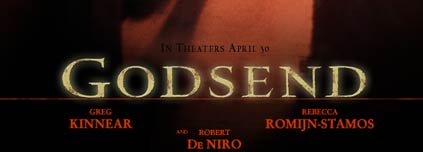
So with the writing, casting, and promoting of my thriller Godsend, the work is at very different ends of the spectrum. One movie is completed and about to be distributed, whereas another is at the beginning of its life cycle.
Talking of beginnings, we've also just started work with BBC Comedy on a new project about the paparazzi. It's contemporary, comedic, and I'm fascinated by it. I'll update you over the next few weeks as it progresses. On top of all this there are the daily issues of the company, which I own and run with my brother. We have to move offices, simply because we've outgrown our present space. It's no small thing, I promise you, spending a fortune, guaranteeing some landlord rent for the rest of your natural life, when you don't even know what's going to happen next year.
I love our company, and the work that it does. My brother is a genuine creative and has established a family of brilliant people around him. We've grown it from one computer in a borrowed room, to 20-plus people in a warehouse loft in Shoreditch. It's constantly interesting but frightening. No one tells you how to run these things, you sort of find out how to do it on your feet.
Off to Brighton now for a writers' meeting, then into the country to spend some time with friends and family. The friends happen to be directors; it's always a relief to spend time with your own kind. Directors by and large get on with each other - that is if you respect and like one another's work. It's competitive, of course, but that mellows as you get older, and there is a kind of common acknowledgement and appreciation of how difficult it is just to keep being interesting.
If directors could practice their trade with no repercussions, just imagine the work they would do. In other words, if you could direct anonymously sometimes and just practice the trade of directing, enjoying dramaticising scenes, filming images, editing, applying music - almost like a regression back to film school. If you could do all this without any commercial repercussions, I suspect much more inventive work would result. For obvious reasons though you can't, you're punished for what are deemed your wrong choices and celebrated for the "right" ones. There's no right to fail in the film business.
So that's where we are this week. Next week I'm going to screen some footage shot in LA, around the opening of Godsend.
Nick shot video footage of his time in Los Angeles for the launch of Godsend:
Watch it now