 | 13 November 2014 |

| |
| BBC Homepage | | |
| |||
| Contact Us | | |
Nature featuresYou are in: Cumbria > Nature > Nature features > The Dragonflies of Cumbria 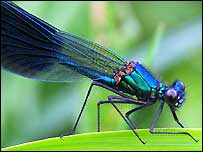 Dragonfly The Dragonflies of CumbriaAs part of BBC One's series Nature of Britain, Presenter Matt Baker visits The Solway mosses in the North West corner of Cumbria and finds out how the habitat is held together.
If you had to suggest the least likely place to go to find wildlife you might end up choosing a peat bog, after all it’s totally flat, stretches as far as the eye can see and is mostly made up of soggy earth. You would be surprised at just how much there is to see when you get up close. The Solway mosses in the North West corner of Cumbria are teeming with life. Created over thousands of years the raised mires, as they are called, are a habitat held together by nothing more than water. The unique character means only plants that are able to cope with such a harsh environment can prosper. Among them you will find 13 different types of sphagnum moss, the cranberry and the carnivorous sundew. It’s the British equivalent of the Venus Fly Trap. It has sticky prongs that trap unwary insects which it then digests. The industrial extraction of peat and drainage put in to make the land suitable for agriculture have all taken their toll. Now efforts are being made to wet up the peat bogs again. As Matt Baker found out the success can easily be measured by taking stock of the local insects. Dragonflies are common in this type of environment and Matt gets to see them up close. He walks around the reserve with two volunteers and finds out more about the dragonflies that come there. The Nature of BritainWatch films from your region from the Nature of Britain series on BBC One.
Help playing audio/video last updated: 18/09/2008 at 11:01 You are in: Cumbria > Nature > Nature features > The Dragonflies of Cumbria     All the latest weather reports for Cumbria |
| | About the BBC | Help | Terms of Use | Privacy & Cookies Policy |
