Arran to Gretna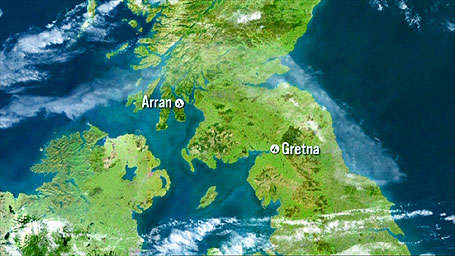
Sweeping landscapes and jagged mountains make up the rugged magnificence of Scotland's Deep South. But this beautiful tranquil setting conceals an explosive and sometimes secret past.
 Life on Arran Life on Arran
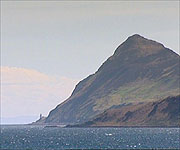
Arran may have the feel of a wild island refuge with its peaceful and spectacular mountainous landscape - but it's not just popular with tourist and day trippers from Glasgow, some visitors come and stay for the duration. Neil Oliver meets up with local fire-fighter, farm hand and newspaper delivery lady, Fiona Laing, to see what life on the island is like.
Ardeer - Alfred Nobel
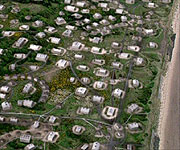 It's hard to believe that once, this bleak desolate spot on the Scottish coast was the centre of an explosives empire. The modern world was developing and there was a need for something more powerful than gunpowder to help build it. It's hard to believe that once, this bleak desolate spot on the Scottish coast was the centre of an explosives empire. The modern world was developing and there was a need for something more powerful than gunpowder to help build it. Alfred Nobel found the solution in nitro-glycerine, but packaged in a way that made this fickle liquid much safer to handle, in the form of solid sticks - dynamite. With backing from investors in Glasgow he built his factory in Ardeer. 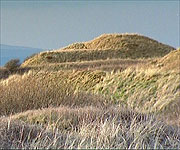 This part of the coast was ideal, not only was it isolated but you also had access to the sea. But when you take a closer look at the area, you cant help but wonder if the landscape is actually natural or if it has been deliberately reshaped, if so why? This part of the coast was ideal, not only was it isolated but you also had access to the sea. But when you take a closer look at the area, you cant help but wonder if the landscape is actually natural or if it has been deliberately reshaped, if so why?
Alice Roberts carries out an experiment with the help of explosives expert David Pittam, to see how Nobel used the landscape to protect not only his investment but also his employees. Prestwick Airport
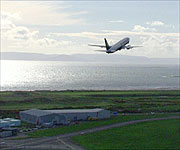 During the Second World War and the Cold War, the airport was used as a refuelling stop for many GI's on their way to and from Europe - the most famous being Elvis Presley, his brief and only moment spent on British soil. During the Second World War and the Cold War, the airport was used as a refuelling stop for many GI's on their way to and from Europe - the most famous being Elvis Presley, his brief and only moment spent on British soil. But today Prestwick's air traffic control centre is one of the busiest in the world, looking after many holiday makers and commuters on transatlantic flights. What is Ailsa Craig's connection with the Olympic Games?
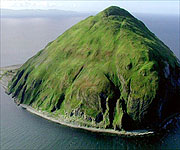 At first glance you could be mistaken for thinking that Ailsa Craig's hidden treasure is its rugged natural beauty. Born out of a volcano, the outside wore away, leaving behind an unusual plug shaped island. At first glance you could be mistaken for thinking that Ailsa Craig's hidden treasure is its rugged natural beauty. Born out of a volcano, the outside wore away, leaving behind an unusual plug shaped island. But on a closer observation, you will find the remains of what was once a small cottage industry based around the granite quarry on the island. Nicholas Crane joins Hew Girvan who 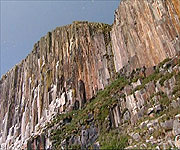 helped his father quarry here when he was a boy,as many of his family members did during the 200 years before 1971, when this way of life came to an end as it no longer became economic to live and work on the island. helped his father quarry here when he was a boy,as many of his family members did during the 200 years before 1971, when this way of life came to an end as it no longer became economic to live and work on the island. This natural and beautiful stone is the link between the island and the winter Olympic Games. The tough granite on the island is perfect for Curling stones. The distinctive sound of the forgotten foghorn
For 150 years whenever fog rolled in, 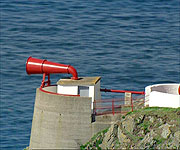 the sound of the fog horn would echo along the coast warning of hidden dangers. But since the 80's its sound has dwindled on our coast. Electronic navigation systems have made them redundant and the fog horn has now been switched off. the sound of the fog horn would echo along the coast warning of hidden dangers. But since the 80's its sound has dwindled on our coast. Electronic navigation systems have made them redundant and the fog horn has now been switched off. But how did the fog horn come to have such a distinctive sound? The story goes that one night in 1853 Scotts born inventor Robert 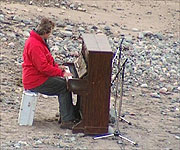 Foulis heard his daughter playing the piano across the bay and noticed that the lower notes were more distinct and travelled further than the higher notes. Foulis heard his daughter playing the piano across the bay and noticed that the lower notes were more distinct and travelled further than the higher notes. With the help of Open University acoustic expert David Sharpe and Mark Horton at hand on the piano in the middle of the beach, Alice Roberts sets about putting Foulis' theory to the test. Galloway Coast - St Ninian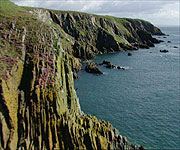
This remote and windswept part of the coast might seem an unlikely spot for St Ninian to establish Christianity in Scotland, but 1500 years ago that's exactly what he did. That's why St Ninian has been a major attraction for many pilgrims to the area for centuries. There wasn't really any hard evidence of St Ninian's impact and the extent of the numbers of pilgrims who came to this area until 20 years ago, when an archaeology dig discovered the remains of a town and 1600 skeletons dating back 700 years - a dig that a younger Neil Oliver took part in.
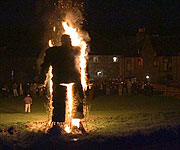 But this area has another tourist attraction which may have raised one or two eyebrows in St Ninian's time, but it is more to do with fiction. But this area has another tourist attraction which may have raised one or two eyebrows in St Ninian's time, but it is more to do with fiction. The area was used as the location for filming the cult 70's horror film 'The Wicker Man'. Many of the movies fans visit, attracting a slightly different tourist to the area. Flounder Tramping
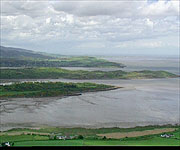 The World Flounder Tramping Championships are held each July or August off the Glen Isle peninsula to the south of Palnackie. The competition is held to raise funds for the Royal National Lifeboat Institution (RNLI). With a first prize of £150, the competition has around 300-400 competitors who take part each year. The idea is to catch a Flounder (which is a flat fish) by standing on it, hence "Flounder Tramping". The World Flounder Tramping Championships are held each July or August off the Glen Isle peninsula to the south of Palnackie. The competition is held to raise funds for the Royal National Lifeboat Institution (RNLI). With a first prize of £150, the competition has around 300-400 competitors who take part each year. The idea is to catch a Flounder (which is a flat fish) by standing on it, hence "Flounder Tramping".
Solway Firth Wildlife
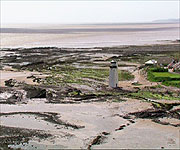 The unique landscape of the Solway Firth is teeming with wildlife. The unique landscape of the Solway Firth is teeming with wildlife. By day huge flocks of barnacle geese feed on the grassy marshes. The grass fuels their epic migrations to the Svalbard Islands during the summer, where they spend five months of the year. As night falls its time for the natterjack toad to make an appearance. Miranda Krestovnikoff teams up with Brian Morrell from the Wildfowl & Wetlands Trust, in 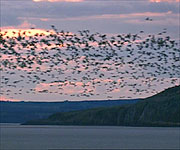 search of this rare, nocturnal creature. The natterjack toad is very distinctive, not only by a yellow line that runs down its back, but they're also very very noisy and when they call out they inflate their throat which makes them look like they've swallowed a huge ping pong ball. The natterjack toad is one of the rarest amphibians in Britain and is a protected species that can only by handled by licensed experts. search of this rare, nocturnal creature. The natterjack toad is very distinctive, not only by a yellow line that runs down its back, but they're also very very noisy and when they call out they inflate their throat which makes them look like they've swallowed a huge ping pong ball. The natterjack toad is one of the rarest amphibians in Britain and is a protected species that can only by handled by licensed experts.
Cockle Picking
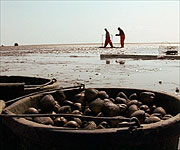 For years gathering cockles on the Solway sands has been a key source of income for many locals. But this way of life is being threatened by illegal cockle pickers who don't have a licence and are also proving to be a danger to themselves. For years gathering cockles on the Solway sands has been a key source of income for many locals. But this way of life is being threatened by illegal cockle pickers who don't have a licence and are also proving to be a danger to themselves. Local coastguard Stewart Bryden talks to Neil Oliver about how he has to rescue many inexperienced and illegal cockle pickers. TOP SECRET - First World War Munitions Factory
With no end in sight of the First World War, the Government were growing concerned at dwindling ammunition supplies, especially cordite which fires the bullets and shells from the guns.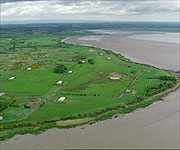 Their solution was to create one of the worlds largest munitions factory's in 1915. Codenamed Moorside, the scale of the project was enormous. Not only was it nine miles long and two miles wide, but it brought a massive influx of people to this quiet stretch of coast on the Solway, creating two new towns to house them, Eastriggs and Gretna. With men away at war, the workforce was made up with predominantly women to handle this explosive mixture,which was nicknamed 'the Devil's Porridge'.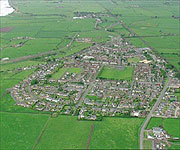 But with around 20,000 female workers and 10,000 navies, explosives and the munitions factory were not the only thing the government was trying to keep under wraps. But with around 20,000 female workers and 10,000 navies, explosives and the munitions factory were not the only thing the government was trying to keep under wraps. Mark Horton meets up with local historian Anne Dickie to find out what steps the Government took to keep any sparks from igniting. Would you like to find out what music was used in this programme?
Arran to Gretna: Thursday 9 November, 8pm on BBC TWO
|