
| |
| 疑难解答 | |
 | | | | | | | ||||||||
| | |||||||||||||
Off, Out and Away - Off, Out 和 Away 的区别 | ||||||||||||||
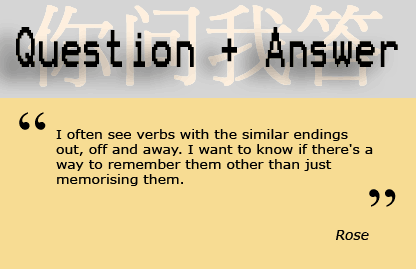
Listen to this programme first and then read the content below. 请先听节目然后再阅读以下内容。 This week's question comes from Rose who wants some help learning phrasal verbs. She noticed that some phrasal verbs have similar endings, such as off, out and away, and wonders whether this means phrasal verbs with these endings have similar meanings. Finn said that unfortunately phrasal verbs with similar endings can mean very different things. For example both these phrasal verbs end in off. Kick off 开始 But they mean very different things. Kick off means to begin, while clock off means to finish working. Tricky? Sadly there are few shortcuts to learning phrasal verbs. But Finn offers three learning strategies to help you. Here they are: 1. Learn new phrasal verbs in a sentence. Put off 推迟 Sheila hated going to the dentist so she put it off and put it off, until she couldn't put it off any longer.
2. Try to learn words that go together with your phrasal verb. Put out 熄灭 Cigarette, fire. To put out a cigarette. He put out the fire. 3. Learn phrasal verbs in groups, for example: 3.1 By first verb - GO Go out 离开,出去 3.2 Or by ending - OUT Chill out 放松一下 3.3 Or by theme - USING THE PHONE Hang up 挂电话 We hope this helps you with learning phrasal verbs. If you have any other questions, please email them to questions@chinaelt.bbc.co.uk Glossary 词汇 phrasal verbs 短语动词 | ||||||||||||||
| ||||||||||||||
| ||||||||||||||


 本周问题与答案
 Download the script of this programme 点击此处下载文字材料