
| |
| 疑难解答 | |
 | | | | | | | ||||||||
| | |||||||||||||
True and Real 真实的/真正的 | ||||||||||||||
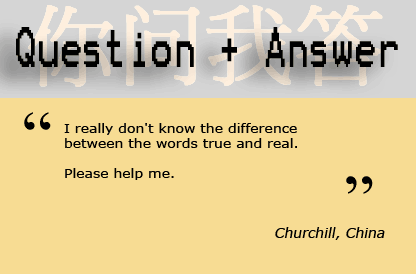
This week's question from Churchill in China is about the words true and real. What's the difference? Finn and Li explain that although the words are very similar, there are differences in the way they are used. Here are three of them: 1. In the desert people often see mirages of things like islands, castles and lakes, but they aren't REAL.
We use the word real here because we are talking about something actually existing or occurring. We use the word real when we talk about things which actually exist – they are real: a real person, a real place. They're tangible and not imaginary. 2. A: I heard you're leaving us next week? Is it TRUE? We use the word true here. When we say that a statement or piece of information is true it means it's in accordance with fact or reality. 3. The film Titanic is based on a TRUE story. The film Titanic is based on what we call a true story: a story with events that really happened. There really was a love story between two of the passengers, many of the characters were real people, and the ship really did sink after it hit an iceberg. We hope these three examples help but as always, our advice is to read as widely as possible to improve your sense of when to use each word. If you have a question about English, email it to questions.chinaelt@bbc.co.uk. We might answer it on this programme. Glossary 词汇 mirage 幻觉,海市蜃楼 tangible 实实在在的 imaginary 想象中的 in accordance with fact or reality 同事实或现实相一致 based on 根据,基于 passengers 乘客 sink 下沉 iceberg 冰山 | ||||||||||||||
| ||||||||||||||
| ||||||||||||||


 本周问题与答案
 Download the script of this programme 点击此处下载文字材料