
| |
| 疑难解答 | |
 | | | | | | | ||||||||
| | |||||||||||||
A Hundred and One / 许多 | ||||||||||||||
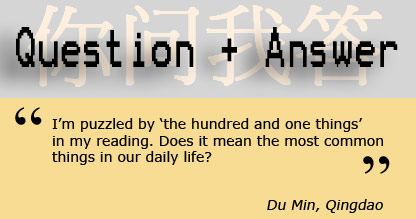
Listen to this programme first and then read the information below. 请先听节目然后再阅读以下内容。 This week’s question is from Du Min and it is about the meaning and usage of the English idiom ‘a hundred and one things’. The idiomatic part of this phrase ‘a hundred and one’ can be used instead of the words ‘too many’ or ‘lots of’.
In the UK, idioms form part of our everyday conversations. Sometimes people don’t even realise they’re using them. There are many idioms that contain numbers, often large numbers such as a hundred or a million that are used for emphasis. When you learn an idiom, you need to find out if it is still popular and frequently used in everyday conversation. Using an outdated or unpopular idiom in conversation could sound very silly. Tracy and Li talk about the idiom ‘a hundred and one’ and introduce four other popular idioms containing the number one. Listen to the programme and read the script by clicking on the links at the top and bottom of this page. We hope we have answered your question Du Min and look forward to receiving more questions about the English language. If you have a question, email it to questions.chinaelt@bbc.co.uk. Glossary 词汇 idiom 成语/谚语 meaning 意思 usage 用法 emphasis 强调 popular 流行的 outdated 过时的 | ||||||||||||||
| ||||||||||||||
| ||||||||||||||


 本周问题与答案
 Download the script of this programme 点击此处下载文字材料