
| |
| 疑难解答 | |
 | | | | | | | ||||||||
| | |||||||||||||
Phrases with Agree 关于 Agree 的短语 | ||||||||||||||
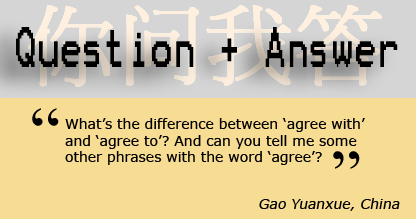
Listen to this programme first and then read the content below. 请先听节目然后再阅读以下内容。 This week’s question comes from Gao Yuanxue from China who wants to know more about using phrases with the word ‘agree’. Firstly, I should note that agree with and agree to mean very different things. 1) Agree with 同意 To agree with someone means to agree with something the person has said. You can also agree with an idea. When we use ‘agree with’ in a sentence it usually has the structure: subject + agree with + object. For example: I completely agree with you.
2) Agree to 答应 We use ‘agree to’ when we are talking about agreeing to do something. When we use ‘agree to’ in a sentence it is usually followed by a verb in the infinitive. So the sentence structure is: subject + agree to + infinitive. For example: I agreed to work late tonight. 3) Phrases with agree 和 agree 有关的短语 When people have agreed on something we might say they have reached an agreement. Here agreement is used as a noun. If two people really can’t agree on something, they might have to agree to disagree. Sometimes they have to do this to move forward.
If someone agrees 100% with something another person has said they might say, I couldn’t agree more. For more examples, listen to the accompanying audio programme. We hope this has answered your question Gao Yuanxue. If you have a question about the English language, do send us an email: questions.chinaelt@bbc.co.uk and don’t forget to visit this page regularly to learn more about English. Glossary 词汇 subject 主语 object 宾语 infinitive 不定式 reached an agreement 达成共识 agree to disagree 同意各自保留不同意见 move forward 前进 couldn’t agree more 与某人意见完全一致 | ||||||||||||||
| ||||||||||||||
| ||||||||||||||


 本周问题与答案

 Download the script of this programme 点击此处下载文字材料