



 | | | | | | | |||||||||||||||||||||||||||||||||||||||||||||||||
| | ||||||||||||||||||||||||||||||||||||||||||||||||||||||
|
The attempted coup in Trinidad | ||||||||||||||||||||||||||||||||||||||||||||||||||||||
On the evening of 27 July 1990, 114 members of the islamic grouping, the Jamaat-al-Muslimeen took over the country's parliament during a sitting of the House of Representatives. Jamaat leader Yasin Abu Bakr led some of his men and also took over the then only state TV station, Trinidad and Tobago Television (TTT). Trinidad and Tobago's security forces cordoned off the areas around the Trinidad parliament (the Red House) and TTT. Abu Bakr broadcast several transmissions to the Trinidad and Tobago public saying he had overthrown the government and asking for public support. In the early hours of 28 July, the armed forces cut off transmissions from TTT. A state of emergency was imposed in Trinidad and Tobago and a five-day hostage crisis then ensued.
At the Red House, one of the hostages, Prime Minister ANR Robinson announced that an amnesty had been negotiated with the Muslimeen and a series of visits by go-betweens from the country's church leaders took place. The surrender of the Jamaat-al-Muslimeen insurrectionists and the release of their hostages brought an end to six of the bloddiest days in Trinidad's history. 24 people were dead, many injured, and hundreds of thousands of dollars worth of damage done to looted and damaged buildings and shops in the capital Port of Spain. BBC Caribbean is looking at the personal stories of the key players in the events of 1990 and memories of those caught on the front line during the crisis. |
EXTERNAL LINKS The BBC is not responsible for the content of external internet sites | ||||||||||||||||||||||||||||||||||||||||||||||||||||||
| |||||||||||||||||||||||||||||||||||||||||||||||||||||||
 | |||||||||||||||||||||||||||||||||||||||||||||||||||||||


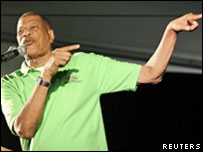
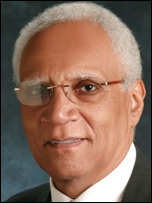
 Debbie Ransome talks to Major-General Ralph Brown


 TT coup: a reporter's story 1995