



 | | | | | | | |||||||||||||||||||||||||||||||||||||
| | ||||||||||||||||||||||||||||||||||||||||||
|
Shades of grey | ||||||||||||||||||||||||||||||||||||||||||
There's a new global map painting countries into various shades - it deals with tax compliance. During the days of the British Empire, large parts of the Caribbean found themselves defined as being some of the "red parts" of the global map. The red defined the then extensive British empire's reach around the world. Despite independence for some and, for others, more freedom as dependent territories with their own local administrators, some Caribbean territories find themselves once again on a new coloured global map. They've become the "grey bits" of the global map as defined by the Organisation for Economic Development (OECD). The OECD had been asked by the world's richest nations, the G20, who met in London on April 2, to come up with lists of countries assessed by their Global Forum against the international standard for tax information exchange. The OECD came up with both a black list and and a grey list. Caribbean territories escaped the black list but some do appear on the new OECD grey list. There are to be sanctions against tax havens that do not transfer information on request. Shades of grey The OECD list published its blacklist on Thursday naming Costa Rica, Malaysia, the Philippines and Uruguay. The Bahamas, Bermuda, and the Cayman Islands were included on the separate grey list of countries which have agreed to improve transparency standards, but not yet signed the necessary international accords. Of the countries 'listed' by the OECD, 38 are in the grey area, including 16 from the Caribbean: Anguilla, Antigua and Barbuda, Aruba, the Bahamas, Belize, Bermuda, the British Virgin Islands, the Cayman Islands, Dominica, Grenada, Montserrat, the Netherlands Antilles, St Kitts and Nevis, St Lucia, St Vincent and the Grenadines, and the Turks and Caicos Islands. Not in that group are Barbados and the United States Virgin Islands, which received special mention for their efforts to date in complying with the OECD standards. The offshore alternative As economic doors close across the Caribbean in terms of preferences for their agricultural products in Europe and dwindling tourism figures, offshore business had been seen as one of the potential powerhouses for small, struggling economies.
As the twin-island state of Antigua and Barbuda sought to find a new niche in the early 1990s in online gambling, it found the potential job provider batted down by a US ban on the sector. The potential US gambling market offered Antigua and Barbuda security for over 3,000 jobs - enough to the force the island to challenge the US through the World Trade organisation (WTO) and the international courts. That battle is still far from over. Cayman impact For the Cayman islands, a British dependency in the north-west Caribbean, registration of foreign companies has been a major income earner. A report commissioned by the Caymans' financial community indicates that financial service represents 55% of the island's economy. That's 1.2 billion Cayman dollars a year in 2007 earnings (1 US dollar= 82 Cayman cents).
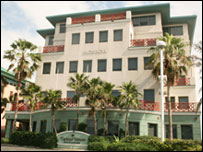
According to the Oxford Economics report, published in February, over 5,000 people are directly employed in the financial services industry. "The financial services industry is integral to the Cayman economy," the report stated. "It is the largest employer and generator of GDP in the country." In the five-storey Ugland House in Grand Cayman, over 12,000 international companies are registered. This level of registration without a physical presence led to much scrutiny in 2007 with leaders of the US Senate Finance Committee asking their Government Accountability Office to investigate Ugland House. Ahead of this week's G20 summit, it was not surprising that the British dependent territory had moved early with a Monday announcement. This had announced outlined a new tax amendment arrangement with Ireland, Japan, the Netherlands, and South Africa. "Combined with our efforts over the last weeks...now means that the Cayman Islands now has tax information arrangements with 20 countries including the majority of Caymans' trading partners," Kurt Tibbets, the leader of Cayman government business, said. Wider impact Other Caribbean nations with international company registry systems have spent the week confirming their tax information exchange arrangements with other countries. In a statement earlier in the week, Bahamas Prime Minister Hubert Ingraham, insisted that his country "had always sought to be a responsible financial services centre". The premier of the British Virgin Islands, Ralph O'Neal, had said that the BVI was already meeting OECD standards. And the St Kitts and Nevis parliament has passed a new law for the exchange of information on taxation. Expect more Thursday's G20 Summit and the OECD announcement following this clearly mark the continued pressure on so-called tax havens around the world. OECD officials have been explaining since the summit of the need for countries to track money being stashed elsewhere which could earn increasingly important tax payments back home. The grey list has 38 countries that have agreed to improve standards but not yet done so. For the blacklisted nations, the G20 leaders agreed to take sanctions against tax havens using this OECD list as its basis. In their communique, they agreed: "We stand ready to deploy sanctions to protect our public finances and financial systems. The era of banking secrecy is over." Angel Gurria, secretary general of the OECD, said that the G20 summit had helped to focus minds on the issue of tax havens. "We've had more progress in the last two weeks on this matter than we've had in the last 10 or 12 years," he told the BBC. Meanwhile, those speaking up on behalf of Caribbean countries have argued for more help as they diversify into the service sector. "Financial centres in many small Commonwealth states are well regulated and transparent entities, " the Commonwealth Secretariat said ahead of the G20 Summit. "A significant concern is that small states that adhere to accepted international standards may be adversely affected by regulatory measures agreed on in their absence from the table." The Commonwealth is arguing that more small states should be allowed to the OECD decision-making and regulatory table. |
LOCAL LINKS  Are you pleased with the G20? Are you pleased with the G20?01 April, 2009 | News Tax Havens: No place to hide02 April, 2009 | News Tax haven jurisdictions: sitting ducks and scapegoats 17 March, 2009 | News Tax havens come under new scrutiny02 January, 2009 | News EXTERNAL LINKS The BBC is not responsible for the content of external internet sites | ||||||||||||||||||||||||||||||||||||||||||
| |||||||||||||||||||||||||||||||||||||||||||
 | |||||||||||||||||||||||||||||||||||||||||||


 We've had more progress in the last two weeks on this matter than we've had in the last 10 or 12 years


