| | | | | | | |||||||||||||||||||||||||||||||||||||
| | ||||||||||||||||||||||||||||||||||||||||||
|
Caricom's "disconnect" | ||||||||||||||||||||||||||||||||||||||||||
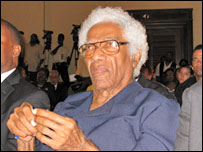
It was like a former schoolmaster returning to the school to mark your end of term papers. Caribbean Community leaders faced their gentlest but most damning criticism from veteran academic and writer George Lamming. It was after receiving Caricom’s highest award, the Order of the Caribbean Community (OCC).
Renowned Caribbean author Lamming, whose works include In the Castle of my Skin, thanked the leaders for his OCC and went on to describe what he called the “disconnect” between Caricom’s political classes and its people. Lamming's lament “Listening to what you call ordinary people guessing about what you are doing here, there is in my view an impermissible social divide between the political classes and the populace…from one end of the Caribbean to (the other),” Lamming told leaders at their opening ceremony Tuesday night.
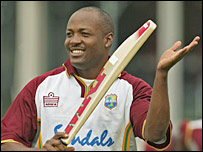
“And that divide has led to a serious crisis in communication,” Lamming, wearing his new OCC ribbon, told the leaders and representatives of the 15-member grouping. “My guess is that about 80 per cent of the population tonight are vaguely aware, if at all aware, of what is happening here tonight,” he added. Lara “intimidated” Some of the leaders sitting closest to Lamming on the podium, listened intently as if to an old school teacher who still had much knowledge to impart. Others, whether because of the message or feeling the effects of the first three hours of speech-making, sat with their heads down. The audience, representing Caricom’s great, good, and officialdom, mostly sat in silent awe during Lamming’s comments, every now and again bursting into applause. West Indies former cricket captain, retired batsman Brian Lara was another of the four OCC recipients was set the task of following Lamming’s speech. Other OCC recipients were Jamaican academic, dance troupe maestro, and cultural critic Rex Nettleford and Dominica’s president Nicholson Liverpool. “I’m intimidated by my teammates, my fellow awardees” Lara said as he spoke at the end of a batting order of Nettleford, Liverpool, and Lamming.
“I feel like I was asked to bat after you’ve seen the late George Headley, Sir Vivian Richards, and Garfield Sobers – all making hundreds on a difficult pitch.” This did not stop Lara going on to call for one of the many new stadia built for the 2007 Cricket World Cup now being converted for what he described as much-needed training facilities for future West Indies players. Caricom’s challenges Lamming’s quick-paced bowling at leaders had simply added to an evening of soul-searching in speech after speech at the opening of the 29th Caricom Heads of Government Summit in Antigua. Many of them referred to pre-summit comments by St Vincent and the Grenadines prime minister Ralph Gonsalves who lamented the slow pace of Caricom’s integration. It's a situation which he said was, "destined for the foreseeable future to keep Caricom as a community of sovereign states in which (those states) jealously guard a much vaunted and pristine sovereignty." But he had also called for the drive toward a deeper union in Caricom to continue. Host leader and incoming Caricom Chairman Baldwin Spencer admitted in his speech that there was something in Gonsalves’ comments and said there was a “manifest need for re-engineering Caricom. The leaders face challenges from rising fuel and food prices juxtaposed with declining raw commodity prices and the fear of reduced tourist visits. As their three days of discussions opened Wednesday, they were set to try and achieve agreement on what some officials are calling “joined-up” travel arrangements across the Caribbean island chain.
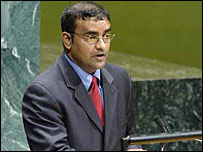
This will take the co-operation and a degree of efficiency on the part of mostly commercially-owned airlines and some officials are questioning in off-record briefings how much of this can be achieved in a one-day focus on tourism. Other top agenda items include a joint approach to the food and fuel crises. “We have to leave here on Friday with a clear response to the global situation and the impact it is having on Caribbean people,” Jamaican Prime Minister Bruce Golding told BBC Caribbean. Golding admitted that some global economic changes are outside of the power of Caribbean leaders. “But we can do more collectively than individually,” he added. “Bully boy tactics” One of the most potentially divisive issues will be Caribbean countries giving final signature to Europe’s Economic Partnership Agreement (EPA). Guyana’s president Bharrat Jagdeo accused the EU of “bully boy tactics” on getting Caricom states to sign up.
While stating at the opening ceremony that Guyana will not sign the EPA as it is, he admitted that threatened economic sanctions could force the country, one of Caricom’s poorest states, to finally toe the line. He described the EPA deal as breaking up solidarity between former preferential trade recipient grouping, the African, Caribbean, and Pacific group (ACP). President Jagdeo called for a “goods-only” agreement, alluding to stripped down version of the EPA offered by European Commission officials at the end of 2007. With much speech-making and clear divisions laid on the table, Caricom leaders go into their three days of behind-closed talks at their hotel resort location outside the capital St John’s. But they did so with Lamming’s words echoing and asking whether the Caribbean public knew or cared. | LOCAL LINKS  Caricom's crossroads Caricom's crossroads30 June, 2008 | News | ||||||||||||||||||||||||||||||||||||||||||
| |||||||||||||||||||||||||||||||||||||||||||
 | |||||||||||||||||||||||||||||||||||||||||||


 There is ... an impermissible social divide between the political classes and the populace