| 13 November 2014 |

| |
| BBC Homepage | | |
| |||
| Contact Us | | |
West Yorkshire TrailsYou are in: Bradford and West Yorkshire > Places > West Yorkshire Trails > A walk around Ted Hughes' Mytholmroyd A walk around Ted Hughes' MytholmroydPoet Ted Hughes spent his first few years in Mytholmroyd and it was in roaming the fields, woods, and moors around his childhood home that he found much of the inspiration for his later poetry. We've been following in his footsteps. 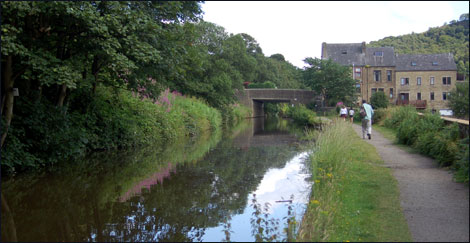 The Rochdale Canal at Mytholmroyd Today Mytholmroyd is a busy village along the A646. You might pass through it on your way to Hebden Bridge, and to Lancashire beyond, but behind the road is the canal as well as Ted Hughes' birthplace at 1 Aspinall Street. This short urban trail takes us around some of the places that Hughes would have known when he was growing up here in the 1930s. The routeThe starting point is the railway station at Mytholmroyd. Because it covers a small area, the route can easily be shortened. 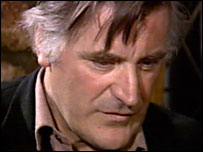 Ted Hughes Spend a few minutes looking around the station. The Iron Man storyboards, based on Ted Hughes' short novel, are the work of local schoolchildren. On the platform nearest the village centre (the platform for Leeds and Bradford) you can see all that's left of a much grander station building - spot where the big clock used to be! Look down below and you'll see the rest of the station building, now disused, was several storeys high and passengers used to have to climb up stairs to get to the platforms. Looking across the railway line and up to the left you can see Scout Rock. Green and pleasant in appearance on a summer's day, it features in Hughes' autobiographical essay, The Rock, where he claims it would cast its mood over the village. 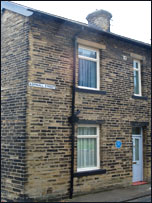 Where it all began: Ted Hughes' birthplace Make your way down the unmade road at the side of the railway station and turn right making your way towards the main road. On your left you will see a big building with the words 'Man know thyself' inscribed in stone. Today this is a block of flats but in the 1930s this was Mytholmroyd Co-op - it was to here, as his pal Donald Crossley remembers, that Ted and his pals would return jam jars and receive a few pennies with which to buy sweets. Cross the bridge over the River Calder. Looking underneath and around the bridge, you might be able to spot the remains of several older structures, including a stone packhorse bridge. The next stop is the Memorial Garden but take great care when crossing the busy main road. We've come here to look at the village war memorial. Like many young men along the valley, Hughes' father had joined the Lancashire Fusiliers and he was one of only 17 in the regiment who returned home from the Gallipoli campaign. You may notice that the statue has a very unusual head - this had to be replaced after the original head was removed by vandals. Sadly, when we went to take a look at the memorial, vandals had just struck again, removing the names of those from the village who had given their lives in both world wars. 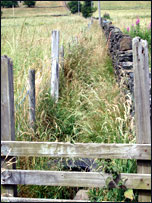 This stile leads from Bankfields up to the moors Walking along the main road towards Halifax, take the road on the left which crosses the canal. Make your way towards the small block of flats - these are built on the site of Mount Zion Primitive Methodist Chapel and it is here Ted Hughes was taken to worship. It's just across from Hughes' birthplace at 1 Aspinall Street and Donald Crossley remembers that the chapel did a good job in blocking out light from the nearby houses. A plaque now marks the house where Hughes was born which is now owned by the Elmet Trust and let to holidaymakers. Other members of Ted's mother's family, the Farrars, lived in other houses along the street while his friend Donald lived in No. 9. Please respect the privacy of today's residents when looking around. Take one of the streets that go up from the houses in Aspinall Street towards Mount Pleasant Mill and make your way around the left of the building. Continue uphill through the Banksfield estate using a series of ginnels, eventually arriving at a stile where a steep path leads straight up the hillside. This is the path that took Ted Hughes and his brother Gerald up onto Wadsworth Banks as Donald Crossley recalls. Today this path is very uneven underfoot and anyone wanting to extend their walk up on to the moors should take great care. 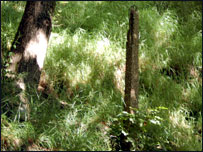 This path leads through Redacre Woods From the stile, turn left and make your way down through the houses - there were allotments here in Hughes' day - and make for the prefabs, built as temporary housing after World War Two. Go along Royd View, passing the prefabs, until you reach the thick undergrowth at the end of the road. Either path will take you into Redacre Woods and it's here that Ted and Donald and the other boys from Aspinall Street would play together. It was also a short cut to school and Burnley Road Primary School is our next stop. If you are a wheelchair user or have a pushchair with you, you may want to make your way down to the main road and, if you want to take a look at the school, walk along to the right. The paths go down through the wood and behind Redacre Farm before joining a track. Turn left and cross the canal and you will see the school, surrounded by a high fence, on the right. 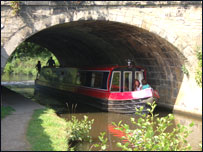 The "long tunnel" The rest of the walk follows the canal towpath on the school side. Almost immediately we pass some flats with balconies but in Hughes' time the site was occupied by the derelict Empress Foundry. Donald Crossley still remembers the broken skylights and the rosebay willow-herb growing inside and in the poem, Under the World's Wide Rims, Hughes remembers he and his pals would often throw stones at the windows. It's also here that Donald, Ted and the other boys went fishing for tiddlers and, Donald recalls, if a loach came along it was a very special day. Hughes looks back to his fishing days here in the poem, the Canal's Drowning Black. If, crossing under the main road on the towpath, you happen to look up at the roof of the tunnel then this is the very place described in The Long Tunnel Ceiling. At this point you might want to leave the towpath and return along the road to Mytholmroyd Station. Alternatively you can walk as far as the cricket club which features in the poem Sunstruck and, not far from here, up among the houses on the far side of the canal and the road is Southfield where Ted's Uncle Walt lived. 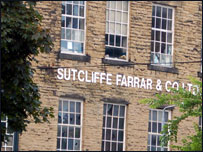 The sign is a link with Hughes' mother's family Making your way back to the village centre either by the towpath or the main road, take a detour into the recreation ground. At the far side is Mount Pleasant Mill which during Hughes' time in Mytholmroyd was still owned by his mother's family, the Farrars. Today a part of the mill is occupied by the clog makers Walkleys. The BBC Bradford and West Yorkshire website wishes to thank John Billingsley for permission to use his walk around Mytholmroyd, and to Donald Crossley for sharing his childhood memories with us. Further afieldDonald Crossley grew up in Mytholmroyd just along the street from Ted Hughes and as boys they played together. Since the poet's death Donald has been discovering just how much of the poet laureate's writing was rooted in the Calder Valley. A circular walk from the National Trust car park at Hardcastle Crags to Lumb Falls and Crimsworth Dean, based on Donald's research and published by the Elmet Trust, takes in many of the "special places" from Ted Hughes' childhood. The booklet, The Ted Hughes Trail in Crimsworth Dean, can be purchased from the bookshop in Hebden Bridge as can John Billingsley's A Laureate's Landscape: Walks around Ted Hughes' Mytholmroyd which is published by Northern Earth. John's booklet also extends his walk around Mytholmroyd up onto Midgeley Moor. 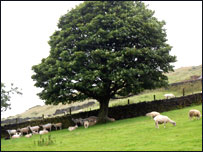 Along the path to Crimsworth Dean... The Elmet Trust, based in Mytholmroyd, is a charitable trust set up to celebrate Hughes' poetry and holds regular festivals in his memory, including The Ted Hughes Birthday Festival which takes place between Saturday 15 and Monday 17 August, 2009. PracticalitiesIf you stop to take the odd photo along the way or to read John's booklet, then this stroll around Mytholmroyd may take a couple of hours to complete. Refreshments are available in Mytholmroyd and Hebden Bridge and all the places mentioned here are covered by the Ordnance Survey Map OL21: The South Pennines. If you're passionate about the poetry of Ted Hughes, you can have your say in the BBC's vote to find the Nation's Favourite Poet. The shortlist was compiled in consultation with The Poetry Society and The Arts Council. Click on the link below to vote now!last updated: 04/08/2009 at 16:32 SEE ALSOYou are in: Bradford and West Yorkshire > Places > West Yorkshire Trails > A walk around Ted Hughes' Mytholmroyd [an error occurred while processing this directive] |
| | About the BBC | Help | Terms of Use | Privacy & Cookies Policy |