
Morbid discoveries on Your Paintings
I have a new hobby – exploring the Public Catalogue Foundation’s Your Paintings website. It is amazing what you can find there.
I have just been searching the theme of ‘Death’, because I rather like pictures with a gloomy and morbid subject matter. As expected, there are lots of pictures depicting the demise of the heroes and heroines of classical antiquity – Achilles, Dido, Cleopatra, etc. – and the beastly ends meted out to saints and Biblical wrongdoers. Some sublime masterpieces stand out, Titian’s majestically fleeting The Death of Actaeon in The National Gallery is well-known, but who realised that a work attributed to Nicholas Régnier, the polished The Death of Sophonisba of 1665–1667 is held at Leicester Arts and Museums Service?
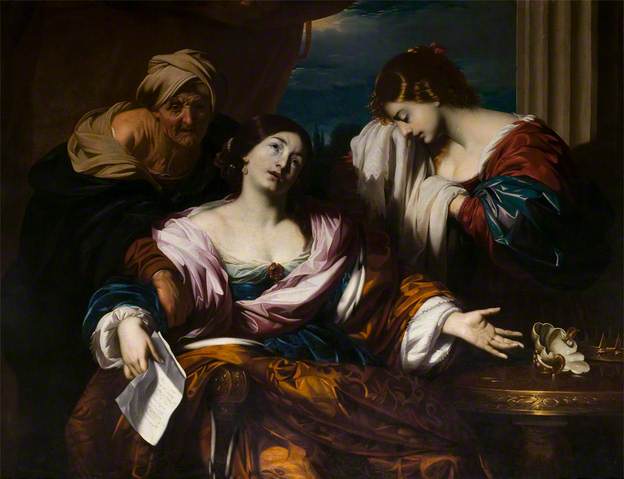
The Death of Sophonisba (Attributed to Nicholas Régnier, Collection: Leicester Arts and Museums Service)
Then there are the historical deaths. As one might expect in British public collections, Horatio Nelson does particularly well, with many contradictory depictions of the Admiral’s heroic death on shipboard at Trafalgar. The largest must be Daniel Maclise’s The Death of Nelson in Liverpool, a study for the even larger mural in the Palace of Westminster, which is so big that it cannot yet be photographed in its entirety. But I liked Edward Armitage’s 1848 The Death of Nelson – a sort of Regency secular pieta, with Nelson stripped down to his underclothes, from the Britannia Royal Naval College in Dartmouth.
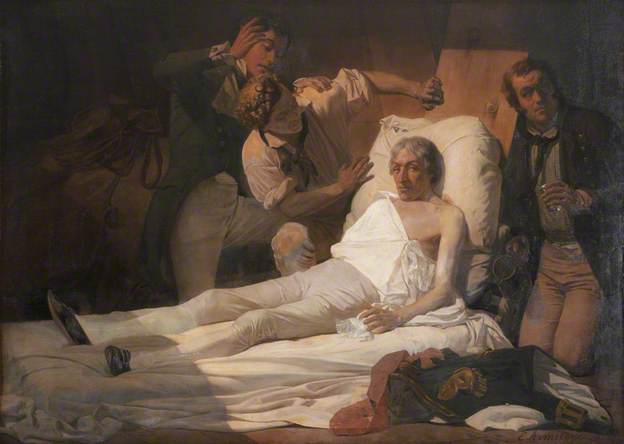
The Death Of Nelson (Edward Armitage, Collection: Britannia Royal Naval College)
Sometimes the title of a picture is misleading, Edgar Hunt’s exciting-sounding Dicing with Death (1941) in Dover Museum, shows five sugary kittens balefully regarding a tortoise from the safety of some flower pots! Meanwhile, Henry Fuseli’s lugubrious The Italian Count (1780) in my own Museum, Sir John Soane's Museum, depicts the aftermath of a particularly violent murder!

Tim Knox
You can read the full feature on the PCF's website.
Tim Knox is the Director of the Sir John Soane’s Museum in London.


Comment number 1.
At 03:31 27th Aug 2012, shopping2012 dddd wrote:This comment was removed because the moderators found it broke the house rules. Explain.
Complain about this comment (Comment number 1)