Your paintingsUncovering the nation's art collectionIn association with The Public Catalogue Foundation

Archives for July 2011

Waldemar Januszczak: The Impressionists

Post categories:

Adrienne Doyard|15:54 UK time, Friday, 15 July 2011

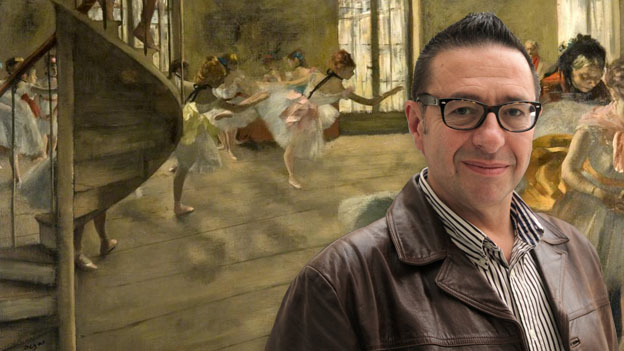
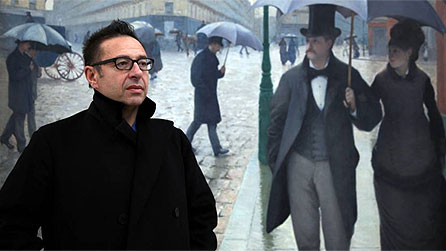
Art critic, Waldemar Januszczak revisits the Impressionists in a new four-part BBC Two series launched on Saturday 16th July 2011 at 8pm.

In each episode, Waldemar uncovers the surprising truth about this seemingly familiar art movement and reminds us how truly revolutionary it was.

If you can't wait, find out more from Waldemar's brand new guided tour of cherry picked Impressionist paintings from the nation's art collection.

Waldemar Januszczak Guided Tour

"There are a large number of Impressionist pictures in Britain and I've picked out a few that I'd like to talk about."

Do you know obscure facts about Impressionists that you would like to share? Are there other Impressionist paintings from the collection that you particularly love.

James Fox: BBC Four's 'British Masters'

Post categories:

Adrienne Doyard|17:37 UK time, Monday, 11 July 2011

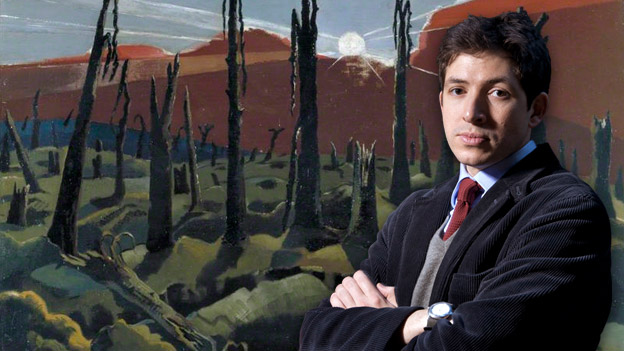
In a major re-calibration of 20th-century British paintings, art historian James Fox argues that British painting from 1910 to 1975 was far from being old-fashioned but an extraordinary flowering of genius. The three-part BBC Four series starts on Monday 11th July at 9pm.

Exclusive to Your Paintings, James Fox narrates a guided tour that uses some of the most interesting paintings in the nation’s art collection to tell a story of 20th century Britain. Along the way, we find out how artists were influenced by British society and how in turn they aimed to influence it.

Dr James Fox

" I've selected brilliant paintings that I think are not only great examples of twentieth century British art, but they tell a story of twentieth century Britain as well"

What do you think of this take on 20th century Britain? Are there other paintings that you think tell the story as well, or better? And do you agree with what James Fox argues in his BBC Four series - that art historians of the future will rank British paintings in this period alongside the Golden Ages of Renaissance Italy and Impressionist France.

You can also read more in James Fox's latest BBC TV blog post, 'British Masters: My one big chance to get even'.


Alastair Sooke: Top Ten Most Valuable Paintings in the World

Post categories:

BBC EmilyBBC Emily|13:55 UK time, Wednesday, 6 July 2011

This Sunday 10th July at 9pm, art critic and journalist Alastair Sooke explores the remarkable stories behind the Top Ten Most Valuable Paintings in the World.

What are the ten most expensive paintings to have been sold at auction? Why do some pay millions for a painting? Who are the buyers? Why is art so valuable?

In seeking the answers to some of these questions, Alastair uncovers stories of scandal, war, exile, revolution, paranoia, and economic turmoil - stories which range from the Holocaust to the discreet banks of Zurich and the boom of Japan in the 1980s.

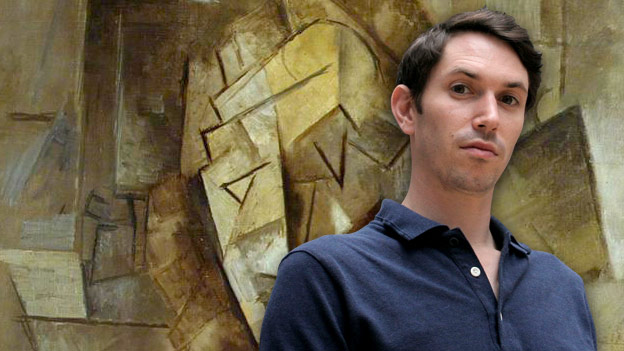
These works of art are mostly locked away in private collections. But to accompany the BBC1 programme, Alastair Sooke presents a Guided Tour to great art that you can see for free, in public galleries and collections around the country.

Alastair Sooke on great art for free

"Here's my selection of paintings I particularly like which can be seen, for free, in museums and galleries all around the country, even though the artists who made them are the most coveted and most expensive artists in the world"

Once you've taken the Guided Tour, let us know if any of the work by Picasso, Monet, Bacon, Titian or Van Gogh in Alistair's Guided Tour caught your eye. Have you seen these paintings in the flesh, or are you planning a trip to a gallery to see them? Plus, any recommendations for credit crunch friendly art viewings are very welcome.

Alastair Sooke's Top Ten Most Valuable Paintings in the World is on BBC One at 9pm. Let us know what you think.

Art Revealed on the BBC

Post categories:

Dan Gluckman - Product Lead|14:42 UK time, Friday, 1 July 2011

There's a great lineup of TV on the BBC for lovers of paintings, as the BBC's 'Art Revealed' season starts later this month.

The season begins on Sunday 10th July when art critic Alastair Sooke explores the stories behind The World's Most Expensive Paintings on BBC One.

Then on Monday 11th July, art historian James Fox comes to BBC Four with British Masters, arguing that we have undervalued the quality and impact of the last century of British art.

Trones Wood, the Somme, France (Stanley, Maidstone Museum & Bentlif Art Gallery)

In late July, Waldemar Januszczak will examine the more radical works of The Impressionists, in a three part series for BBC Two.

All three presenters will also be featuring on Your Paintings, with Guided Tours of the nation's art collection. You can already hear James Fox talk about a selection of paintings by the British Masters, and what it tells us about twentieth century Britain.

You can also hear Alastair Sooke talking about some of the best artists whose work you can see for free, in galleries and collections around the country.

Waldemar Januszczak's tour of the Impressionists is coming soon...

Battle of the Somme

Post categories:

Adrienne Doyard|09:00 UK time, Friday, 1 July 2011

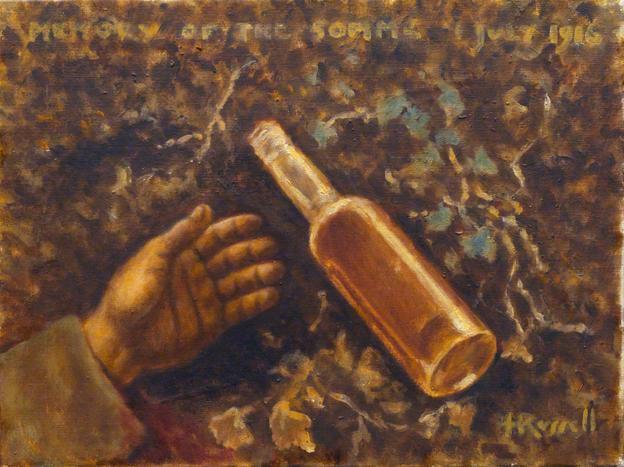
The national collection of paintings is a rich record of British history. Some paintings are like reportage, capturing scenes with high realism; others add an artistic interpretation which communicates the emotional impact of what it was like to be at key historical events.

Over the coming months, we'll be making selections of paintings showing some of these events. And we've started with 8 paintings to mark the 95th anniversary of the Battle of the Somme, one of the bloodiest encounters of the First World War.

Half of them are from the Imperial War Museum, which has the most comprehensive collection of 20th century war paintings in the UK, but we've also uncovered some striking pictures from other museums around the country.

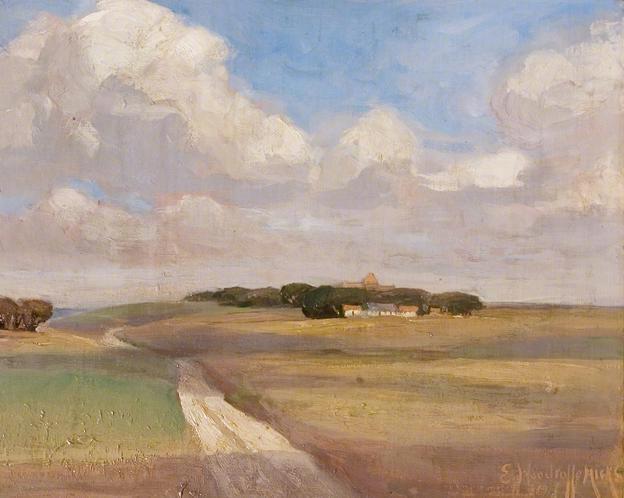
The first picture in this selection was painted in 1913, a year before the start of the First World War. It shows the peaceful fields and trees, that just three years later would be transformed into a hellish fighting ground. There is something eerily prescient about its title.

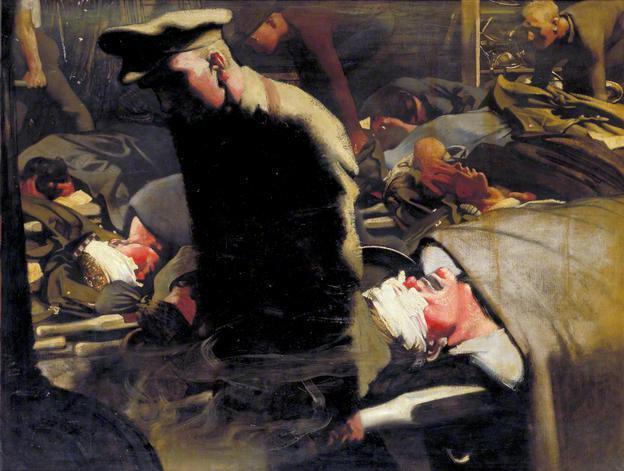
The battle began on July 1st 1916, when Allied forces led by Britain attempted to overrun a 15 mile long stretch of German trenches, near the River Somme in North Eastern France. Despite heavy shelling by the Allies in the days before the battle, the German defences remained largely intact. Even worse, the bombardment created large craters that made it harder for Allied troops to reach the German trenches. The artist William Orpen painted the following picture, and many others that captured the physical scarring of the Somme.

The British Commander, General Douglas Haig, thought that the shelling would have weakened the Germans, and the battle would be short and decisive. His troops soon found out that the plan had failed. The taking of every town and feature, resulted in days of fighting and heavy casualties. Trones Wood was one of these - a strategic point outside a small town that the Allies needed to take to make progress. Eventually after two days of fierce fighting, the British 18th and 30th divisions managed to capture the wood.

Another closely fought encounter was at Mametz Wood, where the 38th Welsh Division fought hand to hand with the Germans. The fighting was so intense, that veterans recalled the soldiers crying in each other’s faces. The poet Robert Graves fought at Mametz Wood, and wrote: ‘It was full of dead Prussian Guards, big men, and dead Royal Welch Fusiliers and South Wales Borderers, little men. Not a single tree in the wood remained unbroken.’

(You can hear Dan Snow talk about this painting in his Guided Tour of the nation's art collection: The Art of War)

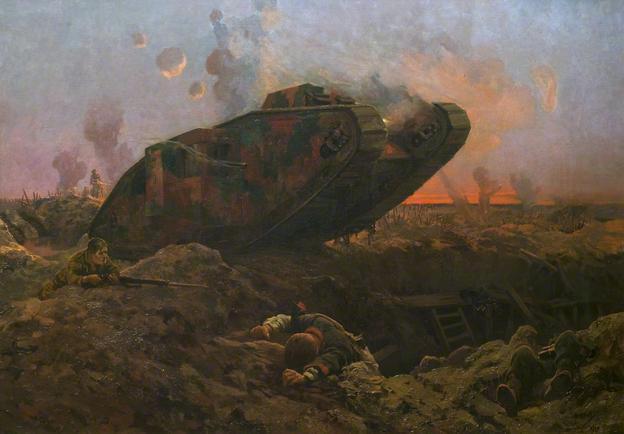
In September 1916 at the Somme, tanks were used for the first time in history. Despite the surprise element, they provided little help. Many of them were faulty and inefficient, and were left broken down on the battlefield.

The number of casualties was unprecedented. On July 1, the first day of the battle, over 19,000 British soldiers were killed. By the time the Battle of the Somme ended, there were over a million casualties on both sides, with over 300,000 killed or missing.

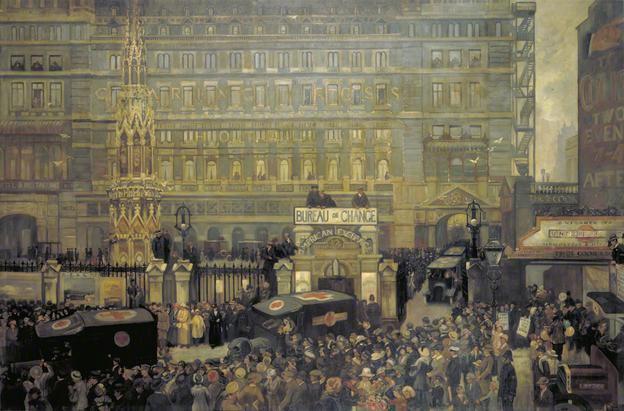
The soldiers had volunteered with dreams of returning home victorious and full of adventure stories. Those who came back were scarred for life. Here we see the wounded silently escorted out of Charing Cross station, in a very different atmosphere to the one they left in.

After over four months fighting, the battle ended. Neither side had made a significant breakthrough. The Battle of the Somme has come to stand for the horrific slaughter and stalemate that characterised so much of the fighting in the First World War.

This article was corrected on 04/07/11 after comments by WFA Web Editor.

BBC © 2014The BBC is not responsible for the content of external sites. Read more.

This page is best viewed in an up-to-date web browser with style sheets (CSS) enabled. While you will be able to view the content of this page in your current browser, you will not be able to get the full visual experience. Please consider upgrading your browser software or enabling style sheets (CSS) if you are able to do so.