
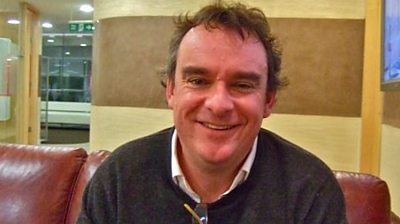
The word ‘iconic’ is overused but leafing through Matthew Graham’s list of credits, it’s hard to avoid it. When he wasn’t writing episodes of shows like EastEnders, This Life, Spooks, Hustle and a little thing called Doctor Who, he was creating or co-creating some of British TV’s most successful series from The Last Train to the all-conquering Life on Mars and Ashes to Ashes. His latest project involved writing for Redwater, the EastEnders spin-off featuring Jessie Wallace and Shane Richie. We caught up with Matthew and talked about that project, plus some of the other series he’s worked on.
Some writers can be cagey and cautious but Matthew proved completely open and forthright, allowing us a fascinating insight into some of the series we reeled off earlier. We began by asking what we can expect from Redwater…
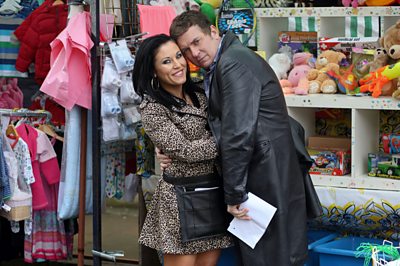
Matthew Graham: Well, you can expect it to look amazing! The lead director, Jesper [Danish helmer Jesper W. Nielsen] is a film director and has a tonal and visual ambition for this which is amazing. It’s to make Redwater as big as anything you see on terrestrial television and I’ve tried to write a cinematic episode 1. The show has a heightened realism at times – I wouldn’t go quite as far as to say ‘magic realism’ but through parts of the story we are allowed to take tonal liberties! It’s very family-based. Very character-based. And it’s very emotionally real and raw. The cast are amazing! It’s one of the best read-throughs I’ve ever been to... And it’s very dramatic!
BBC Writersroom: What drew you to the show?
MG: When I got the call about Redwater from its producer, Vicky Wharton, I was in America and I’d spent a year in the States and Australia making a big American mini-series called Childhood’s End which was a huge, alien invasion type story with massive special effects and five continents and the world getting blown up!
And so the idea of writing a family drama about a community in rural Ireland just seemed like a wonderful counterpoint to everything I’d been spending the last year doing. I pretty much said yes to Vicky during that first call! I came in and helped storyline it and found a more driving narrative for the series and I wrote episode 1. It was a real joy to come into something smaller and more intimate.
BBC WR: You worked on EastEnders many years ago and this is set in the same world. Was it like coming home?
MG: Yes! I was around when Tony [Jordan] devised the Slaters and I was around when we all created Alfie Moon. I LOVED writing for Kat and Alfie. They were two of the best characters to write for. They’re so funny and tragic. You can put big, funny gags into their mouths and it works… Or you can break people’s hearts with them. So that opportunity to write for them again was irresistible.
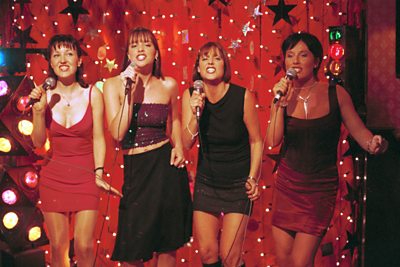
BBC WR: I think Kat is up there with the greats of soap. Even if you don’t watch the show, you tend to know who the character is, in the same way that you once knew who Else Tanner was, even if you didn’t watch Corrie. What do you think makes her such a great character?
MG: I think, for whatever reason, Jessie [Jessie Wallace – who’s played Kat since 2000] knows how to tap into pain. Jessie has had a very big life. Had a lot of things happen to her – good and bad. And she knows how to use those things as an actor.
BBC WR: When you’re writing for her is there anything you always bear in mind? One thing that’s paramount about the character of Kat?
MG: Yeah. Hurt. Everything she does comes out of the fact she doesn’t think much of herself. So, her humour and her in-your-face qualities all come out of a place of insecurity. She doesn’t think she’s good enough. That’s what I use when I’m writing Kat.
BBC WR: You first wrote for EastEnders in the 90s. How has the business changed since then?
MG: It’s international now. When I started writing for British television, as far as the Americans were concerned, you might have been writing for Cypriot television! Apart from a couple of shows, they just weren’t interested. Now when I’m working in Los Angeles they want to talk about Happy Valley. They want to talk about Call the Midwife…
I’ve been working with a film director who loves Vera! Can’t miss an episode of it! You see, everything is international, now. There was a piece in Variety in LA last week about Redwater, so you can see there is a global expectation on almost everything we write. The writers that are going to thrive and flourish in this new world are the ones that have the confidence to stand up and be counted on an international arena!
BBC WR: I can’t speak to you without referencing a show that people probably want to talk to you about every day of your life, so I apologise in advance for mentioning Life on Mars…
MG: [Laughs] Oh, yeah! I remember that!
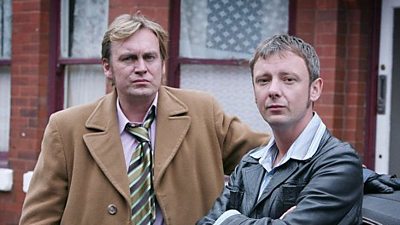
BBC WR: I’m not so much interested in the look of it, or the direction or the casting. But as writers, how did you guys come up with such an extraordinary idea?
MG: I think it was a question of us not knowing enough! We were young. We didn’t know what the rules of television were, and we didn’t care!
We’d been tasked with coming up with some shows for the BBC and so Ashley [Pharoah], Tony and me sat down and said the last thing we want to do is a cop show or a medical show… But, they’d probably be the ones that could sell. So, we set ourselves the task of setting out one police show, one medical show and one completely bonkers show that we’d really want to do. And interestingly, the bonkers one we came up with was very similar to Lost. It was about a group of people shipwrecked on an island that had ghosts and strange things happening.
When we started talking about police shows we inevitably kept going back to our favourite and that was The Sweeney. We all loved The Sweeney, so we said, Let’s do that! It hasn’t been done for years! But then, when you actually sit down in a room and start developing something like that… You have to have a woman in her bra and knickers having her bum slapped! You have to have them smoking and they have to be idly racist. And idly sexist. Not necessarily nasty, just lazy about everybody. And we said – We can’t do that! We just can’t!
So we knew we had to find a way of putting somebody into the 1970s so that figure could be us. They could roll their eyes and make the comments we should be making. That’s how it started!
In Part Two of the interview Matthew discusses the hardest thing about writing Life on Mars and the changes it underwent during development. He also talks Doctor Who, offers advice to new writers and reveals which episode of one of his own shows he’s sick of! You can read it now!
