
One of the filming locations this year will be Cemlyn Bay. As you'll already know from my last blog this place is full of terns.
There are thousands of them here and they seem to enjoy dodging my camera lens and tearing along the shingle beach at 100mph, inches off the ground which makes photographing them quite a challenge.
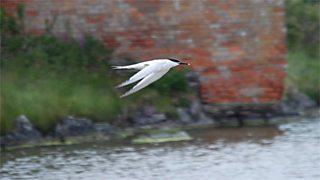
The main species of tern found here are sandwich terns which thankfully, are easy to distinguish from the other species.
If you've ever seen an arctic and a common tern then you'll know what I'm talking about.
Common, arctic, sandwich and even roseate and sooty terns have all been spotted here although the common, arctic and sandwich are the most common species.
This year sandwich terns are definitely ruling the nest as far as numbers go.
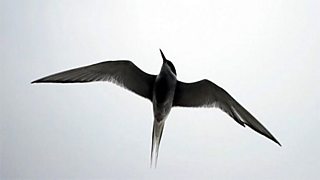
The two islands in the lagoon at Cemlyn are home to thousands as well as a healthy population of black headed gulls.
The terns nest alongside these gulls for a reason. The black headed gulls are quite a feisty mob and although they will take a few tern eggs for food, they will also protect the area from larger predators such as greater black backed gulls.
It also struck me watching that there might be another reason: it can't be a coincidence that both the terns and gulls have black heads so I think they might also nest together for sheer safety in numbers?
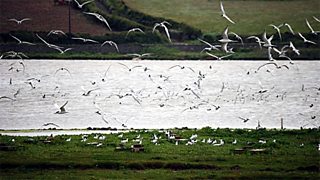
When a predator flies over, the terns 'dread' which involves hundreds of them taking off at once and flying above the nest site which is very impressive to watch.
Sometimes they'll do this just for the hell of it but it's mainly done as a defensive tactic against birds of prey, gulls and grey herons etc
Roseate terns, little terns and even sooty terns have also passed through on occasion and the importance of this site can not be over stated as it is one of the last remaining locations in Wales where sandwich terns nest.
Gull
