
Parts of Wales were treated to a wonderful display of the Northern Lights last night.
The lights are the result of the biggest solar storm in 11 years and there is a chance the Aurora Borealis will be visible again tonight but mainly in Scotland and Northern Ireland, depending on cloud cover.
On Friday 20 March a total solar eclipse will occur across the Arctic and in the far northern regions of Europe. This is the last total solar eclipse in Europe for over a decade, with the next one not visible in Europe until 2026!
The solar eclipse also takes place on spring equinox and when the moon is at its closest distance to Earth, known as a Supermoon, making it a very rare celestial event.
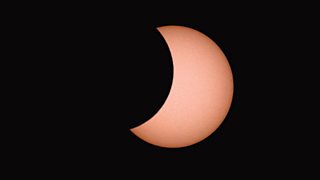
January 2011 solar eclipse by Kev Lewis
The Supermoon, however, is a new moon, which means it won’t be visible from Earth because the sun illuminates the side of the moon that is facing away from us.
The next solar eclipse taking place on the March equinox will happen on 20 March 2034, followed by two more this century in 2053 and 2072.
If you're hoping to view the partial solar eclipse on Friday morning, Wales could be one of the best places in the UK to see it! Conditions are unlikely to be perfect with some cloud cover expected, but at the moment a few gaps in the cloud are likely, so fingers crossed you will be lucky and catch it.
In Bangor, the partial eclipse will start at 8.25am, reach a maximum at 9.30am and come to an end around 10.39am. In Cardiff it will start and finish slightly earlier.
