
As the nights begin to draw inexorably in, we at BBC NOW HQ are beginning preparations for our opening concert of the 2014/2015 season at St David’s Hall, Cardiff.
I’ve picked up all my concert dresses from the dry cleaners (a trip much needed after the annual sweat-fest of the BBC Proms), I’ve got a lovely fresh block of rosin (after unceremoniously dropping and smashing mine), and I’m ready to go!
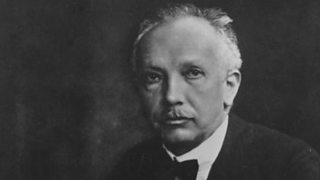
Richard Strauss
Friday evening’s season opening is one of those programmes that makes me want to purr like a satisfied cat. Sibelius’ Second Symphony is a work I’ve loved to listen to and play since I was young. I think the writing in this symphony is everything you need to know about Sibelius - exuberant brass, strings playing swirly figures like leaves or snow being whipped up by the wind, folk-like melody in the woodwind, all the ingredients are there! It is always a pleasure to play Sibelius with our Principal Conductor, Thomas Søndergård, and I hope the audience enjoy his approach to Sibelius’ music as much as I do.
However, it is the inclusion of Strauss’ Four Last Songs on the programme that really has my excitement piqued. The culmination of a life’s work, the Four Last Songs were composed in 1948, the year before Strauss’ death at the age of 85. The world in 1948 was in post-war turmoil, and was a world changing at an incredible pace.
The Four Last Songs however, are an artist’s deeply intimate summation of his own personal time and career, untainted by the events unfolding around the globe. Strauss’ love affair with the soprano voice is well documented, so it is fitting that it was the highest female voice he chose for his swan song.
The first three Songs are settings of words by Herman Hesse, and the last Song is based on a poem by Joseph von Eichendorff. The work opens with Fruhling (Spring) and is a blissful hymn to love. The second Song, September, tells of the passing of summer to autumn and closes with one of the most beautiful horn solos, which I think our Principal Horn Tim always plays exquisitely.
Charles Hazelwood explores Richard Strauss's Four Last Songs.
After the autumn of man’s day comes old age, which is the subject matter of the third Song ‘Beim Schlafengehen’ (‘Going To Sleep’). In spite of the weariness spoken of in the words, there is also the desire for the soul to fly unfettered, and if the violin solo and the soaring vocal line don’t bring you close to tears, I will personally buy you a drink after the concert. The final of the Songs, ‘Im Abendrot’ ('At Twilight’), is one of gentle, welcome release - the grateful thanks for a life well lived - and includes a short quote from his work ‘Death and Transfiguration’.
As the composer faced his final days, there was no sense of fear in his writing. When I listen to the Four Last Songs I hear the best of Strauss’ ecstasy, exuberance, decadence and tenderness. In my opinion, this is one of the greatest works of all time - I’ve played it countless times, and I never tire of it. Depending on my mood, I find something new in it every time. This is music that touches the core of one’s humanity - all of our our frailty, our passions, our undying desire to strive. To me it is perfect.
BBC NOW open their St David’s Hall season on Friday 3 October at 7.30pm. For tickets and more information visit the BBC NOW's website or call the orchestra’s Audience Line on 0800 052 1812.
The concert will also be broadcast live on BBC Radio 3 and available on iPlayer for 30 days after broadcast.
