Mabinogion series concludes with new tales from Trezza Azzopardi and Tishani Doshi

Polly March
Tagged with:
The ancient myths of the Mabinogion are firmly rooted in the Welsh national identity, offering a mystical glimpse of the medieval Celtic myth cycle and how life in this land may once have been for our ancestors.
They tell of a time when Welsh was spoken as far north as Edinburgh and make reference to some of the earliest Arthurian myths and enthralling legends of the founding of London.
Over the past five years the publisher Seren has been working with 10 prominent Welsh authors to reimagine the 11 tales for modern audiences.
The series began in 2009 with titles from Owen Sheers and Russell Celyn Jones and last week marked the launch of the final two books, Fountainville by Tishani Doshi and The Tip of My Tongue by Trezza Azzopardi.
I spoke to both writers about the task of rewriting an ancient myth for modern audiences.
Fountainville, by Welsh-Indian writer Tishani, concerns the original Arthurian tale The Lady of the Fountain and takes the reader on a bizarre journey to a surrogacy clinic in a nameless border town with gangsters, opium dens, and a mythical fountain.

Tishani Doshi. Photo: Carlo Pizzati
The retelling remains close to the original in terms of the characters and the themes, but explores some aspects in greater depth and, unlike the original, is female-centric, revolving around strong women characters.
Tishani told me: "Some of the things I wanted to explore were the ideas of portents and symbols, visibility and invisibility, the Matryoshka effect of the story within the story within the story, the body and sexuality, and the tensions between the insider and the outsider.
"I have taken liberties, and I’ve eliminated things that I couldn't fit within the restraints of the structure, but for people who know the original story well, there are many clues in my tale, which they'll recognise."
Tishani herself first learnt of the Mabinogion's existence when she heard her friend and fellow series contributor Owen Sheers retelling one of the stories.
She told me: "I remember then asking my mother if she'd ever read the Mabinogion and she said, "Mabi-what"?
"She grew up in north Wales speaking Welsh, but she left Flintshire for India over 45 years ago, so perhaps India has beaten the Welsh out of her."
When Tishani was later approached to pen a book for the series she admits to feeling daunted at tackling the task as what she calls an outsider, unfamiliar with the original. She had to re-read the original many times over a few months to see what images would stick.
"I thought it would be an interesting way for me to connect to my latent Welshness. In retrospect, I feel I would have been far more hesitant to take on an Indian myth. It's a question of ownership in a way: whose stories are these? Whose stories are these to tell? Sometimes it's good to be the outsider: there seems less at stake, the lens is positioned differently.
"Essentially, I'm a poet and I work with images so I needed to find a way into the story and I needed a voice. I also had to figure out how to work wilderness, amnesia, a widowed countess, a white lion, a serpent, a mountain ogre, an incredibly sad earl and a woman trapped in stone into a realistic novella!
"I feel I've definitely kept some of the weirdness of the original but I have created a completely different setting for it.
"My main objective when I wrote it was that it should stand alone as a story even for people who haven't read the Mabinogion."
She believes that all the fantastical stories of the Mabinogion have resonance for audiences today and will exist long after us.
Trezza Azzopardi was also unfamiliar with the mythical series before she became involved in the project, only dimly remembering it being mentioned in school.
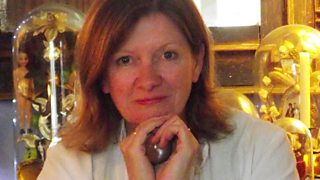
Trezza Azzopardi. Photo: Rosie J Johnson
She believes it still holds so much importance for Welsh people because the stories are so often about core values: trust, honesty, honour and bravery, and about the possibility of the fantastic in all its forms.
She said: “And they're great stories, very dramatic and sometimes quite funny. Every culture should be able to reach back in time and find the source of the thread, and the Welsh are great storytellers.
"There's so much imaginative material in the tales, it would be great to see a national schools project put in motion to give Welsh children an understanding of the Mabinogion, but more, to encourage them to create their own adaptations."
Her novella retells the story of Geraint, Son of Erbin, but she transforms the medieval heroine, Enid, into a brave 1970s girl from a council estate in Cardiff who, no matter how difficult the circumstances, always seems to get the last word.
She said: "The original tale focuses quite heavily on Geraint proving himself in battle, and being extremely mean to his innocent wife Enid.
"To a modern-day sensibility, Geraint is a bit of a prig and a bully and no sensible woman would put up with him. But it's different for children, especially ones who are forced by their parents to try to be nice to each other.
"So I made Geraint and Enid cousins, 14 and seven respectively when the story begins. Not only does this allow a bit more sympathy for Geraint, who is only being a moody teenager, but it gave me the opportunity to focus on Enid's voice - she is as unflinching as any seven year old can be, and tells it how she sees it.
"It immediately became clear that I would be reinterpreting the themes rather than the shape of the narrative itself. I didn't have any qualms about retaining the feel of the story, as it doesn't follow a modern narrative arc; rather, it ebbs and flows, with lots of repetitions. I think I could be forgiven for not following the circular style!"
She believes the story still has relevance and meaning because it reveals how the wit of a woman triumphs against the domineering force of a man: "Geraint demands that his wife is silent: she always finds a way to speak in order to save him from danger. It's an undercurrent in my interpretation - that speaking out, or keeping counsel, can have very different outcomes."
The other authors who have written books for the New Tales from the Mabinogion series are Owen Sheers, Russell Celyn Jones, Gwyneth Lewis, Niall Griffiths, Fflur Dafydd, Horatio Clare, Lloyd Jones and Cynan Jones.
