
This Friday comrades in verse Gillian Clarke and poet laureate Carol Ann Duffy return to the Dylan Thomas Centre in Swansea for an evening of poetry.
National Poet of Wales Clarke will read from her latest collection Ice, which was published by Carcanet in October, and the event will also celebrate the awarding of the Pen/Pinter prize for outstanding literary merit to Duffy.
I caught up with Clarke ahead of the event to hear a little about the inspiration behind it and get an insight into what her public role means to her.
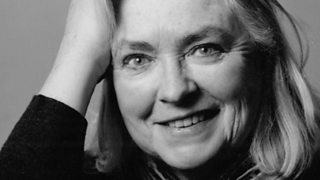
Poet Gillian Clarke. Photo: Poetry Live
Ice was penned after the bitter record-setting winters of 2009 and 2010 which saw widespread travel chaos and ruined many a Christmas homeward journey.
Clarke herself was stranded by the snow and felt as if the force of nature was asserting itself in the landscape all around her.
She told me: "The trigger was a polar bear skin rug my father bought in a house sale when I was a young child.
"I began Ice in the long winter of 2010-11, snowbound in a 12th floor flat over the river Ely in Cardiff, then snowbound again in the beauty of frozen Ceredigion.
"The snow was resonant with memory and myth, silent as my late mother's mother tongue, Welsh.
"Thaw loosens the water and the words, and the bear lives briefly once more before we drive him from the earth."
While many of us were praying the boiler man would come soon and wondering if our feet would ever feel warm again, Clarke said the bleakness of the seasons reinvigorated her, giving her a sense of "beauty, adventure, a charge of energy".
She said: "Our house is 200 years old, with no central heating, 900 feet high, among 18 acres of woodland, gorse and grazing.
"We have a small flock of sheep to care for. Food, warmth, water, all had to be managed. It was real!"
The compilation also presents commissioned pieces written during Clarke's time as National Poet of Wales, including poems for Haiti and Guardian features for Christmas and Valentine's Day.
I asked her if she ever finds the job onerous and overwhelming, when so much import is placed on what she says when she writes about public events or is commissioned to write a specific piece.
She replied: "Not at all onerous. I enjoy the challenge. It is in the Welsh tradition for a poet to be 'the voice of the tribe'. Sometimes poems are commissioned; sometimes a public event is enough to set me going.
"In the case of Running Away To The Sea, Carol Ann Duffy gave me the year 1955, no argument, for her anthology for the Queen's Jubilee year, Jubilee Lines.
“She wanted personal poems, and it was a charged year for me - my last year as a schoolgirl at a convent boarding school - so the poem wrote itself."
More recently she was inspired to pen a poem, Daughter, in response to the harrowing disappearance of five-year-old April Jones from Machynlleth, Powys, a story that had every parent or grandparent in the country holding their offspring a little closer and tighter.
Clarke said: "The poem wrote itself in 10 minutes. The child was in all our minds, and still is.
"I tried not to write about it in case of putting a foot wrong, or seeming to exploit the situation.
"I showed it to two poets, Carol Ann Duffy and Imtiaz Dharker. Carol Ann suggested changing one word, which I did. I did not send it anywhere for a while."
Ice also includes the poem Six Bells, written 50 years after the mining accident at Six Bells Colliery in Abertillery, Blaenau Gwent. The explosion killed 45 miners and rocked the Welsh mining community.
I asked Gillian how she goes about writing a response to events that have such public resonance and are so well documented and familiar to so many people.
She said: "I have to care - and who does not care about such human tragedy? We all do. I just find words for it.
"I am still enjoying the role of national poet. I have learnt that if I enter the world of poetry wholeheartedly, there is great energy to be found there. The title helps.
"Poetry has enabled me to cross boundaries, linguistic, national, international, racial, tribal. The walls fall down and a poet can go anywhere."
And while the role brings a great deal of work and responsibility, it is Clarke's husband David that keeps her going.
She said: "Without his support I could not have accepted every invitation, every commission."
I asked her if she has ever struggled with a commission. "They are all just poems, which come or they don't. No struggle - struggle shows.
"Language should sound at ease with subject. I have refused to write a poem or a cause in which I didn’t believe."
Clarke and Duffy run the website Sheer Poetry together, a resource of information about poets by poets for scholars, teachers and poetry lovers everywhere.
The pair have been known to turn to one another for inspiration and Clarke says she has the utmost respect for Duffy's "acute poetic intelligence".
"She spots a false word or a fraudulent poet at the speed of a hawk after prey!
"We are completely different kinds of poet, so it is more a question of a shared commitment to poetry's great variety, and pleasure and fun in sharing a stage.
"We do sometimes ask each other's opinion on a poem, or even a whole manuscript."
Friday's event takes place at two different times - 5pm and 7.30pm - at the Dylan Thomas Centre in Swansea.
