The changing face of BBC Daytime: Moving On, The Indian Doctor, Land Girls and more

Liam Keelan
Controller, BBC Daytime
Tagged with:
BBC Daytime has gone through a pretty significant shift in terms of our programmes over the last couple years, so it was interesting to read the BBC Trust's thoughts on Daytime in their Strategy Review and particularly where they think there's room for improvement.
While some headlines are bound to focus on the criticism, it's worth having a look at how far BBC Daytime has changed in recent times, where this overlaps with the Trust's argument for greater distinctiveness and how this all compares to our commercial competitors.
Going back to February 2008, BBC Daytime no longer continued to broadcast the Australian soap Neighbours. At the time this felt like a major loss to the schedule -after all it was the highest rating show in Daytime and had been part of the schedule for more than 20 years!
Although it didn't feel like it at the time, it was probably the best thing that could have happened to BBC Daytime as it freed up schedule space and, more importantly, money to invest in making daytime feel much more distinctive than our rivals.
So what's been done in the intervening period and what more is being done to address the Trust's particular emphasis on thinking there are too many property and collectibles programmes.
It's fair to say the three genres we've focused upon more than any other since 2008 are current/social affairs, consumer and UK-originated drama. In fact, we have increased consumer, social and current affairs programmes in Daytime by 140% - a rise from around 80 hours to almost 200 planned for 2010.
Among the many examples we're rightly proud of are Rip-Off Britain, a consumer series fronted seasoned journalists Angela Rippon, Gloria Hunniford and Jennie Bond, Missing Live, a campaigning series to reunite missing people with their families and which was commended in the House of Commons, and the award-winning The Estate We're In, which is on air at 09.15 at the time of writing, and which Philip Johnston in yesterday's Daily Telegraph called "a programme for our time... it touches on Broken Britain and the Big Society".
Another big push has come in the area of UK-originated drama. For some years we've been the only broadcaster to produce drama in Daytime and Doctors has a long history of covering a broad range of social issues, winning several awards along the way. Have a read of Diane Keen's post on this blog about the show's 10th anniversary on this blog.
Over the last year this has been joined by event drama which I really believe has changed perceptions of what we do in Daytime.
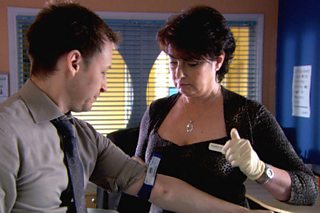
Missing, starring Pauline Quirke, undoubtedly raised the issue of missing people to a wider audience and drew greater attention to the campaign overall. Jimmy McGovern's single plays Moving On touched on many issues our audience really care about and is back this autumn with double the number of episodes.
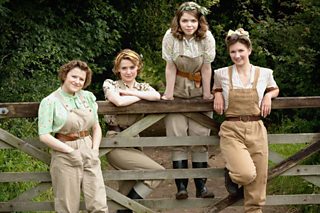
Finally, Land Girls was a first for BBC Daytime in that we'd never before produced a period drama in that part of the schedule - this too was paired with a factual series (The Week We Went to War) and was recognised with a Broadcast award earlier this year.
Several of the programmes I've mentioned, including Land Girls and Moving On, have received such acclaim that they've been repeated in peak-time. Factual programmes such as Fake Britain, Real Rescues and Dom's on the Case: NHS have also been promoted to peak time and have performed very well for the channel.
The Trust rightly gives us credit for the range of programmes in Daytime: we launched more than 50 different shows last year compared with fewer than 10 on each of our commercial rivals.
A large influx of new programmes, such as those mentioned above, does of course mean we have to lose others from the schedule to make space. Most recently Car Booty has been decommissioned alongside property series such as The Unsellables.
The Trust has also acknowledged that Daytime has already started the process of changing its mix of programmes - the challenge remains to continue to provide the broadest range of programming of any broadcaster.
Despite challenging budgets (a daytime series budget is roughly a quarter of a peak time series) the aim in daytime will always be to produce the highest quality programming other broadcasters wouldn't go near.
Sanjeev Bhaskar's new drama The Indian Doctor, set in Wales in 1963 and part of a wider season of programming on 60s, is one example in the autumn.
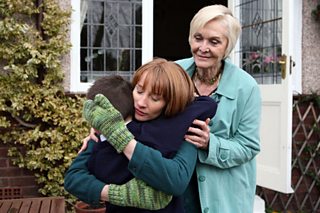
The next series of Moving On kicks off with John Fay's Sauce For The Goose, a powerful study of senile dementia with a stunning performance from Anna Massey.
It's followed by Shaun Duggan's Losing My Religion, a riveting film about Catholic hypocrisy and it concludes with Esther Wilson'sI Am Darleen Fyles, the two stars of which are actors with serious learning difficulties.
And, as Jimmy McGovern said, "This series just wouldn't have been possible without BBC Daytime's commitment to commissioning drama that takes risks. Drama with something to say. Drama that is inexpensive. Drama that is excellent value for money."
Expect many more to follow.
Liam Keelan is the controller of BBC Daytime.


