
There’s something about pop art that tends to get up people’s noses. That was certainly the case in the earliest days of the movement, at the start of the 60s, when paintings by the likes of Andy Warhol and Roy Lichtenstein began to be seen in New York. And, to an extent, pop art still polarises opinion today: with its emphasis upon celebrities, consumer products and cartoons, it can come across as superficial. How could a painting of, say, Superman count as a serious work of art?
But pop’s sassy energy and engagement with the real world we all encounter every day is exactly what I love about it. Pop is arguably the most important movement of modern art, because it brought art to the people by focusing on Coke cans, film stars and comics. It made art sexy, glamorous and fun. Yet - as I discovered while filming Soup Cans and Superstars: How Pop Art Changed the World - it was never simply some sort of dead-behind-the-eyes cheerleader for the capitalist system. And its influence is visible all around us.
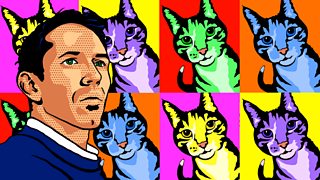
Alastair gets the pop art treatment
There’s a brilliant anecdote that helps to explain the new pop mindset. The American artist Jasper Johns, whose pioneering work in the 50s had an incalculable influence upon the development of pop art, once heard that Willem de Kooning, a senior member of the abstract expressionist art movement that was dominating New York at the time, had been badmouthing a dealer called Leo Castelli.
“That Castelli,” de Kooning supposedly said. “You could give him two beer cans and he could sell them.”
Tickled by this remark, Johns, who was already making casts of light bulbs, decided to do just that. He cast a couple of Ballantine Ale cans in bronze – and, he said, “Leo sold them.”
Like the other pop artists who followed him, Johns sensed that modern art was taking itself too seriously. If you were an abstract expressionist, you didn’t dillydally when painting a picture with frivolities such as drinking beer, but attempted on canvas to convey grand, essential truths about the human condition.
“I’m interested only in expressing basic human emotions – tragedy, ecstasy, doom,” Mark Rothko, one of the major painters associated with the group, said during an interview in 1957.
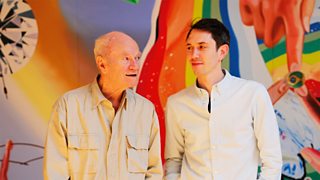
American pop artist James Rosenquist meets Alastair for BBC Four
In pop art, suddenly, the elitist, rarefied world of abstract art was confronted by the everyday culture of the street. Pop replaced the sombre self-regard of abstract expressionism with a new, more modern attitude that was nimble, witty, ironical, and flip.
This, above all, is what we find in the choice pieces of archive selected for the BBC Four Goes Pop Collection: a zesty, deadpan spirit that is as compelling today as it was when it first appeared back in the 60s.
Artist Derek Boshier explains the American influence on his Cornflakes painting
Pop Goes the Easel (1962), Ken Russell’s inventive and impressionistic documentary about the nascent pop movement in Britain, is a tour de force: the programme’s memorable style more than matches the energy of its subject matter. But there are other, less familiar treats here too, including Paul Morley’s witty investigation into the legacy of Lichtenstein, as well as the redoubtable Robert Hughes pronouncing on pop art’s biggest hitters ahead of an important exhibition of their work at the Hayward Gallery in London in 1969.
I hope that, as they have done for me, these vibrant pieces of footage will make an already lively art movement that little bit more vivid for you too.
Alastair Sooke is an art critic and author. He presents Soup Cans & Super Stars: How Pop Art Changed the World and curates the BBC Four Goes Pop Collection, a selection of archive TV programmes available to watch now in BBC iPlayer.
Soup Cans & Super Stars: How Pop Art Changed the Worldis broadcast on Monday, 24 August at 9pm on BBC Four and will be available in BBC iPlayer for 30 days after broadcast on TV.
See more about pop art on the BBC Four Goes Pop season page.
Alastair's author image was taken by Richard Cook.
Comments made by writers on the BBC TV blog are their own opinions and not necessarily those of the BBC.
