32 Brinkburn Street: I designed the set

Andrea Hughes
Production Designer
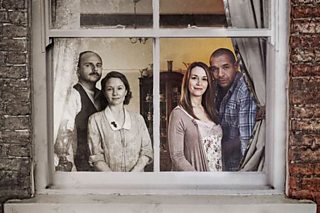
32 Brinkburn Street is a new BBC One daytime drama timed to coincide with the 2011 census. It is set in two time periods, 1931 and 2011, with each episode covering 24 hours.
The drama follows the lives of two generations of one family who live in the same terraced house in Manchester, comparing and contrasting the problems they face and how they deal with them.
This was a wonderful production to work on as a designer.
Initially, the producer, director and I proposed a colour tone to run throughout the entire piece. It was important that the drama would flow when cutting between the two time periods.
The colour palette, and some lovely transitions by the director, Dan Wilson, ensured that the drama felt like one piece rather than two stories merely stitched together.
The street location in Droylsden, Manchester was chosen before I was on board but the main house was found by the director, location manager and myself simply by knocking on doors in that street.
At the very last minute, just when we thought that the house we needed didn't exist and we were unhappily considering various alternatives, we happened across resident Derek's house which had the perfect layout to suit our script.
We were so happy as the entire drama hinged on finding this house!
The street itself is very well preserved; it even still has Victorian street lamps so this made my life a lot easier!
The residents gave us a warm welcome even when we knocked on their door at eight in the morning to ask if we could put up period netting in their window as their house was in shot!
And Derek was amazing; we removed almost all of his belongings, even his bed, so that we could recreate 1931 in his house - we did walk his dog though!
As you can imagine, a lot more of my time went into creating 1931 than it did 2011 as it had to be thoroughly researched first.
My starting point was Manchester library and its archive of photographs of Manchester residents.
There were some really good street scenes and I was able to get a good sense of the time and the people who lived in it.
Another fantastic source particularly for referencing a working class home in this period (it was a little later, 1939) was a photographic book by Bill Brandt, Homes Fit For Heroes.
Most design books representing this era tend to illustrate the current trends of the day which would really only have been relevant to the wealthy (influences which would eventually filter through to the masses but many years later) whereas this book showed how working class people of this time really lived, in a minimalist, practical way.
If you look closely, you'll see objects in practical places gleaned from Bill Brandt's images to give the sets a sense of being lived in.
Gracie's handbag is kept on a nail by the cooker where she can see it, scissors and shoe brushes are on a nail by the fire where they can be found easily every day.
The period props were sourced from a few places in Manchester (prop houses, coin collectors etc) but in particular we used a prop house in Lincolnshire which has several floors of props covering several periods.
You travel from the 1920s to the 1960s by simply opening a door. They can supply almost anything from wallpaper to carpet, to washing powder boxes to lollipops.
It's an amazing place to wander around and I could easily have spent all day exploring except that we (me and my production buyer, Ron Pritchard) had one day to travel four hours each way and to choose props for seven weeks of filming!
We had to choose our props wisely in order to keep to our budget and I chose not to use authentic period wallpaper as this is particularly expensive.
Instead I searched around to find modern wallpaper of the correct tone for our piece and which had a flavour of the period - rather than merely being a historical reproduction.
This would then be aged down - a painting term meaning to dirty the walls with dark washes of paint and which can be done lightly or heavily depending on the effect I'm after, ie, the attic set needed to feel like it hadn't been lived in for decades and was subsequently heavily aged down.
The most interesting space to design was the 1931 kitchen set; I inherited the blueprint of the space from Derek's 2011 kitchen but after that point I could take it anywhere.
Ron and I happened across a range that matched Derek's and which our special effects team brought to life with fake coals and gas bars, an item which brought a lovely atmosphere to the set.
By having a fire fuelled this way, we ensure that the size of the flames can be controlled at all times and that the correct safety measures are put in place, such as having fire extinguishers to hand and keeping the gas bottle at a safe distance outside the studio.
Dennis Henshaw (the construction manager) and his team did a wonderful job in bringing my drawings to life and helping to transform Derek's house into Gracie's house.
I was very fortunate to have a fantastic art department supporting me and a wonderful crew to work with making this one of the most enjoyable productions to date!
Andrea Hughes is the production designer on 32 Brinkburn Street.
32 Brinkburn Street begins on Monday, 28 March at 2.15pm on BBC One and BBC One HD. For further programme times, please see the upcoming episodes page.
Karen Laws, the writer of 32 Brinkburn Street, has written a post about the creation of the drama on the BBC Writers' Room blog.
Comments made by writers on the BBC TV blog are their own opinions and not necessarily those of the BBC.

