Disappearing Dad: is fiction better off without fathers?

Andrew Martin
Presenter
When I had the chance to write and present the documentary Disappearing Dad, about fathers in fiction, I immediately knew which way I wanted to go.
I had just been trying to invent a plot for a novel, and I'd been thinking it would be useful if the villain of the piece had been psychologically damaged by his evil father.
Then I'd thought, 'Hold on, I can't do that again' and looking over the plotlines of my first half dozen books it had struck me how often the father was mad, bad, just generally useless, or entirely absent.
Perhaps this explained why my latest novel has been on my father's bookshelf for the past six months with the bookmark at page 20.
In fact, I have a perfectly good relationship with my dad; it's just that if a father does play his paternal role correctly, there can be no story. He would, by means of his restraining hand, his wise counsel or financial support, step in to prevent any misadventures occurring. Much better to kill him off in chapter three, as Robert Louis Stevenson does with Jim Hawkins's father in Treasure Island.
Dad is usually dead in any decent children's story, whether it be Harry Potter or The Tale of Peter Rabbit, whose father was not only killed but also eaten by Mr McGregor.
In the course of filming, I looked at a whole library-shelf full of children's books, and dad had been killed off in almost every one.
As clips in the film will show, Mr Bennet, of Pride and Prejudice is laid-back to the point of negligence, whilst my favourite author, Dickens, specialised mainly in orphans.
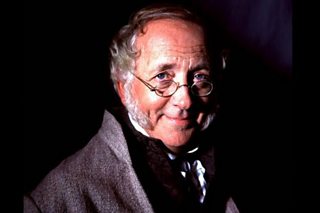
Of the fathers who do take centre stage in his books, Mr Dombey of Dombey and Son causes disaster by playing the role of the unbending paterfamilias, whereas Mr Micawber (David Copperfield) and William Dorrit (Little Dorrit) are more childish than their own children.
In the second half of the 20th century, it wasn't just authors who were against fathers, it was the whole of society. The youthquake of the 1960s, the rise of feminism, and the culture of 'cool' mean that any male hoping to exert familial authority was ripe for a kicking.
In the kitchen-sink novels of the fifties, 'father' has become dad, a risible figure who's wasted his life down a coal mine, and never had sex with anyone except the woman he married.
At least he didn't aspire to be like his children, but today's father has capitulated to youth culture. He wears shorts in summer; he drinks his coffee from a mug marked Cool Daddy; he reads books telling him to become his children's 'best mate'.
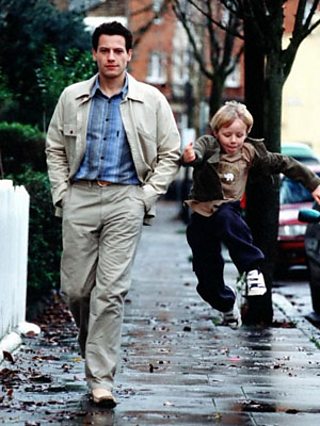
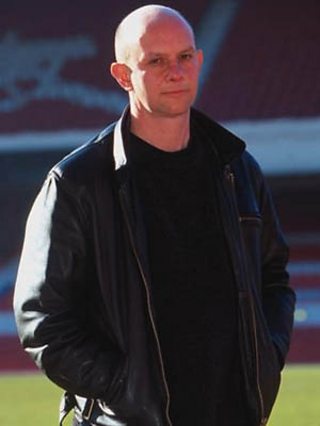
The film features clips from Man and Boy, from the novel by Tony Parsons, and About A Boy (Nick Hornby), both featuring middle aged men learning life lessons from young boys, and very excruciating is the process.
My advice to any author is: despatch dad quickly and cleanly early on, before he starts killing all the magic of your story with his male-pattern baldness, his dodgy knees, and his unsympathetic and uncomprehending or - worse still - his sympathetic and comprehending attitude towards the modern world and the beautiful young people in it.
Andrew Martin is the presenter of Disappearing Dad.
Disappearing Dad is broadcast on Tuesday, 29 June at 9pm on BBC Four, part of the Fatherhood Season.
BBC Four controller Richard Klein has also written for the BBC TV blog on the Fatherhood season.

