BBC TV blog - BBC TV blog

Archives for July 2011

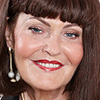
Hilary Devey: Becoming a Dragon

Blog comments are currently unavailable. Find out more.

Post categories:

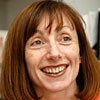
Hilary DeveyHilary Devey|12:04 UK time, Friday, 29 July 2011

Being told that I was going to be a Dragon on Dragons' Den was one of the highlights of my life, as I had been a fan of the show for many years.

In the late 1990s, I founded Pall-Ex, a distribution network that revolutionised the process of transporting goods across the UK and Europe, making the movement of smaller consignments of palletised freight quicker and more cost-effective.

The success of my business, and perhaps the incongruity of being a woman CEO in a traditionally male sector, led to my being asked to speak at various charity events and business functions.
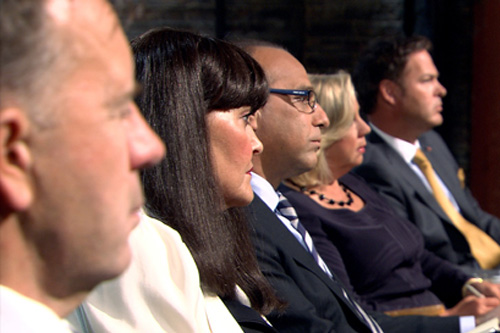
Dragons in their den

The Dragons: Duncan Bannatyne, Hilary Devey, Theo Paphitis, Deborah Meaden and Peter Jones

Though nervous at first, I discovered that I had a flair for, and enjoyed, communicating my beliefs about business, encouraging others to achieve.

I realised that people were genuinely interested in hearing about the often difficult professional and personal events that I had encountered on the way to the top.

It was this, I suppose, that led to the call from the BBC.

Though it is an entertaining programme, and, let's face it, some good business ideas do slip through the net because the entrepreneurs fudge their pitches or the sums just don't add up, Dragons' Den does get people thinking about self-reliance, sacrifice and having the guts to develop a business idea and then be brave enough to hold it up for scrutiny - for better or for worse!

It's hard to pick any specific pitch from a previous series as being my favourite, but the ones that are the most memorable are those where the would-be entrepreneurs have the personality to match their product - Levi Roots, of course, being the best example.

Gone are the days, particularly in retail, where a founder or CEO can get away with being anonymous and hide behind a desk.

The general public wants to buy into the passion of the creator as much as they want to believe in the physical product.

I like to think that if the younger me had stood there in the Den in front of these intimidating business people, I would have held my nerve, done my homework, and certainly I could have done with the support when I was starting out.

In order to see this content you need to have both Javascript enabled and Flash installed. Visit BBC Webwise for full instructions

A trailer for the new series of Dragons' Den

I didn't really know the other Dragons too well before filming, but they were all really encouraging to me as the new girl.

I admire Deborah Meaden a great deal, and I don't think that the fact that we were the women in the Den meant that we behaved so differently to the men when it came to making investments.

After all, I did not succeed in business because I was a woman. I succeeded because I was determined and tenacious.

If anything informed my decisions when it came to investing, it was experience gained within my own business.

We have been involved with the nationwide transport of just about every type of freight under the sun, and so I have insight into a number of different sectors.

I shouldn't give anything away about which investments were made on the show, but I can say that I went for some companies which surprised even myself, so it is going to be fun to develop them.

It's an intense atmosphere in the Den, and a lot of entrepreneurs do suffer from nerves, but I like to think that I was one of the more tolerant and patient Dragons when it came to encouraging people to get to the end of their pitches.

However, I had a lack of sympathy for those who stood before me with dodgy figures or ludicrously over-inflated valuations of their own businesses.

You only get one shot in the Den, and however charming you might be, get your sums wrong at your peril.


Hilary Devey is a Dragon on Dragons' Den.

Dragons' Den is on BBC Two and BBC HD on Sunday, 31 July at 9pm.

For further programme times, please visit the upcoming episodes page.

You can press red after the show to get the inside story on the investments made in the Den.

See the BBC News profile on Hilary Devey to find out more about the new Dragon.

Comments made by writers on the BBC TV blog are their own opinions and not necessarily those of the BBC.
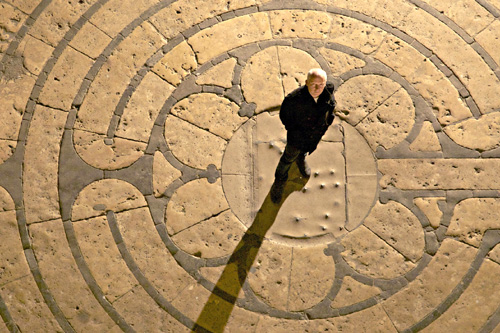
The Code: Revealing the secret

Blog comments are currently unavailable. Find out more.

Post categories:

Marcus du SautoyMarcus du Sautoy|11:15 UK time, Wednesday, 27 July 2011

When I was 12 my maths teacher took me aside after one lesson and let me into a secret that changed my life forever.

Mathematics, it turned out, was more than just the long division we were practicing in the classroom.

He started to tell me fantastic stories that were written in the language of mathematics.

Marcus du Sautoy - The Code

He revealed to me a hidden code that explained why the world looks and behaves the way it does.

But not only that. By tapping into Nature's code he explained how we have been able to change our surroundings, build extraordinary cities and develop amazing technology that has resulted in the modern world we currently live in today.

Mathematics, he told me, is the code that makes sense of our universe.

In my new series for BBC Two called The Code, I hope to let everyone in on that secret code of mathematics that my teacher shared with me behind the back of the maths block.

The Code changed the way I see the world and I hope this series will let you see things through the eyes of a mathematician.

We travel to Pixar animation to reveal how the film-makers are using mathematics of fractal geometry to create the virtual worlds of films like Up and Cars.

We interview an ex-FBI agent who uses mathematical equations to locate serial killers.

We witness a plague of cicadas in Alabama which only happens every 13 years, a prime number which the cicadas cleverly used to avoid other species in the forest.

In order to see this content you need to have both Javascript enabled and Flash installed. Visit BBC Webwise for full instructions

Marcus du Sautoy learns about the periodical cicada

And we discovered how the mathematics of pattern searching helps you to become the rock paper scissors world champion.

Hopefully after you've watched The Code you'll never look at mathematics or the world in the same way again.

But what makes this series so unique is that it is more than just a television programme.


Running alongside the programmes is an exciting mathematical treasure hunt full of engaging puzzles, addictive online games and clever conundrums that will take you on an exciting mathematical journey of discovery.

Called the Code Challenge it is an experience that combines the intrigue of solving a murder mystery with the addictive playfulness of Angry Birds.

For me, mathematics is not a spectator sport. The best way to appreciate and get excited by the power of this extraordinary subject is by immersing yourself actively in its world.

The Code Challenge is a fantastic way to play and explore the mathematical language of the universe.

And not only is it fun to play but there is a unique and valuable prize awaiting one talented player.

So join me on my journey and let me reveal to you what mathematics is really about.


Marcus du Sautoy is a professor of mathematics and the presenter of The Code.

The Code is on BBC Two and BBC HD on Wednesday, 27 July at 9pm.

For further programme times, please visit the upcoming episodes page.

For episode guides from Marcus du Sautoy and clues to The Code Challenge, please visit The Code blog.

Comments made by writers on the BBC TV blog are their own opinions and not necessarily those of the BBC.
Restoration Home: Being the private eye of the past

Blog comments are currently unavailable. Find out more.

Post categories:

Kate WilliamsKate Williams|12:20 UK time, Tuesday, 26 July 2011

The private eye of the past, in Caroline Quentin's words, is my role in Restoration Home.

As the social historian on the series, my job is to investigate the histories of the six properties on the show, and the people who lived in them.

Each one has been an incredible journey of discovery - into stories of war, inheritance, scandal, elopement, betrayal and true love.

In order to see this content you need to have both Javascript enabled and Flash installed. Visit BBC Webwise for full instructions

Dr Kate Williams discovers the will of the first owner of Stoke Hall

The six houses are not only impressive and original in an architectural sense, they also have histories that I could hardly believe when I began researching in the archives.

Moreover, their stories tell the story of Britain - the Civil War, the Industrial Revolution, enclosure and social changes.

My research was a case of visiting archives and museums across the country - some public and some private.

I spent days deep in fragile wills, maps, letters, diaries and portraits as the wonderful stories of the houses became clear.

The camera shows my moments of discovery - behind them lay hours of work with giant boxes of documents and letters.

At times, it seemed as if the answers would never be found - and then the most incredible sources turned up.

At the same time, my fellow investigator, architectural expert, Kieran Long was working hard on the architectural histories of the properties.

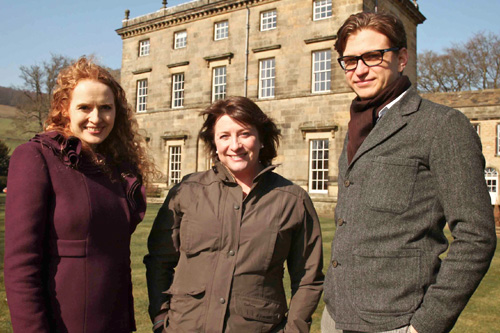
Dr. Kate Williams - Social Historian, Caroline Quentin - Presenter, and Kieran Long -Architectural Expert

Dr Kate Williams, Caroline Quentin and Kieran Long

I was fascinated by his findings about architects, design and craftsmen - his discovery of the Smethwick makers of the stained glass window of Pensford Church was just one of the wonderful things he found.

It just shows how fortunate we are in this country to have such comprehensive and well-kept archives.


I receive many letters from people hoping to research their own houses.

Every house is different, but any researcher would find local archives and record offices invaluable.

Some archives and record offices are housed in your local museum or library, others have their own stand-alone building.

Wherever they are, they are a treasure trove.

There is often information there about the designers, architects, builders and occupants of the most ordinary looking houses.

Our small island is crammed with an incredible history - which touches every part of our lives.

I loved all the periods featured in the show, but I was particularly fascinated by the stories from the 18th and 19th Centuries.

It's impossible to pick a favourite, but I loved reading about the different families who had owned Stoke Hall and Stanwick Hall.

As well as the scandalous history of Calverton Manor, and the stories of rescue for Pensford Church and the Pumping Station.

And the electoral shenanigans of Big House, the final property in the series, are pretty hard to beat.


I became entirely caught up in the history of the properties - and I often find myself talking in the present tense about events that happened hundreds of years ago.

It's impossible not to do so when you have histories as fascinating and exciting as those for Restoration Home!


Dr Kate Williams is a social historian and one of the presenter of Restoration Home.

Restoration Home continues on BBC Two on Tuesdays at 8pm.

For further programme times, please see the upcoming episodes page.

Comments made by writers on the BBC TV blog are their own opinions and not necessarily those of the BBC.
British Masters: My one big chance to get even

Blog comments are currently unavailable. Find out more.

Post categories:

James FoxJames Fox|16:00 UK time, Monday, 18 July 2011

A few years ago I was at a conference on 20th Century painting. As I queued up for a coffee in the canteen I overheard a French historian describe Britain as "the land without modern art".

His friends all laughed in agreement. I was livid. And ever since I've been determined to prove them wrong.

In order to see this content you need to have both Javascript enabled and Flash installed. Visit BBC Webwise for full instructions

James Fox discusses Stanley Spencer's The Resurrection, Cookham

That's why you may notice the occasional gleam of vengeance in my eyes during British Masters.

Because when, last May, the BBC asked me to make this series, I knew it was my one big chance to get even. I just hope they get BBC Four in France.

In British Masters I argue that, despite the endless talk of Paris and New York, some of the best art of the 20th Century was actually made here in the UK. We just haven't told anyone about it yet.

This series plans to do just that. It focuses on the lives and work of some of our greatest modern painters.

There are familiar names like Stanley Spencer, Francis Bacon and David Hockney. But we also look at some superb artists you'll probably never have heard of.

I promise you that there will be some jaw-dropping stories.

Episode one investigates a murder mystery contained within a painting by Walter Sickert.


Episode two explores the artistic fall-out of Stanley Spencer's extraordinary romantic life.

And episode three concludes with the heartbreaking suicide of the artist Keith Vaughan. I'm sure it will move you. It certainly brings tears to my eyes.

But there won't just be human stories. If all you want to see is some terrific art, you won't be disappointed.

Well, I hope you won't be disappointed. Because we all worked really, really hard on the series.

In order to see this content you need to have both Javascript enabled and Flash installed. Visit BBC Webwise for full instructions

The story behind Walter Sickert's painting Mornington Crescent Nude

The truth is that when I heard I'd be presenting a BBC documentary I was expecting glamour and dancing girls.

Instead I got repeated 4am starts, endless journeys in smelly vans, and a disgusting diet of sweets from service stations.

But we still had some great moments making British Masters.

The most memorable was filming at Newmarket for episode two.

The sun was rising, thousands of horses were galloping across the grass, and the echoes of their hooves thundered all around. It was one of the most surprisingly beautiful things I've ever seen.

I'm really pleased to have made British Masters. After all, no matter how many people watch it, it will still be a lot more than come to my university lectures.


Dr James Fox is an art historian and the presenter of British Masters.

British Masters continues on BBC Four on Mondays at 9pm and is available in iPlayer until Saturday, 6 August.

For further programme times, please see the upcoming episodes page.

You can watch a guided tour by James Fox on 20th Century British painters on the BBC's Your Paintings site.

Comments made by writers on the BBC TV blog are their own opinions and not necessarily those of the BBC.
At the mercy of The Great British Weather

Blog comments are currently unavailable. Find out more.

Post categories:

Tomasz SchafernakerTomasz Schafernaker|11:20 UK time, Wednesday, 13 July 2011

Do cows really lie down on the ground before it rains? Does a farmer in Cumbria really rely on a red sky at night?

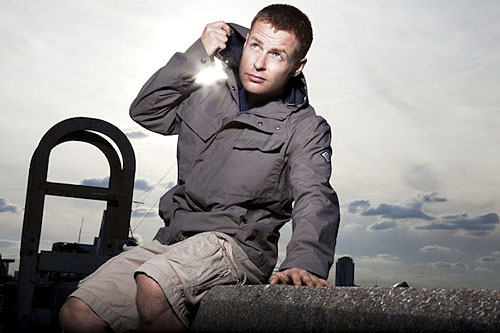
I'm the specialist meteorological reporter on BBC One's The Great British Weather, where we put weather folklore like this to the test and demystify some of the science behind elements of the weather in this country.


The Great British Weather is a four-part show that taps into our obsession with weather, and will come live from a different location each week.

In order to see this content you need to have both Javascript enabled and Flash installed. Visit BBC Webwise for full instructions

Tomasz demonstrates how to make a rain gauge

I think our national obsession comes from the weather being so changeable and our seasons seeming to be so unpredictable.

I'm struggling to think of a country in Europe which can have a gloriously hot April but a cool and miserable June. Let's face it, our seasons seem to have gone bananas.

One of the reasons why I studied meteorology is because I wanted to understand why the atmosphere does go bananas.

Sometimes it's hard to imagine that a storm quite literally pops out of thin air.

Giving a weather forecast on the news is one thing, but explaining the physics of why things "pop out of thin air" to a live audience will be a new challenge for me.

I always believed that, in this day and age, entertainment value is almost as important as the science itself.

So, in the show, we will attempt a range of fun and bizarre experiments, some of which can be recreated at home using household items.

It's an interactive show so we're counting on you, the audience, to get involved.

We will attempt to create a snapshot of the weather across the whole country as you show us what the weather is like in your location, live on air.

We will, of course, be at the mercy of the traditional British summer, which is exactly the point of having the show live - the crazier the weather the better.

Alexander Armstrong will be hosting the show, along with Carol Kirkwood and Chris Hollins.

Other familiar faces, such as Michael Fish, Bill Giles and John Kettley, will also make guest appearances.

Tomasz Schafernaker

Tomasz Schafernaker

The impact of the weather in British history will also be discussed.

D-Day was an incredibly complex wartime operation that needed a specific combination of weather factors in order to be successful.

In fact, weather information was so vital in those days it was actually classified information, as whether or not to invade would be based almost entirely on the weather forecast.

We will also try to explain how it can rain frogs and fish, while Chris Hollins goes fishing for sharks and Carol Kirkwood attempts to see the inside of a cloud.

The first episode is live from St Ives, which is on the edge of the Gulf Stream.

It's the most southern tip of the nation and one of the first places to get blown to bits and drenched with rain, as weather systems march in off the Atlantic.

We'll also be broadcasting from the Lake District, Scotland and London. Whatever the weather, we'll be there!

Tomasz Schafernaker is the meteorological reporter for The Great British Weather.

The Great British Weather is on BBC One at 7.30pm on Wednesday, 13 July.

If you use Twitter, you can follow the show @BBCbritweather or use the hashtag #bbcgbw.

The Great British Weather team want your weather pictures - you can send them to [email protected]. Please visit the show's site for terms and conditions.

Find out more about the science behind popular weather myths from Tomasz at the BBC News Magazine.

Comments made by writers on the BBC TV blog are their own opinions and not necessarily those of the BBC.

Roger: Genocide Baby

Blog comments are currently unavailable. Find out more.

Post categories:

Nick AndrewsNick Andrews|13:13 UK time, Tuesday, 12 July 2011

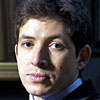
The idea for Roger: Genocide Baby sparked to life as I sat watching BBC Breakfast, munching on some oats.

A young British actor, Roger Nsengiyumva, was promoting his new film Africa United and I heard him say something like, "Yes, I was born in 1994 during the Rwandan genocide."

I put my bowl down and picked up the phone. "Roger's agent please..."

Days later I was at Roger's family home in Norwich asking them to let me tell their story.

And the story is rather extraordinary.

In order to see this content you need to have both Javascript enabled and Flash installed. Visit BBC Webwise for full instructions

Roger visits Nyakabanda, where his father was killed

Roger was born only days into the Rwandan genocide. He only survived thanks to the raw courage of his mother, Illuminee, who spent 100 days hiding herself and her newborn baby from the death squads.

They cowered in the family home and in a number of safe houses around the city.

His father, John, was tragically hacked to death by the neighbours.

Remarkably, Illuminee has come to forgive the men who killed her husband. Roger has not.

The BBC team who commission programmes asked me, as the director, to use Roger: Genocide Baby as a means of exploring forgiveness, a universal theme which we can all relate to in some way.

This was absolutely fine and would give the story added depth.

But for me, personally, this film would take me back to a harrowing chapter in my own life.

I grew up in Rwanda, my parents were Christian missionaries and we lived in the capital city Kigali.

I was 15 when the genocide began. It's odd looking back.

I remember 10 days of fear, and then whispered rumours of Tutsi friends being killed, the sounds of guns and grenades, the whiff of death. Eventual escape.

We had a Tutsi friend who was living with us. We had to leave him behind hiding in our attic. He survived, just.

Watching the archive from that time hasn't been easy. It brought back sad memories.

I travelled out to Kigali a few days before the crew. Rather than stay at a hotel, I crashed at my old house, slept in my old bed, in fact.

This was the room where my brothers and I hid from the gunfire - very strange.

Our old home is now used as a guest house in the heart of the city.

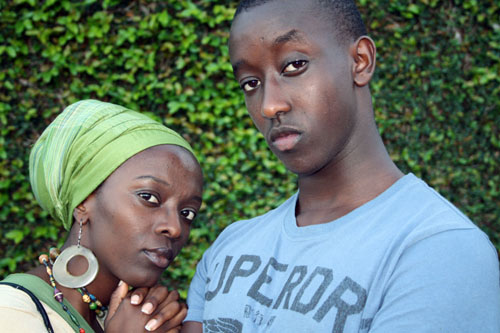
Rapper Miss Jojo and Roger

Rapper Miss Jojo and Roger

I wandered around the garden and saw the remnant of me and my brother's tree house - shattered by a mortar bomb during the conflict.

I felt melancholic and looked forward to the team arriving.

I hired a 4x4, bought litres of bottled water, grabbed a whole bunch of permission forms and met Ayuub, our translator.

My crew - Robe (camera) and Alistair (sound) - arrived safely with Roger and we filmed the scene at his uncle's house that same evening. We were up and running.

So, I found myself with Roger (only a year older than I was during the genocide) wandering the killing fields of Rwanda, telling the grim tale of one tribe attempting to eradicate another.

A killing frenzy of ferocious efficiency: 800,000 Tutsi dead in 100 days. That's six people every minute of every hour of every day.

We met survivors and killers; rappers (The Brain, Miss Jojo, Ryderman) who dreamed of a tribe-less Rwanda.

Roger attended a memorial which became a mass outpouring of grief at the national stadium. It was awful to witness. I wanted to run away.

The cacophony of 30,000 people wailing was hideous. You'll know what I mean when you watch the scene.

Not long after my own family's escape from Rwanda I remember watching an episode of BBC Panorama, presented by Fergal Keane, and called Journey into Darkness.

Fergal discovers a terrible massacre at a place called Nyarubuye.

We travel to Nyarubuye in the film. It's an eerie place. I never want to go back.

In order to see this content you need to have both Javascript enabled and Flash installed. Visit BBC Webwise for full instructions

Roger visits the site of the Nyarubuye massacre

I asked Panorama for permission to use the footage they shot in 1994. It's unbelievable.

Like the footage of Auschwitz or Belsen, none of us like watching it but it's important that we do.

It's only 17 years ago, but watch five seconds of the footage and the sheer horror of genocide, any genocide, comes screaming back.

I remember watching the footage at the age of 16 and it has stayed with me ever since.

As well as the horror, we met inspiring men and women - Tutsi and Hutu - involved in the reconciliation process.

There is hope here. And Roger felt it too. It challenged his reticence to forgive. It challenged me.

Roger's mum wrote a diary about her harrowing experience. It's an extraordinary document - an insider's guide to the horror of genocide.

I decided to punctuate the film with these diary extracts. And we've animated them to bring her terrifying memories to life.

I'm so proud of this film.

It was wonderful to be back in Rwanda. It was a privilege to make a film about forgiveness. And Roger bravely shouldered the responsibility.

Nick Andrews is the director and producer of Roger: Genocide Baby.

Roger: Genocide Baby is on BBC Three at 9pm on Wednesday, 13 July, and is part of BBC Three's Extraordinary Me season.

Comments made by writers on the BBC TV blog are their own opinions and not necessarily those of the BBC.
How we transformed Lark Rise's sets for The Night Watch

Blog comments are currently unavailable. Find out more.

Post categories:

Martin BoddinsonMartin Boddinson|09:50 UK time, Monday, 11 July 2011

I am the production designer on The Night Watch and prior to that I was production designer on Lark Rise To Candleford. This was convenient really because, as you will see later, the two shows are inextricably linked.

I am responsible for the look and feel of the show. It is my job to convince you that you really have stepped back in time to the Blitz era - that you are living and working in London and experiencing those events alongside the characters in the film.

I am responsible for not only designing the sets - both interior and exterior locations - but also for the props required to dress these sets, the vehicles that will drive along the roads, the sandbags that will line the streets, even down to the street signs.

In order to see this content you need to have both Javascript enabled and Flash installed. Visit BBC Webwise for full instructions

Trailer for The Night Watch

All of this information and detail needs to be clearly researched. The Blitz is a period of history that many people alive today are more than familiar with.

We did this by using the internet, extensive library and photographic research, newsreel footage, and by talking to people who lived through it.

One of the provisos was that, due to the inevitable budgetary restrictions, we would have to utilise the interior stage sets of Lark Rise (standing in two industrial units just outside Bristol) for The Night Watch.


This was not an inconsiderable feat. How do we turn late Victorian interiors into 1940s interiors without you noticing the joins?

I had already read Sarah Waters' book a few years before, but after reading the script of The Night Watch it seemed very important to re-read the book for inspiration and for information.

There is so much detail in the book about the way some of the rooms are decorated, the way that they are dressed, the little details that provide so much information about these very complex characters.

So, for instance, Sarah Waters writes that in the introduction agency waiting room, there is a Christmas cactus in a pot. Well, on our set there is a Christmas cactus in a pot.

Some, in fact lots, of these little dressings go unnoticed by many people. The camera can only focus on one thing at a time and that is usually the actors.

But anything that we, as an art department, can do to enhance the environments that we have created for these characters to live, and move and talk in, can sometimes make a big difference.

We had about two weeks between finishing shooting on Lark Rise to the first day of shooting on The Night Watch, though we had been prepping for two or three weeks prior to that.

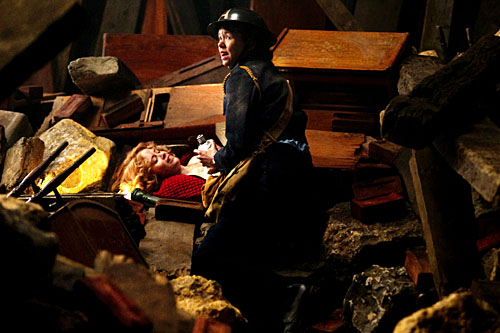
Kay, played by Anna Maxwell-Martin, stands over Helen, played by Claire Foy, lying in the rubble.

Kay (Anna Maxwell-Martin) helps Helen (Claire Foy) at the bomb site

I think we built and dressed around 85 interior and exterior sets and locations. That's an enormous number, especially in the time scheduled both to prepare the show and to actually film it.

Our scheduled four-week shooting period was an incredibly short space of time for such a large, complex and detailed piece.

The script heading might say, for instance, "Julia's flat" but within Julia's flat would be Julia's study, Julia's bathroom, Julia's bedroom and so on.

The production team had to schedule so that the sets we needed first for The Night Watch had to be used early in shooting Lark Rise so that we could take them over and transform them.

It would be interesting to know if you noticed that Mr Mundy's house was actually the Pratt sisters' parlour, the introduction agency was the Golden Lion hotel function room, and Julia's hall, kitchen and study was, in fact, The Golden Lion reception area?

We filmed The Night Watch in November and December 2010 - one of the coldest winters in living memory - often filming in temperatures in the region of minus five to -10 degrees, sometimes lower.

Much of the bombsite debris that we laid down on the ground (most of which, incidentally, was made of fibreglass and rubber) was actually freezing to the ground, making it difficult for the props team to move it around in between takes.

We also used real furniture that we had purchased from reclamation stores and broke up to use as dressing, particularly on the bombsite locations.

The eagle-eyed amongst you may have noticed the same piece of dressing table used in two or three different locations.

None of the exterior sets of Lark Rise were used for The Night Watch. Instead we filmed outside scenes in Bath and Bristol as a stand in for London.

The largest of the bombsite locations was a place called the Grosvenor building in the centre of Bath.

This was used for a number of locations including the prison canteen and visiting room (they were the same room redressed), the underground tube corridor, and the bombed-out cellar where Kay rescues Helen.

In order to see this content you need to have both Javascript enabled and Flash installed. Visit BBC Webwise for full instructions

Helen is rescued from the rubble

The exterior of that building was used for the bombsite location, where Kay is searching frantically for Helen.

The opening shots of that sequence, where the camera pans down off the window of a bedroom and then tracks past the exposed broken edge of the building, was all shot in one night.

The damaged building that you see was the real building, though heavily braced and supported, and visited by BBC Health and Safety before we were given permission to use it.

The Night Watch was, without doubt, the hardest job of my career, for many reasons.

But, on the night when we were filming the scene where Kay attends the bombsite where she finds the dead children in the Anderson shelter, one of the extras used in that scene came up to a member of my department.

They said that as a child, during the Blitz, they used to play on bombsites like that and, to quote, "It used be just like this, it really takes me back."

In moments such as that you feel, well, maybe regardless of everything that was against us - time, money, etc - maybe we did our job properly. Maybe?

Martin Boddinson is the production designer on The Night Watch.

The Night Watch is on BBC Two at 9pm on Tuesday, 12 July.

Read a post by The Night Watch and Lark Rise To Candleford's costume designer, Pam Downe, on the BBC TV blog.

Comments made by writers on the BBC TV blog are their own opinions and not necessarily those of the BBC.
Pointless: How I became the co-host

Blog comments are currently unavailable. Find out more.

Post categories:

Richard OsmanRichard Osman|12:57 UK time, Wednesday, 6 July 2011

So Pointless started at 5.15pm on BBC One on Monday, launching with a week of celebrity programmes.

We've already done over 100 shows on BBC Two and now we're making the big leap up to BBC One. Very exciting.

In one swoop I will go from being "Whassisname, that bloke from that thing on BBC Two," to "Whassisname, that bloke from that thing on BBC One".

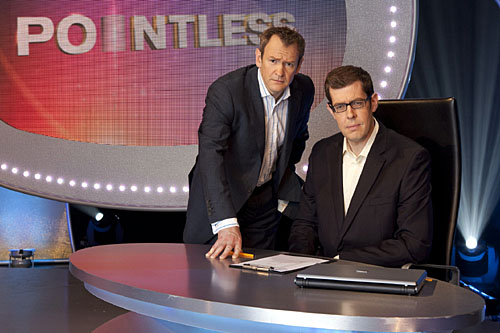
Alexander Armstrong and Richard Osman on the set of Pointless

Alexander Armstrong and Richard Osman

If you haven't seen it - for example, you might have a job - Pointless is a quiz show where you win by giving obscure answers to simple questions.

We also like to have some fun along the way.

The wonderful Alexander Armstrong is the host and I'm his 'pointless friend', providing extra facts, trying to tell jokes, and adding to the Brokeback Mountain-style sexual frisson of the show.

I had never appeared on TV before. My background is behind the camera.

First as a writer on shows like Have I Got News For You and Whose Line Is It Anyway?, and then as a producer on shows as varied as Deal Or No Deal, Total Wipeout and 8 Out Of 10 Cats.

My new TV presenting career came as an unexpected but lovely surprise. So how did it happen?

Well, my day job now is creative director of Endemol UK, and part of that role is trying to sell new shows to TV channels.

The Endemol creative team had come up with the format for Pointless and we headed off to the BBC to do a run through of the show for the brilliant Liam Keelan and Pam Cavannagh, who run the whole of BBC Daytime.

In this run through, the executive producer of Pointless, Tom Blakeson, played the role of the host, and I played the role of co-host.

Liam and Pam were sufficiently impressed/hoodwinked that they bought the show. Hooray!

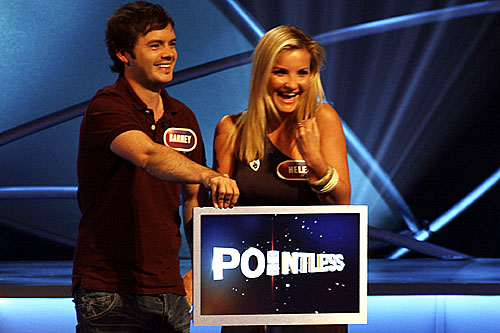
Barney Harwood and Helen Skelton on Pointless Celebrities

Barney Harwood and Helen Skelton on Pointless Celebrities

Alexander was the perfect choice as host - warm, witty, clever, sickeningly talented and handsome - but Liam and Pam wondered if I might like to be the co-host for real?

I pretended to consider the offer for nearly two to three seconds, but inside I couldn't have been more excited.

I love television, I love its presence in the corner of every living room in Britain, I love the sense of belonging that television uniquely can bring.

To me, actually appearing on TV - in a quiz, my favourite thing, filming at BBC Televison Centre - is a dream come true.

Excuse me while I get teary-eyed for a bit. I just hope you enjoy the show as much as we enjoy making it.

So, that's the story so far. Now, though, it's the move to BBC One, to the slot filled so brilliantly for so long by Anne Robinson. We're not the Weakest Link... hello.

Richard Osman is the co-host of Pointless Celebrities and Pointless.

Pointless Celebrities is a week of special episodes on BBC One at 5.15pm until Friday, 8 July. The regular quiz show Pointless resumes on BBC One at 5.15pm on Monday, 11 July.

Comments made by writers on the BBC TV blog are their own opinions and not necessarily those of the BBC.
Stolen: I work with trafficked children

Blog comments are currently unavailable. Find out more.

Post categories:

Christine BeddoeChristine Beddoe|08:46 UK time, Monday, 4 July 2011

For the past six years I have been the Director of ECPAT UK - End Child Prostitution, Pornography and Trafficking. We are a leading children's rights organisation campaigning against child exploitation.

Over the years there has been a variety of films, TV programmes and books focusing on the issue of child trafficking and some have been more authentic than others.

When Stephen Butchard (writer) and Sita Williams (executive producer) from Open Door Productions first came to see me in early 2007, they showed immense patience and interest as we sat in a cafe around the corner from my office and talked for hours about the plight of children trafficked to the UK.

I knew then that Stolen would be a different production - one that captured the vulnerability of trafficked children, yet placed the child at the centre of the story, rather than the criminals that traffic them.

In order to see this content you need to have both Javascript enabled and Flash installed. Visit BBC Webwise for full instructions

Trafficked child Rosemary escapes from her safe house

That was followed up over the next year or so with many questions and answers and, to my pleasant surprise, the draft script was sent over for my comment on authenticity.

Such generosity is rare and it is indicative of the passion and commitment of the production team.

Stephen's script had encompassed most of the details that we had discussed earlier that there wasn't anything specific I wanted to change.

The script was so moving that I couldn't wait to see it on film.

When Sita later advised that Justin Chadwick would be the director of Stolen, I knew immediately that the children cast for the leading roles would be treated in the most sensitive way.

And to have Damian Lewis play cop-with-a-heart DI Anthony Carter it was evident that this would be an intelligent and honest portrayal of child slavery in the UK today.

The plot follows three children trafficked into Britain - Rosemary from West Africa, Kim Pak from Vietnam and George from the Ukraine.

All their stories resonate strongly with ECPAT UK.

We hear about similar cases on a daily basis and we help the victims by holding the government to account, ensuring that it should do everything possible to protect the victims and prosecute the perpetrators.

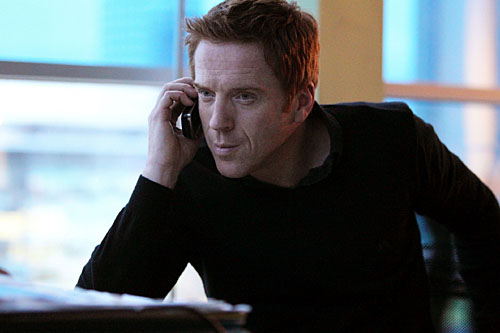
Damian Lewis as DI Anthony Carter in Stolen.

Damian Lewis as DI Anthony Carter

As in Rosemary's case, children who are trafficked are often threatened by their traffickers, and groomed not to trust anyone else even, in this case, a well-intending DI Carter.

ECPAT UK believes every child suspected of being trafficked should have a 'guardian', one person they can trust, who would have responsibility to care for and support them, interpret seemingly incomprehensible behaviour and take decisions based on the child's best interest.

It's something that doesn't exist at the moment.

Police and other professionals who have not come into contact with child trafficking often don't understand how traffickers control their victims and how children are disciplined to respond with silence or with a series of well practised lies.

Rosemary's experience of juju is not unusual. She has had a curse put on her before leaving West Africa and believes horrific things will happen if she doesn't comply with her traffickers.

Witchcraft and ritual practices taken from their country of birth are widely used to control children, creating fear and terror.

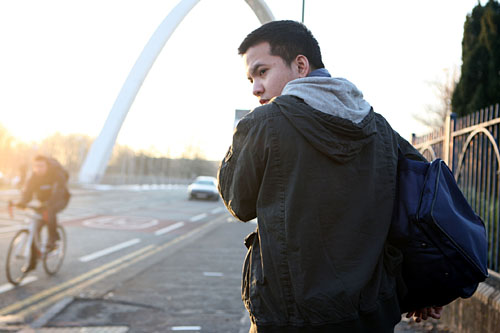
Huy Pham as Kim Pak in Stolen

Huy Pham as Kim Pak

But these practices can seem unbelievable to the untrained professional and children's stories are often dismissed as not credible.

Kim Pak's story of being trafficked for forced labour to cultivate cannabis is a realistic portrayal of what has been identified by police research as one of the largest growing trends in child exploitation in the UK.

Vietnamese children make up the largest number of children trafficked to the UK, and yet are often put into prison themselves, their traffickers going free.

Stolen is set in an anonymous city, but without doubt child trafficking is a crime happening across the UK.

ECPAT UK research has found evidence of child victims from small villages in Wales to larger cities across the UK.

As comes across so well in the drama, child trafficking in the UK is a hidden crime so the child victims who are identified by police are only ever the tip of the iceberg.

Many more children are suffering in silence in ordinary streets and neighbourhoods.

This is why Stolen is such a landmark drama. Let's hope that all who watch it will be shocked at what they see and take action to support anti-trafficking work in the UK.

Our hope is that viewers will take more notice of the child they see doing more than the usual household chores next door, the child not in school, or the child begging on the street.

Child trafficking is slavery, there is no place for it in our society.


Christine Beddoe is director of ECPAT UK and a script advisor on Stolen.

Stolen is available to watch and download in BBC iPlayer until 10.29pm on Sunday, 10 July.

Comments made by writers on the BBC TV blog are their own opinions and not necessarily those of the BBC.

More from this blog...