
Sectioned: Filming inside a mental health unit
Post categories: bbc four, disability, mental health
 |13:45 UK time, Wednesday, 19 May 2010
I'm really interested in making documentaries that go into worlds we seldom get to see, so I was thrilled to be asked to work with producer Lucy Cohen on an observational film made inside a psychiatric hospital.
I'd also had an old mate who'd been in and out of psychiatric hospital many times and felt strongly that people in that situation should be given a chance to share what it feels like.
Sectioned was in development for nine months before anything was filmed. Lucy scoured the country for a mental health trust who'd grant us the necessary level of access to their psychiatric services.
She found that Nottinghamshire Healthcare NHS Trust, one of the largest in country, shared her strong belief that the documentary was a real chance to help break down stigma around mental illness.
Once we started looking for contributors for Sectioned, however, we soon discovered there were very few people both well enough and brave enough to appear in the film. But following the guidance of some of the Trust's consultant psychiatrists and nursing staff, we began to meet patients who had an unfolding story we could follow.
It was absolutely crucial that anyone who might take part was well enough to make a decision about being filmed. Before I shot a single frame, lawyers from the BBC and the NHS Trust drew up a rigorous protocol.
A key staff member treating each potential contributor would sign a form to confirm the patient had the mental capacity to consent to filming and that they understood what it would entail.
The contributors themselves had to give three levels of consent - in writing, on-camera (which you see in the programme) and then at the end once they'd seen the final film.
We checked in with staff every time we wanted to film and they had the power to stop us at any time. Once these safeguards were in place, we could begin to tell their stories.
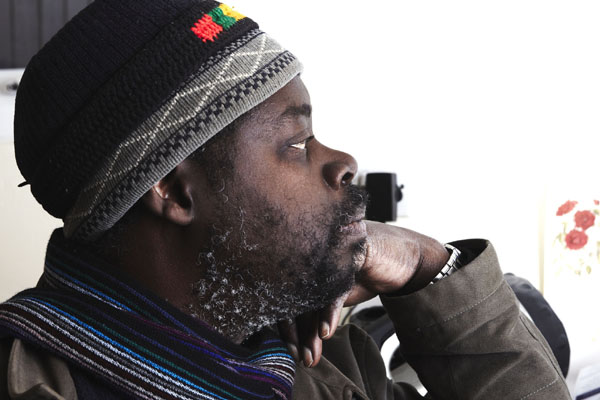
We met Anthony quite early on and it was obvious how deeply frustrated he was with the psychiatric system. He's been in and out of hospital for 26 years since a breakdown back in 1984, but rejects the label of schizophrenia he's been given and hates the medication he has to take when under section.
He feels trapped in a Catch 22-like situation - if he protests against taking medication, he's told that shows what little insight he has into his illness and proves how much he needs to take the medication.
But when Anthony's daughter Marcia described the level of self-neglect Anthony sinks to when not on his medication, it was clear his story was more complicated than it first appeared.
I met Andrew on one of Nottingham's treatment and therapy wards. A month earlier, during a paranoid episode, he'd been involved in a high-speed chase with three police cars and when he was finally caught, he was arrested and then sectioned.
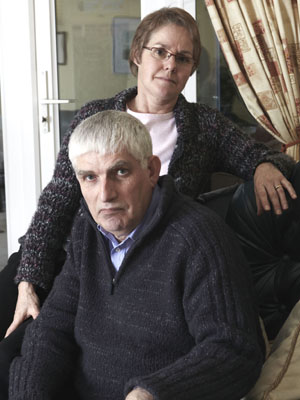
Andrew recently retired from a long and fulfilling career as a consultant pathologist despite enduring bouts of bipolar disorder for 30 years.
Even when unwell, Andrew seemed to have a real insight in to his illness and after our first conversation he was keen to take part in the film.
But he was still in the manic stage of a bipolar episode and it was a few weeks before his consultant was happy enough with his progress to allow any filming.
When Andrew's mood sunk into the depressive stage of the illness he found the filming very arduous and some days he couldn't face it. But such was his belief in the project, he admirably continued when he could.
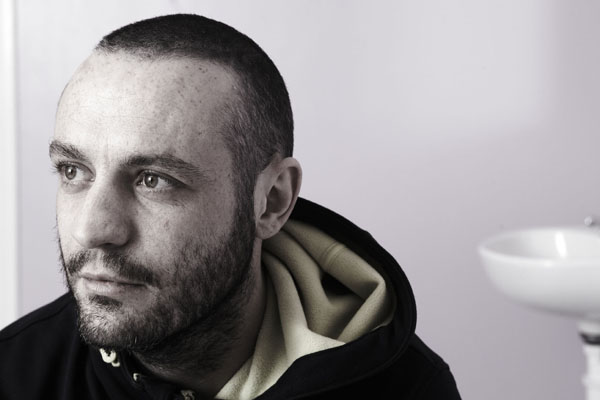
The day we met Richard on the intensive care ward, he was hearing voices and experiencing powerful suicidal thoughts.
Now 34, Richard had his first psychotic episode 15 years ago and was diagnosed with paranoid schizophrenia. Despite the delusions Richard was experiencing during our first meeting, his consultant was confident Richard still had the capacity to decide about being in the film.
Lucy and I were immediately struck by how charming and positive Richard is about life despite the huge challenges he faces.
The intensive care ward is an intimidating place for the uninitiated, but Richard soon made us feel comfortable and although it was hard at first to know how to react to the long pauses while Richard listened to 'the gods' in his head, we soon got used to it.
I set out to try and build relationships with Anthony, Richard and Andrew that were not based just on discussions about their mental health.
Perhaps the fact that that turned out to be so easy says something about my own prejudices going in to the project.
These men don't want to be defined by mental illness, although that is often how they feel others see them.
We wanted to make a film that gave a voice to those whose identity is often masked by a label and all three men have said making the film gave them that opportunity. That they found the experience of making Sectioned helpful is what I am most proud of.
Ben Anthony is the director of Sectioned, co-produced by the Open University, and is available on iPlayer until Thursday, 26 May.
Sectioned is part of the Out Of Mind season, a series of programmes which focuses on mental health issues.
For more information about Sectioned or for information on how to get help with the issues raised in this blog post, please visit the BBC Headroom website.


Comment number 1.
At 22:58 19th May 2010, MILLY wrote:I confess I did not see the beginning of this programme, but there were some things that I did find surprising. I thought that the representations of the individual service users of mental health services were thoughtful, sensitive and respectful - and honest. It was great to see people with serious mental health difficulties being represented as those with real struggles, complex problems, but NOT potential random serial killers. I gathered as I watched the programme it was focussed on the service user perspective, which I thoroughly applaud. Having read Ben Anthony's blog I am reassured that these individual's rights and vulnerabilities have been respected.
If I have a concern it is that it did not appear to me that the range of services available to these individuals was made clear in the programme; which they had been offered and declined, those that had not been available, or what they were receiving but was not included in the filming. Again this is an issue that contributes to the stigma that mental health service users experience and the perception that anyone who has mental health difficulties is a danger to any member of the public. I work in MH services for the NHS. I know that people, (service users and carers) do not always get all that they need, but people with serious, enduring and complex mental health difficulties in my area are mostly offered community mental health team, carers support team, early intervention, assertive outreach, drug & alcohol team support as a matter of routine even if they choose not to opt in. Being picky, I would have liked to know if the men involved in this programme had had access to these services and their responses to these options.
Generally, excellent viewing and brave decisions by the participants. Thanks to all involved
Complain about this comment (Comment number 1)
Comment number 2.
At 06:54 20th May 2010, Rich_Southsea wrote:Was really struck about how brave the participants were to share their thoughts and struggles with the public, not many people would be strong enough even to share with their friends. It made this into a very insightful programme.
Complain about this comment (Comment number 2)
Comment number 3.
At 14:16 20th May 2010, wuthering wrote:Ben, thank you. Really. Thank you. You found some giant moments from the men in your film. I was particularly struck by Richard and found myself in floods of tears (and fear) over his story. I really want to find out what has happened to him. I understand there are (rightly so) strict confidentiality laws in place. I just wonder if there is any news, even if it's just to say he's still safe. I've never felt so strongly about a person in a documentary and am in awe at his candor.
I've done a quick Google search in the hopes of finding out how Richard is, but the closest I've come is your own blog. There's obviously a strong amount of privacy surrounding these men -- and there should be. I am just so concerned and I can't be the only one who was touched by your access and ability to reach those men.
Complain about this comment (Comment number 3)
Comment number 4.
At 20:00 20th May 2010, Taf wrote:This comment was removed because the moderators found it broke the house rules. Explain.
Complain about this comment (Comment number 4)
Comment number 5.
At 12:50 21st May 2010, Tedsgirl wrote:I'm doing Open University course, K101, at present and have found the recent documentaries very interesting and moving, as well as thought-provoking. Some fellow-students have been particularly upset by scenes from the past - I think most people enjoyed(if that's the right word) the stories of these three guys in 'Sectioned', rather more.
Also wondered if anybody remembers a documentary filmed at my old training hospital, Brockhall, Old Langho, Blackburn, which closed down some years ago? (Posh housing estate now, I believe) Have tried to find some information on-line but I can't even remember who made the documentary - I think it was 1982 but no later than '84, the year I qalified and moved away. Think you'd be too young to have seen that one, Ben but maybe someone will recall it! 'Sectioned' was done very well, very sensitively and I was left feeling that there is hope,still, for all three of them.
Complain about this comment (Comment number 5)
Comment number 6.
At 15:38 21st May 2010, Taf wrote:This comment was removed because the moderators found it broke the house rules. Explain.
Complain about this comment (Comment number 6)
Comment number 7.
At 17:04 25th May 2010, Sunshine wrote:I have worked on all the wards featured on that show and I’m absolutely amazed at how inaccurate a portrayal the programme is. It reminds me of one of those propaganda films put out by an oppressive regime that shows happy people dancing in the streets and waving flags, when in reality everybody is half starved and working in a forced labour camp!
I met many patients who were sectioned. Most of them felt confused, trapped and powerless, and like they were being punished for a crime they had not committed; the patients shown on the programme had obviously been carefully selected to be those who are most “compliant” with treatment. Rather than sitting down and having in depth discussions with patients as portrayed on the programme, the doctors actually meet the patients for around 10 minutes once a week in a room full of other professionals and students taking notes, the patients are generally very anxious and given little chance to speak. In the programme the wards were shown to be fairly quiet and peaceful, in reality there are confused patients wondering around, people desperately waiting to be taken out for a cigarette, and staff members too busy with paperwork in the closed staff-room to take any notice. The patient being given an injection against his will was even shown as a fairly painless situation – in reality when this happens there are 3 or 4 staff members on hand to restrain the patient if they do not comply.
It upsets me that people who know nothing about the mental health system will see this program and think it to be an accurate portrayal.
Complain about this comment (Comment number 7)
Comment number 8.
At 01:35 27th May 2010, C wrote:26 May, just watched the repeat of Sectioned. missed it first time around but it has been a discussion topic by people I know so I managed to catch it this time, though i missed the beginning and am upset that it is not on iPlayer. I just felt so moved by each one of these men, Anthony, Andrew and Richard, each one has been to hell and back, and then back again, and again, and lovely men all. I'm so deeply concerned about the way we still treat mental ill health in this country, so devastated by the world they have to endure, and so concerned for them - each one. I want to pass on to them that i am so grateful to them for sharing their lives, and i so wish it could be better for them. If a loved one of mine, or I started to go through what they do, I dont know what I'd do, I think they are unbelievably brave. Is there any way that my sincere thanks can be passed on to them, and my kindest wishes? I would very much like to share this programme with my family through iPlayer - can it be put back on? Thank you to the programme makers, for showing Anthony, Andrew and Richard as sensitively as they appeared. But I quite take Sunshine's comments that the real system can be even more cruel/alienating than even it was shown to be here. How unjustified the stigma is. And the general new and tabloid media needs to start telling us the truth, give some depth, give some understanding.
Complain about this comment (Comment number 8)
Comment number 9.
At 11:03 1st Jun 2010, Ben Anthony wrote:Hi Milly, thanks for your comments. The aim was to give a voice to service-users currently in the system, but we were keen to film with staff too. Unfortunately, one of the biggest challenges we faced while making this film was gaining the staff's trust. Too many sensationalistic media portrayals of mental illness to blame no doubt. We were keen to film with the crisis teams in particular, but none of their members chose to take part as hard as we tried to convince them! Of course, one must respect an individual's choice, but I cant pretend it wasn't very disappointing that we were unable to film their work. It was a similar story with the drug and alcohol team members we met. We did film with Anthony's AO worker, but the meeting wasn't included in the final film.
Complain about this comment (Comment number 9)
Comment number 10.
At 11:38 1st Jun 2010, Ben Anthony wrote:Hi Sunshine. Thanks for your comments about the film. As you will probably appreciate better than most, this film was very difficult to make! There were many aspects of mental health services and the patient experience we had wanted to cover that we simply couldn't, either because the patients were too unwell or because staff did not want to appear in the film. Because we decided to make the film about patients with long-term experience of hospital, I think they were less confused than patients newer to the system might be. We also began filming once the patients were already some weeks into their section, which meant that their moods had settled considerably since admission. We had wanted to film the experiences of those who are in hospital for the first time, but as I'm sure you will understand, there were many major issues around consent and privacy to make that possible. And then there's the stigma they felt of being newly labelled as 'mentally ill'. One of the biggest challenges as a film-maker was to reflect the nature of the wards, which was frustrating because they were often noisy and chaotic. But again, there were so many issues over consent and privacy, it was not possible to film openly on the wards as we would have liked. As far as Anthony's medication goes, he dislikes it greatly as he explains, but while we were filming he accepted all his medication without resistance. Of course, this documentary is only meant to be a small piece of the picture of mental health services in Britain - lets hope there are many other films to come that will shine a light on other areas of the system.
Complain about this comment (Comment number 10)
Comment number 11.
At 22:52 18th Jan 2011, shufflewick wrote:I was moved to tears by this programme, particularly by Richard's story. The part of the programme where he was flicking through old photos touched me most, as you could see the promise of his youth there in his hands. So sad. I have suffered with depression and anxiety sporadically for the past 6 years after suffering a nervous breakdown triggered by a long term health concern and am still on medication having come on and off them several times. I am now at a point where I am resigned to taking them permanently if it means enabling me to function without feeling dreadful. I am also a registered nurse so I am able to view mental health from both sides of the equation. I do in part agree with Sunshine about the full picture of the mental health unit not being shown, but my concern whilst watching was more on the personal stories of the individual, which I feel is a far more important thing to show the public, and breakdown the misunderstanding that mental health problems can't just happen to anyone, because they can. Many Thanks to all involved in this programme.
Complain about this comment (Comment number 11)
Comment number 12.
At 05:58 20th Jan 2011, Glen wrote:This comment was removed because the moderators found it broke the house rules. Explain.
Complain about this comment (Comment number 12)