BBC TV blog - BBC TV blog

Archives for May 2010

Anne Lister's diaries: From page to screen

Blog comments are currently unavailable. Find out more.

Post categories:

Jane EnglishJane English|10:30 UK time, Monday, 31 May 2010

I had never heard of Anne Lister until she popped up in an email, one slow Friday afternoon. Oxford Film and Television were seeking a writer to dramatise her diaries and had attached a potted biography. She was impressive: an independent, self-educated landowner, living in Halifax in the early half of the 19th century, who travelled widely and put herself about in business and politics.

I was interested. Then off she strides to meet her married female friend in a Manchester hotel for a night of passion.
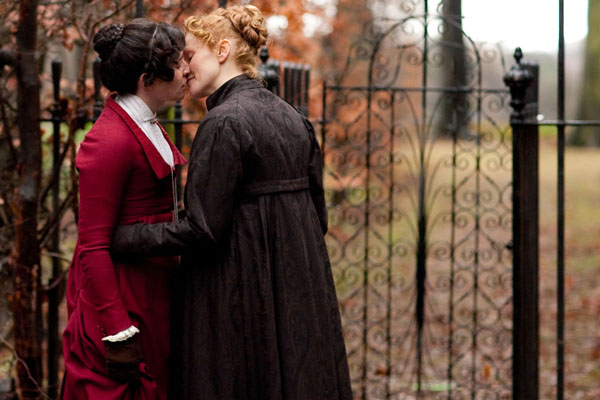
Anne Lister, played by Maxine Peake, and Tib, played by Susan Lynch share a kiss outside some gates

What?

Had I read right? Women meeting for illicit hotel sex in the era of Jane Austen? It just didn't happen, did it?

It proved to be the tip of the iceberg, and I was hooked.

For Anne was also a lusty, self-aware lesbian who had many flirtations and full-blown love affairs, before settling into what was to all intents and purposes a civil marriage. Her diaries are a page-turning first hand account of being a lesbian in Georgian England, and reveal a whole network of women, either lesbian like herself, or willing to "dabble".

I soon realised that everything I knew about women at this time, I knew from fiction - the novels and dramatisations of Austen and the Brontes - and that Anne's version of events somewhat turned all that on its head.

Writing The Secret Diaries Of Miss Anne Lister was a chance to bring an important piece of hidden lesbian history to a wider public, but also to represent women as earthier, funnier and feistier than the genteel creatures more commonly found in period drama.

So where to start? Anne's diaries run to four million words and cover roughly 25 action-packed years. As we were always going to be on a relatively low budget, adventures in Paris and Russia were out, narrowing the focus to Halifax and her beloved Shibden Estate.

Even then, to tell her story fully would take a 10-part returning drama series. With 90 minutes, our drama could only ever be an impression of Anne's life. Which put pressure on getting the essence of Anne herself right.
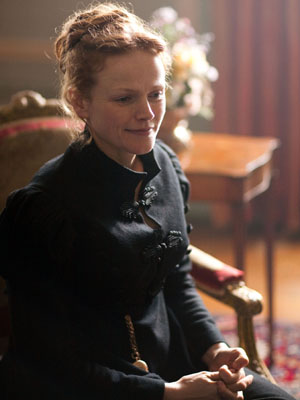
Maxine Peake, as Miss Anne Lister, sits in a chair

The voiceover which runs through the drama is comprised from Anne's own words. Anne wrote her most intimate thoughts in an elaborate code. As I was ransacking them and broadcasting them to the nation, I felt it only fair that Anne should tell her own story. In life she longed for "a name in the world" but always remained an outsider, so I think she'd appreciate the gesture.

Composing the dialogue was a joy. Anne has a wonderfully rich vocabulary and a droll turn of phrase to draw from (motley set, suspicious bonnet, grubbling... being a few of my favourites).

She often sounds modern (ie when doubting a lover's character: "Only in bed is she excellent") and writes vivid depictions of her friends.

She records conversations which feel alive and present and surprisingly easy to relate to.

Where possible I've quoted the diaries. Otherwise, Anne's voice is so distinctive that once I'd absorbed the material and thought my way into her head, dialogue flowed quite naturally.

If I strayed from Anne's character, Helena Whitbread, our historical consultant - the Halifax woman who transcribed the diaries and who knows Anne Lister better than anyone - was on hand to tell me, in no uncertain terms, what Anne would or wouldn't say or do.


I'm a sucker for a love story and Anne's passion for Mariana Lawton leapt from the pages of the diaries and provided a strong emotional thread for the drama. Mariana broke Anne's heart by marrying a much older, and richer, man. But this is only the beginning, as the drama explores their attempt to sustain a relationship in spite of this rather large obstacle.

I saw Anne and Mariana as fitting that classic Hollywood romantic mould of the couple who're great together but can't quite get it together. Much of the time you want to shake them and say, "Sort it out!"
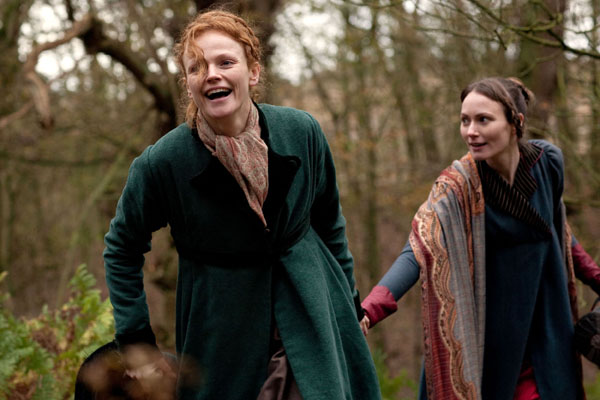
Anne Lister, played by Maxine Peake, and Marianna, played by Anna Madeley, run hand in hand through the woods

In fact, I may have got too wrapped up in the love story because when director James Kent came on board he highlighted a need for a greater sense of social context: society's ignorance and/or abhorrence of lesbianism; the social pressure to be married; the difficulty for women of maintaining economic independence.

James and I talked through every scene in the script. He wanted to 'download' everything in my head, and it gave me a rare opportunity to share my intentions. These discussions enabled us to hone and polish, and push the script for all its emotional worth.

But of course, this drama would stand or fall on its Anne Lister. When it got the go-ahead and casting suggestions started flying around, panic set in: would they find the right person to play her? But when James called to say he'd cast Maxine Peake, I relaxed.

Like Anne, she throws herself completely into a project, and has the range to capture everything from Anne's strength and emotional intensity, to her vulnerability and humour. And rather helpfully, in the latter stages of writing, Criminal Justice aired. Maxine's performance in that expressed so much without words, it gave me the confidence to go through the script with a red pen and really pare down her dialogue.

I love the finished film and think every member of the cast and crew has dug deep to produce something beautiful. My biggest hope is that our depiction of Anne Lister intrigues people enough to want to seek out this unique woman for themselves in her diaries. Believe me, they're an illuminating read.

Jane English is the scriptwriter of The Secret Diaries Of Miss Anne Lister.

The programme is available on iPlayer until Monday, 7 June

BBC One is going High Definition

Blog comments are currently unavailable. Find out more.

Post categories:

Danielle NaglerDanielle Nagler|11:26 UK time, Friday, 28 May 2010

For some time now, the number of programmes we make in High Definition (HD) has been growing. Last month, we began broadcasting Ashes To Ashes, Doctor Who, Graham Norton, and Young Musician Of The Year for the first time, as well as Springwatch's first appearance in HD, which starts next week.

I can now let you know that by the end of the year, you will also be able to enjoy EastEnders, Holby City, QI, Weakest Link and The Apprentice in HD from the BBC, as well as a whole range of returning programmes and new shows.

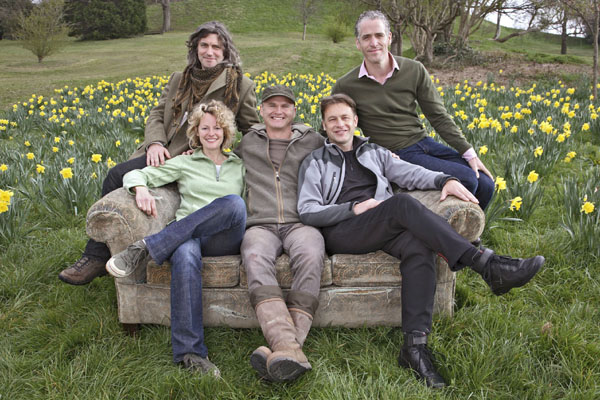
The Springwatch team sitting on a sofa in a field. The new series will be broadcast in HD

To ensure that we have space to bring you these programmes in HD, we are also planning to begin broadcasting BBC One in HD this autumn.

That means that in the future - once you have a fully-connected HD set in your home - you will be able to enjoy all the BBC One programmes made in HD (including the vast majority of programmes shown in the evenings) without the need to change channels.

And if you don't fancy a BBC One programme, BBC HD which will operate for longer hours than it has done previously will be able to offer you an alternative including Top Gear, Later With Jools Holland, and new drama, comedy, factual and children's programmes.

These two HD channels from the BBC will be available whatever digital television platform you choose, provided, in the case of Freeview, that HD has rolled out to your area.

I don't know when we will reach a point at which all the BBC's channels are available in HD. To an extent, that may depend on you - whether you choose to buy a new HD set, or to connect up the set you already have but don't use for HD, and ultimately how far you feel that HD is the way you want to watch television.

But I do hope that giving you a choice, night after night, of different HD programmes from the BBC will help you to find something to enjoy in the best quality television can currently offer. If you'd like you can read the full story on the BBC Press Office website.

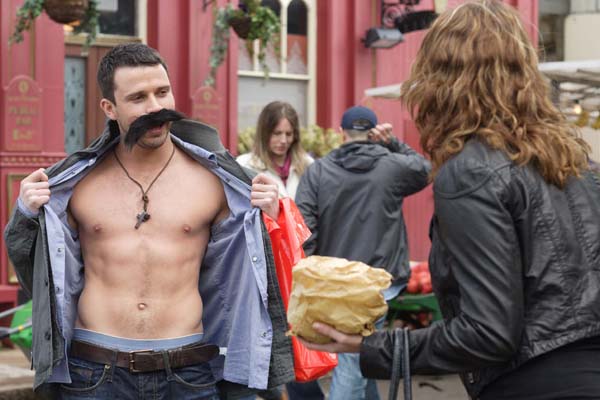
EastEnders' Ryan Malloy, played by Neil McDermott, unbuttons his shirt to reveal his torso to Janine Butcher, played by Charlie Brooks, in the middle of Albert Square. EastEnders will be broadcast in HD by the end of the year

As the countdown to the World Cup gathers pace, HD is blasting out of pretty much every newspaper, billboard, and television display around. Those of you who have not yet succumbed are no doubt wondering what all the fuss is about.

The BBC will, of course, be offering a large number of ball games over June and July this year - including football from South Africa, tennis from South London, and golf from St Andrews - all on BBC HD, with every ball, every blade of grass, and every bead of sweat more visible than ever before thanks to high definition.

But for those longing for the summer of sport to be over before it has even begun, today's news hopefully makes clear HD from the BBC can offer a whole lot more.

And while we are getting ready for BBC One HD - and the new programmes that will be on it - don't forget that you can sit back and enjoy the summer on BBC HD now.

Danielle Nagler is controller of BBC HD

My journey with Stephen Fry and Wagner

Blog comments are currently unavailable. Find out more.

Post categories:

Patrick McGradyPatrick McGrady|09:45 UK time, Tuesday, 25 May 2010

I'm approaching the end of a journey which began nearly three years ago. In summer 2007, my company, Wavelength Films, was lucky enough to be working with Stephen Fry on a film for BBC Four about Johannes Gutenberg - the man who invented printing.

As we travelled through Germany in quest of that elusive medieval genius we found ourselves on a twisting road which ran alongside of the river Rhine. In the backseat of the crew vehicle Stephen was plugged into his iPod when a mysterious sound filled the van.

In order to see this content you need to have both Javascript enabled and Flash installed. Visit BBC Webwise for full instructions. If you're reading via RSS, you'll need to visit the blog to access this content.

"Rheingold! Rheingold!" The great man was singing (sort of) to the music of his favourite composer - the legendary, controversial, Richard Wagner. And what better choice for this impromptu burst of karaoke than Wagner's opera, Rheingold, the first instalment of his famous quartet of operas The Ring, which kicks off with a scene played out in exactly the landscape we were driving through?

As the journey continued the singing ended and the talking began, sowing the seeds of our next collaboration with Stephen. The result is our film Stephen Fry On Wagner, which I directed, which goes out on BBC Four Tuesday, 25 May at 9pm.

Stephen's loved Wagner's music since he was a child but over the years his passion for it has also grown more complicated.

It's no secret that his enthusiasm for Wagner was also shared by Hitler, or that Wagner himself was outspokenly anti-semitic. Stephen is Jewish, and he lost members of his family in the Holocaust, so those have always been hard facts for him to stomach. This film is his opportunity to tackle that dilemma head-on - an attempt to salvage the music he loves from its dark association with the Nazis.

It's also an opportunity for him to realize a lifelong dream by attending the Bayreuth Festival - an annual extravaganza of Wagner's music held in a theatre, the Festspielhaus, designed and built by the composer himself (never a man to trust a job to others that he thought he could do better himself). You can't really understand what made Wagner tick without visiting this extraordinary venue, so it was crucial for us to film there.

But access was tough to negotiate. The festival is still run by members of Wagner's family, who are notoriously cagey about letting the press roam free, especially in the run up to the festival, which is a time of intensive rehearsal and preparation.

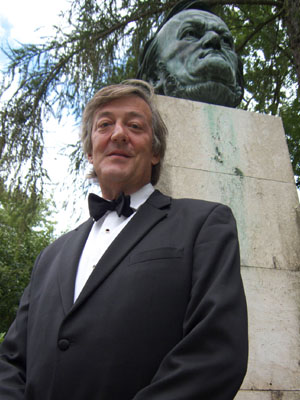
Stephen Fry in a tuxedo stands by a bust of Richard Wagner

When we first approached them with our request the boss was Wagner's grandson Wolfgang. By the time we finally persuaded them to let our cameras in, the baton had passed to his daughters, Eva and Katharina. It took more than a year of meetings and discussion to agree the deal.

We first visited in the snows of winter and then, more than a year later, in the early spring sunshine. We finally began filming in June 2009, a few weeks before the festival began.
But it was worth the wait just to be there to film Stephen's first arrival at this legendary venue and watch him tiptoe his way into the rehearsal room with Wagner's extraordinarily powerful music in full swing, and the composer's great-grand-daughter Eva keeping an eagle eye on proceedings in the corner.

Over the next few days we had a chance to explore every nook and cranny of this amazing place - perhaps the most famous music venue in the world - and to eavesdrop on the singers and musicians as they prepared for the festival.

There's something slightly surreal about hearing the Ride of the Valkyries being hammered out on an upright piano whilst a gang of spear-wielding sopranos choreograph their movements in what looks like a school sports-hall.

But when they start to sing, the hairs on your neck stand to attention - even though we later discover that they weren't giving it full throttle quite yet, but saving their voices for opening night.

There were plenty of other treats in store after that - including a chance for Stephen to play on Wagner's piano (like Eric Morecambe he managed the right notes but not necessarily in the right order), and to leaf through the original score of his opera Gotterdammerung.

As we took a breather between takes, the archivist put the velvet-bound book down on a side table before casually informing me that it was worth upwards of 10 million euros - an interesting piece of trivia that I decided to share first with our sound recordist, Steve, who'd placed his coffee cup - still half full - perilously close to the score itself. Most film crews spend a fortune on coffee, but this could have been the costliest latte in history.
Away from Bayreuth we also called in at Neuschwanstein - the fairytale castle built by another Wagner fan, 'mad' King Ludwig, as a tribute to his hero.

Our schedule was tight, and the traffic was bad, so we arrived a couple of hours later than planned before making a whistlestop tour of this ludicrously kitsch masterpiece in the fading evening light. After racing through room after room inspired by Wagner's work we called time on the day's shoot and headed back to the hotel.

I was worried that perhaps we hadn't done justice to the location but later discovered that my concerns weren't shared by Stephen. According to his Twitter account, he felt that we had, in fact, "shot the arse off it".

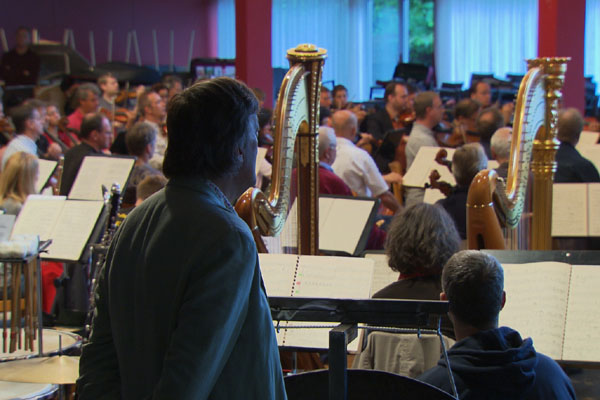
Stephen Fry watches the orchestra rehearse for the Bayreuth Festival

Our filming also took Stephen to some darker places, as we explored the way Wagner's music was later appropriated by the Nazis.

In Nuremberg - scene of the infamous Nazi propaganda rallies - Stephen grappled with the stain placed on Wagner's music by this association with the Hitler regime.

Every year, on the evening before the rallies began in earnest, a gala performance of Wagner's opera Die Meistersinger was staged in the city's Opera House.

According to a historian we met, Hitler loved this opera so much that he would whistle the tunes - and what tunes they are - to his guests. On the steps of the famous stadium, which is now slowly decaying and overgrown with weeds, Stephen thought aloud and very movingly about the quandary which faces any fan of Wagner's music, comparing it to an extraordinarily complex and beautiful tapestry with one indelible stain - a stain which can't be washed out.

It was a powerful moment - not something which could be scripted or prepared in advance but the result of a lifetime's engagement with the music and the issues which surround it.

Just a few yards from where we filmed stood the podium from which Hitler would harangue the assembled masses. In the time we were there, scores of visitors climbed to this famous vantage point to take in the view.

Stephen wondered if I wanted him to go there too. I said it was up to him. He couldn't bring himself to do it. Minutes before we left, an almighty thunderstorm broke out drenching us all in the minute or two it took us to dash across the parade ground to our vehicle. We needed a change of clothes before setting up in our next location.

Before returning to Bayreuth for the first performance of the festival, there was one final visit for Stephen to make - another encounter with a special resonance for him.

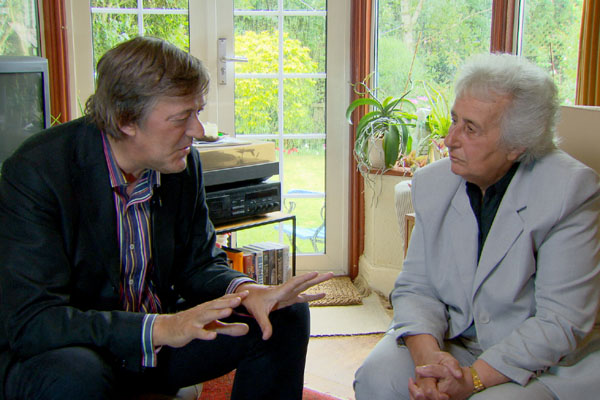
In London he called on Anita Lasker-Wallfisch who was once an inmate in Auschwitz, the camp in which members of Stephen's family died. Mrs Lasker-Wallfisch was a teenager when she was imprisoned. She was also a cellist whose love for music probably saved her life, when she was recruited into the inmates' orchestra at the camp (a story which is told in her book, Inherit The Truth).

The orchestra was forced to provide entertainment for the guards, and you might think that performing under such appalling conditions would have corroded her love for music. But, as Stephen discovered, that wasn't the way things turned out, and after the war she had a very distinguished career as a cellist.

Stephen Fry with chellist and concentration camp survivor Anita Lasker-Wallfisch

Stephen also wanted to find out more about one of the darkest aspects of Wagner's legacy - the suggestion that his music was used as a psychological weapon against the prisoners on some of the camps.

He was relieved to discover that this wasn't something which she experienced, although there is plenty of evidence to show that it did happen in some camps. Stephen's conversation with this remarkable woman is, for me, one of the most powerful moments in the film.

Our film ends, just as our journey did, with the opening night of the Bayreuth Festival itself. This is one of the hottest tickets in classical music, a high point of the German social calendar.

On the balcony above the main entrance, a band of musicians summon the audience to their seats as they have done since the very first festival in 1876 and the audience - dressed in everything from traditional black tie to eurotrash chic - clutch their hired cushions to their chests in anticipation of the five hours of music to come (Wagner operas are famously long) and make their way into the auditorium.

The lights dim and the opening bars of the music emerge from out of the darkness. After spending months immersed in the story of this extraordinary composer - genius, tyrant, egotist and mythmaker - it's a memorable experience to sit in the theatre he dreamed of building and give yourself over to the music.

I can only begin to imagine what it must feel like for Stephen, who first fell in love with that music when he was just a child.

Patrick McGrady is the director of Stephen Fry On Wagner, which is broadcast at 9pm on BBC Four on Tuesday, 25 May.

Getting Martin Amis' Money to the screen, with help from Nick Frost

Blog comments are currently unavailable. Find out more.

Post categories:

Ben EvansBen Evans|12:03 UK time, Friday, 21 May 2010

As a former literature student, I had read Money and thrilled at its outrageous characters, gawped at its rich textual layers, and sniggered at the misadventures of its protagonist John Self - a drink-addled, swaggering misogynist, whose hopelessly flawed nature was at the centre of Martin Amis' wicked tragi-comic story. So when the opportunity arose to produce it as television drama, I jumped at it.

But it wasn't without a certain degree of trepidation I approached a drama adapted from the much admired and blackly-comedic novel about an ill-fated film production.

Would I find myself juggling the egos of my cast, pushing desperately for last-minute rewrites and wrestling with spiralling production costs, in an homage to Amis' much maligned anti-hero Self? The answer was... yes and no.

In order to see this content you need to have both Javascript enabled and Flash installed. Visit BBC Webwise for full instructions. If you're reading via RSS, you'll need to visit the blog to access this content.

First, and completely key to the enterprise, was finding an approach to the screenplay that made dramatic sense of the narrative, felt true to the spirit and tone of the book, yet didn't feel like a regurgitation of prose onto the screen.

Writers Tom Butterworth and Chris Hurford pitched a very sensitive treatment of the material, getting to the heart of "what's eating John Self".

And so they set about plotting out the drama, editing and re-editing the material from the book, finding the most direct way of accessing Self's reptilian brain, dramatising his brutally honest first-person narration, yet ultimately finding what was human and sympathetic about him.

It was probably the most painful task in the whole process: we all had favourite (different!) passages of the book we felt could be part of the drama.

However, with only two hours of screentime, we had to make difficult choices in order to arrive at a cohesive, manageable story.

They didn't tell me when they were writing early drafts of the scripts, but Tom and Chris had always been writing the character of Self with only one actor in mind to play him.

When they told me that Nick Frost (best-known for Hot Fuzz, Shaun of the Dead and Spaced) was that actor I punched the air at the brilliance of the idea (who else could make such a selfish, boor of a character likeable and, indeed, funny?), but my clenched fist then slowly returned to my side when I realised quite how busy Nick is and, potentially, impossible to secure.

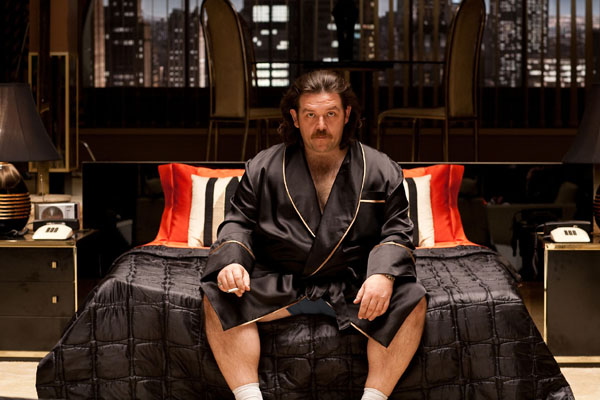
Nick Frost as John Self sits in his hotel room

A draft of the script was sent to Santa Fe, where Nick and Simon Pegg were busy shooting their first co-written feature film, Paul. 48 hours later, and my nails bitten down to the quick, a message was relayed back from the New Mexican desert: "I'd love to do it. When can we start?"

So far, so good, surely? Well... not quite. What I haven't yet mentioned is that the drama is set in 1981. In London. And Manhattan....

With six weeks before filming commenced, director Jeremy Lovering joined the production in what would become his trademark whirlwind of incisive questions and even more brilliant story and visual ideas inspired by the book, and started working with casting directors Gemma Hancock and Sam Stevenson, to find the actors to embody the fabulous, sexy, at times grotesque characters that Amis created in his novel.

It felt important to have some authentic American-born actors in the cast, especially for the characters of corny soap actress Caduta Massi, and Fielding Goodney, the ersatz producer of John Self's film and his confidante in the glitzy, dangerous world of Manhattan.

Jeremy and I went incognito to see Jerry Hall in the stage version of Calendar Girls and she was hilarious, not to mention completely gorgeous and credible as Self's fantasy teenage crush. Jerry read the script, came onboard and soon started rehearsals with Nick - and she instantly brought us all into fits of giggles.

Now I am a HUGE fan of Mad Men. Not only that, I am a COMPLETELY BONKERS fan of Vincent Kartheiser in the role of Pete Campbell in Mad Men. So when Gemma and Sam told us he was reading the script it was another nail-biter moment.

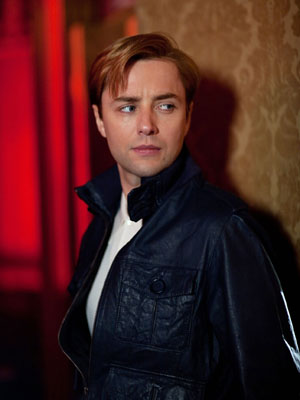
Vincent Kartheiser as Pete Campbell in Martin Amis' Money

Once again, although he loved the project, the reality of bringing him to London was to prove difficult, with lots of last-minute paperwork being signed and faxed, and no time to rehearse with him during pre-production.

We started filming, and a week in, Vincent arrived at the airport and came straight down to set to meet the team - unexpectedly complete with a bushy beard!

For reasons that become obvious towards the end of Episode Two, the beard would pose something of a story problem, so Vincent sadly said goodbye to his proud whiskers and dyed his hair blonde, in readiness for the perfect-teeth perfect-tan "money glow" of supporting role Fielding.

Nick, meanwhile, was working his buns off: the combination of a short filming schedule, plus the fact that his character is in almost every scene, meant that when he wasn't on set, he was running between costume and make-up in readiness for his next scene - continuously, for five weeks.

His stamina and focus, yet an ability between takes to entertain and energise the whole crew during frequent torrential downpours, was much-valued by everyone.

But dreadful winter weather aside, there were lots of other fundamental problems posed by the production, not least with its modest budget: i.e. how on earth do we pull-off a period drama based predominantly in New York, without actually moving the cast and crew beyond the perimeter of the M25?

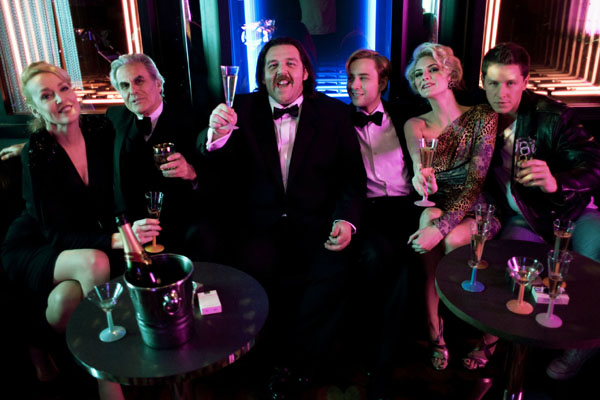
The cast of Money, in character, raise glasses of champagne

The answer was found in a wily combination of story-boarding, lateral thinking and the fantastic team we gathered, from respective costume and make-up designers Rebecca Hale and Jane Walker (both gingerly using their own photo albums sporting various hilarious 80s fashions as research material), to production designer Tom Burton, to director of photography Ben Smithard, to line producer Abi Bach, to location manager Rupert Bray, to the visual effects and post production team at Molinare.

We also had an indefatigable BBC-based production team, all of whom eschewed the usual comforts of home, leisure and sleep to ensure the smooth running of the shoot logistics.

Our main challenge was conveying the bustle, noise and chaos of Manhattan in the early-80s, as it's the vivid backdrop against which Self's increasingly nightmarish story of dissolute night-crawling unfolds.

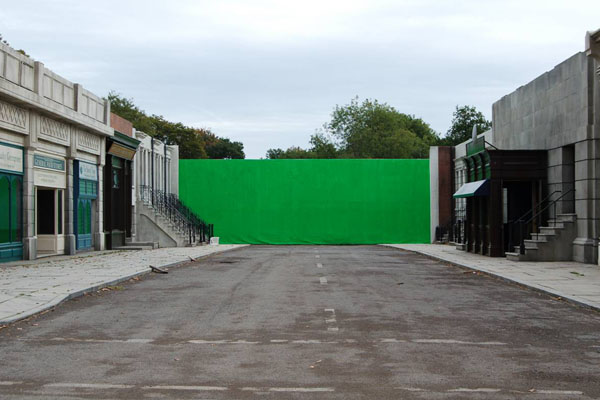
Fortunately, I'd heard rumours of a wind-blown standing set at Pinewood Studios, so we trouped down en masse to see what it looked like. It looked like this:

The Pinewood set of Money without CGI and with a green screen at the back of the set

Hardly a bustling metropolis - but what it gave us was the foundation stone for the rest of our design and locations.

We then found location interiors that would match the exteriors that the street set offered us, as well as building Self's glamorous hotel suite in a studio sporting an enormous translight with a blown-up photo of a 1981 New York skyline, complete with Twin Towers.

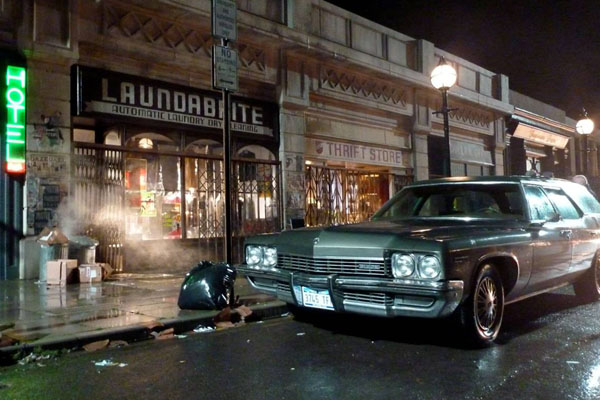
Our props team exhaustively trawled for all the right details to populate the various sets, including authentic vehicles.

The Pinewood set complete with period props and car and CGI to recreate downtown Manhattan

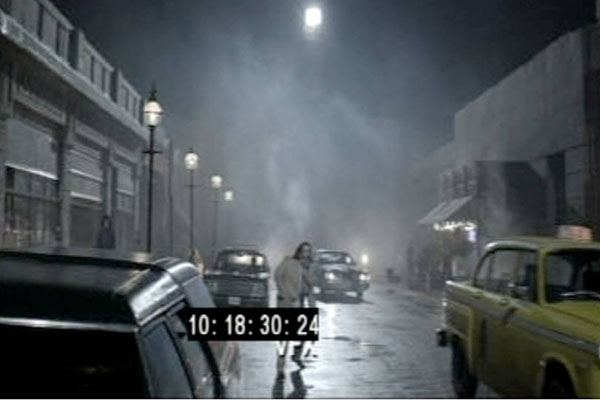
When every detail was in place and the set was lit, here is a rough screenshot from the moment in Episode One when Self realises he is late for his pitch, and runs frantically through the streets of Manhattan:

A screenshot of Nick Frost crossing the road on the set of Money before the special effects and CGI were added to the background

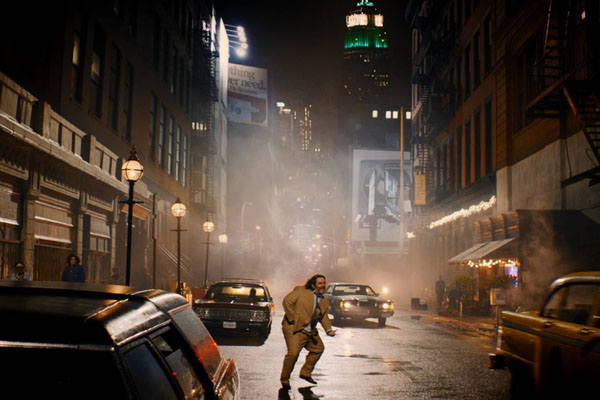
After the main shoot was complete, Ben took a handheld camera to New York for 48 hours, shot a series of cunning stills of Manhattan buildings and skyline, then brought it back to the visual effects team.

After they had carefully composited the pictures together and tweaked and pushed a dizzying array of knobs and buttons, here is the same moment in the finished drama:

The same screenshot of Nick Frost crossing the street on set, but with special effects and CGI added

Seeing this particular sequence come together, alongside a groovy score by Daniel Pemberton and an atmospheric sound design from Molinare, was for me the best moment in the entire production - where everyone's hard work came together to achieve an effect greater than the sum of its individual parts.

The moment only lasts a couple of seconds, but for me it encapsulates the combination of talent and magic in making TV drama.

Ben Evans is the producer of Money, which airs at 9pm on BBC Two on Sunday, 23 May.

Young, British And Angry: What fuels the English Defence League?

Blog comments are currently unavailable. Find out more.

Post categories:

Ben AndersonBen Anderson|11:00 UK time, Thursday, 20 May 2010

One of the main reasons I have ended up doing what I now do - making documentaries from the less accessible and hospitable parts of the world - is that I have always been slightly desperate to escape small town English life.

I grew up in Bedford, but most of my family is from neighbouring Luton, which has won several "crap town" competitions. I went there often as a child. My first ever mugging happened there. But apart from a few Christmas dinners, I've never had much desire to go back.

But then slowly, over the last few years, Luton started getting national headlines - none of them good.

The 7/7 bombers set off from there, the infamous protest against British soldiers was there and there had been several street battles that looked eerily similar to the race riots of the 70s and 80s.

When a new movement, calling itself the English Defence League, or EDL, was launched there, and soon started to grow, attracting front page headlines every time it staged a demonstration, I started looking at Luton again much more seriously.

Close up of T shirt with motif 'No surrender to al-Qaeda'

The EDL is a fast emerging right-wing group which, over the last 11 months, has attracted thousands of predominantly young men to demonstrations around Britain.

I wanted to find out how powerful the EDL could become, what attracted so many young men to join - and whether, as they claimed, they were non-violent and non-racist, and genuinely dedicated to standing up to what it said was a serious threat from militant Islam.

Luton has had waves of immigration since my Dad was a child - Irish, Italian, African and Asian. It is often held up as a poster child for multicultural Britain.

For some, and especially for the EDL, this is a myth. They claim that not only is Luton not the happy melting pot it's often claimed to be - it's actually a town with tensions simmering so close to the surface that it won't take much for there to be a "civil war".

Did they have a point worth listening to? Some of my favourite writers had become dedicated to critiquing Islamism (very different to Islam) but others claimed that EDL were part of the problem, not the solution.

I first went to an EDL demo late last year, in Manchester. I'd spoken to several leaders on the phone, told them about my Luton connection, and that I was interested in making a film about them.

They were enthusiastic, and some were clearly obsessed with militant Islam - as they saw it, the enemy the EDL had been set up to combat. We had long chats about Sharia, terrorism and how the EDL had been formed.

I was even told that they'd decided it was stupid to be fighting each other on a Saturday afternoon at football matches, when they should all be uniting to fight Islamic extremism.

Presenter Ben Anderson

But in Manchester the leaders suddenly ignored my calls, and none of them were at the arranged meeting places. Instead, several other EDL supporters threatened to beat me up, saying that the BBC "supported Islamic extremism."

I'd just come back from Afghanistan, and made the point that I had been shot at many times by Islamic extremists, but the EDL weren't in the mood for a discussion.

Months later, myself and a colleague, Steve Grandison, managed to persuade a few EDL members, and one leader, to let us film with them.

The resulting programme, which took two months to make, was an open minded look at what was fuelling the EDL.

We came across so many examples of violence and racism, from EDL demos to EDL Facebook groups, that it was hard to resist the conclusions of so many other people - that the EDL were little different to the other far right groups that have come before them.

But equating them with the BNP, Combat 18, or the National Front is far too simplistic, as is dismissing them as racist thugs. They have black members, even a few Muslim members, and their main speaker is an Indian Sikh.

But - and this is perhaps where multicultural Britain is showing some cracks - there was regular and extreme racism against Muslims. Not extremist Muslims, terrorists or foreign fighters, but all Muslims.

One moment completed all the thoughts I had been having about the EDL throughout the making of this film.

I was in a Luton pub with two of the founding members of the EDL, who had been celebrating St George's Day.

Two childhood friends of theirs arrived, brothers, and African Muslims. One was practising, the other wasn't.

"We agree with you about Islamic extremism," they told their EDL friends.

"We'd be side by side with you at those demos, but there are just too many idiots there, we'd end up in fights."

This summed up perfectly the problem the EDL has - as long as you can hear and see racism and violence at its demos - as long as its main tactic remains organising what is essentially football awaydays - where hundreds, and sometimes thousands of young men get tanked up and march into town centres, looking and sounding like they want that civil war they have predicted, it's difficult for many people to take any political point seriously.

Hopefully the film will give a good sense of where they have come from - and we leave it up to viewers to decide what chance they think the EDL has of being taken seriously as a legitimate protest group.

Ben Anderson is the presenter of Young, British And Angry.

Young, British And Angry is available in BBC iPlayer until Wednesday, 26 May.

Sectioned: Filming inside a mental health unit

Blog comments are currently unavailable. Find out more.

Post categories:

Ben AnthonyBen Anthony|13:45 UK time, Wednesday, 19 May 2010

I'm really interested in making documentaries that go into worlds we seldom get to see, so I was thrilled to be asked to work with producer Lucy Cohen on an observational film made inside a psychiatric hospital.

I'd also had an old mate who'd been in and out of psychiatric hospital many times and felt strongly that people in that situation should be given a chance to share what it feels like.

Sectioned was in development for nine months before anything was filmed. Lucy scoured the country for a mental health trust who'd grant us the necessary level of access to their psychiatric services.

Richard, a patient at the psychiatric hospital who hears voices

She found that Nottinghamshire Healthcare NHS Trust, one of the largest in country, shared her strong belief that the documentary was a real chance to help break down stigma around mental illness.

Once we started looking for contributors for Sectioned, however, we soon discovered there were very few people both well enough and brave enough to appear in the film. But following the guidance of some of the Trust's consultant psychiatrists and nursing staff, we began to meet patients who had an unfolding story we could follow.

It was absolutely crucial that anyone who might take part was well enough to make a decision about being filmed. Before I shot a single frame, lawyers from the BBC and the NHS Trust drew up a rigorous protocol.

A key staff member treating each potential contributor would sign a form to confirm the patient had the mental capacity to consent to filming and that they understood what it would entail.

The contributors themselves had to give three levels of consent - in writing, on-camera (which you see in the programme) and then at the end once they'd seen the final film.

We checked in with staff every time we wanted to film and they had the power to stop us at any time. Once these safeguards were in place, we could begin to tell their stories.

Anthony, a patient for 26 years who rejects the label of schizophrenia

We met Anthony quite early on and it was obvious how deeply frustrated he was with the psychiatric system. He's been in and out of hospital for 26 years since a breakdown back in 1984, but rejects the label of schizophrenia he's been given and hates the medication he has to take when under section.

He feels trapped in a Catch 22-like situation - if he protests against taking medication, he's told that shows what little insight he has into his illness and proves how much he needs to take the medication.

But when Anthony's daughter Marcia described the level of self-neglect Anthony sinks to when not on his medication, it was clear his story was more complicated than it first appeared.

I met Andrew on one of Nottingham's treatment and therapy wards. A month earlier, during a paranoid episode, he'd been involved in a high-speed chase with three police cars and when he was finally caught, he was arrested and then sectioned.

Bipolar Andrew and his wife Janet

Andrew recently retired from a long and fulfilling career as a consultant pathologist despite enduring bouts of bipolar disorder for 30 years.

Even when unwell, Andrew seemed to have a real insight in to his illness and after our first conversation he was keen to take part in the film.

But he was still in the manic stage of a bipolar episode and it was a few weeks before his consultant was happy enough with his progress to allow any filming.

When Andrew's mood sunk into the depressive stage of the illness he found the filming very arduous and some days he couldn't face it. But such was his belief in the project, he admirably continued when he could.


The day we met Richard on the intensive care ward, he was hearing voices and experiencing powerful suicidal thoughts.

Now 34, Richard had his first psychotic episode 15 years ago and was diagnosed with paranoid schizophrenia. Despite the delusions Richard was experiencing during our first meeting, his consultant was confident Richard still had the capacity to decide about being in the film.

Lucy and I were immediately struck by how charming and positive Richard is about life despite the huge challenges he faces.

The intensive care ward is an intimidating place for the uninitiated, but Richard soon made us feel comfortable and although it was hard at first to know how to react to the long pauses while Richard listened to 'the gods' in his head, we soon got used to it.

I set out to try and build relationships with Anthony, Richard and Andrew that were not based just on discussions about their mental health.

Perhaps the fact that that turned out to be so easy says something about my own prejudices going in to the project.

These men don't want to be defined by mental illness, although that is often how they feel others see them.

We wanted to make a film that gave a voice to those whose identity is often masked by a label and all three men have said making the film gave them that opportunity. That they found the experience of making Sectioned helpful is what I am most proud of.


Ben Anthony is the director of Sectioned, co-produced by the Open University, and is available on iPlayer until Thursday, 26 May.

Sectioned is part of the Out Of Mind season, a series of programmes which focuses on mental health issues.

For more information about Sectioned or for information on how to get help with the issues raised in this blog post, please visit the BBC Headroom website.

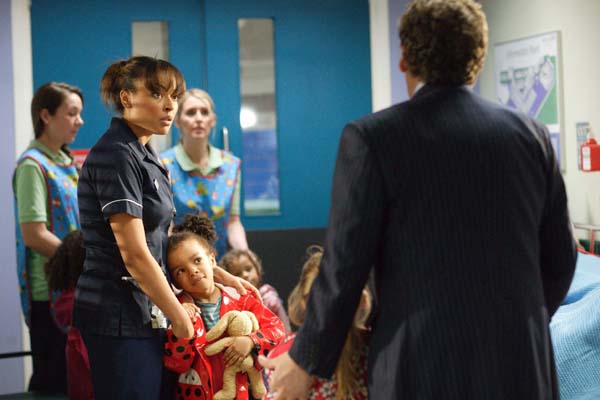
Holby City: Connie and Joseph battle time and tide

Blog comments are currently unavailable. Find out more.

Post categories:

Luke RobertsLuke Roberts|09:52 UK time, Tuesday, 18 May 2010

At the beginning of the shoot for this two-part episode of Holby City, Time and Tide, I think the director was in some pain. When he was told that we were having two episodes about a flood but we weren't doing any flood sequences, he replied "Riiiiigggggghhhht."

But I think it all works pretty well. It was a pretty smooth shoot, all things considered, and there's the ever-present sense that outside it's torrential.

At the beginning of the first episode there's warnings of a flood and other hospitals in the area are affected.

Obviously, Holby then gets affected and the water gets into the basement and the consequences are that we lose power, so we're in a constant state of jeopardy.

In order to see this content you need to have both Javascript enabled and Flash installed. Visit BBC Webwise for full instructions. If you're reading via RSS, you'll need to visit the blog to access this content.

My character, Joseph, is in theatre with Amanda Mealing's character, Connie, and we're all under stress because we shouldn't be in there and that's where we leave off at the end of the first episode.

Joseph does take a tougher line and on this occasion Connie is the wobbly one because of her personal emotional involvement in it all.

Amanda and I have been working together for some time and we have to shift up those dynamics a little bit and I think it was nice for Amanda to play it a little more frail.

I think Amanda's at her strongest when tough schoolmarm Connie is knocked off her pedestal emotionally. She did a great job and it's kind of cool for my character to finally grow some balls.

We're actors so we always embrace the dramatic - the bigger the better! Holby really excels when there's a major incident that involves the entire cast and unites the staff of the hospital.

Big episodes like the flood are really good because they offer everyone a little more dramatic licence.

Toby Moore, our director of photography, was able to have a lot more fun than he usually does because he has to create a disaster zone - it's basically like the Towering Inferno.

Dr Joseph Byrne, played by Luke Roberts, and Dr Connie Beauchamp, played by Amanda Mealing, rush a unconcious patient down a corridor in desperate search of a room with power

You've got these beautiful beams of light across people's eyes but otherwise it's all in darkness and there's flickering lights and, as actors, all we get to see is the shadows, and then they put a little jolt in your knees to make you pretend the lift is broken.

These kinds of episodes are really fun. Personally, I relish it - and I wish we did more of them! But we have to earn them - you can't have them every week in Holby City.

They're also exciting for the audience because the stakes are higher for everyone. The emotional stakes for Connie are high, and then there's Mark (Robert Powell) trying to keep everyone together and basically everyone's in danger.

That's what we want - drama! You want instant, cold fear!

It's fun for me because my character's pretty starchy. I mean, I love Joseph dearly but he's quite suit-wearing and nothing's out of place, so it's fun for me to be in scrubs.

Ok, there's not many moments, I admit, but there's a little more chance to play the action hero, running around in scrubs and carrying trolleys down the stairs and that kind of stuff.

It's actually quite hard to do. It requires a lot of concentration when you're trying to take a stethoscope out of a bag, or a syringe, or whatever it might be, and you're doing it all on the move and hit our mark and get in the right bit of light and delivering it with the right intensity and not overcooking it.

Paradoxically, even though my character wouldn't normally touch anyone who was even slightly dirty, I inevitably get thrown into the fray to see how my character will react.

There's a real sense of hospital community as everyone's story is interwoven. Jaye Jacobs' character, Donna, has a story with a missing child and that links into everything else.

Nurse Donna Jackson, played by Jaye Jacobs, stands on the ward with her infant daughter Mia

Meanwhile, we're throwing everything up in theatre and running out of power, and against the clock and other unforeseen problems. It's dramatic, exciting and involves everybody - it's a real visual treat!

Funnily enough, I think there are about three shots of water in those two episodes - and it's the secondary problems, the electricity and the lack of air-con, and all the other problems.

There are a lot of references to water but fortunately for us, we don't see much. Frankly, actors can often be the last concern filming stories like this and we often get wet and cold in the line of duty but we were spared a soaking this time!

Holby's so much fun - I've done shootouts, delivered babies in lifts, been held up in South Africa, been to Dubai. I've done a lot of running down corridors and sometimes falling down corridors when it goes wrong. More of it for Joseph please!

Luke Roberts plays Dr Joseph Byrne in Holby City

Holby City: Time and Tide Part One is available on iPlayer until Tuesday, 25 May. Part Two is available on iPlayer until Wednesday, 26 May.

Boy George: What I thought of Worried About The Boy

Blog comments are currently unavailable. Find out more.

Post categories:

Fiona WickhamFiona Wickham|15:31 UK time, Thursday, 13 May 2010

Worried About The Boy is a new one off drama about Boy George's late teenage years. The story begins before he was famous, and tells the story of him leaving home in the suburbs and becoming a leading figure on the New Romantic club and fashion scene. It leads all the way up to him starting Culture Club and falling in love with Jon Moss.

Boy George spoke to me about how he felt about having a programme made about his personal life - and what he thought of the actors, the costumes and the make up.

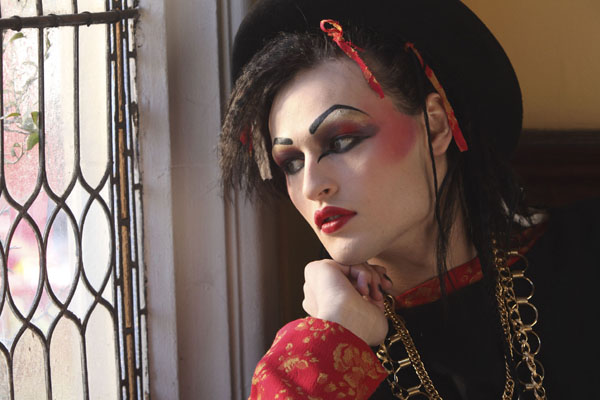
Douglas Booth as Boy George stares out of a window in Worried About The Boy

What did you think of the drama?

I watched it on my own to start with. I don't know what I was expecting it to be and I thought I might horrified but it really made me laugh.

I'm not particularly precious about the past anyway so I was never going to lose any sleep over it. But it's beautifully filmed and Douglas Booth is amazing. Somehow he has the stink of me! He just gets it. There's something about him that reminds me of me when I was 17.

There's a few bits of artistic licence. For example, my dad was a Cockney.

Wasn't he Irish?

He was Irish, but he never spoke in an Irish accent so that was quite amusing to see that. But what's great about this is it's captured a really important part of history and that's great. I think it looks brilliant. Steve Strange looks like Caligula - he seems to come off the worst (laughing) but I was chuffed with it actually.

I liked the relationship between me and Marilyn, I thought that was really positive.

In order to see this content you need to have both Javascript enabled and Flash installed. Visit BBC Webwise for full instructions. If you're reading via RSS, you'll need to visit the blog to access this content.

I agree, that was funny and a lot of the scriptwriting made me laugh.

My favourite line is where I'm with the guy in the phone box and he says I'm not really gay and I say, I'm not really a nun. I don't know if I ever did say that but I hope I did! It's quite bitchy.

I mean, here and there, there's a lot of bitching when nobody bitches that way all the time. There's a lot of one liners.

But generally it has a great heart and the styling of it! They've really got the clothing right and there are characters who are based on people who were around at that time and they've really got their looks completely perfect.

And Douglas' make up is just beyond... I laughed my head off! I was like "Oh my God!" - they've done it really well.

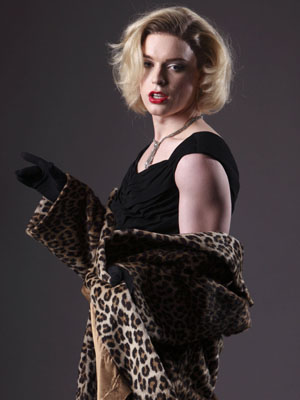
Freddie Fox as Marylin in Worried About The Boy

And he's quite beautiful too.

Oh yes, stunning! Absolutely stunning! I think not many people can pull off those kind of looks. They're quite individual - not many people can wear a yellow face and make it look pretty.

So it's a triumph. I was really impressed with his acting - and Freddie Fox too, I thought was really good at Marilyn. In fact I'm having a viewing of the film tonight and Marilyn's coming over with my friends to watch it. The real Marilyn.

I said to him, you won't like it! But you'll be pleased with our relationship in it. Because you know, he hates everything. (laughing)

But I'm really pleased with it, it made me laugh so much.

One of my favourite lines was from Marilyn, when Douglas (as you) says to him, why can I only pull straight men? And Marilyn says back, "Because you're really unattractive to gay men."

(Laughing) It's so true as well!

My relationship with Jon is quite reasonable in this film (laughing). Like when we split up in the end, I was thinking I don't remember it being all that reasonable in real life! It was more frenzied than that.

How did you hear about the film?

I found out about it from my friend who was asked to do the make up. So I called the BBC. I managed to get a few of my friends jobs on it so at least I knew the look would be right.

I was really worried they'd make it look too pantomime because the looks are so extreme and they were specific to people. That's what impressed me the most. Lots of the people who worked on the drama, in terms of the styling and make up and stuff, were people who were around at the time.

My friend Donald McInnes, he's the make up sort of designer and my friend Christine Bateman who does my make up, she worked on it as well. And a girl called Annie Symons who also was around at the time - so pretty good people working on it.

What was your first thought when you heard about them wanting to make a film about you?

I wanted to know what it was about, obviously and I did get the script and I kind of read bits of it and I thought 'Oh I can't be bothered.' It's basically true and there's obviously bits of artistic licence here and there.

Is that scene true, where your Dad is looking at your picture in a magazine and he's saying "So what have you all done? I don't get it. What are you called?" and he just can't get his head round your celebrity.

Yes that's true! Because I wasn't famous but I was getting a lot publicity for looking weird. My mum and dad... I would come home with these photo albums full of cuttings, or they would see me in the Daily Mirror, a fashion spread or I was on the cover of a German magazine. And they were like, well what do you do? You don't work, you're on the dole, you don't seem to get out of bed... how comes?!

Really, when I got the band together, they were so relieved, because it was like alright, now we know what he's going to do. But for three or four years they just did not understand my lifestyle at all.

Douglas Booth as Boy George makes his first appearance on Top Of The Pops

Your dad is portrayed as, although very blokey in the film, he's really accepting and understanding of you.

He was. My dad's dead now, unfortunately but he was amazing. When I came out, I thought he was going to kill me. Absolutely I thought I was dead. Over! Like I better say my prayers now.

And he was absolutely brilliant about it. I've always had their support in that respect and it was amazing to me that my dad was so relaxed about it.

So when you visited the set, you Tweeted about how good Douglas Booth looked and how you were looking forward to seeing the film. Did you talk to Douglas at all?

No I didn't talk to him about what he was doing. When I went up there was the day they were doing the extreme look with the yellow face and sticky up hair. I'd seen pictures of Douglas and thought, he's really beautiful but he doesn't look like me. But when I saw him in the gear, I was like Oh my God, he really does look like me! It's so weird!

We were in this room, we were having breakfast there and he was getting mic'd up and it was really creepy looking across the room thinking, he really does look like me.

Obviously he was playing me when I was 17 and I was a lot more feminine when I was younger. I've morphed into a more rugby type figure since I've got older (laughing) but when I was that age, I was very girlie and androgynous. And he definitely has that, even as a normal person, he has this sort of rock star look about him.

I was watching and when I was there they shot it where he went to the toilet and he's standing up and I said "Oh, I wouldn't have stood up!" (laughing) But that was about it really. I didn't interfere with what they were doing because it was very nice up there and when I saw what they were doing I was really impressed by it.

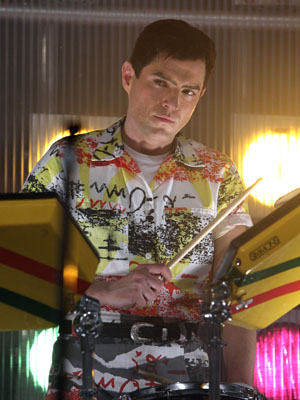
Mathew Horne as Jon Moss playing the drums for a Culture Club live appearance

What did you think of Mathew Horne as Jon Moss?

Mathew talked a bit like Jon, I know he met Jon before he did it, and they had tea together. His mouth - he's really got Jon's mouth, the way Jon talks. Although Jon was quite posh, he used to talk a bit like that and play act at being a bit of a lad. Mathew must have studied it because he really did get it. I think Mathew's great in it actually.

How do you think back on that period now?

Well you know, they're dealing with certain aspects of it and they have a limited amount of time so you don't get time to really see relationships developing as such. Life is far more complex.

The obvious thing would have been to do a film about Culture Club. That sort of period really shaped a lot of people. It was a really exciting time, we were all living kind of vicariously, squatting, you know, living hand to mouth, kind of hedonistic.

But it was also a great time of discovery and personal discovery, sexuality... so many things were going on you know. And a time of great freedom for us as teenagers so yeah, I think it was an interesting time to choose.

And generally it paints a true picture of what happened at that time.

Fiona Wickham is editor of the BBC TV blog

Worried About The Boy premiered on BBC Two at 9pm on Sunday, 16 May and is available on iPlayer until Sunday, 23 May.

Worried About The Boy is part of BBC Two's Eighties Season

Theo's Adventure Capitalists: Can you sell Marmite to India?

Blog comments are currently unavailable. Find out more.

Post categories:

Theo PaphitisTheo Paphitis|13:05 UK time, Monday, 10 May 2010

The concept of Theo's Adventure Capitalists is: Can we do business abroad? Our great British nation who used to be fantastic international traders has really contracted back to our shores in the last century or so.

When we look at the state of the British economy, we're coming slowly out of recession, the pound's been bashed, we've got some difficult times ahead - it's easy to start becoming negative. But actually there's a massive positive.

And that is, if the pound is weak and we've got slow growth here, there's countries out there who still have got growth and our weak pound makes our products and services very attractive.

So that's one big tick in the box.

In order to see this content you need to have both Javascript enabled and Flash installed. Visit BBC Webwise for full instructions. If you're reading via RSS, you'll need to visit the blog to access this content.

Another is that 50% of UK plc's turnover (or Gross Domestic Product [GDP] in layman's terms) comes from small and medium sized businesses.

And 50% of all small and medium sized businesses fail in the first three years.

Now if we can give them a leg up with some guidance and finance, then we could gallop out of this recession. We just want small and medium sized businesses not to fail so dramatically. And we only need to do a tincy wincy bit.

With a little bit of growth from businesses abroad, we can replace all that consumer buying that is now lacking in the UK.

Doing business abroad sounds very attractive looking at it that way.

But of course, doing business in someone else's back yard can seriously get your butt kicked if you don't learn their culture. And it takes more than an airline ticket and a hotel room to do business abroad.

The show was made in partnership with the Open University, so it is a learning-based programme that had to be entertaining too. There's only a little bit of lecturing there, hopefully.

Something I preach when you start a new business is: homework, homework, homework.

Stack the cards in your favour. In a casino if you stack the cards in your favour, you get thrown out. In commerce it's called knowing your business and with it, you'll have a better chance of surviving.

You can't say "I'm going to set up in India or Vietnam or Brazil" from the comfort of your office. You need to get out there, smell it and see it.

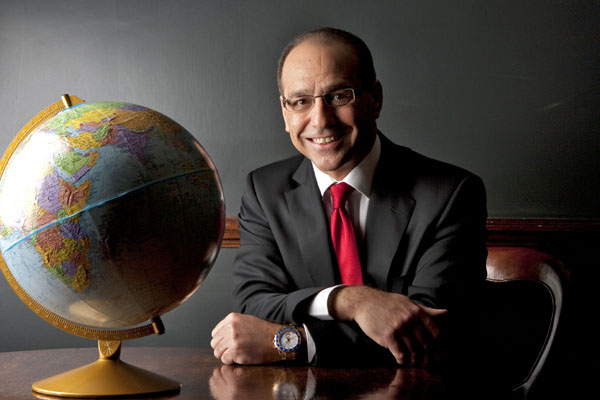
Theo Paphitis sits next to a giant globe

I'll share a story with you about a lingerie business I was once involved in. We had a successful formula which worked all around the world so we set up a franchise in Saudi Arabia.

So, you have lovely lingerie on the shelves and on the peg and fantastic pictures of ladies wearing it, which you put around the store and in the window.

Wrong.

Because in Saudi Arabia, you can't have those pictures up on display - number one.

Number two: all the shop assistants are male because women aren't allowed to work.

And then, just when you think you've got enough problems, every time there's a call to prayer, all your staff walk out the store, leaving the tills and doors open to go and pray.

Even with all our homework, those were three challenges we only learned about by being in the country.

Now luckily, they have a pretty good honesty system in Saudi Arabia, which I won't go into, but nobody nicks the money. So there's a relief. We could never bring that business model back to the UK where you say, don't worry, leave the tills alone and go to prayers. But it it really does work in Saudi. They don't steal the money.

Now if you've only got male assistants, the ladies won't try the lingerie on, so you don't need changing rooms. The customers take it home to try on and you have to have a good returns policy.

And how do you deal with not being able to put pictures up? You do artistic line drawings which simulate the female form and put that in the window.

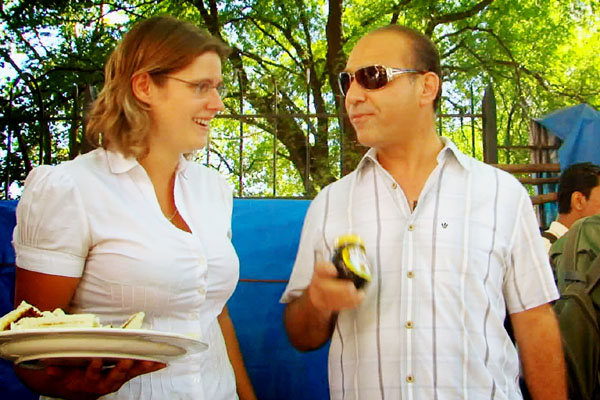
Theo Paphitis and Marmite's marketing manager, Cheryl Calverly, try giving away free samples on the streets of Mumbai

You have to have an open mind. Look at your product and think, how do you modify it to fit the market? Because you know what, it's really tough to change the market to fit your product.

That leads us onto episode two, where you'll see us trying to launch three products in India - luxury watches, biofuel and Marmite. I started off thinking I was a hater though since the show I've come round a bit. If I had been a lover of Marmite, I probably wouldn't have liked to see this next scene in the programme.

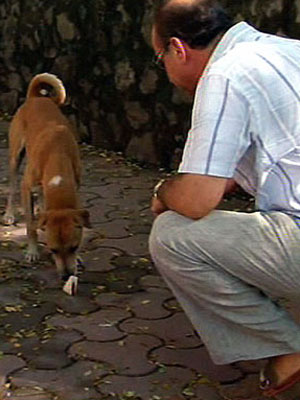
It was where we were on the streets of Mumbai, giving away free Marmite sandwiches. The people just hated them. This starving stray dog came up to me, and I thought, well I've got a whole tray of these things...

So I end up on my hands and knees and as I'm going forward to the dog to entice it to eat this sandwich, the dog instantly taught itself to walk backwards. It became a circus dog and as I went backwards, the dog came forward. In the end I left it on the ground for him. He sniffed it, backed off, cocked his leg and walked away.

Theo offers a stray dog a Marmite sandwich. The dog sniffs it before declining the offer

It's comical but that was a worry to me, I've got to be honest. Because if dogs won't eat it - who's going to? You'll see in the episode how we got through all the challenges.

The Marmite marketing team were fabulous by the way, and so they should be, being owned by Unilever and having the resources. Their venture partner in India thought Marmite wasn't a big enough product to try launching. Unilever deals with hundreds of millions of pounds of turnover with their washing powders and so on, and they didn't want to dilute their resources for a smaller product.

The marketing team decided to go ahead anyway. Marmite has a history of being commercial in varied ways.

In Sri Lanka, it sells very well as a drink you mix with a few local herbs - and it comes in powder form!

And during the First World War, Marmite was given to newborn British babies. It was sold as a food supplement for vitamin B. There's an old black and white ad I've seen around which says something like, "Have you got a disappointing baby? Feed it Marmite!"

Their marketing manager, Cheryl Calverley is exactly the person you'd like with you in the trenches. She has the right outlook in that she doesn't expect success or failure. For her, it's a scientific approach. If the samples weren't right, she wouldn't power on.

She's passionate, which is often something lacking in big companies. But she makes sure she still sees dangers and is prepared to rein back if the signs are there - some passionate people can't do that.

Entrepreneurs like me generally look at it differently. We look at the risk/reward ratio. My approach is gut reaction and experience. Sometimes I do things which have a chance of failure. I'm not afraid of failing.

Anyway, let us know what you thought of the programme - and if you've ever had a go at setting up abroad, let's hear your tips.


Theo Paphitis is the presenter of Theo's Adventure Capitalists.

The second episode, set in India, is broadcast on BBC Two at 8pm on Tuesday, 11 May. Episode one is available on iPlayer until Tuesday, 25 May.

Autism, Disco & Me: Jimmy's in the mood for dancing

Blog comments are currently unavailable. Find out more.

Post categories:

Liz BloorLiz Bloor|09:38 UK time, Thursday, 6 May 2010

When I was asked to produce a documentary for BBC Three about how disco dancing has changed 10-year-old James Hobley's life, it seemed like an interesting opportunity to make a potentially quirky documentary about a cute kid who is a great dancer. It had to be a winner.

That initial euphoria was then replaced with anxiety. James - known as Jimmy - has autism. I knew very little about the condition, didn't know anyone living with autism and had no idea of how it would work out, making a film where the central character is only 10 - and autistic.

In order to see this content you need to have both Javascript enabled and Flash installed. Visit BBC Webwise for full instructions. If you're reading via RSS, you'll need to visit the blog to access this content.

I rang Sheila, Jimmy's mum, within 10 minutes of being asked to make the film. As the lynchpin of the Hobley family I knew she'd be the key to the success of my relationship with all of them. We had to get on well as I'd be spending the next five months following their lives and I needed them to trust me.

From that first call, Sheila was warm, reassuring and very open. She's a great communicator. Sheila's two other boys, George (Jimmy's twin) and Alex, 16, both have autism too. But it was Jimmy who was the most profoundly autistic, and whose future Sheila feared for the most.

When a leaflet advertising disco classes dropped through their letterbox by chance, Sheila took the twins along, little realising she was embarking on a course that would change Jimmy's life.

Sheila talked about how she and her husband Andy believed that dancing had clicked a switch in Jimmy's head.

She told me that at seven he'd been unable to read and write and lived in a world of his own. Within months of dancing he had started to read and write and had found something he truly enjoyed.

"I think he was always dancing," she said. "He was always dancing in his head but he needed a dance teacher to show him the steps."

My next call was to the National Autistic Society. I wanted some advice on working with a family living with autism and how to make the filming process as easy as possible for them. I also wanted to check out Sheila's assertion that dancing had initiated such profound changes in Jimmy.

The press officer said that they had heard similar stories from other parents but as far as they were aware there had never been any academic studies to show the link between dance, or any other kind of exercise and intellectual development.

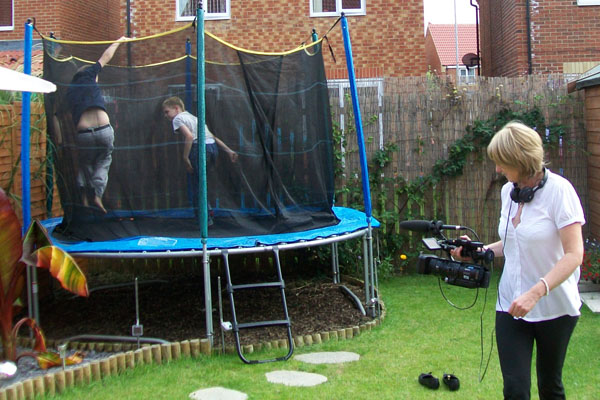
Liz Bloor films the Hobley children on the trampoline in their back garden

This was disappointing as I was hoping to really explore this theme in the film. My relationship with the family and the story they had to tell was now even more important, as the documentary would solely rely on their personal experiences.

Within days, I travelled to Redcar to meet Sheila, Andy and the boys. Kimi Gill from the National Autistic Society came too, principally, I think, to represent the family's interests.

Once again, Sheila was engaging and it was clear we'd get on. Andy was equally relaxed and let Sheila do most of the talking.

When the boys came in from school, my first impressions were telling. Jimmy leaned against the door frame watching what was happening without saying a word. Alex said hello, then disappeared upstairs not to be seen again. George came bounding into the room talking and full of news about his day.

On the drive back to the station, Kimi told me she thought that Jimmy and Alex were more typical of people with autism: quiet, reserved and finding it hard to make and keep eye contact. George is unusual with his openness, eye contact and huge emotional intelligence.

The next time I met the boys was with my assistant producer, Alan, and Jimmy was a different character altogether - happy, chatty and fine abut being filmed. George was also very keen to appear on camera and to do some filming himself. It was Alex, the older son, who was the most uncertain and reserved. He stayed that way for the rest of our time with the family.

I asked Jimmy to show us some of his warm up routines and we filmed him the first evening with his dance teacher, Anita. It was clear that Jimmy has a real gift for dance.

As he told us: "When I'm on the dance floor I feel free and like I don't actually have a disability, I feel like everybody else."

It was lovely to see the relationship he has with Anita and how well they work together. Over time we saw just how much hard work Jimmy has put into his dance with five disco classes a week, a ballet lesson on Fridays and competitions at least twice a month.

The first insight came when we filmed the large dance class on Saturday morning. The class runs for three hours and is incredibly intense. Those kids are fit and incredibly bendy! It gave us a clue as to the championship levels of dance we might see at the competitions.

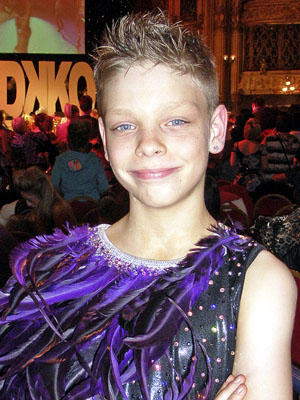
Jimmy dressed as in his bright purple dance costume outfit

We saw our first dance competition in Gateshead in September, two months after filming had started. The first thing that hits you is the volume - it's so loud we had to lip read - and that goes on for 10 hours or more.

The next shock is the transformation in the dancers from super-fit kids to exotic birds of paradise with amazing costumes, bright orange tans and Las Vegas showgirl make up (seemingly obligatory for all the girls from four to 20). Some of the dancers are incredible.

Jimmy was a star and we thought, with perhaps some bias, that he was fantastic. As he says, he really comes alive on the dance floor, his concentration and memory for routines is amazing.

These competitions do take their toll on the family. The days are long and with no-one to mind him at home, George has to come too. He says he finds it really boring and you can see why - there's lots of hanging about between rounds.

Competitions are also expensive. Costumes can cost upwards of £700, and then there's the travel, food in the venues and entry fees. It's not a cheap hobby and the family have had to make sacrifices. George seems to feel it the most keenly.

Over the months working with the family, Alan and I got a real insight into just how difficult it can be living with children with autism. We learned that we had to stick to arrangements and promises as changes affect their mood for the rest of the day.


As all the boys had short attention spans, we filmed with them in a concentrated way for perhaps 10 minutes and then they'd lose interest and we'd have to have a (long) break. Other than these basic similarities the boys are very different characters and their autism presents in different ways.

Jimmy is very focused on his goals and likes being on his own doing his own thing, paying little heed to anything else whereas George is the opposite. He craves attention and loves talking.

Like most teenagers, Alex wants to be with his friends and is desperate to be accepted by them as "normal". This was a strong theme for Jimmy too and it's wonderful that he may be able to go to a mainstream school now.

The boys are happy and relaxed at home where they feel safe but unsure and unsafe in the outside world. They have no road sense and little comprehension of danger and consequences. A parent has to be around all the time and they can't enjoy the simple pleasures of playing out on the street or going to play with other children.

It puts a huge strain on Andy and Sheila especially as George also has behavioural problems and enjoys challenging strangers and his parents in public spaces like the supermarket.

Over the months I spent with the family I became really fond of them all. I learned that autism can manifest itself in many ways and it's hard to describe absolute characteristics. Each boy was totally different and affected differently.

One thing they did all agree on was that they are going to find it really hard to survive financially beyond school. They all said they knew getting a job was going to be really hard and to live an independent life was almost a dream.

Perhaps this was one reason they were so supportive of Jimmy - he has a chance to live his dream of becoming a professional dancer and really making the most of his opportunities. I really hope he does.

Liz Bloor is the producer for Autism, Disco & Me.

You can read an interview with Sheila Hobley, Jimmy's mum, on the BBC Three blog.

Autism, Disco & Me is on BBC Three at 9pm on Thursday, 6 May. The programme is part of BBC Three's Living With Autism season

Out Of The Frying Pan and into Sandhurst

Blog comments are currently unavailable. Find out more.

Post categories:

Rachael BarnesRachael Barnes|17:52 UK time, Tuesday, 4 May 2010

We were only there to watch. It's standard procedure in an observational series, but a little less easy to pull off when your lens is trained on two rookie caterers who've just been told they must deliver a three-course banquet to nearly 300 newly commissioned officers.

Every producer's instinct is to make it happen. As the series producer dealing with both James and Ali and the clients they'll be cooking for, my instinct was no different. But in this case 'it', the event, will be solely, wholly, utterly in the hands of James and Ali.

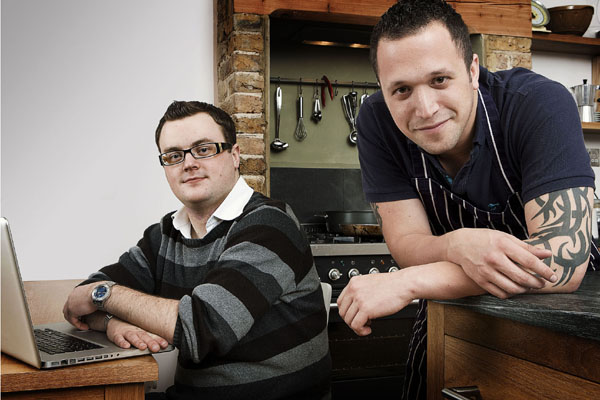
Alasdair Hooper and James Knight Pacheco

James Knight Pacheco and Alasdair Hooper took part in the second series of The Restaurant, competing to win the backing of Michelin-starred chef Raymond Blanc to open their own restaurant. They made it all the way to the final, gaining a huge and affectionate following, only to be pipped at the post.

Despite coming second, it was clear they had both talent and great TV presence. They were fun and funny together, and passionate about offering a fine dining experience, although, as The Restaurant judges constantly told them, they were rather inclined to overlook basic details in delivering it.

Raymond Blanc offered James training in his own kitchen at the double Michelin-starred Le Manoir aux Quat'Saisons and Ali was given a position in front of house. Nine months later the BBC returned with a new challenge: test your new skills in the real world once more - this time as event caterers.

They'd learned huge amounts training under Raymond and were eager to prove it. But however tough the Manoir kitchen, it had Monsieur Blanc's exquisitely honed menu, an elite kitchen team, and fully functioning equipment.

What James and Ali are embarking on now is guerrilla gastronomy - rolling out their brand of fine dining wherever and for whoever was asking. And we tracked down some pretty demanding clients to test their mettle.

Duncan Bannatyne's dinner party in Mougins in the south of France took bags of ingenuity in episode one. But they managed to steer their way through French food markets and unfamiliar local ingredients.

Then, in episode two, in the New Forest they'd overcome antiquated ovens and served up nearly 18 hours of continuous service culminating in a five course game banquet.

James at the stove

With happy clients under their belts, I knew the boys were riding high. I also knew the Sandhurst dinner, with the biggest number of diners they'd ever served, was going to stretch them further still.

But only as James and Ali themselves stood in front of the chief of staff and head of functions for their briefing did I realise fully how hard we were pushing their buttons.

In keeping with the ceremony of the evening, Sandhurst wanted silver service. It was a shock enough for front of house Ali, who'd never overseen a silver service team in five years in the restaurant trade, but a quick look at James revealed he may as well have been asked to plate up on the moon while wearing a spacesuit backwards.

I'd thought it was all about numbers, but the challenge for James was something else altogether. I think even he'd agree he likes to be in control - he's a perfectionist, certainly, used to overseeing every item he sends out from the kitchen.

But the Sandhurst request meant handing over his creations to be served up by strangers. In a cruel culinary twist on Chinese whispers, James would need to demonstrate his dishes first to Ali, who would, in turn, have to communicate his presentation to an as yet unknown team of 30 waiting staff.

It was a terrifying turn of events for James. And one we hadn't even spotted coming.

The giveaway with James is his silence, and a tiny ticking muscle in his face. But even if we had been able to take him to one side, resuscitate and reassure it would all be OK, he wouldn't have listened. He needed to work out a menu strategy for himself, and within 24 hours he had.

James is one clever and creative chef, and the menu he created to waiter-proof his dishes without compromising on design or taste was inspired. It even looked as though they might be in for a smooth service on the night - well right up until the afternoon of the event....

As for the night itself - well it's probably not giving anything away to say it's another white knuckle ride - both in the kitchen and front of house. Make sure you watch to see if anyone gets fed!

Rachael Barnes is the series producer of Out Of The Frying Pan. The third episode will be on BBC Two on Wednesday, 5 May at 7pm

More from this blog...