BBC TV blog - BBC TV blog

Archives for March 2010

The World's Most Dangerous Place For Women

Post categories:

Gary AndrewsGary Andrews|17:53 UK time, Tuesday, 30 March 2010

Over on the BBC Three Blog there's a fascinating piece from Fiona Lloyd-Davies, the director of The World's Most Dangerous Place For Women, describing the challenges and emotions of putting together the documentary.

As Dana, the blog editor says, just watching the preview for the programme leaves you feeling angry, emotional, upset and more than just a little intrigued.

Dangerous.jpg

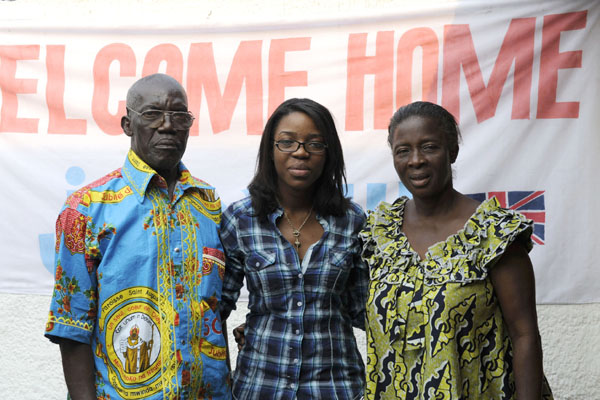
The programme, which airs on BBC Three tonight (Tuesday 30 March), follows a young woman's journey back to the Democratic Republic of Congo to see the effects of widespread violence and rape against women in the country.

One of our aims on the TV Blog is to give you the inside stories on the shows featured here, or highlight inside stories in other places, and Fiona's piece does just that, painting a vivid picture of a country where "rape is cheaper than bullets".

The World's Most Dangerous Place For Women is one of a range of programmes across the whole BBC network to coincide with International Women's Day earlier this month.

Jana Bennett has already written about the highlights of this series in a previous post on this blog - if you've not already read the post, it's a good place to start for a snapshot of other programmes around the day.

Gary Andrews is standing in for Fiona Wickham, TV Blog Editor, while she's on holiday

Canoe Man: Why does the Darwins' story stick in our minds?

Blog comments are currently unavailable. Find out more.

Post categories:

Richard KleinRichard Klein|09:45 UK time, Tuesday, 30 March 2010

A Canoe Man paddles across your horizon only once in a while, so my first reaction to director Norman Hull and producer Magnus Temple's suggestion that we dramatise this story was one of delight.


It is odd, is it not, how every now and again some stories stick in our minds? They are true stories. Real people really did do all that the story said they did. But these stories stand out because they are more like fiction than fiction itself and therefore seem unreal.

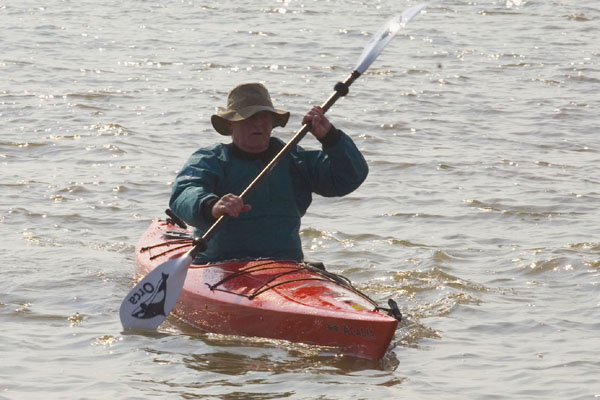
Bernard Hill as the canoe man paddles out to sea

Often tragic with a strong theme of the comic about them, these stories become iconic windows on our world. And when I hear or read about them there is always a little bit of me that thinks there but for the grace of God go I.


Norman Hull is a director who likes to explore the inner workings of his characters. In the story of John and Anne Darwin he struck a rich seam of material to draw upon. A couple who found themselves caught up in a spiral of debt, then, seemingly unwilling to face the normal consequences of bankruptcy, they opted to, well, opt out.

And then the hare-brained scheme - part comic and absurd, part cruel and slightly crazy - to pretend to drown at sea while on a canoeing trip in order to claim life insurance.

Follow this up with a madcap plan to live out the rest of their lives in Central America - of all places, Central America! - and then to find that, ah, oh dear, they need new visas in order to live in Panama permanently and they have to return to Britain to get them.

And finally, maddest - or perhaps most desperate - of all: the plan to go to the police and claim a five year disappearance was to be explained by a spot of memory loss. As I say, you couldn't make it up.


Bernard Hill turned up to play John Darwin - a role he took to with aplomb. Bernard delivers a performance that subtly plays with John Darwin's character, exploiting for both comic and tragic effect the gap between his apparent heartlessness towards his own children and his desperate attempts to get out of the sticky mess he finds himself in.

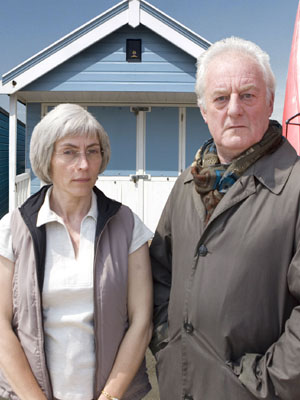
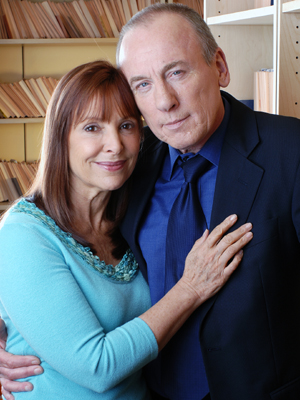
Bernard Hill and Saskia Reeves as The DarwinsSaskia Reeves also plays a blinder. Again, in the way that BBC Four dramas celebrate, she plays the complexity of Anne Darwin's situation with an elegant mix of emotion and deranged wifely support. Anne Darwin is, perhaps, the most conflicted and least understood character in this very human story.

The judge at her trial condemned her outright as the plot's mastermind and called her manipulative. Norman chooses to see her role in a more complicated way, suggesting that while she was very much part of the scheme she was also more aware than her husband of the emotional damage the reckless scam was causing, especially to her two sons.

Getting the film made was an achievement in itself. I am delighted that the producers met the Darwins' two sons, Anthony and Mark to gain their support and permission to portray them in the drama. What Norman wanted to do was not a simple re-telling but something more ambitious and the sons were happy to support it.

Anthony and Mark visited the set during the filming of the scene where Bernard Hill as John Darwin is interviewed by police. The script is verbatim of the real life police interview. Like of all us, they were fascinated by the magic of film-making. Though the circumstances were sensitive, both were very amused by Saskia's two wigs in the costume and make up truck - for looking uncannily like their mum's real hairstyle.


One of the aims of BBC Four is to employ style and wit, to entertain as it informs, that is as warm and affectionate as it is knowledgeable and insightful. The channel, at all turns, aims to deliver programming of distinction for people who love to think.

BBC Four is known for sensational biographical films and clever, attractive literary adaptations. It's great, therefore, to be able to branch out into broader factual territory.

Canoe Man is essential a tragedy but through good drama we can not only recognise the comedy but also the humanity and the reality - a very BBC Four approach!

Richard Klein is controller of BBC Four

Inside Over The Rainbow's first show

Blog comments are currently unavailable. Find out more.

Post categories:

Mark LinseyMark Linsey|11:02 UK time, Friday, 26 March 2010

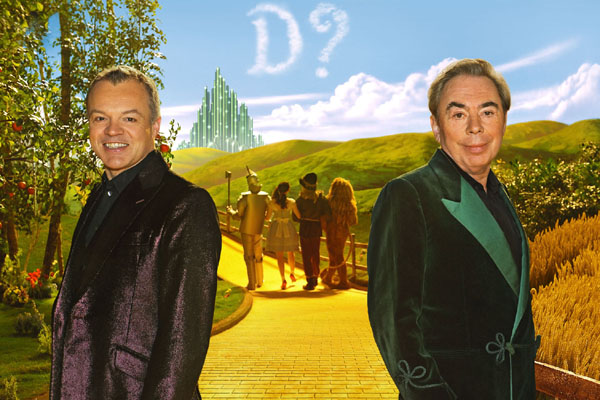
On Wednesday night I went to the recording for this Saturday's studio show of our new BBC One series Over The Rainbow, hosted by Graham Norton and starring Andrew Lloyd Webber.

We're searching for a Dorothy to appear on the West End stage next year. As the BBC's controller of entertainment commissioning I get to attend recordings of all the shows my team and I commission.

100326_overtherainbow_600.jpg It all went extremely well. Graham and Andrew - TV's unlikeliest couple - were on fine form. I've so enjoyed watching their relationship develop over the years and feel proud that it was the BBC who introduced them to each other. They exude mutual respect on screen which is so important in a show of this kind.

Our new panel of highly expert judges - Sheila Hancock, Charlotte Church and John Partridge were great. And, of course, the girls - 20 Dorothys - performed astonishingly well at this early stage of the series.

Sheila, John and Charlotte are already working very well together. Sheila knows everything there is to know about acting and is passionate about bringing on and nurturing new talent. Charlotte, although still young, has been a professional singer for so many years she knows all there is to know about voice and performance.

And John, before he shot to fame as Christian in EastEnders, was a star of musical theatre in the West End, performing in Cats and Starlight Express amongst others.

Each brings something different but vital to the panel and each manages to say something constructive or insightful - watch out for Sheila's comments about pop music!

In order to see this content you need to have both Javascript enabled and Flash installed. Visit BBC Webwise for full instructions. If you're reading via RSS, you'll need to visit the blog to access this content.

The girls performed in groups of four, each group with a mentor - a current West End leading lady - Kelly Ellis (soon to replace Jodie Prenger as Nancy in Oliver!), Ruthie Henshall (currently appearing in Chicago), Sheridan Smith (Legally Blonde), Tamzin Outhwaite (Sweet Charity) and Melanie C (Blood Brothers).

This is an entirely new format for us but I really think we will be seeing more of it as it gave an added dimension to the singing.

It was never going to be easy getting 20 down to 10 aspiring performers for the live studio shows. The standard is extremely high and I was very encouraged, especially as some are so young (ages range from 16-28).

After much heated debate Andrew and the panel managed to agree on seven who would go through. Then with an even more heated exchange they came up with the next three who have made it through to the live shows and the public vote.

Andrew is brilliant in these discussions, very quickly and concisely focusing everyone's minds on what we need our Dorothy to have. Every time you sit in a room with Andrew you learn something new about musical theatre. His enthusiasm for new talent and the performing arts never seems to diminish.

In order to see this content you need to have both Javascript enabled and Flash installed. Visit BBC Webwise for full instructions. If you're reading via RSS, you'll need to visit the blog to access this content.

And revenue from the phone votes on this series will go to the Performing Arts Fund - a small BBC charity, but one which gives students who otherwise wouldn't be able to afford it the opportunity to study musical theatre.

In fact it's the biggest funder of musical theatre training - within the charity sector - in the UK and has supported over 100 students to date with awards totalling over £600,000.

So we have our 10 girls for the live shows. There is, however, one place left. It's down to you - our viewers now.

You get to choose in a phone vote which girl gets the wildcard entry place into the live shows. The winner will be announced during the first live show on 3 April.

The confidence and ability amongst our Dorothys is amazing but then that is what the series is all about - unearthing wonderful talent that exists in this country, nurturing it, watching the potential being fulfilled and seeing it blossom into marvellous West End talent.

Make sure you tune in to watch the excitement, the tears and the drama!

Mark Linsey is controller of entertainment commissioning

A decade of Doctors

Blog comments are currently unavailable. Find out more.

Post categories:

Diane KeenDiane Keen|15:20 UK time, Wednesday, 24 March 2010

In September of 2002 my agent called and said I'd been asked to go and meet the producers of a show called Doctors. I must confess I'd never seen it, so I sat down and watched the show, trying to familiarise myself with the characters.

Diane Keen and her co-star Christopher Timothy on set in 2005

Immediately, I realised that the main character (Mac) was played by the actor Christopher Timothy. We'd first met when we did a film together, Here We Go Round The Mulberry Bush. I was offered the part of Julia, Mac's ex-wife, and told the character would be in the show for three months.

Almost eight years later, I'm still doing the show and Julia has certainly seen some changes both in her personal and professional life. Over the years she's remarried Mac, lost him again and gained a second surgery - I know which one I'd rather have!

She's been accused of blowing up the old surgery, been in prison, been almost strangled to death by a boyfriend, opened a super practice involving two separate surgeries, moved house and been proposed to by one of the most gorgeous guys on the planet (actor Ray Fearon) and turned him down! What was she thinking, the soppy twit! I mean how many times is THAT going to happen!

On a more personal note, I've watched as Doctors has grown up into a fully fledged stand-alone drama, garnering awards all over the place including best storyline for Vivien's rape at The Soap Awardslast year, as well as best single episode at The Soap Awards in 2004, 2007 and 2009, best newcomer at the Soap Awards in 2005, and Michael McKell won best actor and I won best actress at the Royal Television Society Midland Awards in 2008.

It's not bad for a half hour daytime show which has never been actively promoted in a very big way and functions on a tiny budget. That means that all you guys out there who are so loyal to the show have helped, in no small way to make this possible.

I've been lucky enough to have had the opportunity to work with some wonderful, talented actors while doing this show. Some are very well known indeed. This week I'm filming a big storyline with Susannah York, and people like Sylvia Syms, Eric Sykes, Brian Blessed and Barbara Dickson are just a few others who I've been lucky enough to appear with.

I remember the time Barbara came in to play one of Julia's best friends. We were filming in a rather dingy bar in the centre of town and the only place we could sit in-between scenes, wrapped in several layers of blankets because it was the middle of winter, was the loading bay next to the rubbish bins - how glamorous is that?

I also get to work with the best bunch of people in the world. The crew, the people in the production office, make-up artists, costume designers, writers, producers, runners, the art department and many, many more that make up the whole unit, not to mention the regular actors in the show.

In fact we all have lots of laughs every day. To be honest, if we didn't I don't think any of us could sustain the long hours and often trying conditions that we have to film in.

I remember one day in particular when Chris and I were filming all day in a sauna and spa. For some reason we both got the giggles so there were more retakes than there should have been and, consequently, when we finally got out we were both wrinkled like prunes which made us laugh even more, which resulted in even more retakes.

It's being part of such a close-knit team that makes it all possible. Nothing is ever what it seems and because we work three months ahead, we often find ourselves filming a summer scene, in summer clothes in the middle of January, in a snow storm and standing on three inches of ice!

Whenever I get some time off, I travel. It's a passion of mine and the extraordinary thing is that wherever I go in the world, people know me and tell me that they watch Doctors because this show is syndicated and goes out on BBC Entertainment (previously BBC Prime) in dozens of countries all over the world.

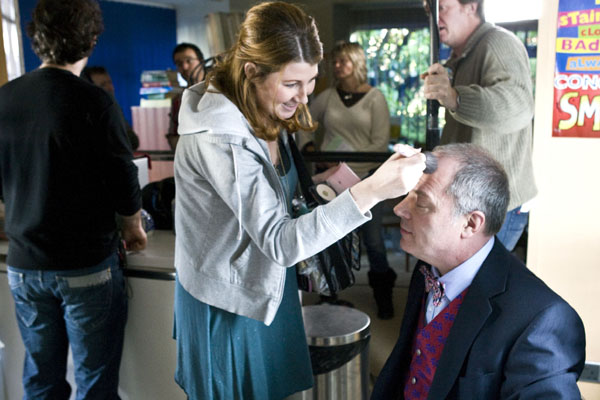
Backstage at Doctors - a make up artist applies power to Owen Brenman, who plays Doctor Heston Carter

One lady who lives in Zambia said that because they get so many power cuts there, she was missing the show so she went out and bought a generator, costing huge amounts of money, just so that she wouldn't miss any episodes! Apparently, all her friends go over to her house to watch the show. How's that for dedication?

During the 10 year run of Doctors some big events have taken place. Pebble Mill Studios was pulled down six years ago and we moved to the BBC Drama Village at the University of Birmingham. The transition was seamless and the show carried on as normal with a new surgery and new surroundings.

Three years ago it was decided that we would run through the entire year instead of being taken off for during the summer. This meant we needed to produce more episodes a year, 234 to be exact, so as there are only seven days in a week, the only way was to extend the days in order to shoot longer. Hence the advent of the dreaded triple banking.

That means three separate crews shooting three half hour episodes each, all filming at the same time! Yeah, I know, it takes some doing to remember where you are in each separate storyline, while shooting nine episodes at any given time and out of sequence, but we eventually got the hang of it.

Triple banking equals speed, so I guess we are allowed to feel proud of what is delivered to your screen five days a week, especially this special 10th birthday week. Here's to the next decade of Doctors!

Diane Keen plays Julia Parsons in Doctors

BBC's quality shines at the RTS Awards

Blog comments are currently unavailable. Find out more.

Post categories:

Jana BennettJana Bennett|15:37 UK time, Thursday, 18 March 2010

One of the most memorable images of the week for me was the moment when Charlie Brooker stepped onto the stage to pick up the Royal Television Society award for best entertainment programme.

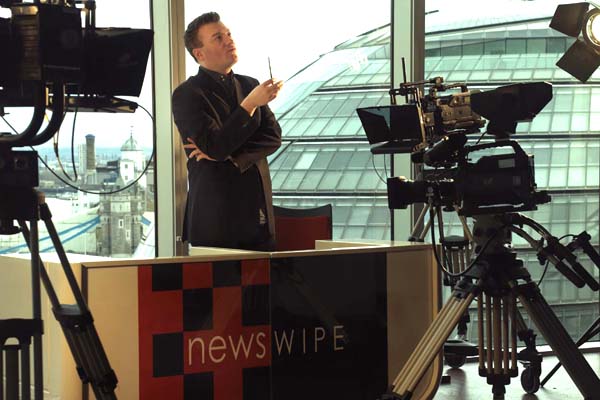
BBC Four's Newswipe with Charlie Brooker was recognised above two estimable giants of the entertainment world: X Factor and Britain's Got Talent.

100318_Charliebrooker_600.jpg

The humorous and uncompromising voice of Charlie Brooker on the BBC has gained this acclaim by having originality, an attitude and genuinely, something to say about our media today. The fact is that BBC Four, a relatively new channel (in British terms anyway), can punch above its weight at these important industry events.

The night saw a record number of awards for BBC television, winning 19 out of 27, if we include the distinguished Norma Percy's judges' award for her unparalleled work for the BBC. It also illustrated what we mean by quality when we talk about the BBC's ambitions in the future.

The range of BBC One's awards was remarkable. From Peter Bower's drama, Occupation to popular factual series like Famous, Rich And Homeless; from EastEnders in its 25th year and Jimmy McGovern's The Street; from the searing feature-length documentary, Wounded, following the slow painful rehabilitation of two veterans of the conflict in Afghanistan to the best history winner, Garrow's Law and double winner Small Island - these were all quality but all very different.

In order to see this content you need to have both Javascript enabled and Flash installed. Visit BBC Webwise for full instructions. If you're reading via RSS, you'll need to visit the blog to access this content.

That key ingredient, quality also stood out for the judges, across a wide variety of programme winners, from both children's channels, CBeebies and CBBC as well as our BBC Four international programme, Mad Men.

BBC Comedy also did well. Miranda Hart, who I sat next to, was fine until the ceremony's wonderful host Rob Brydon suddenly announced halfway through, that there would now be speeches for the remaining awards.

What was a reasonably stress-free evening for nominees suddenly tensed up around the comedy table.

But win Miranda did, for best comedy performance, after her breakthrough sitcom Miranda on BBC Two. While the winner of scripted comedy on my other side was Armando Iannucci, and his Thick Of It team.

Last week's launch of the BBC's strategy review was headlined 'Putting quality first'. No doubt what this means will continue to be debated - but its significance really hits when you look at all these very different winners and the huge array of talent behind them.

Jana Bennett is the director of BBC Vision

What do you want to see on BBC HD over Easter?

Blog comments are currently unavailable. Find out more.

Post categories:

Danielle NaglerDanielle Nagler|11:10 UK time, Wednesday, 17 March 2010

Being a (relatively) new kid on the channel block, we at the HD channel are keen to try things out and I wanted to let you know about one of them. We aim to broadcast the best of the BBC's programmes - and I'm very aware that each and every one of you will have a different view about what "our best" is.

So, over Easter weekend, we're proposing to hand over a number of those choices to you - our viewers.

At the BBC HD's website you will find a selection of 30 programmes we've broadcast over the last year, representing every kind of programme we show, from Life to Shaun The Sheep, from A History Of Christianity, via Psychoville, to Darwin's Dangerous Idea, and of course Doctor Who and Top Gear.

A History Of Christianity

We're asking you to select between them in our Easter Vote and at the end of the voting period we'll find schedule slots for those that you most want to see again. Of course I'm also interested in the thinking behind your choices - and in anything that you feel we've left out.

It's important for the channel team and I to understand the programmes you like to see in HD so that when we take decisions about new programmes - or the moves of existing programmes into HD - we're making the right calls on your behalf.

BBC HD is a youngster as TV channels go: We launched just over two years ago, at a time when very few homes had access to HD, and those who understood the letter combination were few and far between.

Today, HD is prominently available from every television supplier, available to take home with the groceries, and there are numerous channels to choose from. We're now providing programmes viewed by over three million people each month, and rising, but there is still a long way to go in terms of what the BBC is doing, and will do, in HD.

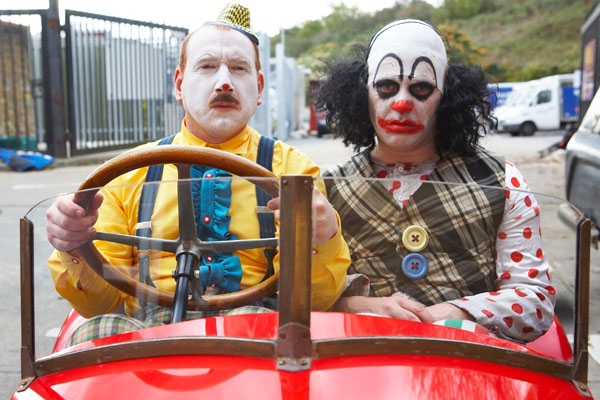
Psychoville

For those of you who have HD already, I hope that my posts on this blog can provide you with some interesting behind-the-scenes detail, and also news on the development of the service.

For those of you interested in HD but who don't yet have it, I hope I can give you an understanding of what we are doing in HD to inform your decision - and I'm sure you will also be able to learn from the others who comment here. There is more information about HD and an overview of the different routes to getting HD on the BBC HD website.

This is the first of what I intend to be regular postings about the BBC and high definition television. I've been writing on the BBC's Internet blog about HD since I took responsibility for BBC HD 18 months ago. As HD grows up, and becomes part of the television mainstream (we're not there yet, but hopefully on the way), this feels like a more appropriate home.

I look forward to sharing the continuing HD story here with you.

UPDATE: The Easter vote has now closed and we're now going through the results. A big thank you to everybody who voted and left feedback on here, and we'll be announcing the results of the vote on Wednesday on the BBC HD page.

Danielle Nagler is head of BBC HD

Lambing Live: I'd love to do it all again

Blog comments are currently unavailable. Find out more.

Post categories:

Kate HumbleKate Humble|17:22 UK time, Tuesday, 16 March 2010

It's now been four days since the end of Lambing Live and I'm in the process of catching up on some sleep. Lambing is exhausting and the poor Beavans are still at it. I spoke to Kate earlier and they had 27 born over night on Sunday - the biggest total yet.

The programmes were very well received and we were all delighted by how interested the viewers were in all aspects of sheep farming. Thanks so much for taking the time to leave a comment on my previous blog on here - 209 and counting(!) - and, before I get some sleep, I thought it'd be nice to take up some of the main talking points. So glad you enjoyed the programmes!

In order to see this content you need to have both Javascript enabled and Flash installed. Visit BBC Webwise for full instructions. If you're reading via RSS, you'll need to visit the blog to access this content.

Vijay, Michael Galvan, Hoppergrass, Martin Overdi and several others raised the dilemma of showing the slaughter of the animals. I think from the date stamps these comments were written before the last show. It was during that show that we did address the issue of the abattoir and I learned from Jim how to assess whether an animal was ready for slaughter and took them to the abattoir.

Although we didn't show the lambs being slaughtered, I did spend a morning in an abattoir to see exactly how it was done, which I talked about on that final show. You are absolutely right though Vijay, it is extremely important not to just dwell on 'cute' lambs.

The Beavans are not raising fields full of pets. They are in the sheep business to produce meat and I hope the series was able to give a full and proper picture of the enormous amount of work and skill that is involved to raise sheep in a way that gives them an excellent quality of life which, in turn, results in the consumer getting excellent quality meat. Thank you again for taking the time to write in.


Plenty of you got involved in debating vegetarianism after watching the show and, in the comments, Helen Kellett asked how I felt after helping the lambs into the world and then settling down to a plate of lamb, and if it made me feel like I wanted to be a vegetarian.

I understand that for vegetarians like Helen and others spending so much time and energy raising an animal in the best way possible, only to eat it, is a very difficult concept to grasp. I also totally respect the choice you've made.

I'm not a vegetarian, but I am extremely concerned about the provenance of the meat I eat - where it has come from and how it has been reared. It is very easy for all of us to be totally disconnected with the production of the food we buy because society has moved so far away from producing its own food and relies so much now on supermarkets, where everything is wrapped in plastic or has had the mud washed off.

It may seem odd but having seen every aspect of the way lamb is produced, from birth to slaughter, I feel much more comfortable about eating it. The Beavan family are good, decent people working incredibly hard to make sure their animals have the best life in order to produce really good meat in the end.

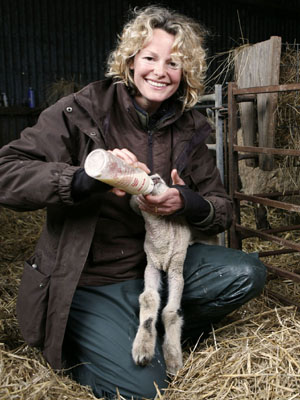
Bottle feeding

Farmers like them deserve to make a living, deserve to have a market for their produce and as a meat eater I am extremely happy to be able to support people like them. But I promise not to try and convert you!


Azureblue wanted to know how little Humble is doing. I spoke to Adam on Saturday and Humble is now happily settled at Adam's farm with some friendly goats for company. She loves turnips and apparently crowds of people turned up to see her over the weekend. She's become a bit of a star.


Finally Emsy asked if we'll be doing anything similar in the future and I would love to do something like this again. I can't tell you how much I learned over the six months I worked with the Beavans, and what a privilege that was.

We just need to come up with another idea and persuade the big bosses! Can I tell them you want another series? That might swing it!

Serious documentary for children on CBBC

Blog comments are currently unavailable. Find out more.

Post categories:

Damian KavanaghDamian Kavanagh|10:20 UK time, Tuesday, 16 March 2010

Almost six months ago as I began my job as controller of CBBC I was told about early plans for a new documentary series that would endeavour to provide an insight into the lives of six very different groups of children from across the UK, all with unique stories to tell.

At this time we were starting to talk about the individual subjects we wanted to cover and the series still didn't have a name.

Fast forward six months and we've taken delivery of six very different but remarkable films and the series has now been named My Life.

The first film Tough Kids followed three boys as they try to become the first children to complete the notorious Tough Guy assault course, some adults who attempt it are unsuccessful but the boys have personal reasons for wanting to succeed.

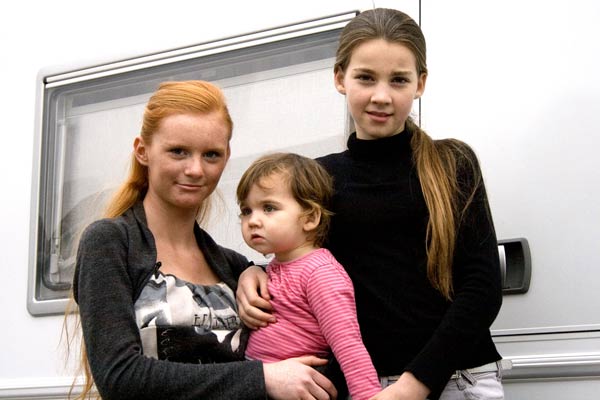
Children Of The Road: Salina, Bionce and Francesca

The Young Mayor Of Newham observes the recent battle to elect a young mayor who has their own youth cabinet and up to £25,000 to make a difference for children living in the borough.


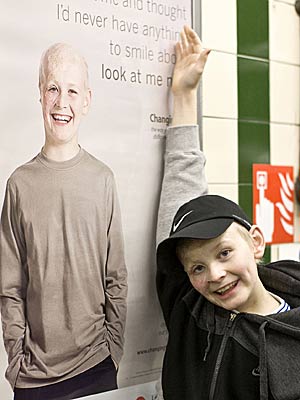
Billboard Kids
follows four kids chosen to front the new poster campaign for facial disfigurement charity Changing Faces.

In Karate Kids we meet three disabled kids whose lives benefit significantly from their work with martial arts master Glenn.

Children Of The Road, looks at what it's like to grow up as a young Irish traveller in one of the largest travellers' camps in the UK.

The final film, My Dad in Prison attempts to find out what it's like having a father in jail for six-year-old Liam.

On a daily basis I'm still amazed by the range of programmes CBBC offers children. We provide a rich mix of programming and cover every genre you will find in the peak time schedules and I believe that serious documentary like My Life must have a home right at the heart of the CBBC schedule.

The reason for this is very simple. I believe in the power of television to open people's minds to new experiences and ideas - and to enable them learn about themselves and their place in the world.

This is particularly relevant in relation to children as they can often live in very confined worlds where their outlook and experience is limited to that of their immediate community, family and school life.

Television has the power to bring them into contact with people and aspects of life that they would not otherwise be conscious of.

This is something I'm acutely aware of as I grew up in Ireland in the 70s and 80s. Ireland then was a very different country to the one that exists today in terms of a diversity of voice and cultures.

In my day-to-day life I only came into contact with other Irish people like myself. It was the television I watched as a child that offered me my window onto the world, it allowed me to travel the globe and to learn about different cultures and to gain exposure to people and ideas I'd never encounter in my own community.

I have no doubt that the television programmes I watched as a child helped shape the person I am today.


Billboard Kids: Harry

Similarly, I believe that a lot of the CBBC audience may not come into contact with the children featured in the My Life films.

I hope that after watching films about facial disfigurement, children with extreme disability, children with parents in prison and those in the travelling community the audience will see that despite apparent differences they have so much in common with them and share the same passions, interests and concerns.

In all six films we worked hard to ensure that they were crafted in a way the CBBC audience would engage with. The stories are character-driven and we took great care to guarantee the children didn't feel marginalised.

Humour features throughout and all of the stories are optimistic in outlook. Each film centres on children who, although facing tough challenges in their daily lives, are full of confidence, hope and insight.

It's as Harry (who has extensive scarring on his face as a result of a house fire) says in the Billboard Kids film: "I just want people to know I'm an ordinary boy."

Damian Kavanagh is controller, CBBC

Snog Marry Avoid

Post categories:

Fiona WickhamFiona Wickham|15:35 UK time, Monday, 15 March 2010

Hello everyone

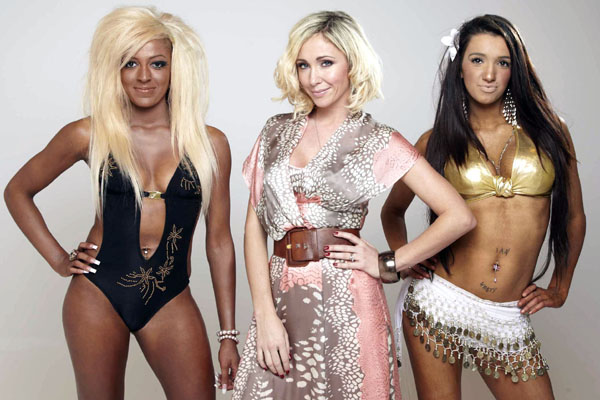
There's a very interesting letter published on the Guardian website, from BBC Three's Snog Marry Avoid's executive producer, Gill Wilson.

Snog Marry Avoid

Gill's answering criticism from Radio 4 presenter Libby Purves who said the BBC should invest in intelligent programmes and stop "fretting how to get an extra million idiots watching Snog, Marry, Avoid? on phone screens the size of a dog biscuit".

And Gill also has a comeback for Bryony Gordon of The Telegraph, who thinks BBC Three should be axed instead of 6Music - partly because she doesn't think much of Snog Marry Avoid. (She doesn't know who Jenny Frost is and hasn't heard of Atomic Kitten.)

Gill wants to point out that Snog Marry Avoid isn't meant to be for women like Libby and Bryony:

"Which other factual programme addresses the hopes and aspirations of 17-year-old mothers in Bolton? In their language? These girls don't just wear eye-watering amounts of false tan. They are raising the next generation of Britons."

Have a read - it's interesting.

BBC Daytime's not-so-hidden gems

Blog comments are currently unavailable. Find out more.

Post categories:

Liam KeelanLiam Keelan|10:06 UK time, Monday, 15 March 2010

It's been an interesting start to the year for BBC Daytime: A Broadcast award for our WWII-based drama Land Girls, a Strategic Review discussion around a significant increase in daytime funding and then a sideswipe from ex-communications minister James Purnell on the value of BBC Two daytime.I must admit I was more than a bit taken aback by the piece in the Guardian, given the range of what we do in daytime with what are in TV terms quite modest budgets.

Overall, we have around £80 million across both channels, which runs from 9.15am all the way up to early peak slots such as the The One Show on BBC One and Eggheads over on BBC Two, with both channels covering almost every genre you can imagine.

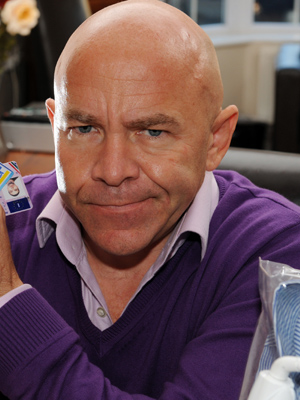
100315_dom_close_300.jpg

To give you an example of the variety of output in BBC Daytime, last week we had a current affairs series Fake Britain, gaining more than 1.6m viewers at 9.15 in the morning, a tremendous achievement against Jeremy Kyle on ITV1.

This week-long event series saw Dominic Littlewood follow the law enforcement agencies as they confront the gangs responsible for bringing counterfeit goods into the country with often tragic consequences. One of the main aims of the series was to show viewers how to avoid the being duped by bogus products and salesmen, so it's great to see the reaction it has had.


Another example would be Missing Live which starts this week at 9.15am and is paired with a two-week run of the Missing drama, starring Pauline Quirke, at 2.15pm.

The previous series was great to have on BBC Daytime, successfully reuniting many missing people with their families and even being commended in the House of Commons for being exactly the kind of programming only the BBC can provide.

This pattern of pairing afternoon dramas with factual programmes in the morning has been hugely successful for us. When you look at the feedback and audiences to Missing or Land Girls and The Week We Went to War, I'm convinced this is due in no small part to the fact that we've given these events so much space in the schedule, showing how much we believe in them.

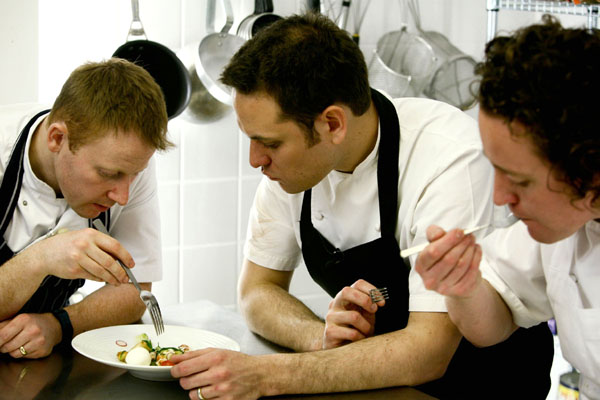
Great British Menu

BBC Two daytime also has its fair share of events. Great British Menu is about to return at 6.30pm and this year the professional chefs are competing to cook at a banquet celebrating the wealth of produce grown, reared and fished across the UK. Earlier this year, Michael Portillo followed the Victorian guidebook of George Bradshaw in Great British Railway Journeys, which received great plaudits and will return early next year.


I'm pleased that BBC Daytime has been identified in the strategic review as an important part of the BBC's future and if it is decided to increase our level of funding for in daytime, I'd hope you'd see a lot more of this kind of programming across BBC One and Two.

While we might not always get it right, and it would be interesting to hear what you think, I've always thought BBC Daytime's strength is based in the range of what we do and this is ultimately why programmes such as Missing and Rip Off Britain can sit happily alongside Bargain Hunt, Doctors and Eggheads.

Liam Keelan is the controller of BBC Daytime

Bang Goes The Theory and the coffee-powered car

Blog comments are currently unavailable. Find out more.

Post categories:

Jay HuntJay Hunt|14:51 UK time, Friday, 12 March 2010

I should have learnt by now never to underestimate the Bang Goes the Theory team.

The first time they came to see me they brought a vacuum cleaner, an excitable presenter and boundless enthusiasm for science. They then literally climbed the wall. They used the vacuum to provide the suction to clamber up the stairwell outside my office with the casual throwaway line that they were keen to do the same thing again up the treacherously shiny face of the BBC White City building in London. And they did.

In order to see this content you need to have both Javascript enabled and Flash installed. Visit BBC Webwise for full instructions

It was the start of an exciting journey that put popular science right back at the heart of the BBC One schedule. Bang captured the audience imagination with its enthusiasm for making sense of the world. Seventy thousand people braved some pretty atrocious weather to meet the team and put science to the test at a series of roadshows.

Many more went online to pose a question for the charismatic Dr Yan or watch experiments they could try at home. From their rather magnificent home in a disused power station, Dallas and Liz tackled everything from the behaviour of cows to sound waves. And all the time, Jem went on building things.

This time round, Jem's surpassed himself. He's driven from London to Manchester in a car powered by nothing more than coffee beans.

In order to see this content you need to have both Javascript enabled and Flash installed. Visit BBC Webwise for full instructions

Before he started on his epic drive, Jem and his the team told me that this alternative fuel could get Jem's motor to 45kph.

That was their theory anyway. Until recently, they'd only managed to drive 5km altogether so the pressure was really on.

Well, they made it. Having faced what must have seemed like endless traffic jams and a few minor engine hiccups the car arrived in Manchester late last night, still in one piece but a little bit dirtier than when it first left.

On the way, in true Bang spirit, Jem was not only greeted by drivers tooting their horns and people waving as the car raced to its end but was helped by dozens of drivers (including a very helpful group of nuns) who came up with any number of creative solutions whenever the car faced any difficulties.

Today, his car will be the centrepiece at The Big Bang Fair, the country's largest science and engineering exhibition for young students.

That's a hugely exciting moment for him and for the team because this journey has embodied what Bang does best - show science in action. Alternative energy is a notoriously tricky thing to make interesting. Jem and his coffee power car might just have cracked it.

Watch out for the car and for lots more spectacular builds when the series returns on 15 March.

Bang Goes The Theory won't be ducking the difficult subjects. Dallas sets himself the challenge of explaining atoms with the use of a few mopeds and a beach and Liz looks at the lab data around whether we can live forever.

It's part of a new look for science on BBC One. Shows like Richard Hammond's Invisible Worlds and Jimmy's Food Factory are making difficult subjects engaging in the most entertaining way. And through the website we are also gathering real data of our own.

Thirteen thousand people (at the time of writing) have contributed data to a bold new experiment about brain training. Does it matter if you keep exercising the grey matter or does it not make any difference at all? We have a large enough sample to deliver some real insight. Watch out for Brain Test Britain - a Bang Goes the Theory special on BBC One soon.

So congratulations to Jem and the team. So far we've had a coffee powered car and a vacuum powered climbing machine. I am slightly terrified about what they might suggest next!

Jay Hunt is controller of BBC One

Women's lives at the heart of our collection of programmes

Blog comments are currently unavailable. Find out more.

Jana BennettJana Bennett|08:41 UK time, Monday, 8 March 2010

Starting on International Women's Day (Monday, 8 March) we're showing a very special and thoughtful collection of programmes on BBC TV with the different experiences of women at their heart.

The author of that feminist classic, The Feminine Mystique died a few years ago. Betty Friedan's highly influential book was all about how the American system had celebrated women doing paid work during WW2 but then tried to repudiate that part of US history and forcefully reintroduce the notion of femininity in the 50s to get women back at home.

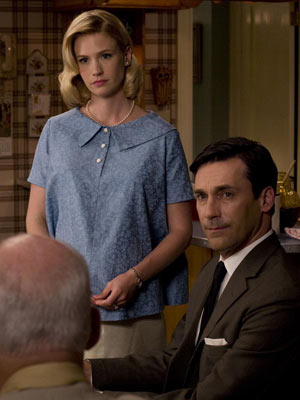
January Jones as Betty Draper and Jon Hamm as Don Draper in Mad Men

It was fascinating to me because it told of the experience of my own mother's generation - an experience reflected in the wonderful Mad Men series on BBC Four now.

Some of the most influential feminist writers - Marilyn French and Mary Daly - have also died recently. What happened to that body of work? There are a number of writers who made a big contribution. What does their writing mean to women these days?

What brought this into sharper focus for me was a chat with some girls in a local sixth form who didn't know why feminists would have talked about burning bras as a symbol of liberation. "Why would you want to do that?" one of them asked.

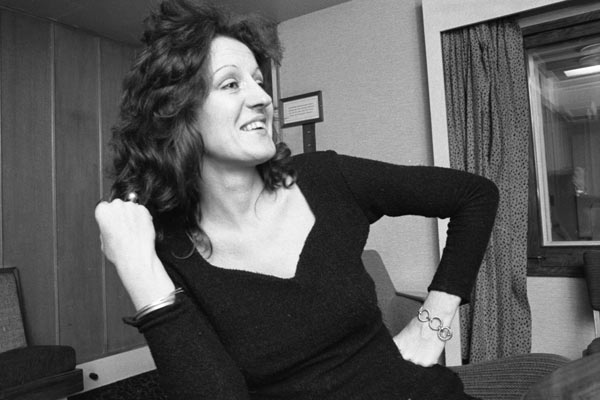
When I was a student, it felt like my whole generation read The Female Eunuch by Germaine Greer - and I mean young men as well as women. This year it's 40 years since that book was published.

Could we tell the story of the contribution made by these writers who had defined post-war feminism and look at the influence of these ideas over the decades through women's and girls' lives?

It feels like a good moment to assess the effects of feminism over the generations. I thought this series could form a chronicle of our own social history driven by writers.

Germaine Greer

So this is what's coming up:

Documentary producer Vanessa Engle has made a series of three documentaries, the first of which, Libbers, is on BBC Four on TV on 8 March.

These engrossing programmes look at how important these post-war writers had been on much thinking on women's rights and women's lives.

Marilyn French gave Vanessa her final interview before she died, so this film is all the more precious.

In order to see this content you need to have both Javascript enabled and Flash installed. Visit BBC Webwise for full instructions. If you're reading via RSS, you'll need to visit the blog to access this content.

In A Passionate Woman on BBC One, Kay Mellor tells the two-part story of her mother's affair with a Polish neighbour in the 1950s - and its impact on her family a generation later in the 1980s. Billie Piper and Sue Johnston are among the cast.

Beyond this, how much have these ideas of Western feminism been shared right across the world where the most basic rights aren't in place?

BBC Three is contributing more stories to the collection, including an incredibly gritty but in some ways uplifting documentary called Judith: Going Back To Congo. A young British woman goes back to her birth country, where, as Amnesty says, rape is cheaper than bullets. Systematic rape has been used as a way to destroy communities there.

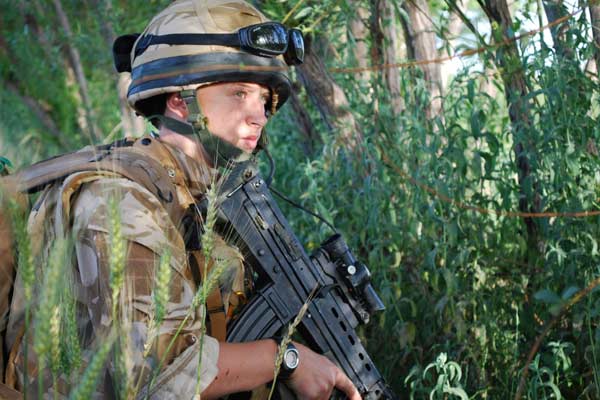
Danny Cohen, the controller of BBC Three, has also commissioned two documentaries about Afghanistan - Girls On The Frontline about young women soldiers and Women, Weddings, War And Me where another young British woman goes back to her birth country, this time to look at the struggle with the Taleban.

This week's Question Time comes from Dewsbury and though chaired by David Dimbleby as usual, it has a female-only audience for the first time on the show.

So across the spectrum, the idea is to capture through different programmes, some of the experience of women's lives here and elsewhere - across the ages and across the globe.

Also in honour of International Women's Day and this week of programming, the BBC website is publishing two absorbing archives of women's history - Marriage and Second Wave Feminism. I encourage you to go there to listen to footage such as a question posed on Any Questions in 1955 - At what age does a woman become a spinster? (Answer - when she can no longer attract!)

There's lots of video clips too - like this Nationwide feature from the 1970s where a female journalist tries to buy a coffee after midnight and can't get served anywhere because she is an unaccompanied woman - and therefore probably a prostitute.

In order to see this content you need to have both Javascript enabled and Flash installed. Visit BBC Webwise for full instructions

Going back to the sixth formers' conversation - the era they were wondering about is captured in this footage. Do have a look - and please leave your thoughts about this special week of programming on the blog here.


Jana Bennett is the director of BBC Vision

EDITOR'S UPDATE - Women, Weddings, War And Me had a title change just before it went on air so I've amended this post. The previous title which Jana had originally mentioned was Nel: From Camden To Kabul.

The central woman in the documentary, Nel Hedayat has written this evocative feature for the BBC News website: Marriage, prison or death?

Lambing Live: Adrenaline and sheer nerves will get me through

Blog comments are currently unavailable. Find out more.

Post categories:

Kate HumbleKate Humble|11:45 UK time, Friday, 5 March 2010

How did I end up spending six months training to be a shepherdess?

A few months ago I got a phone call from one of the very grown up big cheeses at the BBC who said "We've got this marvellous idea for a brand new live series called Lambing Live. We want to do five programmes on five consecutive nights on a farm, the week that all the sheep give birth."

And I said "Are you mad?! Are people going to want to watch this?!"

We started talking more about it and I realised it could be genius. Sheep are an intrinsic part of the British landscape. You can't have a chocolate box scene without sheep looking pretty on a hillside but how much do we actually know about them?

And the fact is, we love lamb. I think I'm right in saying it's Britain's favourite meat and yet how do we connect the little white fluffy things on a hillside with lamb and mint sauce on a plate? How does one become the other?
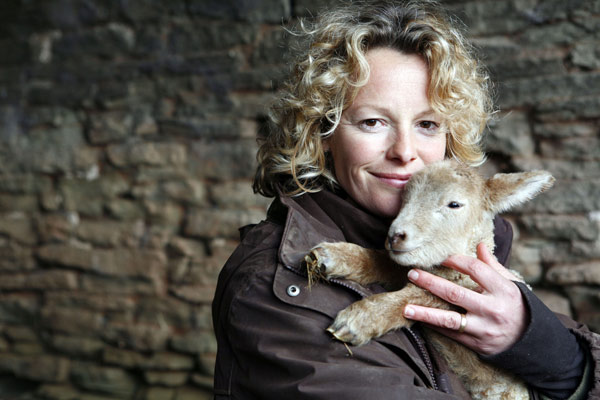
Kate Humble and one of the lambs

I realised I was woefully ignorant about one of the most common farm animals in this country and that this was a fantastic opportunity to find out more. So in September last year I started training on a sheep farm in South Wales owned by this wonderful family of farmers, the Beavans.

I feel an enormous responsibility to the Beavans, because lambing season is their make or break time - when they know, frankly, if they can put food on the table for their kids. I know that sounds over-dramatic, but it's true that lambing for them has to produce a number of lambs to keep their farm running for another year.

They have a job to do and I'm in a weird position. I feel like I'm carrying much more responsibility than I am on Springwatch where if the robin doesn't turn up, it's not my fault. Lambing Live is hopefully going to make interesting television which people are going to love, but equally I have a huge emotional attachment to this family I've been working with for the last six months and I don't want the lambing to fail. I have to help the Beavans have the most successful lambing they can have.

The Beavans have 900 ewes and my introduction to the world of sheep farming was at an auction in September where Jim schooled me in how to spot good rams to buy to introduce to the flock.

In order to see this content you need to have both Javascript enabled and Flash installed. Visit BBC Webwise for full instructions

I thought I'd just say "He's nice looking, I'll go for that one", but Jim identified some fairly specific criteria. Firstly he said to look for a small head.

I said "Don't you want a big-headed, proud looking ram?". No - you have to think of the ewe who's going to have the offspring of a ram with a big head.

Good point!

Secondly you need a ram with good strong hind quarters. A ram is going to do quite a lot of standing up on his back legs (and I'll leave that to your imagination but that's the breeding process!) and the other thing is that the leg of lamb, which is one of our favourite cuts of meat, is those back legs. So are they good, chunky, meaty back legs?

Bear in mind, this was the first day I met Jim so I thought he was taking the mickey when he told me the final check was the testicle test. I have to say, without wanting to be rude but potentially I'm going to be... a ram is a well-hung beast, there's none of this hidden testicles in amongst the wool, these hang down like a handbag! You need to check, are they the same size, a good pair? And the only way to find out is to get your hand in there.

Before introducing the new rams to the flock and letting nature take its course, we needed to tart the ewes up a bit. Now sheep are a little bit messy in the rear end department. They poo on the ground but quite a lot gets stuck on the way down, if you know what I mean. So we had to shear the tails and back ends of the ewes to remove the poo. It was jolly hard work and we did 100 in a morning. By the end of it, I thought, there's a lot more to sheep farming than looking out on a field and going "Those are my sheep".

But it's been the most fantastic experience and the real highlight was scanning 300 of the ewes which are due to give birth live on the programme. It was the most freezing January day, about -6C, when we got proof that the rams had done their work and the ewes were pregnant. We are expecting about 600 lambs to be born in the next week or two, so we're in for a very, very busy time.

In order to see this content you need to have both Javascript enabled and Flash installed. Visit BBC Webwise for full instructions

I've already lambed a couple of sheep. I've seen lambs at the very first breath of life and I'd be lying if I said I didn't find that slightly emotional. New birth is a miracle and you do feel wrapped up in it. But these sheep are there for a reason and they're there for us. Jim and farmers like him are providing us with the meat we buy.

So ultimately what we are giving birth to is somebody's Sunday lunch. That's a hard thing for some people who find it very convenient to divorce the live animal in the field with the chop on a polystyrene tray. So what I hope this series will do is two things really.

I hope that people will see from the way the Beavans look after their stock and their land that farmers are a vital part of Britain's society, providing us with our meat.

And I also hope people will think a little more about the food on their plate - I hope Lambing Live will add to that eminent list of programmes and people who have tried to reconnect us with the origins of our food.

In episode one, you'll see me looking perky and by episode five I'll be exhausted. I know I won't have any sleep and I should probably have thought carefully about how I'm going to manage that, but I'm not sure you can ever prepare for something this intensive. I'm really excited so I'm hoping adrenaline and sheer nerves will get me through.

The one thing I'm worried about is that I really feel the cold. When I get cold, most of my brain shuts down. It may just end up being incoherent babble from me every night. But I am a big fan of Bovril and hot blackcurrant, so there are my diva demands. Some ask for baskets of puppies and I just want Bovril and loads of tea.

UPDATE: I've written a new post since the series finished - if you wanted to have a look at Lambing Live: I'd love to do it all again.

Kate Humble is the presenter of Lambing Live which starts Sunday, 7 March at 8pm on BBC Two

Why BBC Three will play a significant role in the BBC's General Election

Blog comments are currently unavailable. Find out more.

Post categories:

Danny CohenDanny Cohen|11:20 UK time, Wednesday, 3 March 2010

Every General Election is important, but the 2010 vote feels particularly significant for young people. It comes as Britain emerges tentatively from global recession, with youth employment a troubling trend. It coincides with an intensifying of the war in Afghanistan, where young soldiers are tragically losing their lives. And it takes place at a time when the debate over the impact of global warming is reaching crunch-point.

Girls On The Frontline: medic Holly Percival

I have no doubt that young people are interested in politics - and the ethical issues that flow from decisions that politicians make. But it's certainly true that younger people are less likely to vote than the general population. In the last General Election, 37% of 18 to 24-year-olds voted and 48% of 25 to 34-year-olds. That's compared to an overall turnout of 61%.

There are lots of reasons for this, but the big question for me at BBC Three is - how can we help make sure young people are fully informed of the choices they have? It may mean that they make an informed decision not to vote - that's democracy - but we'll be working hard in the coming weeks to provide a range of views, and the factual information to help them decide.

Nel in Women, Weddings, War And Me

BBC Three has a unique role to play in public service television. It's the only youth-focused channel with a regular commitment to news and current affairs. Aside from our General Election coverage, the channel will show documentaries in the coming months on the war in Afghanistan, child trafficking, autism, the use of rape as a weapon of war in the Congo, bullying and the life of Nelson Mandela.

No other youth-focused British channel makes programmes like these on a consistent basis. And with the channel growing 30% in the last two years, we know that young people like the ways in which we approach these subjects for being thought-provoking and stimulating.

So I'm keen for BBC Three to play a significant role in the BBC's General Election coverage - and our plans are already rolling.

In order to see this content you need to have both Javascript enabled and Flash installed. Visit BBC Webwise for full instructions

Robert Peston has presented a short piece for BBC Three, reminding viewers that they need to register pretty soon in order to be able to vote in the Election. He will follow this up with another TV piece in the run-up to election day that explains the mechanics of voting and how to go about it.

Robert is very committed to reaching young people with news and current affairs and a few weeks before the election he's also going to present a TV and web special on finance for young people. Money, banks and the market are obviously major issues in the coming campaign, and we hope this will provide further useful insights for our audience.

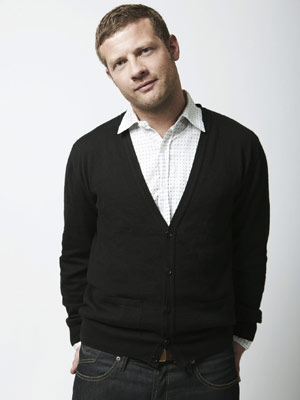
First Time Voters' Question Time host, Dermot O'Leary

Alongside this, BBC Three has plans for live political debate in the shape of First Time Voters' Question Time on 3 March. Chaired by Dermot O'Leary, this is an opportunity for politicians to respond directly to the concerns and questions of young people - and it's something I'm very excited about.

I'm delighted to have Dermot on board as host for this programme. He's passionate about politics, and I hope he may entice some young people to the programme who may not be naturally drawn to some of the BBC's other political coverage.

Sometimes the decision to use a 'non-specialist' presenter like this can be seen as controversial, but I don't think it really is. The key is to look across the whole of the BBC's output - and make sure that there's a wide range of approaches to suit the different ages, tastes and sensibilities of licence-fee payers.

UPDATE 5 March:

I was really delighted by how First Time Voters' Question Time went on Wednesday. It gave young people a very direct opportunity to talk to politicians, hear their policies, and challenge them on their ideas.

I thought that the questions and comments coming from our audience of First Time Voters was of a very high standard, and showed how passionate young people are about the world they live in and the future of the country.

This was also clear from the hundreds of tweets and texts we received during the programme, picking the panellists up on their ideas, and commenting on the action.

It felt like a great experiment for BBC Three, and I'm thinking about how we can build on it. Any thoughts and ideas on this from readers of this blog gratefully received!

Danny Cohen is controller of BBC Three

What is the BBC for?

Fiona WickhamFiona Wickham|12:07 UK time, Tuesday, 2 March 2010
Hello. I'm the editor of the new BBC TV blog. I'll be writing here from time to time though as you can see, it's mostly controllers of the channels, commissioners and executive producers who post on this blog.

I'll also be asking scriptwriters and occasionally, actors and presenters to tell their stories on the blog.

Today though, the big goings on inside the BBC are to do with the proposals to, amongst other things, slim down the BBC website by closing and consolidating half its pages and close two digital radio stations - 6Music and the Asian Network.

The Director General, Mark Thompson gave a talk to all BBC staff this morning where he showed this film which explains some of what he wants to do. He's calling these strategic proposals Putting Quality First.

You may have read some of the speculation in The Times last week. The full report has now been made public by the BBC - have a look at the About The BBC website for all the ins and outs.

It's worth pointing out that these are only proposals at the moment. The BBC Trust has opened them up for the public to comment on before they decide. So if you want to have your say on the proposals, you can do so on the BBC Trust's online consultation page.

We'll be back to posting about telly programmes again tomorrow.

Fiona Wickham is editor of the BBC TV blog

More from this blog...