BBC BLOGS - Today: Tom Feilden

Archives for November 2009

Celebrating 350 years of scientific achievement
Tom Feilden|11:27 UK time, Monday, 30 November 2009

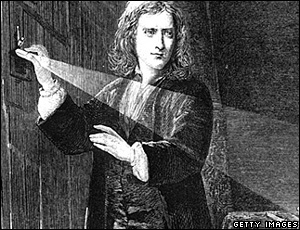
Sir Isaac Newton"Nullius in Verba" - which loosely translates as "take nobody's word for it" - seems to sum up the dramatic departure the Royal Society's foundation represents from the classical Greek tradition of scientific inquiry.

Emerging from what one of its founders, the chemist Robert Boyle, described as an "invisible college" of 17th century natural philosophers, who met first in Oxford and later in London to discuss the ideas of Francis Bacon, the Royal Society was officially constituted at Gresham College in November 1660.

But what was different about the Royal was its emphasis on the application of science for the benefit of mankind, and crucially on the use of observation, measurement and experimentation.

As the Sussex University astronomer and author of The Fellowship: A History of the Royal Society Dr John Gribbin says, the key change was the idea that the universe is governed by laws that we can understand here on earth.

"This is the idea that came to be known as the clockwork universe. That the universe runs on physical laws that we can understand, and apply equally on the surface of the Moon and Mars, and not by the capricious whim of the Gods".

In order to see this content you need to have both Javascript enabled and Flash installed. Visit BBC Webwise for full instructions. If you're reading via RSS, you'll need to visit the blog to access this content.


To mark this historic milestone the Society is launching a new website featuring 60 of the most exciting, influential and inspiring inventions and discoveries that have been published in its journal (see the audio slideshow) - itself the oldest peer review scientific journal still in continuous publication - Philosophical Transactions.

Highlights include an account of Daines Barrington's examination of an eight year old Mozart (to establish whether he really was a child genius), Isaac Newton's landmark paper on the refraction of light, Crick and Watson's description of the structure of DNA, and Stephen Hawking's ground breaking early work with Roger Penrose on the structure of black holes.

Enjoy.
Could cannibalism hold the key to Alzheimer's?

Tom Feilden|12:05 UK time, Thursday, 19 November 2009

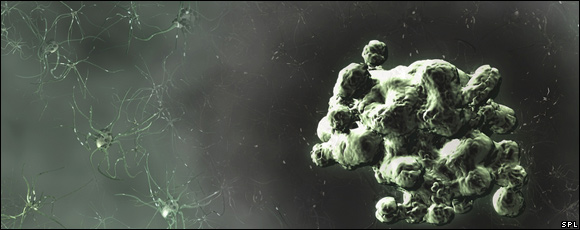
Computer artwork of prion protein plaque

It's a remarkable example of Darwinian natural selection at work in humans.

Villagers suffering from a major epidemic of Kuru, a fatal CJD-like brain disease, seem to have developed a strong genetic resistance to the condition.

The infection, which is associated with mortuary feasts, where mainly women and children consume the remains of respected relatives, devastated populations in the remote eastern highlands of Papua New Guinea. Things go so bad that in some villages there were no women of child-bearing age left alive and the practice was banned in the late 1950's and quickly died out.

But it seems that natural selection was already developing a response of its own. Scientists working on the new variant of CJD associated with eating meat from cattle infected with BSE have found that people living around the Purosa valley in Papua New Guinea, where Kuru was most rife, have a unique genetic variation that seems to offer high, or even complete, protection against the disease.

The scientists from the MRC's Prion Unit studied over 3,000 people from the area, including 709 who had participated in cannibalistic mortuary feasts, 152 of whom subsequently died. They discovered that many of the survivors, and their children, seemed to have a unique variation in the prion protein gene G127V.

Speaking on the programme this morning the director of the unit, Professor John Collinge, said it was a fascinating example of Darwinian selection at work. "This community has developed its own biologically unique response to a truly terrible epidemic. The fact that it has happened in decades is remarkable".

In order to see this content you need to have both Javascript enabled and Flash installed. Visit BBC Webwise for full instructions. If you're reading via RSS, you'll need to visit the blog to access this content.

The discovery is exciting because it could help scientists to understand the genetic mechanisms that underpin the development of CJD in people and even BSE in animals.

But it's also important because many of those same genetic mechanisms play a vital role in the development of other debilitating brain conditions including Alzheimers and Parkinson's disease.

In could be that the cannibalism in Papua New Guinea holds the key to cures for a wide range of degenerative brain disorders.

The world's biggest experiment is back on track

Tom Feilden|12:02 UK time, Tuesday, 17 November 2009

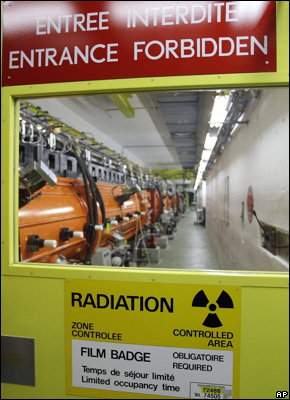
Inside view of a facility in the CERN laboratoriesSome 400 days after a poorly soldered join gave way, the biggest and most complicated scientific experiment ever built, is finally ready to go again.

Some time in the next few days the Large Hadron Collider - the giant atom smashing machine buried beneath the alps on the Swiss-French border near Geneva - will be fired up again. Streams of protons travelling at close to the speed of light will hurtle both ways around the 27 kilometre ring that makes up the bulk of the machine.

Amid much fanfare the LHC flickered briefly into life in September 2008. But just nine days later that join - one of 24,000 - shorted out, triggering a dramatic rise in temperature and a sudden release of liquid helium.

The scientists at CERN don't like to talk about an explosion - operations group manager Steve Myers refers to "strong forces" being brought to bear - but in all more that 37 of the giant dipole and quadrupole magnets, each weighing several tonnes and connected together in sequence like the carriages of a train, were shunted out of position. It must have been quite a bang.

Part of the reason why it's taken so long to get the LHC back on track has been the need to ensure nothing like that could possibly happen again.

As Paul Collier explained to me down in the LHC tunnel, the problem with any superconducting machine is that it has to operate at such low temperatures to reduce resistance (the LHC operates at minus 271 degrees).

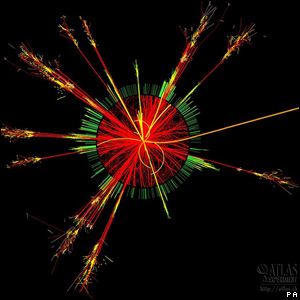
Protons colliding to create a microscopic black hole."When you cool down everything gets shorter. So one of the problems with any superconducting machine is electrical problems, things that only appear when components shrink or change dimension so dramatically. Then you can have wires that suddenly touch or snap."

But getting the LHC up and running again is only a first step. The real work - the new science - will be done by the giant experimental detectors that straddle the ring at the points where the proton beams cross.

The energy released in these collisions will re-create the conditions that existed a split second after the big bang itself, giving us vital insights into the nature of the material world, revealing the secrets of dark matter, and even pointing the way to a theory of everything.

In order to see this content you need to have both Javascript enabled and Flash installed. Visit BBC Webwise for full instructions. If you're reading via RSS, you'll need to visit the blog to access this content.

Professor Jim Virdee, the lead scientist on the CMS detector - the biggest of the four main experiments at CERN - admits to a degree of frustration at the delay. Now, at last, he's ready to get going again.

"We're incredibly keen, incredibly excited again. In a sense we're half way there. The construction is finished now and the extraction of new science is about to begin. Some incredible discoveries are ahead of us".

How far should scientists take animal research?

Tom Feilden|10:00 UK time, Tuesday, 10 November 2009

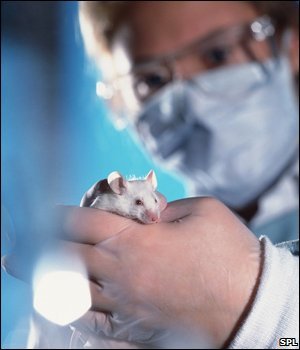
Lab mouseFrom Frankenstein to the Island of Dr Moreau we're well used to the idea of scientists (mad or otherwise) pushing the boundaries of what is, and is not, acceptable.

After all, revolutionary breakthroughs are rarely found in the comfy middle ground, but rather at the cutting edge of what's not yet possible.

So it comes as something of a surprise to find a group of scientists inviting the public to tell them how far they should go with a controversial area of research. But that's exactly what the Academy of Medical Sciences is doing today. It's launched a new study into the use of animals containing human genetic material in medical research.

The work, which involves genetically engineering animals (typically mice) to include human genes associated with specific disorders, allows researchers to study human diseases in animal models in the laboratory.

In research aiming to treat a blood disorder for instance, that might involve knocking out the gene that codes for haemoglobin in a mouse, and replacing it with the human version of the same gene. That way, researchers are able to study the impact of any new technique or treatment on human, rather than mouse proteins.

It's an area of medical research that has proved incredibly successful over the past 40 years, making a huge contribution to our understanding of disease processes, and helping to develop treatments and cures for a wide range of genetic disorders.

But as the power and sophistication of the techniques has developed, so it has become possible to do more and more.

While it might be acceptable to transfer an entire human chromosome into mice to study a chronic degenerative disorder like Multiple Sclerosis, would we feel the same about a rat with an equivalent proportion of human neural material - brain cells - in its genetic make up? Would we be comfortable adding human brain function to another primate? Or how about the genes associated with speech?

These are the sorts of question professor Martin Bobrow, who will chair the AMS working group, says the public have a right to decide.

In order to see this content you need to have both Javascript enabled and Flash installed. Visit BBC Webwise for full instructions. If you're reading via RSS, you'll need to visit the blog to access this content.

"Some of these developments challenge our idea of what it is to be human. It is important to ensure that this exciting research can progress within limits that scientists, the government, and the public support."

Certainly it would challenge attitudes to research on animals profoundly, if the macaque in the cage was heard to wish the researcher a "good morning" as he came into the lab each day.

Choosing to solve the climate crisis

Tom Feilden|09:35 UK time, Wednesday, 4 November 2009

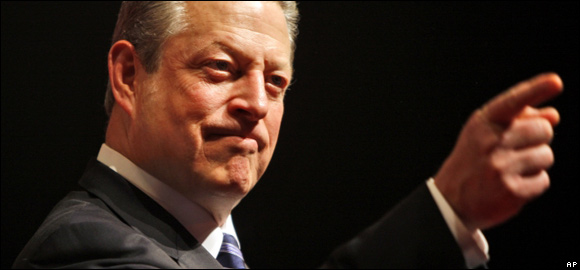
Al Gore

"We can solve the climate crisis. It will be hard, to be sure, but if we choose to solve it I have no doubt whatsoever that we can and will succeed".

Al Gore has come a long way in the four years since the publication of An Inconvenient Truth. That - and the Oscar winning documentary that accompanied it - was polemic: a diatribe that at times beat the reader over the head with the bar-graphs and statistics of global warming.

Our Choice, by contrast (and as the title implies), is much more inclusive. The man who introduces himself these days as, "the man who used to be the next President of the Unites States," has mellowed.

In order to see this content you need to have both Javascript enabled and Flash installed. Visit BBC Webwise for full instructions. If you're reading via RSS, you'll need to visit the blog to access this content.

Of course that doesn't mean he's any less certain. If anything, he says, the scientific picture is even more complete, the evidence even stronger.

What has changed is that the former vice president seems to have decided to try and take people with him. As the African proverb he quotes at the beginning of the book says, "If you want to go quickly, go alone; if you want to go far, go together."

Al Gore wants to go far, and Our Choice is about the solutions to the climate crisis rather than the problems.

And he's surprisingly optimistic. Speaking on the programme this morning Al Gore acknowledged that the Copenhagen climate talks were unlikely to deliver the kind of comprehensive, legally binding agreement, he had hoped for. But the opportunity was still there to commit nations to changing course, and to reducing incredibly harmful global warming pollutants.

"The Glass" he says, "is more than half full".


BBC © 2014The BBC is not responsible for the content of external sites. Read more.

This page is best viewed in an up-to-date web browser with style sheets (CSS) enabled. While you will be able to view the content of this page in your current browser, you will not be able to get the full visual experience. Please consider upgrading your browser software or enabling style sheets (CSS) if you are able to do so.