

Our only hope or a dangerous diversion?
 The Royal Society may have been braced for some criticism this morning, following the publication of its report on geo-engineering - an idea that's seen by many environmentalists as both dangerous and a distraction from the real business of cutting carbon emissions.
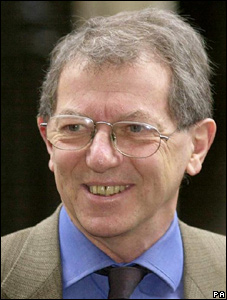
What fellows may not have been expecting was a broadside from one of their own: the Government's former Chief Scientific Adviser Sir David King, and the man who described climate change as the most serious threat to humanity.
Speaking on the programme this morning Sir David described geo-engineering as expensive and essentially useless. A fig leaf for those who want to pursue a business as usual approach to carbon emissions, and he's worried that the world's leading scientific academy should be seen to endorse the concept.
"I'm just concerned that there will be a misunderstanding about this and that geo-engineering could be used as an excuse for inaction".
In order to see this content you need to have both Javascript enabled and Flash installed. Visit BBC Webwise for full instructions. If you're reading via RSS, you'll need to visit the blog to access this content.
The report "Geo-engineering the Climate" makes clear that intervening on a planetary scale to reverse the damage done by global warming should not be seen as an alternative to cutting carbon emissions. There were major uncertainties over the cost, effectiveness, and environmental impact of almost all the schemes considered, but geo-engineering was both technically possible and potentially useful.
Professor John Shepherd, who chaired the study said, "Geo-engineering and its consequences are the price we may have to pay for failure to act on climate change".
Sir David King responded by urging the Royal Society to focus on promoting technologies that could make a positive contribution to reducing emissions, things like solar, wind, wave and nuclear energy.
He said it was vital we didn't do anything to undermine efforts to secure a new global deal on carbon emissions when ministers met in Copenhagen in December.
 I'm Tom Feilden and I'm the science correspondent on the Today programme. This is where we can talk about the scientific issues we're covering on the programme.

Comment number 1.
At 15:18 8th Sep 2009, FateFound wrote:I'm glad someone else has read the report properly. It clearly states that best way to prevent climate change is to reduce emissions and fast. It simply says that Geo-Engineering 'could' be used as a last resort. It certainly, as Sir David King says, should Not be use as an excuse for inaction.
Complain about this comment (Comment number 1)
Comment number 2.
At 13:17 20th Feb 2010, Johnson wrote:Nuclear fission power plants are dangerous. However, I think aneutronic technology could be a better alternative, because it can produce electricity efficiently without producing radioactive wastes, making a contribution to reducing carbon emissions.
Complain about this comment (Comment number 2)