BBC BLOGS - Today: Tom Feilden

Archives for September 2009

Help monitor air pollution with lichen
Tom Feilden|09:25 UK time, Tuesday, 29 September 2009

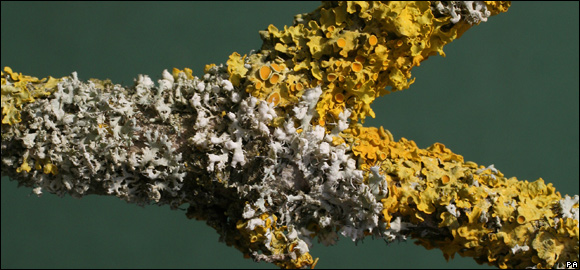
Lichen

I have to admit that until today my familiarity with Lichens was limited to a walk on part in an evolutionary tale about peppered moths (more of that in a moment).

But the natural world never ceases to amaze. Lichens, it turns out, are not just good indicators of air quality (thriving where pollution levels are lowest), they're also two organisms for the price of one: a fungi growing in a symbiotic relationship with an alga.

Air pollution comes from a variety of sources, including cars, factories and agricultural processes.

The problem is we can't always see it, but we can measure its impact on the environment, and by building up a comprehensive picture of the distribution of lichens, scientists at Imperial College hope to create a comprehensive map of air quality across the country revealing the pollution hotspots.

And that's where you come in. Taking part is simple and fun. All you need is a copy of the survey fact sheet, and a handy guide to identifying lichens, which can be downloaded here.

In order to see this content you need to have both Javascript enabled and Flash installed. Visit BBC Webwise for full instructions. If you're reading via RSS, you'll need to visit the blog to access this content.

Now that story about peppered moths:

During the 19th century sooty smoke from the coal burning furnaces of the industrial revolution killed much of the lichen growing on the trees and blackened the bark.

When peppered moths landed on the trees the lightest, that had been well camouflaged against the lichen, stood out as easy pickings for birds.

It created an evolutionary pressure that favoured darker moths, which became progressively more common, and by 1895 98% of the peppered moths in the vicinity of big cities like Manchester were black.

Since the 1950's when pollution controls have significantly reduced sooty particles in the air, both the lichens and lighter peppered moths have made a comeback.
It's official: Birds are descended from dinosaurs

Tom Feilden|08:23 UK time, Friday, 25 September 2009

"Missing link" fossil

Proof positive - if proof were needed - that birds evolved from dinosaurs will be unveiled in Bristol today.

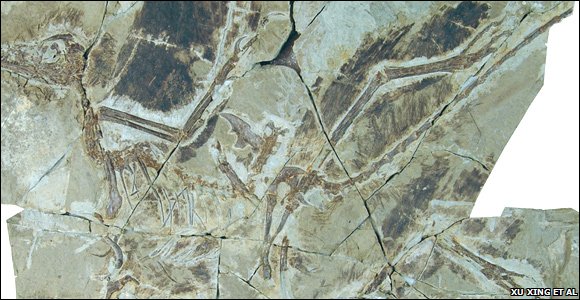
It comes in the shape of five new feathered dinosaur species being presented by legendary Chinese fossil hunter Xu Xing at the Society of Vertebrate Palaeontology's annual meeting.

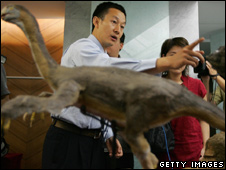
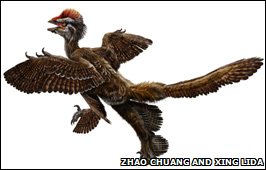
Reconstruction of anchiornisXu, dubbed the "Indiana Jones" of palaeontology for his swashbuckling exploits in the deserts of northern China, claims the fossils - including the spectacular four-winged Anchiornis Huxleyi - confirm the bird-dinosaur theory is correct.

"These exceptional fossils provide us with the evidence that has been missing until now. It all fits neatly into place and we have tied up the loose ends." he says.

In order to see this content you need to have both Javascript enabled and Flash installed. Visit BBC Webwise for full instructions. If you're reading via RSS, you'll need to visit the blog to access this content.

Anchiornis is officially described in a paper in the journal Nature for the first time today. The type specimen is exceptionally well preserved, with long feathers covering its arms tail and feet, suggesting that a four-winged stage may have existed in the transition to birds.

The idea that birds might have evolved from theropod dinosaurs comes from the striking anatomical similarities between them. Notably the three-toed foot, light hollow bones, and furcula or wishbone. More recent evidence shows that birds and dinosaurs shared behavioural traits like brooding and nesting.

Victorian scientists were well aware of these similarities from the fossil record, but the tipping point came with the discovery of Archaeopteryx in a Bavarian quarry in 1860. With its well developed wings and feathered plumage it was clearly a bird. But it also had claws on its arms and a long bony tail.

Xu XingComing so soon after the publication of "On the Origin of Species" (in 1859), the discovery was quickly hailed as the missing link that proved Darwin's ideas about evolution right. Others claimed Archaeopteryx came too late in the fossil record.

The problem is that by plugging an apparent gap in the fossil record Archaeopteryx inevitably created new ones on either side. Until recently, there had been no intermediate fossils showing the steady step by step evolution of dinosaurs into birds either before or after archaeopteryx. A series of discoveries in the 1990's - many of them by Xu Xing - filled the more recent of these gaps. His latest finds, of feathered dinosaurs pre-dating archaeopteryx, complete the picture.

So next time you watch a robin flitting around in the garden, or listen to a blackbird singing, think Allosaurus or even Velociraptor.

An inconvenient truth about global warming

Tom Feilden|09:34 UK time, Wednesday, 16 September 2009

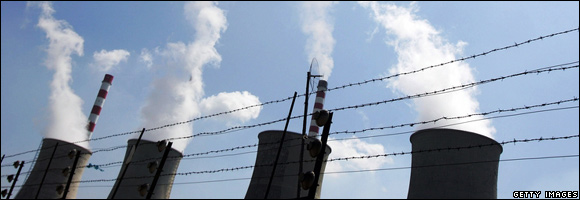
Power station

The global warming narrative - that mankind's addiction to burning fossil fuels is rapidly changing the climate - may be about to go seriously off message.

Far from suggesting the planet will get warmer, one of the world's leading climate modellers says the latest data indicates we could be in for a significant period of steady temperatures and possibly even a little global cooling.

Professor Mojib Latif, from the Leibniz Institute of Marine Sciences at Kiel University in Germany, has been looking at the influence of cyclical changes to ocean currents and temperatures in the Atlantic, a feature known as the North Atlantic Oscillation. When he factored these natural fluctuations into his global climate model, professor Latif found the results would bring the remorseless rise in average global temperatures to an abrupt halt.

"The strong warming effect that we experienced during the last decades will be interrupted. Temperatures will be more or less steady for some years, and thereafter will pickup again and continue to warm".

In order to see this content you need to have both Javascript enabled and Flash installed. Visit BBC Webwise for full instructions. If you're reading via RSS, you'll need to visit the blog to access this content.

With apologies to Al Gore, professor Latif's finding is something of an "inconvenient truth" for the global warming debate.

And the timing couldn't be much worse. World leaders are due to meet in Copenhagen in December to hammer out an agreement on cutting greenhouse gas emissions to replace the Kyoto Treaty. It certainly won't help if there are a couple of inches of snow on the ground outside the convention centre, and climate models are predicting a sustained period of steady, or even falling, global temperatures.

Professor Philip Stott believes climate sceptics may seize on the research as evidence that the whole global warming hypothesis is fundamentally flawed: If natural cycles can interrupt, or even reverse climate change, maybe we don't need to take it so seriously.

It's not a view shared by professor Latif, who points to the resumption of warming as the cycle completes itself in a few years. The best we can hope for, he says, is a brief respite from global warming.

In order to see this content you need to have both Javascript enabled and Flash installed. Visit BBC Webwise for full instructions. If you're reading via RSS, you'll need to visit the blog to access this content.

But the complex message professor Latif's research confronts us with, points up another issue debated on the programme this morning: The thorny issue of the media's handling of science.

The Science Minister Lord Drayson sparked a row when he claimed that the coverage of scientific issues was in rude health at the World Conference of Science journalists. Ben Goldacre, the author of "Bad Science" took exception, arguing that most editors were only interested in revolutionary cures for cancer, or whether coffee made you fat.

In order to see this content you need to have both Javascript enabled and Flash installed. Visit BBC Webwise for full instructions. If you're reading via RSS, you'll need to visit the blog to access this content.

After a heated exchange in the blogosphere the two have agreed to debate the issues at the Royal Institution tonight.

What next as DNA fingerprinting turns 25?

Tom Feilden|08:12 UK time, Thursday, 10 September 2009

Sir Alec Jeffreys

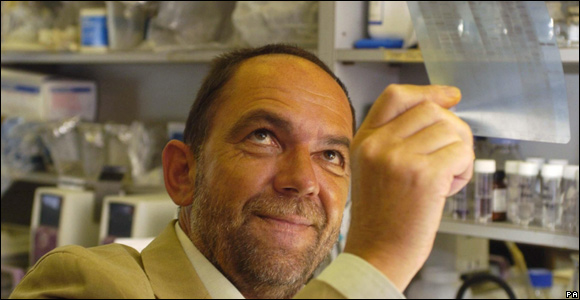
It's a little after nine o'clock on the morning of Monday the 10th of September 1984, and a young research scientist is in the darkroom at the University of Leicester's genetics department, developing x-ray films for a project looking at patterns of genetic variance between three members of the same family.

As he pulls the first negative from the developing tank and inspects it, the penny drops. Alec Jeffreys - now Sir Alec, the Royal Society's Wolfson Professor of Genetics - was looking at the first DNA fingerprint, the unique "supermarket bar-code" that sets out each individual's genetic profile.

"Within seconds it was obvious that we had stumbled upon a DNA based method not only for biological identification, but also for sorting out family relationships," he says.

In order to see this content you need to have both Javascript enabled and Flash installed. Visit BBC Webwise for full instructions. If you're reading via RSS, you'll need to visit the blog to access this content.

It's a good story, and from the self-deprecating way he tells it, you might be fooled into thinking this was just another one of those days: An incremental advance along the road to a better understanding of the biology that makes us all tick. But what Sir Alec had discovered was truly revolutionary. One of those "eureka!" moments that are actually quite rare in science, and open the floodgates on a whole new area of research.

Although he says he immediately appreciated the implications, Sir Alec admits he was ill-prepared for what happened next.

The first case came in March 1985 when the technique was used to decide an immigration case. The first paternity dispute followed soon after, and later that year the team was asked to help with the investigation of the rape and murder of two young girls in nearby Enderby. When Colin Pitchfork was convicted of both crimes in 1988 it was largely on the basis of DNA evidence.

DNA fingerprintingTwenty five years on and genetic profiling has transformed the way criminal investigations are conducted. The techniques used have been extensively refined and improved, and today it's even possible to recover a DNA fingerprint from a surface an offender has merely brushed up against.

The Forensic Science Service's Alison Fendley says that's lead to a step change in the investigation of crime, "The biggest breakthrough in this or the last century".

Speaking on the programme this morning the chief executive of the National Policing Improvement Agency, Peter Neyroud said DNA profiling was helping to solve nearly 400 murders every year, 800 rapes and serious sexual assaults, and some 8,000 burglaries. By next year he hopes further improvements in the technique will allow samples to be processed within an hour or two at the scene of a crime.

Sir Alec has no problem with that, or with the authorities keeping a DNA database of convicted criminals to help in future investigations. But he is very worried by what he describes as "mission creep" - the retention of samples from innocent people caught up in an investigation but subsequently cleared.

We're getting close to 5 million people on the DNA database now, he says, and something like 800, 000 of them are entirely innocent. That raises all sorts of questions about stigmatisation and discrimination.

"My genome is my property, not the state's," he says.

Red tape 'undermines drug trials

Tom Feilden|10:59 UK time, Saturday, 5 September 2009

ladyholdingapill.jpgSome of the country's leading medical researchers claim "red tape" is undermining their ability to conduct drug trials and threatening the lives of patients.

They say new EU regulations - designed to update and harmonise the approval and monitoring of clinical research across Europe - are excessively bureaucratic and smothering vital research. Far from streamlining the process, the new rules have introduced a "tick-box" approach that's stifling the development of new drugs and treatments.

The Oxford epidemiologist Professor Rory Collins says the new rules are making it increasingly hard - and expensive - to conduct large multi-centre drug trials in the UK and that people are dying unnecessarily as a result.

"Trials are not being done that should have been done," he says. "They're not being done as fast, and because of the increased cost, they're often smaller and therefore less reliable.

"There's absolutely no doubt that the regulations are leading to increased disability and death."

The impact of the new regulations is already being felt across the research sector. The UK's share of global drug trials has dropped from six to two percent in five years.

Drug companies are increasingly turning to the Far East, where the figure has risen from two to ten percent over the same period.

The president of the Academy of Medical Sciences, Sir John Bell, says that will have profound implications for the UK knowledge economy.

Our only hope or a dangerous diversion?

Tom Feilden|10:10 UK time, Wednesday, 2 September 2009

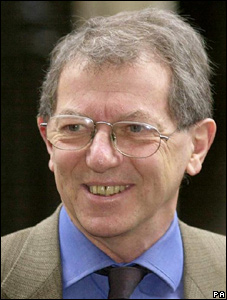
Sir David KingThe Royal Society may have been braced for some criticism this morning, following the publication of its report on geo-engineering - an idea that's seen by many environmentalists as both dangerous and a distraction from the real business of cutting carbon emissions.

What fellows may not have been expecting was a broadside from one of their own: the Government's former Chief Scientific Adviser Sir David King, and the man who described climate change as the most serious threat to humanity.

Speaking on the programme this morning Sir David described geo-engineering as expensive and essentially useless. A fig leaf for those who want to pursue a business as usual approach to carbon emissions, and he's worried that the world's leading scientific academy should be seen to endorse the concept.


"I'm just concerned that there will be a misunderstanding about this and that geo-engineering could be used as an excuse for inaction".

In order to see this content you need to have both Javascript enabled and Flash installed. Visit BBC Webwise for full instructions. If you're reading via RSS, you'll need to visit the blog to access this content.

The report "Geo-engineering the Climate" makes clear that intervening on a planetary scale to reverse the damage done by global warming should not be seen as an alternative to cutting carbon emissions. There were major uncertainties over the cost, effectiveness, and environmental impact of almost all the schemes considered, but geo-engineering was both technically possible and potentially useful.

Professor John Shepherd, who chaired the study said, "Geo-engineering and its consequences are the price we may have to pay for failure to act on climate change".

Sir David King responded by urging the Royal Society to focus on promoting technologies that could make a positive contribution to reducing emissions, things like solar, wind, wave and nuclear energy.

He said it was vital we didn't do anything to undermine efforts to secure a new global deal on carbon emissions when ministers met in Copenhagen in December.

BBC © 2014The BBC is not responsible for the content of external sites. Read more.

This page is best viewed in an up-to-date web browser with style sheets (CSS) enabled. While you will be able to view the content of this page in your current browser, you will not be able to get the full visual experience. Please consider upgrading your browser software or enabling style sheets (CSS) if you are able to do so.