

Where are all the miracle cures?
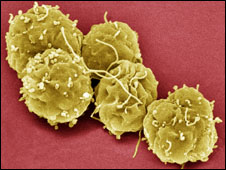 For all the hype (and we've been promised revolutionary new treatments for everything from Alzheimer's and Parkinson's to cures for spinal chord injury) stem cells have - as yet - delivered remarkably little.
OK, so we had the world's first trachea transplant last month, but that involved a unique effort involving teams from six universities in four countries, and it will be years before anything like it is routinely available.
Perhaps you think I'm being a little unfair? Certainly it can take years - decades even - to develop a promising breakthrough into a fully fledged treatment. Regenerative medicine is still in its infancy, but even so, a sizeable number of exciting stem cell projects are now reaching the stage where they should be moving on from the research lab and into clinical trials.
So why the slow progress? Why the log-jam of promising potential treatments?
Well it turns out that the big drug companies are just as much in the dark about where to go with these new ideas as the rest of us. Stem cells are not like conventional chemical pharmaceuticals. It's harder to predict outcomes - forcing a drug company out of the comfort zone of its established business model. And, because they're living tissues, if something does go wrong you can't simply stop the treatment.
Well all that could be about to change. The world's largest drug company, Pfizer, is taking the plunge. Earlier this month it announced plans to invest a $100 million in two new centres - in Cambridge UK and Cambridge Massachusetts - to develop exciting lab-based stem cell projects drive them towards clinical trials.
It's early days (the company has yet to announce which projects it will be picking up), but the hope is this marriage of basic research and Pfizer's know-how in drug development will break the deadlock.
Regenerative medicine may finally be moving out of the lab and into the clinic.
 I'm Tom Feilden and I'm the science correspondent on the Today programme. This is where we can talk about the scientific issues we're covering on the programme.

Comment number 1.
At 12:58 16th Dec 2008, Carl wrote:I think you make a valid point about the years that current therapies take to develop. In the case of regenerative medicine the hurdles are so much higher, not particularly the technical challenges but the R-word, Regulation.
Producing therapies that will get regulatory approval for safety and effectiveness is the key challenge and this has to involve education of the regualtors themselves.
The UK is at the forefront of this activity with an EPSRC funded 'Grand Challenge' project called ReMedi (www.remedigc.org/) which is addressing just these development issues.
This lead the UK has places us ideally to move projects out of the lab and into clinical practice.
Complain about this comment (Comment number 1)
Comment number 2.
At 21:56 18th Dec 2008, Evilkrab wrote:Don't forget also that the business model of pharmaceutical companies is based on treatments, not cures. It makes much more economic sense to sell a patient a pill a day, for the rest of their lives, that helps them deal with the symptomsor at least makes them feel better, placebo or notthan to actually provide a one-off cure, no matter how expensive it's made.
This is a sad reality, and the reason why we cannot expect real cures to be developed by commercial entities. The research necessary to provide cures needs to be publicly funded, yet paradoxically, public research does not necessarily lead to practically usable products, because manufacturing of products is not a concern of research institutions like universities.
If it's something like operation techniques, which require skills to be developed but can be picked up by anyone, then this may spread from research centers to the "real world". If it needs manufacturing, then good luck: only if someone can see a profit, it will become reality, and there the well-meaning regulatory overlords have created such mountainous barriers in terms of clinical research costs before something can be put on the market, that only the pharmaceutical giants can afford it. And those are the ones most likely to focus on that pill-a-day-for-the-rest-of-your-life. Chicken and egg...
The only light I see is that stem cell-based "cures", apart from still needing a lot of research, are also highly skills-based and less manufacturing-dependent. So maybe we will be seeing a lot more of them over the next 10-20 years, but I would not bet all my money on it.
Complain about this comment (Comment number 2)
Comment number 3.
At 21:57 18th Dec 2008, Evilkrab wrote:Don't forget also that the business model of pharmaceutical companies is based on treatments, not cures. It makes much more economic sense to sell a patient a pill a day, for the rest of their lives, that helps them deal with the symptoms---or at least makes them feel better, placebo or real---than to actually provide a one-off cure, no matter how expensive it's made.
This is a sad reality, and the reason why we cannot expect real cures to be developed by commercial entities. The research necessary to provide cures needs to be publicly funded, yet paradoxically, public research does not necessarily lead to practically usable products, because manufacturing of products is not a concern of research institutions like universities.
If it's something like operation techniques, which require skills to be developed but can be picked up by anyone, then this may spread from research centers to the "real world". If it needs manufacturing, then good luck: only if someone can see a profit, it will become reality, and there the well-meaning regulatory overlords have created such mountainous barriers in terms of clinical research costs before something can be put on the market, that only the pharmaceutical giants can afford it. And those are the ones most likely to focus on that pill-a-day-for-the-rest-of-your-life. Chicken and egg...
The only light I see is that stem cell-based "cures", apart from still needing a lot of research, are also highly skills-based and less manufacturing-dependent. So maybe we will be seeing a lot more of them over the next 10-20 years, but I would not bet all my money on it.
Complain about this comment (Comment number 3)
Comment number 4.
At 15:07 7th Jan 2009, pandatank wrote:I was talking to someone the other day who recently had almost the same operation I had back in 1992. I had half my left meniscus removed (arthroscopy)because it had detached. I still can't run more than about 400metres before I get bone on bone pain, and I have arthritic pains in cold weather. He on the other hand had his whole meniscus replaced with one grown from stem cells. A few months later, he's totally recovered and able to do things he hasn't done for years. He hasn't quite finished his Physio sessions but his prognosis is much better than mine. I don't know whether he was a guinea pig for experimental surgery, but I know that as soon as this becomes available I'm booking myself in for surgery.
Complain about this comment (Comment number 4)
Comment number 5.
At 11:15 9th Jan 2009, CathyICR wrote:I work for The Institute of Cancer Research (a public institute that's been around for a100 years) and I'm curious to see this from the perspective of someone who sees what goes on before the pharmaceutical companies become involved.
If it's any reassurance, the scientists in the pre-clinical stage couldn't be less affected by "making money on outputs rather than outcomes"
I'm not going to go into a full advert for where I work, but if you're interested in talking about what stage things are at regarding cancer research, just give me nudge.
Complain about this comment (Comment number 5)
Comment number 6.
At 22:57 9th Jan 2009, tamarisk2 wrote:At dawn this morning I was crawling around the bedroom floor trying to find some relief for my stiff muscles while my Parkinson's medication was slowly dribbling (rather than kicking) in. Back in bed just as the Today programme kicked in instead, I was amazed to hear that recent research had shown that adult stem cells are pluripotent (or can regain pluripotency) and capable of travelling and targeting where healing is required. This is truly amazing but what i find even more amazing is that I have articles from respectable scientific journals concerning research published in 2001 and 2002 (see article references below) drawing the same conclusions.
I was also astonished to hear that 'Regenerative medicine is in its infancy' in Britain while a shortish train journey away in Cologne it is not. Here the XCell-center, a clinic at the Eduardus hospital, has been successfully treating hundreds of patients with their own stem cells for well over 2 years, licensed by the German Society of Regenerative Medicine. Furthermore it is illegal to use embryonic material in this way in Germany.
The doctors at this clinic work on the accepted principle that a person's own stem cells have some knowledge and interest in the well-being of that person and behave accordingly.
Why is it that professionals in the same field in different countries don't seem to be talking and sharing info, even when they are neighbours?
Why is it that no-one on the radio - medical professionals or media people - seems to be aware that there are treatments available now, not in 10 years' time, that can save lives, families, huge amounts of money (but don't tell the pharma companies that ) pain, loss of personality and dignity...I'd better stop now.
I don't have 10 years to spare. I may not have 10 months if I do nothing. I do have a family, a new grandson, loads to live for and determination.
I am going to Cologne as soon as I can get it booked. It will cost me about £7,000 - I deferred my pension for this purpose.
If I am a guinea pig, so be it. There have been 750 others and I like guineapigs!
And if I benefit, I will not be keeping quiet about it ! It is a scandal that this is not known, even though the stem cells used to be processed in Plymouth.
References;
-XCell-Center
-German Society of Regenerative Medicine
Lillge, Wolfgang, M. D. The case for adult stem cell research. Winter 2001-2002. 21st Century science and Technology Magazine.
-The Great Stem Cell Coverup, by Wesley J Smith. Volume 011, Issue 44 of 'the Weekly Standard'
Complain about this comment (Comment number 6)
Comment number 7.
At 12:51 2nd Feb 2009, chriswsm wrote:Imagine what would happen if all the miracle cures did arrive.
Our overpopulated, invasive, damaging, greedy species would grow even faster than the present birth over death rate of 2.5 per second.
While the prevention and cure of disease is a noble task we really to look closely at all the implications of the cures seeing that disease exists as a natural population control measure
Complain about this comment (Comment number 7)
Comment number 8.
At 14:40 3rd Feb 2009, Scientartist wrote:'While the prevention and cure of disease is a noble task we really to look closely at all the implications of the cures seeing that disease exists as a natural population control measure.'
Naturally, improving general education, co-operation and environmental understanding between human individuals and nations is important for the future survival of our world. If human life expectancy is improved, we will need to accommodate accordingly.
However, I find it a distasteful suggestion that miracle cures should be held back from research and development because they will decrease mortality. Arthritis, malaria, Alzheimers, HIV, cancer, etc are hardly desirable population control measures.
Complain about this comment (Comment number 8)
Comment number 9.
At 00:26 4th Feb 2009, lbuckler wrote:Tom,
I certainly agree this is still a nascent industry but I'm going to react to two statements you make:
"...a sizeable number of exciting stem cell projects are now reaching the stage where they should be moving on from the research lab and into clinical trials."
"Regenerative medicine may finally be moving out of the lab and into the clinic."
I do believe this is a slight mis-characterization of the progress to-date in that there are hundreds of clinical trials currently underway of cell-based therapies and regenerative medicines. Several dozens of these are industry-sponsored trials developing potential commercial products. There are also, according to my data, around 25 unique cell therapy products currently on the market globally. These have not yet cured blockbuster diseases that is true but they are already helping address many patient conditions and sub-populations .
See TCell Therapy Blog for more details.
www.celltherapyblog.com
Complain about this comment (Comment number 9)
Comment number 10.
At 00:26 4th Feb 2009, lbuckler wrote:This comment was removed because the moderators found it broke the house rules. Explain.
Complain about this comment (Comment number 10)