

Can Nick Clegg mend our "broken" politics?
In order to see this content you need to have both Javascript enabled and Flash installed. Visit BBC Webwise for full instructions. If you're reading via RSS, you'll need to visit the blog to access this content.
As political slogans go - "power to the people" may not be the most original. But those words are becoming a mantra for Nick Clegg as he settles into his job as Deputy Prime Minister.
I have just interviewed Mr Clegg for the first time since the new coalition government was formed one month ago.
The Liberal Democrat leader and Sheffield MP says he wants to hand more power back to us ordinary folk in the biggest shake-up of our political system for almost 200 years.
High on his list is the huge task of reforming the House of Lords, as well as introducing measures aimed at restoring trust in politics, such as allowing voters to "recall" their MP - effectively allowing us to sack them if they are not doing a very good job.
Then of course there is the tricky task of preparing for a referendum on whether we should ditch the first past the post system of voting and replace it with a method known as Alternative Vote or AV. This will involve a campaign which will largely polarise the two parties which have been brought together in government.
Despite the challenges ahead, Nick Clegg seems relaxed and genuinely appears to be enjoying his role in the new cabinet, which has seen Downing Street meetings delayed so that he and David Cameron can spend more time with their children.
However, the Deputy Prime Minister admits he is concerned that many people are still choosing not to take part in our electoral process. In last month's general election, the national turnout was more than 65%. In the Hull West and Hessle constituency, turnout was just over 45%.
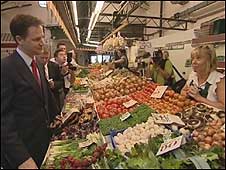
And that seemed to be the main reason for Nick Clegg's visit to Hull - finding out why, in some areas, less than half the population bothered to vote in an election which many considered to be the most important for years.
Only when he gets the answer to that question can political reform really begin.
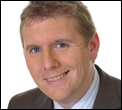 I'm Tim Iredale, the BBC's Political Editor in Yorkshire and Lincolnshire and presenter of the regional Politics Show. This is strictly a "no-spin" zone where the political viewpoint is more Humber Bridge than Westminster Bridge. Your comments and observations are more than welcome.
