

Is it time to shrink the House of Commons?
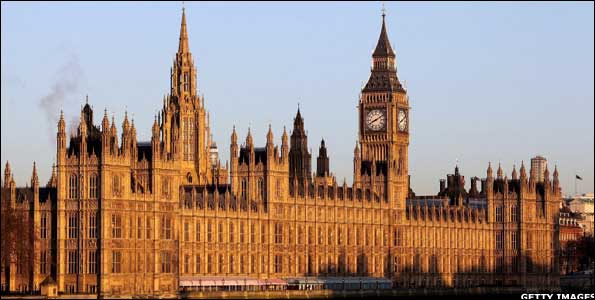
The House of Commons could be about to get smaller.
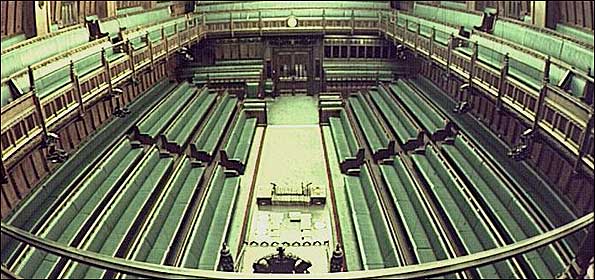
Not literally, of course, as anyone who has visited the famous chamber will tell you how much tinier it is in real life compared with how it looks on TV.
I am referring to government proposals to reduce the number of MPs from the present total of 650 to less than 600. Fewer, larger constituencies would be created with roughly an equal number of voters living in each area.
The Conservatives have long since argued that the current electoral map of the UK does them no favours. Inner-city constituencies - where people are more likely to vote Labour - tend to have fewer voters. Suburban and rural constituencies - where the Tories poll much better - generally have a larger electorate. Or so the argument goes...

An example cited by the Conservatives is Louth and Horncastle, where Sir Peter Tapsell was re-elected recently having polled just over 25,000 votes. In contrast, Labour's Austin Mitchell was returned to parliament with the support of less than 11,000 voters in Great Grimsby.
The obvious concern for Austin Mitchell is that he could be removed from office without a single vote being cast, if his Great Grimsby constituency - which dates back to 1295 - is merged with nearby Cleethorpes.
Mr Mitchell also argues that fewer MPs will lead to a smaller talent pool from which the ruling party (or parties) can form a government.
The proposal to reduce the size of the Commons is likely to face widespread opposition, along with other political reforms to establish fixed-term, five-year parliaments and ensure 55% of MPs are needed to back dissolution of Parliament.
However, ministers say the main argument in favour of the reduction is that it would reduce the cost of politics, which in the current climate could prove popular outside the Westminster village.
 I'm Tim Iredale, the BBC's Political Editor in Yorkshire and Lincolnshire and presenter of the regional Politics Show. This is strictly a "no-spin" zone where the political viewpoint is more Humber Bridge than Westminster Bridge. Your comments and observations are more than welcome.

Comments
Sign in or register to comment.