Many people in Yorkshire and Lincolnshire are already retired and living on public sector pensions. But will the current crop of council workers, civil servants and NHS staff enjoy a similar level of income when they retire?
According to the Office for Budget Responsibility, the cost of providing public sector pensions will double over the next five years from £4bn currently to £9bn by 2015.
The coalition government believes public sector pensions are not sustainable at the current rate and the former Labour cabinet minster John Hutton has been asked to look into ways of reducing the burden on the taxpayer.
Some commentators talk about a 'pensions apartheid' - with many public sector workers retiring at 60 on gold-plated pensions and their private sector counterparts being forced to work longer with a much lower income to look forward to when they retire.
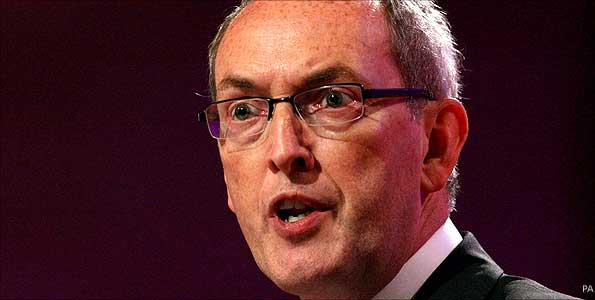
However, the trade unions say they'll oppose any shake-up of pensions. Yorkshireman Dave Prentis, who is the general secretary of UNISON, believes the vast majority of public sector workers are low paid staff who receives on average around £54 a week.
So expect a fierce debate over the next few months on cuts to public sector pensions with claims from some that the bin man will lose out to the banker.
East Yorkshire builder Martin Cuthbert is packing up his tools.
His firm used to employ 25 people, but the recession has taken its toll and he's about to emigrate to New Zealand.
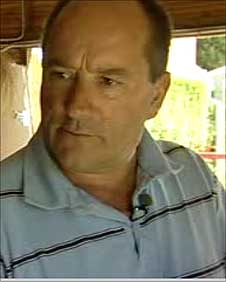
Mr Cuthbert is a former regional chairman of the Federation of Small Businesses. He says he is leaving the country because he is disillusioned with what he claims is the lack of support for small firms in the area.
He describes the regional development agency Yorkshire Forward as "not fit for purpose".
Created by Labour in 1999, Yorkshire Forward is one of nine regional development agencies in England.
It has a budget this year of £277m. Funding comes from central government and the EU. It currently employs 450 people
Yorkshire Forward claims that for every pound it spends - £10 is invested by the private sector. But after more than a decade in existence many people seem unaware of its exact role.
Smaller development agencies such as Hull Forward are already facing the axe.
And projects which had been reliant on Yorkshire Forward money - such as the £5m replacement of Hornsea's Floral Hall - are now in doubt as the government considers the future of regional development agencies.
The Conservatives have long been sceptical about regional development agencies, but it will be largely down to the Liberal Democrat Business Secretary Vince Cable to decide whether RDAs survive under the coalition.
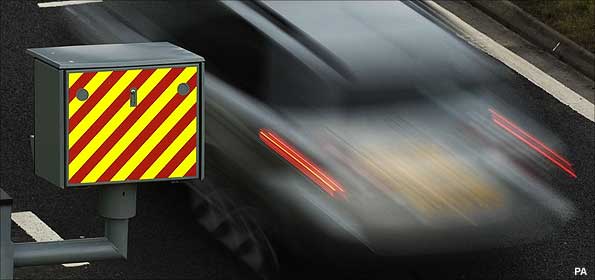
We've been described as the speed camera capital of Europe, with the number of speed cameras in this country trebling in the past decade.
But could it soon be the end of the road for these controversial contraptions?
The Government has indicated that it will no longer fund the installation of new fixed-point speed cameras, which may, or may not be good news depending on your point of view.
In recent times, more than £100m a year has been raised from speed camera fines. That money goes straight to the Treasury - which then distributes grants to local road safety partnerships run by police, councils and other organisations - who decide where to locate new cameras.
Lincolnshire's Road Safety Partnership told me that fixed-point speed cameras have been a deciding factor in cutting the number of road casualties in the county over the past decade by 50%. They also use mobile speed cameras in areas which are regarded as accident blackspots.
Other campaigners have welcomed the move, such as a professional driver from Hull, who suggested to me the real reason no new cameras will be funded is because they no longer generate enough revenue as most drivers know where they are located and therefore know when to slow down.
In future, any new fixed cameras will have to be funded from local budgets. No longer will they be bankrolled by central government.
It's a move which will delight many drivers who believe they are stealth tax on motorists.
But there is opposition from some road safety groups, including the Huddersfied-based organisation, Brake, which has described the speed camera cuts as "a trip back to the dark ages".
In order to see this content you need to have both Javascript enabled and Flash installed. Visit BBC Webwise for full instructions. If you're reading via RSS, you'll need to visit the blog to access this content.
As political slogans go - "power to the people" may not be the most original. But those words are becoming a mantra for Nick Clegg as he settles into his job as Deputy Prime Minister.
I have just interviewed Mr Clegg for the first time since the new coalition government was formed one month ago.
The Liberal Democrat leader and Sheffield MP says he wants to hand more power back to us ordinary folk in the biggest shake-up of our political system for almost 200 years.
High on his list is the huge task of reforming the House of Lords, as well as introducing measures aimed at restoring trust in politics, such as allowing voters to "recall" their MP - effectively allowing us to sack them if they are not doing a very good job.
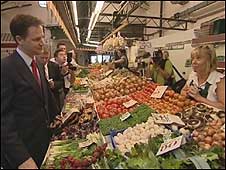
Then of course there is the tricky task of preparing for a referendum on whether we should ditch the first past the post system of voting and replace it with a method known as Alternative Vote or AV. This will involve a campaign which will largely polarise the two parties which have been brought together in government.
Despite the challenges ahead, Nick Clegg seems relaxed and genuinely appears to be enjoying his role in the new cabinet, which has seen Downing Street meetings delayed so that he and David Cameron can spend more time with their children.
However, the Deputy Prime Minister admits he is concerned that many people are still choosing not to take part in our electoral process. In last month's general election, the national turnout was more than 65%. In the Hull West and Hessle constituency, turnout was just over 45%.
And that seemed to be the main reason for Nick Clegg's visit to Hull - finding out why, in some areas, less than half the population bothered to vote in an election which many considered to be the most important for years.
Only when he gets the answer to that question can political reform really begin.


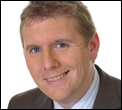 I'm Tim Iredale, the BBC's Political Editor in Yorkshire and Lincolnshire and presenter of the regional Politics Show. This is strictly a "no-spin" zone where the political viewpoint is more Humber Bridge than Westminster Bridge. Your comments and observations are more than welcome.
