

The American way to fail
The breathtaking rises in the price of bank shares this morning are symptomatic of a stock market that is bereft of reason and is being driven almost purely by hysteria and momentum.
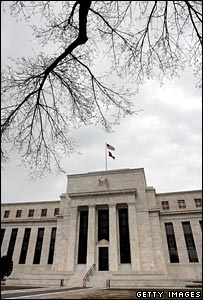 They are surging in part because of the FSA's crackdown on short-sellers but mostly because of the overnight news that the US Treasury Secretary, Hank Paulson, and the Chairman of the Federal Reserve, Ben Bernanke, are preparing a bold - or possibly impetuous - plan to tackle what can now be classified as the most severe and intractable malfunction of the banking system since the late 1920s.
As I put it on the Ten O'Clock News last night, yesterday's co-ordinated intervention by central banks, led by the US Federal Reserve, to pump an additional $180bn of short-term loans into the banking system treats only a symptom, not the cause, of banks' reluctance to lend to each other and to us.
It's a stopgap, while Paulson prepares to absolve many of the world's biggest banks of their idiocy during the boom years, by nationalising their bad debts.
To understand the pros and cons of what's being considered by Paulson, it's worth reminding ourselves of what created the latest terrifying phase of the credit crunch.
The ultimate cause is the chronic downturn in the US housing market. The proximate causes are the rotten loans to US homeowners sitting on banks' and other financial institutions' balance sheets that has mullered their capacity to make new loans.
The recent trigger has been the crises at Lehman, AIG,Fannie Mae and so on, which have created a climate of fear, in which bankers and managers of money appear to believe that almost any bank could collapse.
One important new stress has been a significant withdrawal of investors' cash from US money-market funds, because of the perception that the funds aren't as safe as was widely thought - which has in turn deprived banks of an important source of wholesale deposits (this sudden rise in the perceived riskiness of these funds was sparked by the announcement of a loss at the Reserve Primary Fund).
The drying-up of liquidity from money-market funds is in part what drove HBOS to acknowledge that the game was up, and that a rescue takeover by Lloyds TSB was the best form of protection for its savers and shareholders.
To reiterate, the big point is that Paulson is working with Congress on a package of measures that - he hopes - will attack the roots of the crisis.
It would involve buying many hundreds of billions of the banks' bad loans to overstretched US homeowners.
And it would also attempt to re-establish confidence in money-market funds by insuring them, in the way that retail bank deposits are insured against loss.
This would be the mother of all bailouts. It would certainly involve the deployment of hundreds of billions of US taxpayers' money, possibly more than a trillion dollars.
And it comes on top of the $300bn commitment of public money already made by Paulson to the rescue of Fannie, Freddie and AIG.
It all represents a massive humiliation for Wall Street, the giant US financial services industry and bankers supposed to be the canniest on the planet.
Paulson, himself, was one of their ilk, as the former boss of Goldman Sachs.
There will be serious long-term damage to the ability of the US to export its way of doing business to the rest of the world.
The American way of capitalism doesn't seem all that brilliant right now.
In that sense, a degree of moral authority - as well as financial clout - will shift east.
It'll also damage the robustness of the US public finances.
Possibly the biggest risk for the US is that in bailing out the finances of the private sector, Paulson would dent international investors' confidence in the American government's balance sheet - which could ultimately undermine the dollar, push up inflation even more and raise the cost of servicing debt for the US authorities.
Maybe the US is still big enough and powerful enough to persuade the rest of the world to pay for the mistakes of its financial sector - which is broadly what's being proposed.
But, as I mentioned here yesterday, surely it would be more rational for the Chinese to own the American financial system itself, rather than lend to the US Government (and in that context, it's resonant that Morgan Stanley may well be close to selling almost half of itself to CIC, China's state investment fund).
In this game of Wall Street Monopoly, there's no "get-out-of-jail-free" card.
 I'm
I'm 





Page 1 of 2
Comment number 1.
At 09:45 19th Sep 2008, mcnultyr wrote:The credit crunch has cause a massive reduction in the money supply as banks are forced to deleverage. On the other hand you have the US Govt creating billions of dollars to enable it to bail out these failing institutions. What is the overall impact of these to adjustments to the money supply and how will it impact inflation into the future?
Complain about this comment (Comment number 1)
Comment number 2.
At 09:46 19th Sep 2008, yourfriendforlife wrote:With HBOS shares rising above the 232p offer price following the ban on short selling, can we just cancel the proposed merger and get back to normal.
Complain about this comment (Comment number 2)
Comment number 3.
At 09:54 19th Sep 2008, spike_tt wrote:The FSA have banned short selling, but have they also banned writing of call options? Buying put options? Selling futures?
Have they stopped people backing a falling price? In no way whatsoever. So why all the hoo haa about banning short selling? It changes nothing.
Complain about this comment (Comment number 3)
Comment number 4.
At 09:57 19th Sep 2008, PRF101 wrote:It seems that the authorities are trying to solve this problem in the usual way of throwing newly minted money at it. By creating inflation it will bail out the banks and other feckless borrowers by expropriating (that is, stealing) the savings of those who try to look after themselves without expecting state handouts.
'Twas ever thus from Roman times to now.
Sell cash buy gold.
Complain about this comment (Comment number 4)
Comment number 5.
At 09:58 19th Sep 2008, Jacques Cartier wrote:Mrs. Thatcher, please take note: this is what happens when too many yuppies sit about in London drinking coffee with each other for twenty five years. They have finally forced us to stamp out their nonsense with a command economy. Even the Americans are at it, and that speaks volumes.
Some yuppies might even realise that the world expects them to actually do something useful in return for their wages. What a novel idea, eh? We sacked the welsh miners, but at least they produced some fuel. The yuppies have ruined the economy and forced us all in negative equity!
What a bunch of chumps they have been. But instead of being thrown out on their ears, some of them will get millions in compo. If this is what it takes to make the City "great", then we could do with another bout of the Black Death.
Complain about this comment (Comment number 5)
Comment number 6.
At 10:00 19th Sep 2008, HanifRehman wrote:Just how much is the US debt standing now? So the taxpayer has to be pay a trillion dollars for this bad debt, this is just crazy.
With rising costs of the Iraq/Afghan war, financial system next to collapse, spiralling debt, the American dream is turning into an American nightmare.
Whoever becomes the next president of the US will have a huge task of reducing the debt headache imposed on the general populace.
Complain about this comment (Comment number 6)
Comment number 7.
At 10:05 19th Sep 2008, empiredown wrote:When the patient is losing blood then it makes sense to inject fluidity - but it doesn't staunch the wound does it? If a trillion doesn't work then try two trillion or four? this is going somewhere isn't it?
Complain about this comment (Comment number 7)
Comment number 8.
At 10:17 19th Sep 2008, UltraTron wrote:If this goes through then the days of the dollar as the world's reserve currency will well and truly be over. There's surely no way this will get Congressional backing.
Complain about this comment (Comment number 8)
Comment number 9.
At 10:23 19th Sep 2008, USInterpreter wrote:Peston is extraordinarily cautious and appears to be betting both ways.
There comes a time when governments have to step in with the tools they have available to cool the market and restore some order. Afterwards they need a considered approach to see if any changes in the system are required to prevent a recurrence. The whole of life is like that and Peston is talking with 20/20 hindsight.
His depressingly pessimistic approach is both frightening to the mortgagor and encouraging to the speculators. If people in the UK are worried about their mortgages they should remember that only 6 months ago it was said there are far too few houses being built. There are a lot less now! So watch the prices rise again in due course - rapidly.
Cool it Mr Peston!
Complain about this comment (Comment number 9)
Comment number 10.
At 10:23 19th Sep 2008, MadTom wrote:While trying not to shake my head at the desperation of the US to put its finger in the coastline of economic warning I am still baffled by the short selling myth.
If short selling is the problem with the market at the moment than either
a) People have been lending shares and saying go and devalue my stock. I dont think so?
b) Fund managers have been lending my pension fund out for someone else to devalue. In which case they should be strung up for all to see.
Can we expect to see a lot of criminal cases coming or is this just a myth to try and cover the leverage bubble bursting at long last.
Complain about this comment (Comment number 10)
Comment number 11.
At 10:25 19th Sep 2008, drew_lg wrote:Why is there no debate about the alternatives to a fractional reserve currency?
Would it not be better for the US and Europe to issue their own currency rather than creating it through the balance sheets of private companies?
Complain about this comment (Comment number 11)
Comment number 12.
At 10:26 19th Sep 2008, bankinvestor wrote:The short selling ban is welcome.It is only one part of the problem. There needs to be a change in accounting rules as well,for mortgage loans.Also the mortgage rate needs to be much lower 3-4% to help people pay their mortgage.
Complain about this comment (Comment number 12)
Comment number 13.
At 10:28 19th Sep 2008, apollo_mcqueen wrote:If the UK is "well placed to weather this economic storm", as voiced by GB and AD many times, why of the five recipients of the Feds ?100bn "loan", is the UK receiving an equal share to the European Central Bank, covering the whole of the rest of Euroland?
Surely if ?20bn covers the whole of Europe, we don't need the same? It looks like Switzerland is the only other Eurozone country in serious strife?!
Where are France in all this? Do they just need a proportion of European CB cash? Weve been lied to by our PM and it's time he left - By choice or not!
Bank Of England
European Central Bank
Swiss National Bank
Bank Of Japan
Bank Of Canada
Complain about this comment (Comment number 13)
Comment number 14.
At 10:31 19th Sep 2008, skittledog wrote:Hurray! Several months of reading this blog has finally made me capable of understanding the news. I feel so proud at understanding that what is being speculated about is a nationalisation of the debt, and of being able to see some of the risks on either side (financial crisis vs huge taxpayer debt and risk of it all happening again). Yay. As a non-economist in almost every possible way, I am pleased.
But I am scared of the repercussions of this. How can it possibly be sensible, especially in the American version of capitalism, to privatise profits but socialise losses? It seems crazy.
Complain about this comment (Comment number 14)
Comment number 15.
At 10:31 19th Sep 2008, HPA wrote:Commentators seem surprised that banking shares in the UK stock market are rising. This is a simple reaction to the FSA ban on short selling of financial shares. Hedge funds and their ilk make their money through the opaqueness of their trading activities. The threat to publish names from next Tuesday is bad for business, hence a rush today to cover these positions and exit stage left - unnamed.
Complain about this comment (Comment number 15)
Comment number 16.
At 10:37 19th Sep 2008, dgamble wrote:Can I propose to max out all my credit cards, they apply to the US Fed to bail me out by taking all my bad debt off my hands? ...
Anybody know where I can apply to do this?
Complain about this comment (Comment number 16)
Comment number 17.
At 10:40 19th Sep 2008, jimk60 wrote:Why do we still use the stock market as a thermometer for instant appraisal of all measures - these people are headless chickens! Someone says "I have a cunning plan" and they all rush into BUY mode, then when the plan is announced they will decide it isn't adequate after all and rush to the other corner of the hen house and the whole thing will crash again to record lows.
The stock market is inextricably part of the problem and should not be treated as an independent barometer of whether measures are good or bad. The only rescue package that will please them is one that carries on making them fat, and who pays for that?
Complain about this comment (Comment number 17)
Comment number 18.
At 10:43 19th Sep 2008, floatingpenguin wrote:"The American way of capitalism doesn't seem all that brilliant right now."
The reason that capitalism has rightfully had such success in my view is the opportunity it affords the man in the street and the reduced likelyhood of individual corrupt control exhibited by totalitarian communist regimes. These are however extremes and there are many good examples of successful moderate "middle ways".
It seems to fall down due to the partitioning of risk and reward between individuals, organisations and society - mr smiths invisible hand is not always beneficial to everyone in society, it is an axiom that economic darwinism is not egalitarian.
RP is right in saying some of our canniest people were in banking but sadly their talents were turned to inventing and selling innapropriate and increasingly complex instruments and products that confused laymen, politicians and other bankers for the benefit of their organisations. At the heart of this is the idea that the risk for your actions is externalised to a company or other portion of society that does not affect you - this must be addressed at a fundamental level in the economy in my view to limit such wildly irrational bubbles forming in the future.
Complain about this comment (Comment number 18)
Comment number 19.
At 10:45 19th Sep 2008, theparker56 wrote:Whilst Robert Peston's comments are all very interesting, am I alone in not undersatnding the term "mullered"?
Is it some esoteric term used in the financial services industry, or is my general eductaion somewhat lacking?
Complain about this comment (Comment number 19)
Comment number 20.
At 10:46 19th Sep 2008, FearandLoathing wrote:'Moral authority will shift east'.
Are you refering to that communist dictatorship which has left it's idealogy at the back door whilst it embraces a corrupt form of capitilism?
If you have such high regard for that country why don't you go and try to ply your trade over there and see how long it would be before you lost your liberty and possibly your life!
Complain about this comment (Comment number 20)
Comment number 21.
At 10:47 19th Sep 2008, houghtot wrote:The irony that the banks which all indulge in the practice of short selling are now suffering as a result is not lost on me. However, preventing traders from taking short positions per se does not seem to be the right solution - what next, will invetors be prevented from selling shares in a particular stock because they believe the price will go down? This focus on investor behaviour deflects emphasis from the fundamentals - banks have lent irresponsibly and banking systems have become more fragile as their complexity has grown. We recently saw "speculators" being blamed for high oil prices, now they're being blamed for low bank stock prices - in both cases this prevents clarity being gained on the real issues.
Complain about this comment (Comment number 21)
Comment number 22.
At 10:53 19th Sep 2008, IHaveaDream wrote:Hi Robert,
The truth is Paulson does not care. He made his $500M from the sale of his GS stock. (Which was also tax free because the US government asked him to take the role.)
He has also admitted that the problem will be for the next US government to deal with.
All he cares about is bailing out his buddies on Wall Street who made very dubious investment decisions. It's called privatising profits and socialising losses and it stinks.
I am exceptionally cross that it is 'Jo Taxpayer' who is being told (not even asked) to foot the bill.
Complain about this comment (Comment number 22)
Comment number 23.
At 10:57 19th Sep 2008, Rick_Nobins wrote:The words "Temporary respite" and National and International financial crisis in the US" together with "spiralling inflation" spring to mind as some that will be used in the near future.
Erstwhile economic journalist Chris Filde's words that "inflation is a disease of money" also seem worryingly appropriate as the US attempts to, in effect, write off their banks casually and possibly criminally acquired debts by essentially printing money to throw at the problem. They obviously hope that the rest of the world will continue to underwrite this administration's error in allowing, and possibly encouraging, the whole situation to arise.
This is not the end of the story as the emerging goliath financial economies may well be extremely cautious about lending to a country whose regulatory policies, or lack of them, got us up this particular creek in the first place.
Would you?
Complain about this comment (Comment number 23)
Comment number 24.
At 11:00 19th Sep 2008, clearargument wrote:Concerning short selling: There is much talk about the necessity for short selling to balanced markets. I disagree and would expose this argument as what it is: lobbying by those who profit from excessive
market influence and only need comparatively limited funds for scandalous gains. Short sellers are sellling what they don't own. They are selling shares, which pension funds and others, who should be trustees of these share, have lent to them. Pension funds and other funds should be ashamed of themselves. They are making a small proft when lending shares, whilst at the same time, it seems, they are ruining the value of the shares they hold, robbing both shareholders and pensioners.
Complain about this comment (Comment number 24)
Comment number 25.
At 11:04 19th Sep 2008, bena gyerek wrote:the creation of a consolidation agency was a favoured tactic in the post-communist east european countries. many of them experienced banking crises after the initial rounds of privatisations in the early 90s because of concentrated bad debts to failed communist-era industry, and were forced in some cases to effectively renationalise the banks, moving the bad debts to such an agency and then to resell the cleaned up banks to some of the big west european commercial banks.
it looks like the us is trying to do the same thing, except without the renationalisation step. in effect, this is just an enormous subsidy to the banking sector (so much for "moral hazard"). as i understand it, the us government is saying to the banks "that loan on your book you are marking at $100 but that is really only worth $60, you sell that to us at $100 and let us work it out." i.e. the bank gets an effective subsidy of $40 and doesn't need to write down any more losses. little wonder confidence has been restored in the banking sector.
as robert rightly points out though, this just adds to the stack of debts and the ongoing deficit of the us federal government. in our case, the government has to issue $100 of treasuries to fund the loan purchase, and will eventually have to show the $40 loss in its deficit as it works out the bad debts. another point to be aware of is that, based on the experience of the post-communist countries, the debts in such a consolidation agency can take literally a decade for the government to work out.
the increase in the supply of treasuries will be very significant. the total stock of us public debt before the crisis was about usd 9 trillion (of which usd 4.7bn is us treasuries - i.e. federal government bonds). the total value of all additional debts being taken on by the us (including fnma/fhlc) could be another usd 1 trillion. this is a staggering increase and would take us government debt/gdp ratio to around the 75% mark (not that the us has any intention of joining the euro). when japanese govt debts started mounting in the last decade, the rating agencies had no compunction in downgrading it below aaa. however, i expect the us govt is in a much better position to get favourable treatment from the ratings agencies right now. any such downgrade could be catastrophic for foreign portfolio investment in the us and therefore on the usd. even without such a downgrade, the increase in supply of treasuries will definitely weigh on the market.
i personally also agree with robert that the usd is likely to get hammered in the coming months. we have already seen the usd lose its primacy in the last few years as the base currency for non-us private sector investors. but that still leaves a lot of governments living in the old world of the dollar standard.
the rationale for east asian economies to hold so much usd is based on its historic importance as a major export market (although the combined eurozone is now a bigger one). buy usd and keep your exports cheap to the us consumer. but if that export market is in recession and not buying anyway, then it makes sense for those countries to start diversifying their reserves. moreover, i think that if the dollar starts trading through 1.60/eur level again, then it will put a lot of pressure back on middle eastern countries to break their dollar link as well, creating a kind of cascade effect on the dollar's weakness.
interesting times.
Complain about this comment (Comment number 25)
Comment number 26.
At 11:04 19th Sep 2008, richarddorset wrote:You wrote: "more rational for the Chinese to own the American financial system itself."
Fascinating idea. However, would that mean the Chinese could charge whatever Interest they liked on any debt they took on?
Maybe Marx was right, and economies evolve with technology - but not in the way he thought...
Complain about this comment (Comment number 26)
Comment number 27.
At 11:05 19th Sep 2008, boosmith wrote:I am assuming we are looking at a massive tax payer handout to the financial institutions. This will mean vastly increasing the money supply and therefore risk a large increase in inflation. Inflation is already a problem, and this is only going to make it worse. But this is the classic way for governments to write off their debts - just let inflation rise and gradually devalue the debts. The US gov is solving two problems *for itself* here. Keeping the bankers and financial system solven, and at the same time, ensuring that inflation will rise to wipe out the collosal budget deficit. What people are failing to realise in all this is that the US as a country could well be heading towards default itself, leaving China, Russia, and the far east to move in and snaffle up cheap assets.
Complain about this comment (Comment number 27)
Comment number 28.
At 11:05 19th Sep 2008, Tatruth wrote:And the capitalism doesn't work?
Genius Mr Preston. And the Chinese phenomena is built on? Cheap manufacturing and ridiculous property speculation. Walk around any city in China and there's monolithic sky scrapers/appartment blocks that have never been filled and probably never will be. Then go to a minor town in the middle of nowhere and you guessed it there's another skyscraper doing erm very little. China owns massive ammounts of US debt as to their wasteful investment in the third world how much has it lost?
Yes there probably will be a readjustment of financial power to the Chinese but if you want you have your institutions run by Chinese then let's just wait for the most monumental crash ever seen. Dotcoms can operate on a new business model where profit just goes up. Property is due to rise for erm forever. China is so big it can drive it's own growth and never go into recession????? When consumption goes down China's ridiculous ammount of bad investment will be uncovered. Hence China can not afford to let recession hit too deep to the US. The US drives the world as seen by Paulson's recent solution.
Mistakes they've had a few but China there's too many to mention. God help us when China hit the wall like Japan in the 80's, and that will happen.
Complain about this comment (Comment number 28)
Comment number 29.
At 11:14 19th Sep 2008, Nick Drew wrote:So Paulson, as you say - "the former boss of Goldman Sachs", has saved the world !
How convenient for ... err ... Goldman Sachs.
Actually, let's watch and see. There's a good case for the 'temporary respite' tag, per #23 above.
Complain about this comment (Comment number 29)
Comment number 30.
At 11:14 19th Sep 2008, Dr Peter Handley wrote:Robert is right in the assumptions made regarding future positions. The writing was on the wall some years ago about unethical practices in brokerage houses. Instruments based on algorithms and complex computer modelling enabled this - along with a raft of 20 something traders who were risk averse.
Mostly young men who bent the rules, moved the goal posts and generally pushed
the envelope of legality in order to make huge profits on the back of someone elses loss. Rogue traders brought down banks - and they got caught - but the sheer values they were dealing with was a recipe for disaster. Now the financial tsunami is washing around us. We will survive but there must be more regulation - we cannot afford this form of unbridled capitalism. My prefdictions: The Euro will become the dominant currency; The Australian bank 'Macquarie' will go bust; more rogue traders will be named, shamed and sent down.
Complain about this comment (Comment number 30)
Comment number 31.
At 11:16 19th Sep 2008, PHutchence wrote:There was a time when building societies (and maybe banks?) would only lend money for mortgages on satisfactory evidence that one had been saving with them for a period . There was often a queue to apply for mortgages.
They would also only the lend money which investors had lodged as savings, rather than borrow money from elsewhere to lend on.
Why has it taken such a severe crash in the financial markets to return to what ordinary people would regard as common sense lending?
Complain about this comment (Comment number 31)
Comment number 32.
At 11:22 19th Sep 2008, Capricorn wrote:If blame is to be apportioned for our current financial wreck, then we need a root and branch investigation of the banking system and its methods. The time for incremental tinkerings around the edges has passed.
If any other industry caused so much havoc, there would be criminal investigatons and quick legislation to either ban the industry and/or its practices.
Instead, we have politicians and central bankers talking banally about "stability" i.e. lets just settle down to business as usual as quickly as possible.
All these banks should have been allowed to fail. Their management have permitted and rewarded incredibly stupid decisions. They should fold. Instead we, the taxpayer, without our permission even being asked, are now propping up the very companies that caused the problem.
What is wrong with this picture???
Complain about this comment (Comment number 32)
Comment number 33.
At 11:23 19th Sep 2008, floatingpenguin wrote:I am starting to change my mind about shorting. I think the interesting thing about short selling is that because the assets (shares) end up where they were to start with, you can quite happily carry out something almost identical to shorts without any change in ownership of the shares, it is effectively a bet linked to the movement of a companies share price. (which would interestingly also have the correctional advantages already noted about shorting). So why don't they just do that (bet) rather than actually "lending, selling and buying" the stock?
Answer: The "betting" price gets mangled up with the starting prices of the shares and make it darn difficult for investors to know whats going on and they are more likely to spook - split the two out (somehow - by banning shorting) and you solve the problem. Funds can gamble on index linked betting, and investors can see the price of shares reflected by long term investors.
Also maybe you get taxed more on betting than you do on buying and seeling shares, and the systems are not in place to handle this at the moment, surely this could be sorted?
Complain about this comment (Comment number 33)
Comment number 34.
At 11:25 19th Sep 2008, bena gyerek wrote:a few words on inflation:
the injections of several trillion usd by the world's central banks into the money markets this week will not be inflationary. these are short term loans extended to counter the collapse in interbank liquidity. without these loans there would be a total collapse of the global banking system which would be extremely DIS-inflationary. once confidence in the interbank market is restored, the central bank loans will be repaid (with interest) and the influx of money will be taken back out of the system.
the nationalisation of bad debts by the us treasury is also unlikely to be inflationary. they would be very stupid to fund it by simply printing more usd bills. one of the few things that milton friedman was right about is that this leads directly to hyper inflation. instead it will be financed by issuing a heck of a lot of us federal debt, which will have a neutral impact on inflation, as all it represents is the coversion of existing private debt into public debt.
things that may cause an increase in inflation however are the following:
- the fed keeping interest rates below the inflation rate in order to avoid a recession
- loss of confidence in the usd, which would lead to a rise in the price of imports
- the debt relief that will undoubtedly be offered by the us government to the borrowers they are taking on as they work out all those bad debts over the next few years
Complain about this comment (Comment number 34)
Comment number 35.
At 11:25 19th Sep 2008, the-real-truth wrote:Short selling is a GOOD mechanism.
If a fund has millions of pounds in a company, and they believe the price is going to drop, they can either sell those shares (actually *causing the price to drop*), and then have to find a new investment... buying millions of pounds worth of different shares and actually pushing up their price artificially (so costing more than it should)...
Fees, Stamp duty, Tax etc all to be paid on top.
Alternatively they can lend the shares to someone who wants to sell short - they receive a fee (that covers the expected drop), eventually get their shares back and keep the fee to cover the drop.
Even if short selling is blocked, there will be plenty of derivitive products that *should* provide the same protection - however being more complicated are likely to incur additional fees, and be open to error and abuse.
FSA said HBOS was absolutely fine immediately afterwards Darling said he had known about the problems for weeks -- someone has been lying to the market...
Who was it ? surely something for a real journalist to follow up...
Complain about this comment (Comment number 35)
Comment number 36.
At 11:26 19th Sep 2008, Friendlycard wrote:My first reaction to this is: how can a $180bn taxpayer lifeboat rescue markets from a supposedly multi-trillion-dollar wave of bad debts? Presumably the US taxpayer has to take on board the entire difference between the dubious mortgages and the underlying value of the assets against which they are 'secured'. At $180bn, it just doesn't add up.
To be really effective, this plan would need to be much bigger, and would by implication be inflationary. Perhaps that's the plan; reduce the real value of the debt black hole by devaluing through inflation? If that's the plan, it involves penalising the prudent in order to bail out the feckless.
Shorter term, this looks like a classic 'bull-trap' - during a downward spiral, you get an up-tick which is just big enough to sucker in the bulls before the next downwards lurch begins.
Complain about this comment (Comment number 36)
Comment number 37.
At 11:26 19th Sep 2008, apollo_mcqueen wrote:Mullered = Smacked, beaten, hammered, etc!!
Does stand out as a bit of a colloquialism in his BBC speak, doesn't it!
Complain about this comment (Comment number 37)
Comment number 38.
At 11:26 19th Sep 2008, Brian Golden wrote:Fully agree with #2.
Given the HBOS takeover is so disasterous for competition......
Could the ban on short selling not have been announced first?
Maybe just maybe that might have been enough. Maybe not but at least just see.
This might sound basic but my expectations on competence are rock bottom after witnessing the bank run last year.
Complain about this comment (Comment number 38)
Comment number 39.
At 11:26 19th Sep 2008, fingerbob69 wrote:Woe betide any central banker who tries in the future, should this diasasterous plan be implemented, to weild the stick of moral hazard. Every financial institution will simply quote the Paulson Plan, pass off all that is toxic on us the tax paying public and start again... immune from the threat of failure.
Furthermore, don't think that we in the UK wont be asked to pay a price for this American bailout of American banks... we already are. When you create that much additional cash it has to find a home somewhere. It will...it has already... begun to chase exsisting goods and services. Take a look at oil, up $7 dollars yesterday. The downward trend of that commodity is now reversed and so, to help our American friends, oil will fly past $200pb by Christmas with the obvious consequences at the pumps. But don't worry. With a loaf of bread costing £3 a loaf for example, you'll be too worried about affording your next meal to be worrying about the fact you no longer can afford to drive a car. Inflation? You ain't seen nothing yet!
Complain about this comment (Comment number 39)
Comment number 40.
At 11:27 19th Sep 2008, markbellchambers wrote:I look forward to ending of all derivative trading in stocks and shares.
Owners of shares, particularly pension funds, should be prevented from lending their stock for such purposes as falls in price directly oppose the interests of their members.
All hedge funds should be closed down.
Complain about this comment (Comment number 40)
Comment number 41.
At 11:29 19th Sep 2008, U11711256 wrote:Well, this all just goes to show that if you want to save (long term) for your future, or for your retirement, you are best advised to invest in GOLD....and keep it in a safety deposit box somewhere. The wholesale bail-out of the US and UK banking sectors, thereby socialising the banks' huge losses, is greatest attack on personal wealth ever since tax was invented.
PUT YOUR MONEY INTO GOLD..... as gold (or rather the lack of it) is why the banks got themselves (er, I really mean us) into trouble in the first place.
The fractional reserve banking system has allowed them to get away with recklessly expanding their lines of credit (by giving anyone with pulse huge loans that they could never repay)....is the real root cause of the problem. It is nothing short of legalised fraud.
Quote from US president - Woodrow Wilson (1913-1921) made shortly after signing the Federal Reserve into existence.
"I am a most unhappy man. I have unwittingly ruined my country. A great industrial nation is controlled by its system of credit. Our system of credit is concentrated. The growth of the nation, therefore, and all our activities are in the hands of a few men. We have come to be one of the worst ruled, one of the most completely controlled and dominated Governments in the civilized world no longer a Government by free opinion, no longer a Government by conviction and the vote of the majority, but a Government by the opinion and duress of a small group of dominant men."
Complain about this comment (Comment number 41)
Comment number 42.
At 11:35 19th Sep 2008, nandorfi wrote:Talking about the core of the problem; does this have anything to do with the sizeable chunk of US population which bought into sub-prime products? Where would these people live without this market segment? Is not it, at least, partly about the US government shutting its eyes in front of a potentially major social/poverty issue and letting the financial system handle the problem on its own way? At that time, it has probably seemed a cheap solution from budgetary point of view, has not it?
Complain about this comment (Comment number 42)
Comment number 43.
At 11:39 19th Sep 2008, robinkey wrote:The news from America is awful.
If we are buying the debts of the idiot financial crooks that got us into this mess ,so that we can pretend to reinflate the artificial balloon we call our economy , then we are condemned to 3 to 5 years of paying both the interest on the debt as well as I surmise , an intention to somehow get the general population to accept approx a 20 percent reduction in real wealth/earnings while the effects of globalisation are played out...this is a horror story with big political implications but perhaps worth it to save the financial system from totally failing
Complain about this comment (Comment number 43)
Comment number 44.
At 11:47 19th Sep 2008, bena gyerek wrote:friendlycard @ 36
the 180bn is no cost to the taxpayer. it is a loan by central banks to the banking sector that will be repaid by the banking sector.
btw you made me realise in post 25 i said "trillions" instead of "billions". an easy slip in this crisis. the reason why the loans are only billions is because it is to ease a liquidity squeeze being faced by all banks (good and bad). the money will be used by them for their day-to-day operations. this is basically like replenishing a company's kitty with a short term loan.
the big paulson-bernanke proposal to consolidate the banking sectors bad debts however IS something that runs into 13 figures and WILL cost the taxpayer (though the cost to the taxpayer will only be the value of the debt relief offered to the defaulted borrowers, so should be a lot less than usd 1 trillion).
this definitely proves that saving the system is more important to the us government than imposing moral hazard. like it or not, no economy can survive without banks. so saving the financial sector has to be first priority. however, i expect there will be some very strict regulation coming to deal with the moral hazard issue. i foresee higher disclosure requirements, much more conservative accounting on treatment of "off balance sheet" items, limits on bank's market vs deposit leverage ratios and a reform of the bonus system for paying bank employees.
a more philosophical point: all economies require a financial system to allocate capital. all such systems are subject to period crises. a major advantage of capitalism is that markets highlight these crises much earlier on, make them more urgent and give a clear signal of when they have been successfully dealt with. eastern europe had their crisis in the 70s. it only got worked out in the 90s.
Complain about this comment (Comment number 44)
Comment number 45.
At 11:47 19th Sep 2008, Wee-Scamp wrote:This is the worst of all possible outcomes. I am ashamed of our cowardly politicians.
Complain about this comment (Comment number 45)
Comment number 46.
At 11:51 19th Sep 2008, magnificentjohndoe wrote:So are we talking about soaking up just the debt associated with the toxic mortgages or does this include the vastly larger potential debts associated with credit derivatives? I'm guessing not as these total up more than the world's GDP. These seem to have been calculated based on even more wildly optimistic assumptions than mortgage debt. And they are so huge they make the toxic mortgage issue seem trivial. Of course they won't all go bad at once unless there's a major recession. So that's OK the isn't it?
Complain about this comment (Comment number 46)
Comment number 47.
At 11:52 19th Sep 2008, Pillar wrote:The weeds have out grown the crop. The Governments have to do some serious digging out of the weed roots. When that's done use weed killer. Regulate these SoB's
Complain about this comment (Comment number 47)
Comment number 48.
At 11:55 19th Sep 2008, counsel4socrates wrote:This is the end of the US dollar's dominance. No doubt about it.
But this crisis isn't over. The joker here surely is the Chinese and their reaction. What happens if S and P downgrades the US government's rating as a consequence of the 'rescue'? US government stock and the dollar are going to be viewed as less safe. Now the Chinese own about $1.7 trillion of US government stock and dollars. Understandably they will want to move their money out of this into something more attractive and safe asap.
Now think back to 7/11/7 when a rumour started to circulate that the Chinese govt was thinking of diversifying its holdings out of US assets. The Dow Jones dived and with it the Dollar.
Next time there will be no lifeboat....
Complain about this comment (Comment number 48)
Comment number 49.
At 11:56 19th Sep 2008, mogren wrote:I totally agree with your analysis Robert. Banning short-selling, is the ultimate reward to cynical and incompetent bankers who have been licenced to gamble with everybody's lives with no downside to them.
If not a single one of these financial wizards could not foresee the result of lending to people who could not repay their loans was going to be, it's their problem and why are they in the positions they are in? Banning short-selling only insures the position of failed bankers. They cannot lose. Tommy Cooper could not have come up with a bigger joke at our expense. The only answer is to hold the bankers accountable and relieve them of their positions. They are criminals or as thick as two planks.
Complain about this comment (Comment number 49)
Comment number 50.
At 11:58 19th Sep 2008, Defeased wrote:A failure of regulation (banks have to set aside little or no capital for assets held on trading account whereas the same assets held on the banking book attract 8% to 12% capital) is at the root of this problem.
When the US housing market turned down the instruments based on it became untradeable. Banks could have held the assets to term and accepted relatively modest losses over a pro-longed period except the capital requirements prevented moving the assets to the banking book. Result: forced selling and artificially high losses, followed by a collapse of confidence.
What has been needed for 12 months is a source of long term funding that would enable the tainted assets to be held and worked out. Having torpedoed the banks' ability to raise long term funding (equity being the ultimate in long term funding) by his handling of Fannie, Freddie and Lehmans, Paulsen left no alternative to the government providing that funding.
The only real question is what price the assets are bought in at. At current market prices the buyer should make a huge profit.
Complain about this comment (Comment number 50)
Comment number 51.
At 12:01 19th Sep 2008, Roma1n wrote:Paulson's bailout plan is about liquidity and only indirectly about value.
Value of a mortgage is the present value of repayments. What is not known is morgagees ability to repay and this coupled with collapse of underlying property collateral causes the mortgage assets to loose liquidity.
Paulson plans to take on the credit risk of the morgagees and pay banks cash thus freeing the banks from illiquid assets and liquifying the system.
If this new cash is taken up by credit-worthy borrowers and used to jump-start the property market again then the pre-existing mortgages will become liquid again as property collateral will have known value. This in turn will get the pre-existing mortgages held by US government repaid and everyone will become happy.
But all this assumes that there are CREDIT-WORTHY BORROWERS WILLING TO PROP UP THE PROPERTY MARKET. If this assumption turns out to be wrong - and I believe it is - then Paulson's bet will cause massive inflation and devaluation of dollar.
Complain about this comment (Comment number 51)
Comment number 52.
At 12:02 19th Sep 2008, walshamsupporter wrote:Blaming short sellers for the run on banks is like blaming the undertaker when someone dies. If a financially healthy company is subject to short selling, then those shorters will ultimately get their fingers burnt. The shorters knew what was happening in Northern Rock. As a result the share price gradually fell. Imagine if the news of this company had come out with the share price above £10! The innocent investor would have lost even more. If HBOS was not in danger the directors could have sat tight.
Complain about this comment (Comment number 52)
Comment number 53.
At 12:04 19th Sep 2008, emgebees wrote:The lunatics have taken over the asylum.
Complain about this comment (Comment number 53)
Comment number 54.
At 12:09 19th Sep 2008, doctor-gloom wrote:Robert you're right to be cautious about what's going on in the US. I suspect we'll all be back here wondering what's wrong again in the next week or so. Stocks are rising, sure, but as you point out are we really seeing the underlying problems being addressed? I don't think so. As for the idea that some institutions are simply too big to fail: rubbish. If we really believe this then these institutions ought to become a part of the state. Not that I'm advocating this as a solution, all I'm saying is that we can't have it both ways we either have a market system or we don't. These institutions shouldn't be bailed out, full stop. There has to be a severe price for failure not a generous reward.
Complain about this comment (Comment number 54)
Comment number 55.
At 12:09 19th Sep 2008, AnddrewH wrote:Does this mean that the HBOS takeover will now not be approived by shareholders - who would selkl when the share price is higher than the bid price? Alternatively, if the take-over fails, but the reasons for shorting (i.e. liquidity) are sound, what happens when six months down the road the bank fails because it cannot borrow to repay its market obligations? Is the FSA now responsible for the bank failure by influencing the market?
There are rules to prevent abusive behaviour by users, and I'm left wondering why they appear not to apply to 'regulators', who seem free to meddle whenever they like?
Complain about this comment (Comment number 55)
Comment number 56.
At 12:13 19th Sep 2008, slowcookedporridge wrote:To #3:
Writing calls, buying puts and buying futures does not drive down prices of underlying securities like short selling can.
As you know, the above are only derivatives and as such are an indirect punt on the underlying doing something, but they do not directly affect its price.
Complain about this comment (Comment number 56)
Comment number 57.
At 12:13 19th Sep 2008, magnificentjohndoe wrote:Isn't the financial problem at the heart of the mortgage and credit derivative crises that we allow financial institutions to pass on the RISK associated with debt? It means that they pass on the duty to assess the dangers to a third party and absolve themselves of due dilligence. If the loan seems risky, you can always share out the actual debt (and potential profit ) with other institutions. Being able to sell the risk separately to the debt seems fundamentally flawed. If you have so little faith in the loan that you have to insure out the risk, should you really be making the loan in the first place?
Complain about this comment (Comment number 57)
Comment number 58.
At 12:13 19th Sep 2008, Hawknic wrote:Banning short selling is just a way for the City to appear to be doing something. Short selling in itself is not a problem - markets are just big communication networks, and short selling is the most powerful negative message available; removing this capabilty just reinforces the delusional optimistic tendencies that the market tends to embrace most of the time. If some people are manipulating markets using shorts then it means 1) traders are just sheep and base their decisions on deals rather than analysis, and/or 2) traders are just sheep and base their decisions on deals rather than analysis. The use of rumour has nothing to do with selling short, it is breaking the rules and should be treated as such. The failure to regulate the City adequately in the name of liquidity and enterprise has led to a degree of lawlessness in the financial markets that would be intolerable elsewhere.
As far as the banks go, they are reaping what they have sown - offering unaffordable debt helped to create the house price bubble, and a cycle was created that gave the appearance of economic growth, while being totally artificial. The bubble had to burst some time: once people started defaulting then credit would start to dry up, prices fall and the banks find themselves with debts worth less than the collateral, owners have negative equity which prevents resale, everyone loses. The cause was greed on the banks' part, stupidity on the borrowers' part. The difference is that borrowers end up homeless while the bankers made their bonuses. Once again. adequate regulation could have curbed the problem much sooner.
When will we realise that the city's self regulation (because whatever the bodies we have, they are all staffed by bankers) is never going to result in a system with the integrity required?
Complain about this comment (Comment number 58)
Comment number 59.
At 12:17 19th Sep 2008, fajensen wrote:Stocks are not rallying in response to the "rescue" plan.
It's the shortsellers leaving the market in disgust!!
A ban on short sales:
https://sec.gov/news/press/2008/2008-211.htm
Once they are gone, guess what then happens: There are no buyers anymore.
Next selling will be banned, like in Pakistan.
Complain about this comment (Comment number 59)
Comment number 60.
At 12:19 19th Sep 2008, YummyCarolKirkwood wrote:RP is on the right lines in the last part of this blog entry. If the US Government assumes liability for all the bad debt that has been incurred in the recent bubble, as seems to be the mooted slution, the result will simply be a dollar collapse.
The US has a trade deficit of ~$60bn PER MONTH - which translates to ~$700bn on an annual basis - and an anual budget deficit of several hundred billion dollars (only a couple of weeks ago it was projected that the US budget deficit would hit a record $438bn for 2009 - see https://news.bbc.co.uk/1/hi/business/7607872.stm ). In other words, EVERY YEAR the US is spending something of the order of a trillion dollars more than it has.
By any definition, America is effectively bankrupt. The world has tolerated its "banana economy" for years as I have already pointed out on a previous Peston blog (see here). Where the US dollar is concerned, it's all very The Emperors New Clothes - the question is who will be the little boy that points out that the Emperor is in fact naked?
Complain about this comment (Comment number 60)
Comment number 61.
At 12:19 19th Sep 2008, pensionboy wrote:What I find a little strange about the FSA psoition on trying to control short selling is why no one has drawn attention to the fundamentals involved? Most importantly why lend the stock to a hedge fund in the first place (okay maybe for the fee but..) as, if you as the owner of the stock as a fund manager etc surely knowing that these guys take short positions, your own fund is going to get a hit.
It works ok the other way,even if it does over value, but maybe thats why we get the trade, hedge funds take very short term positions and the fund managers take long, so it all works out in the end, except of course for the guy who has to take his pension benefits now.
Complain about this comment (Comment number 61)
Comment number 62.
At 12:21 19th Sep 2008, globaltruth wrote:Am I the only one to have noticed that the concerns about the Large Hadron Collider have all been realised?
The black holes and strangelets have arrived and are manifesting themselves in the Stock Market.
Switch it off now I say.
Complain about this comment (Comment number 62)
Comment number 63.
At 12:22 19th Sep 2008, James wrote:These investments by central banks/governments only solves the problem short term.
What is needed is some sort of "stick" to punish those who have caused this situation. After all they are rewarded with many many carrots on bonus day for having got it right should they not loose money for getting it wrong?
I seem to recall any person being made bankrupt has their finances examined going back some 6 months or more to see if there has been any misuse of funds. Surely the senior management of these banks and financial corporations recently bankrupt must carry the responsibility for their bank being in the state it is and should have to return all bonuses for the current year and previous year to the banks creditors, after all they made the bad judgement which has landed their corporation in the position where they are susceptible to the mistakes of others.
Complain about this comment (Comment number 63)
Comment number 64.
At 12:22 19th Sep 2008, trevst wrote:Ref 34 from benagyerek
all you panicky bloggers should read 34 and its words of wisdom that explain the sensible measures being taken to cure the costly errors of a deregulated finance industry. Many of the trillions of dollars of unwise investment have not been "lost" in the sense of wartime losses on burning buildings and sunken shipping. The point is that some of the losses are not real because the gains they are measured from were never real!
True, wealth has been redistributed, - not only in excess bonuses but in future commitments. There are winners and losers and longer term economic change will reveal these. In the meantime the injection of liquidity and purchase of bad debts are being used to restore a balance and give confidence (but hopefully not overconfidence). Runaway inflation and dollar collapse are not a direct consequence of temporary intervention.
Complain about this comment (Comment number 64)
Comment number 65.
At 12:24 19th Sep 2008, morebalanceplease wrote:50. Defeased;
Absolutely correct. The Wheat is being valued at Chaff prices because someone mixed them up. The system needs time and stability to work it all through. Some people are estimating $2 trillion of US mortgage losses. Have they stopped to think how many bad mortgages that implies? It's nonsense.
Paulson is playing a blinder so far and my money is on him, not with the shorts. I'll put some money into "Bad assetco." if I get the chance.
It is also absolutely right to ban the shorting of financials whilst this is happening. The market does not know the true value of bank shares at all and shorters have been taking advantage of this vacuum to make money and threaten all our hard earned deposits. A wider fix cannot be made in that environment. Full marks to the FSA on that one - better late than never.
Complain about this comment (Comment number 65)
Comment number 66.
At 12:27 19th Sep 2008, lsi-92 wrote:THOMAS FEFFERSON: "If the American people ever allow private banks to control the issue of their money, first by inflation and then by deflation, the banks and corporations that will grow up around them (around the banks), will deprive the people of their property until their children will wake up homeless on the continent their fathers conquered."
ALAN GREENSPAN: "In the absence of the gold standard, there is no way to protect savings from confiscation through inflation. ... This is the shabby secret of the welfare statists' tirades against gold. Deficit spending is simply a scheme for the confiscation of wealth. Gold stands in the way of this insidious process. It stands as a protector of property rights. If one grasps this, one has no difficulty in understanding the statists' antagonism toward the gold standard."
PRESIDENT THOMAS JEFFERSON: "The system of banking [is] a blot left in all our Constitutions, which, if not covered, will end in their destruction... I sincerely believe that banking institutions are more dangerous than standing armies; and that the principle of spending money to be paid by posterity... is but swindling futurity on a large scale."
PRESIDENT JAMES A. GARFIELD: "Whoever controls the volume of money in any country is absolute master of all industry and commerce".
CONGRESSMAN LOUIS McFADDEN: "The Federal Reserve(Banks) are one of the most corrupt institutions the world has ever seen. There is not a man within the sound of my voice who does not know that this Nation is run by the International Bankers".
HORACE GREELEY: "While boasting of our noble deeds were careful to conceal the ugly fact that by an iniquitous money system we have nationalized a system of oppression which, though more refined, is not less cruel than the old system of chattel slavery.
THOMAS A. EDISON: "People who will not turn a shovel full of dirt on the project (Muscle Shoals Dam) nor contribute a pound of material, will collect more money from the United States than will the People who supply all the material and do all the work. This is the terrible thing about interest ...But here is the point: If the Nation can issue a dollar bond it can issue a dollar bill. The element that makes the bond good makes the bill good also. The difference between the bond and the bill is that the bond lets the money broker collect twice the amount of the bond and an additional 20%. Whereas the currency, the honest sort provided by the Constitution pays nobody but those who contribute in some useful way. It is absurd to say our Country can issue bonds and cannot issue currency. Both are promises to pay, but one fattens the usurer and the other helps the People."
PRESIDENT WOODROW WILSON: "A great industrial Nation is controlled by its system of credit. Our system of credit is concentrated. The growth of the Nation and all our activities are in the hands of a few men. We have come to be one of the worst ruled, one of the most completely controlled and dominated Governments in the world - no longer a Government of free opinion no longer a Government by conviction and vote of the majority, but a Government by the opinion and duress of small groups of dominant men". (Just before he died, Wilson is reported to have stated to friends that he had been "deceived" and that "I have betrayed my Country". He referred to the Federal Reserve Act passed during his Presidency.)
SIR JOSIAH STAMP,(President of the Bank of England in the 1920's, the second richest man in Britain): "Banking was conceived in iniquity and was born in sin. The Bankers own the earth. Take it away from them, but leave them the power to create deposits, and with the flick of the pen they will create enough deposits to buy it back again. However, take it away from them, and all the great fortunes like mine will disappear and they ought to disappear, for this would be a happier and better world to live in. But, if you wish to remain the slaves of Bankers and pay the cost of your own slavery, let them continue to create deposits".
MAJOR L .L. B. ANGUS: "The modern Banking system manufactures money out of nothing. The process is perhaps the most astounding piece of sleight of hand that was ever invented. Banks can in fact inflate, mint and unmint the modern ledger-entry currency".
RALPH M. HAWTREY (Former Secretary of the British Treasury): "Banks lend by creating credit. They create the means of payment out of nothing".
ROBERT HEMPHILL (Credit Manager of Federal Reserve Bank, Atlanta, Ga.): "This is a staggering thought. We are completely dependent on the commercial Banks. Someone has to borrow every dollar we have in circulation, cash or credit. If the Banks create ample synthetic money we are prosperous; if not, we starve. We are absolutely without a permanent money system. When one gets a complete grasp of the picture, the tragic absurdity of our hopeless position is almost incredible, but there it is. It is the most important subject intelligent persons can investigate and reflect upon. It is so important that our present civilization may collapse unless it becomes widely understood and the defects remedied very soon".
Complain about this comment (Comment number 66)
Comment number 67.
At 12:28 19th Sep 2008, lsi-92 wrote:THOMAS JEFFERSON: "If the American people ever allow private banks to control the issue of their money, first by inflation and then by deflation, the banks and corporations that will grow up around them (around the banks), will deprive the people of their property until their children will wake up homeless on the continent their fathers conquered."
ALAN GREENSPAN: "In the absence of the gold standard, there is no way to protect savings from confiscation through inflation. ... This is the shabby secret of the welfare statists' tirades against gold. Deficit spending is simply a scheme for the confiscation of wealth. Gold stands in the way of this insidious process. It stands as a protector of property rights. If one grasps this, one has no difficulty in understanding the statists' antagonism toward the gold standard."
PRESIDENT THOMAS JEFFERSON: "The system of banking [is] a blot left in all our Constitutions, which, if not covered, will end in their destruction... I sincerely believe that banking institutions are more dangerous than standing armies; and that the principle of spending money to be paid by posterity... is but swindling futurity on a large scale."
PRESIDENT JAMES A. GARFIELD: "Whoever controls the volume of money in any country is absolute master of all industry and commerce".
CONGRESSMAN LOUIS McFADDEN: "The Federal Reserve(Banks) are one of the most corrupt institutions the world has ever seen. There is not a man within the sound of my voice who does not know that this Nation is run by the International Bankers".
HORACE GREELEY: "While boasting of our noble deeds were careful to conceal the ugly fact that by an iniquitous money system we have nationalized a system of oppression which, though more refined, is not less cruel than the old system of chattel slavery.
THOMAS A. EDISON: "People who will not turn a shovel full of dirt on the project (Muscle Shoals Dam) nor contribute a pound of material, will collect more money from the United States than will the People who supply all the material and do all the work. This is the terrible thing about interest ...But here is the point: If the Nation can issue a dollar bond it can issue a dollar bill. The element that makes the bond good makes the bill good also. The difference between the bond and the bill is that the bond lets the money broker collect twice the amount of the bond and an additional 20%. Whereas the currency, the honest sort provided by the Constitution pays nobody but those who contribute in some useful way. It is absurd to say our Country can issue bonds and cannot issue currency. Both are promises to pay, but one fattens the usurer and the other helps the People."
PRESIDENT WOODROW WILSON: "A great industrial Nation is controlled by its system of credit. Our system of credit is concentrated. The growth of the Nation and all our activities are in the hands of a few men. We have come to be one of the worst ruled, one of the most completely controlled and dominated Governments in the world - no longer a Government of free opinion no longer a Government by conviction and vote of the majority, but a Government by the opinion and duress of small groups of dominant men". (Just before he died, Wilson is reported to have stated to friends that he had been "deceived" and that "I have betrayed my Country". He referred to the Federal Reserve Act passed during his Presidency.)
SIR JOSIAH STAMP,(President of the Bank of England in the 1920's, the second richest man in Britain): "Banking was conceived in iniquity and was born in sin. The Bankers own the earth. Take it away from them, but leave them the power to create deposits, and with the flick of the pen they will create enough deposits to buy it back again. However, take it away from them, and all the great fortunes like mine will disappear and they ought to disappear, for this would be a happier and better world to live in. But, if you wish to remain the slaves of Bankers and pay the cost of your own slavery, let them continue to create deposits".
MAJOR L .L. B. ANGUS: "The modern Banking system manufactures money out of nothing. The process is perhaps the most astounding piece of sleight of hand that was ever invented. Banks can in fact inflate, mint and unmint the modern ledger-entry currency".
RALPH M. HAWTREY (Former Secretary of the British Treasury): "Banks lend by creating credit. They create the means of payment out of nothing".
ROBERT HEMPHILL (Credit Manager of Federal Reserve Bank, Atlanta, Ga.): "This is a staggering thought. We are completely dependent on the commercial Banks. Someone has to borrow every dollar we have in circulation, cash or credit. If the Banks create ample synthetic money we are prosperous; if not, we starve. We are absolutely without a permanent money system. When one gets a complete grasp of the picture, the tragic absurdity of our hopeless position is almost incredible, but there it is. It is the most important subject intelligent persons can investigate and reflect upon. It is so important that our present civilization may collapse unless it becomes widely understood and the defects remedied very soon".
Complain about this comment (Comment number 67)
Comment number 68.
At 12:30 19th Sep 2008, GTR0913 wrote:"The breathtaking rises in the price of bank shares this morning are symptomatic of a stock market that is bereft of reason and is being driven almost purely by hysteria and momentum."
I disagree. The huge swings have fundamental foundations. It only takes modest swings in the value of assets to massively impact the equity of a bank when that equity is geared up 30 or 40 times.
Complain about this comment (Comment number 68)
Comment number 69.
At 12:34 19th Sep 2008, Tony North West wrote:'absolve many of the world's biggest banks of their idiocy during the boom years, by nationalising their bad debts.' and on top of that make the investing in shares a one way bet as you can't sell short .. absolutely brilliant ! we as taxpayers take on ALL the risk and the bankers get to start again - where is the logic in that? Or more to the point the downside to the bankers failure ? None - unless its governments using our money to tacitly accept responsibility for ineffectual regulation over the last 10 years ?
Complain about this comment (Comment number 69)
Comment number 70.
At 12:35 19th Sep 2008, minuend wrote:Just more socialism for the rich, free market economics for the rest of us.
The taxpayer loses out big time by this nationalisation of existing bad debt, while the city financiers are left to make money out of creating more of the same bad debt in the markets.
Have no lessons being learnt here.
The city whizz kids are still able to pocket huge sums of money by risking all of our jobs, our deposits and our assets.
Lets have no more talk about how these financial centres are the powerhouses of our economies. These institutions are simply parasites.
Complain about this comment (Comment number 70)
Comment number 71.
At 12:36 19th Sep 2008, stevewo wrote:Brilliant article,Mr Peston.
But why didnt they think of it earlier?
Just give all the banks failures, debts and losses to...............THE PUBLIC!
BRILLIANT!
Are we about to get the biggest tax hike in history?
Complain about this comment (Comment number 71)
Comment number 72.
At 12:37 19th Sep 2008, Belgian_Biscuit wrote:The US is effectively looking to communism to resolve the problems.
However unlike Russia and China where the poor peasants revolted and got the state to provide for them, in the US its the super-rich bankers who have control of the system - the government is now bailing them out with money raised in taxes from your average Joe.
Ordinary Americans who are losing their jobs and their houses are seeing the super-rich bailed out with tax payers funds when after many years of wins they've suffered a devastating loss at the financial roulette wheel.
Uncle Sam is now taking money from companies who are still making money, and then giving enormous piles of it to companies that have a proven track record of losing it. Not a good way to run a successful economy.
None of this is good for ordinary Americans. Only the super-rich bankers will be better off. Mr Average will continue to see his earnings freeze as inflation takes off and his house is repossessed.
And whats more he'll be watching Fox News, be told its all a great idea (by the super-rich who own the station) and he'll vote for more of the same and rant about how bad communism is as the US state takes over ever larger chunks of the ailing US economy.
Complain about this comment (Comment number 72)
Comment number 73.
At 12:38 19th Sep 2008, Oldhabits wrote:Before the PM and the Chancellor over-indulge in self- congratulation at the steps they took yesterday to ban 'short selling' could not the takeover of HBOS been avoided had they taken action a week earlier? Another example of their dithering? The Scottish Nation won't forgive them!!
Complain about this comment (Comment number 73)
Comment number 74.
At 12:39 19th Sep 2008, stevewo wrote:Nick Leeson lost 800 million.
He was prosecuted.
Our bankers have lost 200 billion.
Is anyone being prosecuted?
Complain about this comment (Comment number 74)
Comment number 75.
At 12:39 19th Sep 2008, Hippy god says Peace and Love likes RT wrote:Well, now the artificial effects of shortselling are being stripped out of the market, we can get to see what real investors feel the Shares are worth.
Complain about this comment (Comment number 75)
Comment number 76.
At 12:41 19th Sep 2008, bgrimer wrote:All the Kings horses and all the Kings men.
Couldn't put Humpty together again.
Complain about this comment (Comment number 76)
Comment number 77.
At 12:42 19th Sep 2008, Hippy god says Peace and Love likes RT wrote:In reply to 10 B is the correct answer.
Fund Managers lend shares at a profit, not risking their own money just their clients who own the Shares and do not get paid for them being lent out.
This also happens with Shares held in a Nominee account.
Complain about this comment (Comment number 77)
Comment number 78.
At 12:47 19th Sep 2008, Hippy god says Peace and Love likes RT wrote:The problem seen with shortselling recently has been down to the shear scale on which the Hedge funds have acted, in concert, in order to control the Market prices of certain target institutions.
This is thusly an artificial market, a market being rigged against the Pension Funds and small investors.
I have been saying this since the begining of this year but it has taken major crisis for people to take it seriously.
Complain about this comment (Comment number 78)
Comment number 79.
At 12:48 19th Sep 2008, st_sugustine wrote:I question if root cause analysis would state that mortgage defaults were the cause of this. An analysis might lay the blame on US deregulation laws passed in 1997/98 and subsequent laws in 2001 and subsequent skirting of insurance laws by inventing credit default swaps. If one wants to go further, the deregulation was an attempt to allow US financial institutions to better compete in a global market (GB being one that was worth emulating). But if one wants to go back even further, one would see the bailout of farmers in 1922/23 and responses to banking failures in the mid 1920's as similarities. I suppose one can go back to earlier governments attempts to control economics and find all the failings of this current situation. It's just human condition.
Complain about this comment (Comment number 79)
Comment number 80.
At 12:50 19th Sep 2008, Hippy god says Peace and Love likes RT wrote:Mr Peston says the Bank share rises are breathtaking.
Well no.
The share prices are just returning to the levels they should have been at had the market not been manipulated by shortsellers.
Shortsellers whose antics will cost the Staff of Hbos a considerable number of jobs.
Needlessly.
Complain about this comment (Comment number 80)
Comment number 81.
At 12:53 19th Sep 2008, metalstardust wrote:Short selling stopped until January.
It should be outlawed for ever and all other morally corrupt practices.
It's time to name and shame the short sellers. If I find out my pension company is loaning out shares I am taking my business elsewhere.
Best place for your money now is under the mattress or in property abroad.
Complain about this comment (Comment number 81)
Comment number 82.
At 12:54 19th Sep 2008, noshkid wrote:China is way ahead of the USA, in that the state already bankrolls unprofitable businesses in order to maintain employment, or allow low productivity and competitive pricing.
The banking culture in China is less gung-ho, but more oh-well.
Complain about this comment (Comment number 82)
Comment number 83.
At 12:58 19th Sep 2008, tomireland wrote:Governments should be aware of the attitude of bankers the world over, their greed knows no bounds, our governments have failed us all.
Instead of letting them have their own way for the last few decades we should have been regulating and watching very closely.
It's the greatest shift of wealth we have ever seen and it certainly is not over yet by a long chalk.
Complain about this comment (Comment number 83)
Comment number 84.
At 12:59 19th Sep 2008, Tim wrote:#34, you are wrong about inflation. A rise in government debt is inevitably linked to a rise in inflation, no matter what they spend it on, even buying private debt. After all, those creditors will have more money to spend after the bailout than they did before but output in terms of goods and services will not have increased, so, whoops! you've got inflation.
Of course, if the US government ever gets round to reducing that debt, there will be a serious deflationary effect. But I wouldn't hold my breath.
Complain about this comment (Comment number 84)
Comment number 85.
At 13:01 19th Sep 2008, ActuarialSense wrote:Robert
The ultimate cause is the chronic downturn in the housing market....
The actual cause is surely the crazy upturn in the housing market over the last number of years helped by 125% mortgages to anyone, relaxing of buy to let etc... Inflated prices caused by debt society.
The BBC amongst others would regularly broadcast "good news for homeowners, prices have increased by xx%". Now it’s bad news as prices falling at 2% per month but this is function of crazy increases before (which were never bad news)
Brown takes credit on the way up but now blames world events for the downturn. Ok exacerbated because banks were buying and selling products and had no real idea what they were but real fault lies at Governments door in poor regulation of basics – you can’t borrow than you can afford to pay back.
Complain about this comment (Comment number 85)
Comment number 86.
At 13:01 19th Sep 2008, U11711256 wrote:Please note the loophole that somebody pointed out yesterday....
#128. At 7:00pm on 18 Sep 2008, stigmondo wrote:
"Don't get your hopes up (re FSA announcement about retsrictions on short selling).........It's based on disclosure of net positions at market close - what about intraday shorts (naked)? I'm going to bet there were plenty of those that attacked HBOS. What about short CFDs? What about sector CFDs?
Too little, too late, wrong target and all for puff."
Complain about this comment (Comment number 86)
Comment number 87.
At 13:04 19th Sep 2008, nilbymouth wrote:We're in baby and bathwater mode. Yes, banks create capital by multiplying the deposits they take (according to a government agreed ratio) and the government (lender of last resort) prints the money via bond issues "gilts" that allows them to do it. Without this process no new firm could get started, no public sector project undertaken. The secret lies in prudence on the part of the bankers and skilful management and regulation on the part of the government. Securitisation created a process very few people understood and even fewer were able to control. What we need is a greater, and better, appreciation of risk so that capital allocation is better managed. (Have a few dodgy US trailer park mortgages - but not too many).
The idea or notion that financial market makers, bankers, actuaries, statisticians, accountants etc know all there is to know is fanciful. As new ways of doing business are developed we have to learn how to use them to best advantage (trailer owners need mortgages too). Sometimes these lessons are extremely expensive. Ask 17th century tulip growers, 18th century merchant adventurers, 19th century railway builders and Weimar Germans and Japanese housewives in the 20th century.
The key thing is that the US government does not pay for this bail-out by releasing a burst of inflation but by skilful, long term management of repayment and the inevitable defaulters. Who knows, given that they will be buying this debt at knock-down prices, they might even turn a profit.
Complain about this comment (Comment number 87)
Comment number 88.
At 13:07 19th Sep 2008, egomanic wrote:I still think and have always thought that the underlying problem here was that that loans to people who could not pay them back were sold on and were highly rated by the rating agencies and banks bought and sold these loans on the assumption that as they are good loans.
The rating agencies got away with murder as they pretty much lied.
Did we not learn from Enron and it's auditors????
Funny how people forget things on order to try and make money.......
Complain about this comment (Comment number 88)
Comment number 89.
At 13:12 19th Sep 2008, Methersgate14 wrote:The perspective of the Chinese middle classes on all this has been enlightening to me; many of my colleagues, including people in finance, seem to think that all western Banks are about to crash unless bailed out by Governments. Mind you, many of them also think that the Incredible Shrinking Dollar is a cunning plot by the CIA.
Complain about this comment (Comment number 89)
Comment number 90.
At 13:16 19th Sep 2008, grave_sniffer wrote:This is, of course, a great big joke.
And it's at YOUR expense.
These bail-outs do not make the problem go away - and the problem is that quite simply the banks created thousands of times too much money, allowing your house price to inflate, allowing you to buy plasmas and BMW's with money you hadn't earned (unless you were a banker earning excessive amounts from the fools you lent money to).
And now all that money has evaporated into thin air, the respective govt's are piling the liability for it onto YOUR shoulders. The bankers will still be sitting pretty at the end of this - YOUR house may be sold and YOUR cars taken away.
Moral hazard has been thrown out the window to allow the banks, (who already hold far too much power in our lives) to continue their stranglehold on our everyday existence.
And so we all sit at our PC's scared witless about the collapse of the banks.
We allowed this and we have to face the consequences. Say a fond farewell to the UK as we know it.
Complain about this comment (Comment number 90)
Comment number 91.
At 13:17 19th Sep 2008, Ollifrog wrote:How far are we away now from an 'unthinkable' downgrade of the USA sovereign rating? And if the cherished AAA is lost, as happened in Japan and Canada in the past, can any institutions based in the US still maintain theirs?
Complain about this comment (Comment number 91)
Comment number 92.
At 13:22 19th Sep 2008, fairweathersportsfan wrote:So the American governmnent bails out the corporate guys and the Ordinary Joes end up picking up the tab. The financial services sector is then free to continue to make money and the same mistakes again with no hint of punishment for their contribution towards the current mess. Naomi Klein's "The Shock Doctrine" highlighted the potential for the business elite to profit from a crisis using taxpayers' money and yet again she has been shown to be spot-on...
Complain about this comment (Comment number 92)
Comment number 93.
At 13:23 19th Sep 2008, warwick wrote:The fractional reserve banking system is in complete collapse.
As expected, all the usual apologists and beneficiaries of this system are going out of their way to prop it up with bits of chewing gum and worthless paper, when, in fact the only cure would be to completely change the system, go back to hundred percent reserve banking, backed by a gold standard, where there would be no 'liquidity' crisis, and no 'funny' fiat money, floating about.
The technicalities of managing this transition are explained very simply succinctly by the economist Murray Rothbard in the conclusion to his excellent book, The Case Against the Fed.
The only downside would be that the cityboy snake oil salesmen would all be out of work. But since this crisis is all of their own making, I doubt any real people would shed many tears.
Complain about this comment (Comment number 93)
Comment number 94.
At 13:25 19th Sep 2008, virtualsilverlady wrote:What a turnaround we are now seeing. The American idea of globalisation which they assumed would be of utmost benefit to themselves has been completely turned on its head.
Instead we are finding an undemocratic country like China in the position of being able to call all the shots.
It would take a very clever person to find a way out of this one.
I hope the war mongering coming out of Washington at the moment is not their answer.
Complain about this comment (Comment number 94)
Comment number 95.
At 13:28 19th Sep 2008, gimmetruth wrote:Guys, I think it's magnificent the way you are debating and analysign what's going on.
The trouble is that it's all political. The great champions of the free market model really have absolutely no idea what to do.
They are throwing money at it to go away, but when other gpovernments over the last 30 years have wanted to do this, the US and IMF have said 'NO'. The markets have to sort themselves out leaving the weak, the reckless and the unsustainable to go to the wall.
Why can't they do this here? Because of the US elections, and because we have a weak, directionless government who don't understand the system.
The 2 big western economies sold their soul to the financial services industry and don't know how to get it back.
They can't of course, but in trying to do so they will pile up debts that will weigh us down for generations.
There is no easy way out, but all that is happening at the moment is that oil is being poured on the flames, and the fire's gonna get a whole lot worse.
Complain about this comment (Comment number 95)
Comment number 96.
At 13:40 19th Sep 2008, gimmetruth wrote:We will be saddled with debt for generations and will fall back in real terms.
The future growth for the plutocrats in UK and US is not the hoime markets but the foreign markets. London's postion as some kind of epicentre for the world's financial services industry was never going to last.
What we have to watch is what kind of laws / regulations / cutbacks they make on us. Pretty soon people are going to be so scared about the houses, jobs and pensions that they will accept anything o0ffered if it looks like stabilising the situation.
Complain about this comment (Comment number 96)
Comment number 97.
At 13:40 19th Sep 2008, horseacronym wrote:It occurs to me that Hank Paulson may still have a very significant amount of Goldman Sachs equity. Is it therefore possible that, as well as preserving the US financial system, he is using the government's funds to ensure that his own former employer can survive without being sold at a "knock-down" price? If this is the case, the taxpayer's resources are being used to preserve his own wealth. Surely a huge conflict of interest.
Complain about this comment (Comment number 97)
Comment number 98.
At 13:48 19th Sep 2008, Tatruth wrote:The desperate hedge funds left in the short selling market are having to buy back the HBOS stock! Stop them from voraciously buying back bank stock. I demand my share prices not be raised by such amoral short sellers. It is wrong.
All this moral and amoral rubbish is a load of tosh. We'll be here again in another seven-eight years in a different industry. Wealth creation is morally ambiguous as everyone decrying it would be if offered the riches of boom time. As for put your money into foreign property oh please. A contraction in the money supply around the world and the resultant recession. When do emerging economies and oil economies do well in that time? Dubai's not too overbuilt and prime for a property bust?
An interesting point being Mr Peston when did 6% of a stock determine a companies shareprice and collapse? If as you said 6% of stock in recent history was being covered by short sellers how does that force a stock to collapse by almost 90%? They can only influence terribly over rated stock. At some point an economy has to pay back it's debt and that goes for all of us.
Complain about this comment (Comment number 98)
Comment number 99.
At 13:52 19th Sep 2008, BowlerMo wrote:This unmitigated disaster has been caused by greedy, irresponsible banks and their employees, on both sides of the Atlantic, who were interested only in their bonuses, commissions and enormous salaries.
These people and the institutions they work for lent inappropriately large sums of money at inappropriately low interest rates to people who have no hope in hell of meeting their repayments.
This system that relies on short term gains that has now created so much stress and pain must be scrapped forever. The irresponsible people should be sacked with NO payouts.
Complain about this comment (Comment number 99)
Comment number 100.
At 13:53 19th Sep 2008, excuse_me wrote:Even with all the toxic loans etc, I guess the main problem is with institutions who have a liquidity problem. Even with sound core business Northern Rock, AIG, ML etc these companies depend on short term funding but are invested in long term assets. With the "credit crunch" lenders are not willing to roll over these short term loans.
Why are all the central banks supplying huge amounts of "short term" liquidity to the market? How does this help solve the problem? Everytime the amount of money supplied just has to be increased.
In my opinion, the central banks should provide medium to long term funding against quality collateral.. not any worthless collateral offered by the institutions. It should be offered at higher than market rates with heavy penalties for pre payment.
I think with this move, Asset - Liability mismatch in the system would start to get corrected. And as this improves, the credit profile of these institutions would also improve leading to access to required (limited) short term funding.
This is better than letting Lehman sized companies go down the drain as well as nationalising the institutions at tax payer's cost.
It would be upto the shareholders to make sure that the management takes action (before maturity of the long term govt loans) to put in place proper ALM policies and move away from reliance on short term funding.
This could be by way of disposing assets or tying up alternative long term funding. It will probably mean Northern Rock kind of business models would not work in such a scenario and the growth rates of asset portfolios will not be so high. But thats exactly the point. It will help cooling down the market.
Complain about this comment (Comment number 100)
Page 1 of 2