

The mortgage gap
The cost of mortgages for many of us is probably still on a rising trend.
Here's why.
Net lending for mortgages - that's mortgage lending over and above the refinancing of existing mortgages - was £110bn last year (it was a similar amount in 2006 and a touch less in 2005).
According to a leading bank, net lending this year will be £60bn.
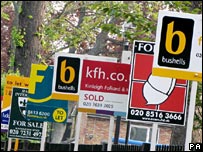 Now you may be surprised that net lending - which represents an increase in the stock of UK mortgages - isn't nil at the moment, given that there's been a sharp drop in the number of housing transactions and house prices are moving downwards.
However, a zero increase in net lending would be associated with a housing market in total freefall - because most people only move house every few years, so the sharp rise in house prices over five years or so guarantees a rise in the value of net mortgage lending, even as the number of transactions falls.
But although the market isn't in freefall, a drop from £110bn to £60bn - a 45% decline - is pretty substantial and significant.
Let's look at why it's happened and then what it means.
It reflects two factors:
1) the nervousness of potential buyers about whether they should postpone purchases till house prices have fallen a bit more;
2) a massive shrinkage in the lending capacity of banks and building societies.
The second cause is the more important.
 As I've written and broadcast recently, mortgage lending is currently dominated by just a handful of our biggest banks led by HBOS.
Specialist mortgage lenders have vanished with the closure of the mortgage-backed securities market. Small building societies are barely lending a thing. And medium size banks have cut back their mortgage-lending very significantly.
Even the biggest building society, Nationwide - which announced impressive financial results recently - is reducing net lending.
So competitive pressures on mortgage rates have all-but vanished.
The reason - natch - is the notorious crunch of credit, banks' inability to raise substantial sums of long-term finance at a reasonable price on wholesale markets.
And although the Bank of England is providing valuable funds to the banks by allowing them to swap mortgage-backed securities for highly liquid government paper (cash, to all intents and purposes), this is only enough - by explicit design of the scheme - to allow the banks to finance their existing commitments, not to make incremental loans.
 Also, the £100bn odd of succour being provided by the Bank of England is not cheap money - but that's a story for another day (as is the longevity of this government-backed financial support - with the Bank of England, as I understand it, likely to hold these mortgage assets for at least four years, far longer than was widely thought).
But let's get back to that £60bn of net mortgage lending that'll be provided this year.
It may sound like a lot of money, but it compares with an estimated £80bn to £85bn that house buyers are expected to want to borrow.
That £85bn-ish is derived from estimates of those who have to move house for various reasons or are desperate to buy their first home.
So to put it another way, the supply of net additional mortgage money is currently around 30% less than demand.
Which means that a staggering number of wannabe borrowers - such as those that can't afford the deposit - are being turned down by banks and building societies.
By the way, those unable to buy a house or move home - and the £25bn funding gap suggest there could be well over 100,000 who can't raise the wonga - are unlikely to be rallying to the cause of Gordon Brown, at this, his moment of some need.
There is a further painful consequence of this mortgage shortage for existing and potential homeowners. It's that mortgage interest rates will be under significant upward pressure, almost whatever happens to money-market interest rates or the Bank of England's base lending rate (which isn't likely to be cut for some considerable time, if at all, in any case).
In fact the few banks still participating in the mortgage market in any size tell me they are planning - in as quiet a way as they can - to nudge up their rates in the coming few months.
The reason is a law as old as commerce itself, the law of supply and demand. For the first time in years, there is massively more demand for mortgages than supply.
Is it remotely realistic in those circumstances to expect that the big banks would not raise prices to take advantage of all that pent-up demand?
Are they charities?
Apart from anything else, the risk of providing mortgages has risen.
The economy is slowing down, increasing the incidence of default. And house prices are falling, eroding the value of collateral.
Banks are - understandably - keen to be compensated for the increased risk of financing house purchases in an economic climate that is a lot less benign than it was.
The mortgage market will therefore remain tight and expensive for some time.
Which will exert downward pressure on house prices - not colossal downward pressure but unremitting.
And a second source of negative momentum on house prices is the demand by all banks for bigger deposits from borrowers, which - as I have explained before - acts as powerful gravity bringing house prices down to earth.
How long could the downward trend in house prices endure? Well one leading bank is bracing itself for a "correction" lasting two years.
That's how long there is to run before the next election. So Gordon Brown and the Labour Party can't assume the feel-good factor will be back in the nick of time for them.
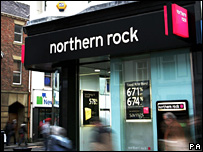 I also can't help but wonder how on earth Northern Rock can run down its mortgage book to repay that £25bn odd of taxpayer-funded loans on the tight schedule it has promised.
It needs to persuade its borrowers to refinance their loans with other banks - but, as I've pointed out, there's a chronic shortage of lending capacity elsewhere.
Northern Rock may be stuck with more borrowers paying expensive variable rates of interest, as they come off the cheap fixed-rate deals, than it would want - though they're profitable customers, for as long as they can afford to keep up the steep payments.
 I'm
I'm 





Comment number 1.
At 17:23 23rd May 2008, John_from_Hendon wrote:I wonder what happened last time there was such a dramatic drop in the rate of expansion of the supply of mortgages? Particularly what happened to house prices.
Is the supply of funds a leading or following indicator? My guess is that banks will lend money if there is demand for money and that it is the demand that they are predicting will reduce, not as you imply the supply of funds.
My main reason for my assumption is the price of funds has not (yet) risen dramatically. If the price of loans had risen it would indicate that the banks were able to squeeze more out of borrowers and they would if the could.
Your Northern Rock point is well made.
Look - this is a decade or more problem - well into the next government and even the one after that. We simply cannot unwind such a huge over gearing of the domestic borrowing market in a shorter time.
Complain about this comment (Comment number 1)
Comment number 2.
At 17:41 23rd May 2008, TimBJones wrote:It may well be in the vested interest of many people for there to be a quick sharp fall in prices rather than a slow drawn out fall. Both estate agents and mortgage salesmen need commissions (and jobs) and these will only arise through an increased number of transactions. As the banks will only be willing to lend again when they think there is some upside to property values, and the first time buyers should only reappear when the expected price falls are less than renting costs there are many with interests in a sharp correction.
So I expect we will hear agents talking about 'realistic prices' and after several years of talking prices up they will now start talking them down (it's that or the dole for some).
With some forecasters saying 20% off within a year and the IMF saying that (a month ago) they are 30% overvalued they should be straightforward to talk down. With all the publicity there has been I find it hard to believe that there are many people left who are not expecting significant falls (outside a few property hotspot - Central London etc).
Unfortunately the last house price falls took 7 to 8 years to bottom out.
Complain about this comment (Comment number 2)
Comment number 3.
At 19:11 23rd May 2008, wykhamist wrote:Seems to me that the following scenario might play out:
With no UK buyers house prices will continue to fall - probably by 20 - 30 % overall. At the same time sterling will get cheaper.
At a certain level all that UK real estate will look very attractive to foreign investors - such as the Russians or Sovereign Wealth Funds.
They will pile in and basically buy up the property with hard cash, leaving the mortgage strapped Brits looking on.
So having sold all our businesses to foreigners, we will end up losing all our real estate too.
When things get bad enough Indian and Chinese entrepreneurs will set up factories here.
Thanks to NuLabour perhaps we will go from owning half the world to being on a par with the Philippines.
Complain about this comment (Comment number 3)
Comment number 4.
At 20:03 23rd May 2008, iwanttoscream wrote:In the current climate I can't imagine anyone offering the full price for any house, the pushing of "realistic" prices by estate agents seems a very likely prospect.
We now seem to be experiencing the kind of situation I have been afraid of for many years, I agree with whykamist we will end up owning nothing and being bled dry. Years ago the balance of payments defecit seemed to worry everybody - now no one seems to mention it.
It's great isn't it "Banks are -understandably - keen to be compensated for the increased risk of financing house purchases is an economic climate which is less benign than it was." but they are largely to blame for that climate. They all competed to offer more and more crazy loans to less and less suitable people - a sort of lemming mentality.
It's not the first time, I remember hearing years ago that one bank had a few quid in a sort of "do something crazy fund" and decided to buy an estate agent. Another bank gets wind of it and thinks that the first must know something so they pile in as well. Before long they all own estate agents (and have paid over the odds for them) and the first bank feels vindicated because they were ahead of the crowd. I think they all lost money in the end but can't really remember.
Ever since we closed down the mines for what seemed like a personal vendetta the whole country seems to have been on a suicide mission, depressing wages, selling assets to fund revenue and becoming more and more dependent on the goodwill of foreigners.
I think that this credit crunch is only the start, the lack of oil and food in the world will combine to make things really tough.
All we will need then is a pandemic of "Bird Flu" and we will be really in the mire.
It's being so cheerful as keeps me goin'
Complain about this comment (Comment number 4)
Comment number 5.
At 23:51 23rd May 2008, Blogpolice wrote:More Doom and Gloom? I don't know what planet you are on Robert (I notice you seem to be about 24 hours ahead on the post versus the comments 24th versus 23rd).
Anyway I just have 4 offers of mortgage for a house that I am to buy in August and I have just sold one. Yep the rates are high and I am going for flexibility on the basis that this credit crunch will sort itself out in the next 12 months. But the rates are only about 0.5% more than they were relative to BOE base a few years ago.
But I guess talking to folk like me isn't sensational enuf.
I think you need to move on. Try another sector: oil and gas or mining or media.
Complain about this comment (Comment number 5)
Comment number 6.
At 02:06 24th May 2008, Keep F1 on the BBC wrote:Further factors that will worry the government is from the revenues they raise from house sales themselves. The government has seen a steady increase in stamp duty revenue as house prices and volume of sales have increased but a reversal in both of these could see revenue falls hit the treasury at a time when its finances are already stretched. Falling house values will also mean less money raised through inheritance taxes as well.
For now we are fortunate the job market is holding up well despite small losses of jobs in the city, if job losses increase though this could knock confidence in the housing market even more.
A worst case scenario for the government holding Northern Rock would be if its borrowers lose their jobs while being trapped with the bank because they can't remortgage elsewhere and being forced onto its higher variable rates. Added with the decline in house sales values this could force the government to write off billions in taxpayers money as well as the government effectivly forcing people out of their homes.
Complain about this comment (Comment number 6)
Comment number 7.
At 07:03 24th May 2008, harry_enfield wrote:This unprecedented inflation of the money supply over the last decade is finally finding its way into assets other than housing where it has lurked largely unmeasured and ignored.
Think oil, metals, think food. All that hot money in the economy is being used by investors to find more lucrative alternatives to property and property backed bonds.
Even worse, because 97% of money is created as debt - there are suddenly more liabilities in the system than there is money itself - and these liabilities grow by the rate of interest each and every year. To avoid catastrophe, the money supply has to out run that growth in liaiblities - it's not looking good right now.
Complain about this comment (Comment number 7)
Comment number 8.
At 07:38 24th May 2008, markaurelius wrote:For all the government's talk of listening to the public and apparently 'acting', the retail banks decisions not to track Bank of England decisions shows how impotent they are.
The only other initiative they've come up with is helping first time buyers (probably subsidising them).
This will have no effect as it ignores the need for mobility within the population, and you're just adding demand at the bottom without increasing supply.
How will the government deliver it's goals of affordable housing, when housebuilders are laying off staff.
The hot money is in oils and metals for the time being, but these are finite resources. And as they are depleted you will see governments taking control of sources and supplies sidelining multinationals.
Everyone needs water and food, these are the long term sectors.
Complain about this comment (Comment number 8)
Comment number 9.
At 08:05 24th May 2008, skynine wrote:Robert,
Your comments about Northern Rock are interesting. A couple of months ago we opened a Silver Savers account with them, the interest was good and with the government guarantees; well why not?
No sooner had we opened the account the interest rate started dropping, now its only 5%. Result, a quick move to B-Midshires to take a 1 year fixed rate at 6.88%.
My view is that Northern Rock is in the doodoo. The best loans will go elsewhere and NR (sorry I mean the taxpayer) will be left with the sub-prime. Their current intterest rates will ot generate the savings book to underwrite the loans. What I want to know is; did the government do any analysis of the N R loan book before nationalising the company, or was it just a "fag packet" calculation? I suspect on the evidence presented to the Treasury Select Committee by Mr Sandler it was the latter. Mr Darling should be asked.
This issue sums up why this government has lost the plot and the faith of the electors. It only seems interested in finding more ways to raise tax and is incapable of spending it wisely. And I thought that the Scots were careful with their money!!
It looks more and more like the government fiscal policy is based on the same principals as that of the Egyptian gully gully man who plies his trade in Covent Garden. The public can never find which cup the ball is under because it is up his sleave.
Complain about this comment (Comment number 9)
Comment number 10.
At 12:33 24th May 2008, Colin Smith wrote:Ah isn't life funny. I jump ship at the peak of the boom and get to buy a whole load of cheap property at the nadir of the bust.
Really this is simple stuff. You just have to understand the nature of money. I suggest you read Mises.
Complain about this comment (Comment number 10)
Comment number 11.
At 13:16 24th May 2008, noinvisiblehand wrote:Why can't Britain be more continental when it comes to property? Is it always better to own, rather than rent, a property? Perhaps with a larger proportion of us living within our means, renting would have helped mitigate the current crisis (are we sure its not a level 0.5 recession?)
Did the government know something in advance. Why then the change in the bankruptcy laws already hidden in the long grass? I@m always one for a good conspiracy.
I'm loath to do such country on country comparisons though. Remember those race riots in Paris, and the ones preceding in and around Manchestor? Just shows that neither multi- nor uni- culturalism work. What can you do when integration comes to a standstill?
I must apologise now for going off message, but I've got stuff to say and I'm not in the meet for trrawling through ten million blogs. I don't think Sir Alan would like me very much.
Mr Preston, I know I complain alot about World Business News, but at least it not as narrow in its coverage as ABC World News Tonight. Misnomer! Wouldn't it be nice if the BBC could swap quarter hours with every continent on the world (I wonder if that would include Antartica?) Yep, a total logistical nightmare. But variety, they say...
Surely, when I press my red button, I could find out how my beloved JSE is doing? Really, is it so hard to include the less obvious markets?
I've concluded that it time for money supplies to be contracted globally. Yes, high interest rates. Is this what Gordon (aka Mr Boom Bust) meant when he sprouted prudence?
And are Credit-Suuisse right to conclude that inflation in Britain is at 4.1% Judging by bread and milk, I'd say say so, although leeks are cheeap! It can't be true that the supermarkets aren't colluding, or am I just too slow to notice the follow the leader effect?
Someone on Jeremy Vine mentioned that in gold and silver, oil is the same. That speaks volumes.
Last thought - it makes me laugh. Does anyone think that Mr Brown and Mr Rose sounded very much the same this week? Only one of them, though, came out smelling of roses. Talking of Roses, what about Cadbury@s? A sensible move to beef up to Mars or someting more akin to Green and Blacks being lured in hook, line and sinker.
That's it. My weekly diatribe is caput.
Complain about this comment (Comment number 11)
Comment number 12.
At 21:58 24th May 2008, pesca2008 wrote:As the Financial Times mentions this week ( May,21,08) , Moody's ratings went " broken " due to a computer failure,and yet the company did not change ratings,covering up losses from sub-prime players among others , accident? ...if you believe in the Tooth Fairy....
and of course ,the media here in the USA basically ignored the affair, how nice !
England and Europe ,as well as the USA,cannot sustain the actual R.E. Market with the actual gas prices, transports,food and utility bills,only by switching to solar, wind ,thermal in every home, with hydrogen and methanol fuelcells, fusion ignition,geothermal,etc., we can get over it, if we don't change,we will not make it as a Healthy Society, it's mathematically impossible.
https://www.fuelcells.org/
https://www.powerofwind.com/
https://www.howstuffworks.com/solar-cell.htm
https://www.iter.org/
https://www1.eere.energy.gov/solar/
https://www.geothermal.marin.org/
https://www.geothermal.org/
https://www.eetimes.com/
https://physorg.com/
Complain about this comment (Comment number 12)
Comment number 13.
At 15:41 25th May 2008, kwikki wrote:This has been building up since deregulation of financial services in 1981. Both ourselves and the Americans, as slaves to the free market, have been trying to run our economies on the never-never - an irony considering Thatcher's homilies about good housekeeping ( I've got a long memory!). As a result we are floating/swimming/drowning in an ocean of debt.
The unwinding will be catastrophic and I will be retiring to my Bavarian bolthole.
What particularly worries me is that I don't think we can actually run our economy without endless borrowing against rising house prices to fund current consumption. There is no other way of running the economy left. A rock and a hard place.
Complain about this comment (Comment number 13)
Comment number 14.
At 16:16 25th May 2008, mightyvictoria24 wrote:I own a mortgage packaging company and I can tell you that lenders have a hidden agenda. they have monthly lending limits due to their funding and will attempt to obstruct cases given any opportunity. treating the customer fairly (the fsa guidelines) has gone out of the window in favour of commercial concerns
Complain about this comment (Comment number 14)
Comment number 15.
At 16:26 25th May 2008, stanilic wrote:The only evidence I have seen as to the financial institutions passing on the `benefits' of the recent cut in bank rate is that the building society to which I am prone to lend my extra cash has cut the interest I get from that lending.
So they are paying less to savers but still charging more to borrowers.
This is not so much a market as a racket!
Complain about this comment (Comment number 15)
Comment number 16.
At 21:14 25th May 2008, Firey Shandy wrote:Robert you don't miss an opportunity to stick the boot into Northern Rock.
Has it not occurred to you that the liquidity problems that the Bank of England should have acted on back in August have now spread to all banks.
We now have two different solutions to the same problem:
1 The Northern Rock solution this involves nationalising the bank, slashing one third of the work force and asking mortgage customers to repay monies borrowed so that mortgage lending is funded wholly by deposits and that the current Bank of England loans are repaid in full within three years.
2 The other bank solution this involves the Bank of England providing risk free bonds backed by taxpayers and swapping them for mortgage debt tht was previously funded by wholesale funding. This money will be lent for as long as it takes until the money markets reopen.
I have believed from day one that "the other bank solution" was the correct response to the wholesale money markets drying up. Unfortunately for Northern Rock shareholders, staff and mortgage customers the response from Mervyn King was the moral hazard speach which was inappropriate and related to bad debts as opposed to liquidity. This was then compounded by the hysteria whipped up by Vince Cable and yourself regarding so called tax payers money.
Complain about this comment (Comment number 16)
Comment number 17.
At 23:42 25th May 2008, WakeyGreen wrote:I am a Northern Rock Mortgage Holder, earlier this month my rate was reduced, its happened twice already since privatisation.
We are virtually back at the rate we took the loan out at a year ago. So I find claims that rates for borrowers will go up a little hard to believe. There's far too much gloom around at present.
Complain about this comment (Comment number 17)
Comment number 18.
At 00:50 26th May 2008, YummyCarolKirkwood wrote:And although the Bank of England is providing valuable funds to the banks by allowing them to swap mortgage-backed securities for highly liquid government paper (cash, to all intents and purposes), this is only enough - by explicit design of the scheme - to allow the banks to finance their existing commitments, not to make incremental loans.
I believe it is the case that institutions availing themselves of this facility are not permitted to use the funds to provide new mortgage lending, ie the facility is there solely to get them out of a hole with their existing mortgage lending, and nothing else.
There is a further painful consequence of this mortgage shortage for existing and potential homeowners. It's that mortgage interest rates will be under significant upward pressure, almost whatever happens to money-market interest rates or the Bank of England's base lending rate (which isn't likely to be cut for some considerable time, if at all, in any case).
In fact the few banks still participating in the mortgage market in any size tell me they are planning - in as quiet a way as they can - to nudge up their rates in the coming few months.
The reason is a law as old as commerce itself, the law of supply and demand. For the first time in years, there is massively more demand for mortgages than supply.
Correct. However, you omitted to mention that the action of the BofE lowering the Base Rate by 75bps is also contributing to higher rates on new mortgages. Why? Because a considerable amount of exisiting mortages are trackers, so the lenders have automatically received lower payments from their borrowers whilst their cost of funds (LIBOR) has not correspondingly fallen. Result: they need to compensate by charging more for new lending. In other words, new borrowers are subsiding a large number of existing borrowers because of the perverse and highly questionable actions of the MPC. And if it is now the fashion to fund all/the vast majority of mortage lending from deposits, then they're not going to attract the deposits needed by offering lower rates on their savings products, are they? Rather torpedoes the tactics of the MPC lowering the Base Rate, irrespective of the fact that they are being derelict in their mandated duty of controlling inflation.
Higher interest rates are the painful but only way out of this god-awful mess. The bullet needs to be bitten, and sooner rather than later.
Complain about this comment (Comment number 18)
Comment number 19.
At 09:32 26th May 2008, happywerdna wrote:Hi Robert,
you may still be over complicating the situation.
My understanding is that because the securitisation market is difficult,(not closed as Halifax and UBS have just sold mortgage backed assetts), you will find that most, if not all lenders relied upon this system, they are now left in a situation where they have less money to lend and the more simple business criteria of making profit has taken over.
Lenders as a result have a finite amount to lend, so by increasing rates, fees and tightening up criteria they are ensuring they remain profitable and maintain a position in the marketplace.
As no one lender wants to be top of the best buys or the brokers sourcing system, that is why the deals go so quickly and in preparation for the return of securitisation the LTV's have reduced, to make the loan book more attractive (and less risky) to the potential investor.
The BOE £50m is only going to the high street (effectivley) and as much of the UK lending was done by specilist lenders who will not have access, it is almost like a special deal for the Banks, I bet they are laughing, as they can exchange their worst business (which they may have already written off the balance sheet) and hey presto, make profit again!! it has not been well thought, most Govt ministers do not seen to understand the basic principles, and they are telling us what to do!!
Complain about this comment (Comment number 19)
Comment number 20.
At 11:08 26th May 2008, jamesamelia wrote:If and i believe it is already happening, there is a massive slowdown in consumer spending, the economy will either fall into recession or all the governments spending plans will need to be scrapped.
With recession will come rising unemployment ( we have been here before)
and the BOE will cut rates to below 4%(in my opinion) as the risk to the economy will be greater than that of inflation.
Also i dont believe that the banks can nudge up their rates because of supply/demand teory.Banks most basic function is to lend money to make money .With other areas of income drying up, we will see lending improve otherwise banks will not make any money and will force thier own battered share prices to spiral down again. Shareholders will not allow this to happen nor will the UK government.
This is not doomsday but a realignment and houses will continue to be a very good long term prospect. Remember 2001 and 1990.I wish i could have known then what i know now.This country is becoming more populated and will force another housing boom in the next 10 years because no one is building houses at the moment.
Complain about this comment (Comment number 20)
Comment number 21.
At 15:31 26th May 2008, GrouchoMarxist1 wrote:There are some myths that need to be exposed:
We don't need more houses: we've already got a surplus and we will have a greater one when 1 million immigrants/emigrants leave due to a recession.
Our manufacturing base declined by over a million jobs in the past ten years - we don't produce anything to sell therefore profit and growth is re-patriated elsewhere. (Not that there are many buyers in a global recession.)
Government spending will be crippled by the forthcoming recession and cuts will mean tens of thousands of redundancies.
The fractional reserve banking system has been ridiculously abused and we will have to pay the price.
There are $7 trillion dollars worth of 'assets' out there that do not actually exist and once debts start getting called in then people's balance sheets will start exploding.
The good news...the dollar's a short term spike.
Complain about this comment (Comment number 21)
Comment number 22.
At 20:03 26th May 2008, greyhammyhamster wrote:A quick trawl of high street lenders and their internet sites proves they are still very much in business to lend money. Typical fixed rates of around 5.5% would have been considered very competitive 2 or 3 years ago. We became conditioned to very cheap lending in the 12 to 18 months before the so called credit crunch. If buyers have around 10 to 20% deposit - which is most people - borrowing is not a problem. The real reason of course that people have stopped buying and borrowing is because every time they turn on the television or open a newspaper distorted, sensationalist headlines peddled by the likes of Robert Peston and his pals puts the fear of god into them. Well done Mr Peston you have achieved stage 1 of your goal to wreck the British Economy. No doubt employment is next on your agenda!
Complain about this comment (Comment number 22)
Comment number 23.
At 20:39 26th May 2008, Mad_Mad_Max wrote:If NR repays it government debt then nationalising a bank will be seen to have worked.
Its in the interests of banks generally not to let this happen because it would signal to risk takers that recklessness pays and government is always on hand to bail a things out.
Complain about this comment (Comment number 23)
Comment number 24.
At 21:38 26th May 2008, fingerbob69 wrote:Hammy keep selling the party line...'cos no one else is.
A quick trawl through some comparison sites shows that 6.5% is about average and most come with hefty sign up fees (£1500+).
Those very few that are sub 6% (5.78%) are likely to be over subscribed and gone by the time you read this.
Most people Don't have 10/20% deposits ...on a two bed terrace house (Ipswich) that would be between £12000 to £27000 ...in your dreams!
And as for shooting the messenger....v.low.
The housing market has, in my experience, stopped. Most informed comentators are predicting 10%+ falls in market value with lending 40% down on last year. That my friend is best case 'tits up senario' ...worst case senario ...horrible, horrible, horrible.
What you want to hope for is that the oil market bubble bursts v.v.soon!
Complain about this comment (Comment number 24)
Comment number 25.
At 00:34 27th May 2008, YummyCarolKirkwood wrote:Re: #20 jamesamelia
Also i dont believe that the banks can nudge up their rates because of supply/demand teory.Banks most basic function is to lend money to make money .
Indeed. But tell me, has the US sub-prime fiasco somehow passed you by? It has served as a reminder to lending institutions that they need to manage their risk much better than they have been doing for the last 5 years. In other words, you can be pretty damn sure the level of lending will drop significantly in the coming years: far better to lend a smaller amount of money for a higher return (higher interest rates), than to lend huge amounts of money at a lower return which comes with the added risk of more eventual defaults (ie losses).
Complain about this comment (Comment number 25)
Comment number 26.
At 09:14 27th May 2008, Steve_from_Luton wrote:I hope you'll forgive a bit of stylistic criticism over your use of "natch"; "wannabe" and "wonga".
I think that it's hugely important that people are aware of, and actually understand, current economic and financial affairs. And I think you're very good at getting difficult concepts and dry economic facts across in an approachable, non-intimidating way.
But using language that is a curious mixture of Sex and The City, Spice Girls and cockney barrow boy doesn't add anything. I can't imagine anyone reading your blog and thinking "how refreshing to find economic news written in my language!" just because they've found "wonga" in the middle of a paragraph can you?
Complain about this comment (Comment number 26)
Comment number 27.
At 11:13 27th May 2008, geoffrbrown wrote:Apart from estate agents and such like I don't think that the rest of us should be concerned that net mortgage lending is down by around 50% so far this year. This is surely good news because it means the property bubble that everyone expressed so much concern about, over the past few years and agreed was unsustainable is (for the time being) now over. In that case we should see house price inflation returning to something like normality and house owners expectations about their rising asset value,moderating accordingly.
For those people unable to get a mortgage either because the banks have run out of money for such purposes or, because they are deemed to be a less than satisfactory risk that is unfortunate. Those people will still need somewhere to live and so will end up renting instead. That might be disapointing for those people who are not already on the property ladder but owning a home is something to aspire to and is not a given right. My last comment is not intended to be a cynical "I'm alright Jack" comment but simply reflects one of the harsher realities of life and over the years I personally have experienced a number to those.
Perhaps the most important thing for all of us to remember is not become too disheartened by the current situation and not to believe that all we read is necessarily true. There are many people who for one reason or another are trying or hoping to turn this situation to their advantage. Be that reporters demonstrating their ability to keep a good (and sometimes bad) story running or speculators trying to prey on the broader publics fear about such matters, for personal gain.
Complain about this comment (Comment number 27)
Comment number 28.
At 12:35 27th May 2008, Cassandretta wrote:I'm not sure that respondants have all appreciated that rising house prices funded by mortages increase the money supply directly. If you own a house worth a million pounds and sell it to somebody who buys it with a mortage, then the million pound debt is created and sold as money, meanwhile the seller of the house also has a million pounds to spend on things.
In theory this money creation is controlled by central banks setting of interest rates but the lever is no longer working as it used to do.
But if the mortgage market reverses, the housing market drops in value, mortages are repaid or houses are repossessed, and the money supply shrinks again.
This would normally be regarded as deflationary.
The interesting thing is that this can happen while food, energy, and commodity prices are rising fast. Yes, economic theory suggests that shouldn't happen, but it is happening right now.
So we have price inflation and monetary deflation together. What do you call that? I don't know, but it sounds even worse than stagflation.
Whatever we call it, the squeeze is certain to reduce consumer spending and will have its knock-on effects on growth, factory output, taxation receipts, and the rest, which certainly is recessionary.
So worrying about the inflationary effects of interest rates could cause the feared recession to get a great deal worse than it is already.
Complain about this comment (Comment number 28)
Comment number 29.
At 12:36 27th May 2008, Cassandretta wrote:I'm not sure that respondants have all appreciated that rising house prices funded by mortages increase the money supply directly. If you own a house worth a million pounds and sell it to somebody who buys it with a mortage, then the million pound debt is created and sold as money, meanwhile the seller of the house also has a million pounds to spend on things.
In theory this money creation is controlled by central banks setting of interest rates but the lever is no longer working as it used to do.
But if the mortgage market reverses, the housing market drops in value, mortages are repaid or houses are repossessed, and the money supply shrinks again.
This would normally be regarded as deflationary.
The interesting thing is that this can happen while food, energy, and commodity prices are rising fast. Yes, economic theory suggests that shouldn't happen, but it is happening right now.
So we have price inflation and monetary deflation together. What do you call that? I don't know, but it sounds even worse than stagflation.
Whatever we call it, the squeeze is certain to reduce consumer spending and will have its knock-on effects on growth, factory output, taxation receipts, and the rest, which certainly is recessionary.
So worrying about the inflationary effects of interest rates could cause this to get a great deal worse than it is already.
Complain about this comment (Comment number 29)
Comment number 30.
At 13:34 27th May 2008, fingerbob69 wrote:Robert, you need to do a piece on the nature of bubbles. The course on which the national and global economy is currently set can be argued to been set with the bursting of the dot.com bubble. Since then the credit bubble has well and truely expired and the housing bubble is also in the process of suffling off it's mortal coil as a result of the bust in credit. What next? Oil.
We are currently gripped in the mother of all oil price bubbles. The given reasons for oil's unceasing rise are:
We have reached the tipping point in supply - more oil has been taken out of the ground than is left in.
Increased demand from emerging economies, principally China.
Market speculation and dollar hedging.
Geopolitical uncertainty - Iran, Iraq Nigeria etc.
It has been reported that another Nigerian pipeline has been attacked. Rarely does a month go by when this dosen't happen. Given it's frequency oil traders should soon, if they haven't already, realise that this is not an interuption to supply but a cost of production... pipeline fixed - pipeline damaged - pipeline fixed etc and the quantity of supply from Nigeria always understood to be Xmillion barrels less atleast one damaged oil facility in any one given month. Iran is oft quoted because antagonism between it and the USA. Well GW Bush exits stage left in less than six months so it should be a case of 'war? what war?'
China consumes 7billion barrels per day (bpd) population 1.1 billion
UK 2.5 bpd population 60 million
USA 21 pbd population 300million
As a percentage of population the UK's consumtion far exceeds that of China and the USA' economy still dwarf's that of China. But wont China's economy grow at an expotential rate such that her consumption of will match that of US in less than 20 years? Not if her principal export markets (USA and Europe) go into recession this year and China too suffers commodity price rises in double digits, increased wage demands, inflation and so recession and unemployment of her own.
When even China's stock market has halved in value since November 07 just how long can traders continue to price in China's possible demand for oil tomorrow today?
The 'tipping point' theory says there is less oil in the ground than we have taken out. The market seemed to spectacularly ignore Brazil's recent announcement of a new off shore field equal to or greater than our own North Sea. There's know to be great reserves in the enviromentally sensitve Alaska and rumours of large reserves on the US/canadian border. Iraq while geopolitically 'difficult', sits on reserves second only to Saudia Arabia and unrealised through years of under investment, neglect and two decades of war. There's plenty of oil in the ground. The real question should be, do we really want to take it out and burn it, given global warming?
Lastly there's those speculators. Their stated aim is to get a better return on their cash when the dollar is weak. Mostly these guys work for banks and hedgefunds who recently showed just how good they are with their investment choices in the recent subprime catastrophe. Indeed, oil is being used as a means to put cash back into the coffers of banks so recently and so cronically damaged. But here's the thing. This oil price bubble is like a game of pass the parcel. When the music stops, what are banks going to do when holding oil futures brought for $150 per barrel when the price has 'crashed' to $100 or less?
Are tax payers, via central banks again going to be asked for bailouts?
Complain about this comment (Comment number 30)
Comment number 31.
At 14:04 27th May 2008, noinvisiblehand wrote:I hadn't thought about the deflationary pressure from falling house prices, good to have got that into my train of thinking. Still, can't compare to the scarcity of commodities. Or the interest on national debts. Let's think more on a micro level, and make our localities robust. I'd call that economics of diversity.
'Slow down, you're goin too fast,
You need to make the moment last...'
Simon and Garfunkle
Complain about this comment (Comment number 31)
Comment number 32.
At 20:10 27th May 2008, greyhammyhamster wrote:Fingerbob69. Not just me, several other commentators here feel stories relating to the economy, the housing market and mortgages are being presented with little or no perspective. The BBC and the rest of the media are being incredibly self indulgent when reporting on these issues. Also on the BBC web site today the British Bankers Association says and I quote "It is clear contrary to some reports that the British Mortgage Market has not ground to a halt" - so there!
Complain about this comment (Comment number 32)
Comment number 33.
At 00:38 28th May 2008, YummyCarolKirkwood wrote:Re #30 fingerbob69:
Just one thing to add after reading your post: as the saying goes, you can't argue the market down...
(or up, as the case may be)
Complain about this comment (Comment number 33)
Comment number 34.
At 13:09 28th May 2008, CrumberNuncher wrote:Greyhammyhamster:-
The cold hard facts (not opinion or conjecture) are that the housing market is sliding, to argue against that point in its simplistic terms is ridiculous. This slide would have happened without reporting and commentary from journalists. It is driven by market conditions of which buyers desire to purchase is one of many limiting variables.
Instead of surfing websites to find prices at face value, try actually applying for them, you may well post again retracting your previous comments on how easily credit is available...
I am guessing that you are praying that the market doesn't crash for personal reasons or circumstance, and are trying to convince yourself as much as argue the point with others?
Complain about this comment (Comment number 34)
Comment number 35.
At 13:13 28th May 2008, CrumberNuncher wrote:Also, doesn't your point #32 directly contradict your argument?
The quote you detail is actually from the BBC's website, perhaps offering a balance of opinion?
So you agree that the BBC is presenting quotes representative of the both sides of the debate?
Oh dear...
Complain about this comment (Comment number 35)
Comment number 36.
At 13:31 28th May 2008, noinvisiblehand wrote:I'm fed up with prties and the government presenting statistics moulded to their own devices. When is the ONS being given an accountable Norwegian-style facelift
(or bodyshock) The treasurely says fuel duty is 11% down since whenever. I'll eat my socks!
The only way to understand bubbles is to understand avirace, the madness of crowds (although crowds can, at times, be more insightful that company directors) and to read, read, read. The South Sea Bubble and the resulting kneejerks are a good starting point.
As for the BBC reporting on the whole mess...well, think this way. In the 80's, the news studio was blue. In the late 90's and 00's, it's red. IT'S STILL BETTER THAN MURDOCH'S MONOPOLY!
Anyhoo, good to be in on the debate.
Complain about this comment (Comment number 36)
Comment number 37.
At 14:00 28th May 2008, pilescratcher wrote:Now that we have landed on Mars, what's the housing market like there?
Complain about this comment (Comment number 37)
Comment number 38.
At 14:05 28th May 2008, kayanoreeves wrote:Couldn't the goverment stimilate the economy by cutting the tax on petrol and fuel bills? Surelly this would have a impact against rising costs.
Complain about this comment (Comment number 38)
Comment number 39.
At 14:08 28th May 2008, fingerbob69 wrote:to #33
I agree you can't argue that market down, however given the perspective a certain distance gives one has to wonder just who is being taken in by all this talking up of the market.
Here is another reason you may hear given for oil prices rising.... "Reserves in the US fell unexpectedly last month"
Now I've always thought that this was a reference to government stocks.
It was reported in Time magazine June 2nd that current US stocks are at 703 billion barrels ...I think that was a typo and they meant million....but anyway....it was little reported that Bush, grudgingly, signed an act in March/April, passed by Congress that the US would no longer seek to to add to this reserve the 75,000 barrels a month that it had previously done so. From now on, if called on US reserves will always fall because they are not being replaced!
to #32
Excellent little hamster person... now ask the estate agents, morgage advisors and solicitors of Ipswich ...I'm one of those and I work there... what they think and they will tell you that by any definition you care to use the housing market has stopped... which is true of most of the country outside London.
Across the country it is reported 115 agents are closing a week.
Lending is at a level that is 40% less than this time last year and precious little of that is new lending to FTB's etc.
The CML have an agenda ...do you hammy?
Complain about this comment (Comment number 39)
Comment number 40.
At 15:05 28th May 2008, wykhamist wrote:I would like to echo fingerbob's remarks about oil, although he seems a bit confused between bpd (barrels per day) and billions of barrels per day.
I have worked 26 years in the oil industry and in that time seen 3 complete cycles of the boom and bust nature of the oil price.
In fact, at school in the late 60's we were told definitively that oil would run out by 1980, an assertion that every major scientist agreed with, and resulted in our nuclear power programme.
When oil gets too high and seems unstoppable upward, the resulting recession reduces demand just at the time when new production, spurred by the price, comes on stream. This results in a crash in the price again.
While the N Sea and Gulf of Mexico are all but depleted, there are still potentially huge reserves in FSU, Brazil, Iraq and Arctica. So I believe we have at least one more cycle to go, probably two, before we reach peak oil and it seriously starts running out.
It's amazing to me that straight after we have seen the housing bubble burst, when you would have thought that people have learnt their lesson and that what goes up comes down, those wise investment chaps are saying 'this time it's different'.
We are already starting to see the beginning of the oil price crash, and I am expecting it to be below $100 within a month. Other commodities will follow suit, such as grains (as if food, like oil, was going to 'run out'!) and metals.
I can't help but be reminded of Robert Burns' immortal words: "The best laid schemes o' mice an' men Gang aft agley."
Complain about this comment (Comment number 40)
Comment number 41.
At 16:24 28th May 2008, Hippy god says Peace and Love likes RT wrote:I have just been watchinga certain independent television channel, and iI have seen two adverts offering 0% Finance deals, and three adverts offering Homeowner loans and unsecured loans.
Business as usual for someone !
Complain about this comment (Comment number 41)
Comment number 42.
At 16:25 28th May 2008, Hippy god says Peace and Love likes RT wrote:Plus is there not an electrical retailer from America offering interest free credit on purchases, with according to their advert, no credit reference checks ?
All very confusing !
Complain about this comment (Comment number 42)
Comment number 43.
At 16:31 28th May 2008, Hippy god says Peace and Love likes RT wrote:Estate Agents in my area are still selling Houses quickly, leastways the For Sale boards are replaced with Sold boards quite quickly.
How much of the Oil price rise is due to speculators bidding up the Oil Prices ?
Are the Money men out their making yet another quick buck out of the Plebs?
Reminds me of Trading Places and the Orange juice scam.
But that was just a film such things don't happen in Real life, do they ?
Complain about this comment (Comment number 43)
Comment number 44.
At 16:43 28th May 2008, Hippy god says Peace and Love likes RT wrote:It is quite likely Inflation or no, that UK interest rates will have to fall to 4% this year.
This gives Interest rate equilibrium with Europe, but will still be at a Historically high level to the US Dollar.
Most people who have a Mortgage will see Inflation as the lesser of all Evils.
Those without Mortgages will not be affected, unless they have foolishly invested all their money in fixed capital(deposit) funds.
Inflation is likely to touch 10% this year, in some respects it is already at 6 - 7 %.
If you look at Food and Petrol prices a case could be argued that the COST OF LIVING has already risen by more than 10%.
And of course, should there be a recession no one wins, except offshore Millionaires, but then what would they care about us?
Complain about this comment (Comment number 44)
Comment number 45.
At 01:15 29th May 2008, YummyCarolKirkwood wrote:Re #39 fingerbob69:
to #33
I agree you can't argue that market down, however given the perspective a certain distance gives one has to wonder just who is being taken in by all this talking up of the market.
Here is another reason you may hear given for oil prices rising.... "Reserves in the US fell unexpectedly last month"
Then again, another reason that the price of oil has been rising for the last 5 years is that increases in supply are not keeping up with the increases in consumption. In fact, last year global production remained flat while demand continued to increase. Increased competition for a finite resource will naturally lead to an increase in price. Given that global production is not going to increase significantly - certainly in the short term, if at all (discuss) - the only way of reducing the price is to reduce consumption, yet never do world political leaders state this obvious truth. Our very own Great Leader himself was today urging the major oil producers to increase production from the North Sea (yet another misguided and frankly pointless policy), and indeed I recall a speech by President Geroge W Gump 3 or 4 years ago, when the oil price surge was but in its infancy, deperately urging OPEC to increase production, and yet not once entertaining the idea that the USA possible ought to consider reducing its inordinate consumption. Recently there have been protests around the world about the high cost of fuel, with our vey own hauliers demanding an immediate 20-25p/litre discount on diesel: would such a discount encourage (a) lower usage, or (b) higher usage?
Last year I came to the conclusion that the only realistically workable approach to the problem of our profligate carbon addiction was annual personal rationing, with each person's ration easily tradeable, thereby offering a genuine and meaningful financial reward to those with a smaller carbon footprint. I see that this idea was raised again yesterday (see https://news.bbc.co.uk/1/hi/uk_politics/7419724.stm%29 in the form of Personal Carbon Allowances and I can only hope that this approach is pursued vigorously. Doing so would put this country at a great advantage by encouraging efficiency and the breaking of the reliance on oil-based energy, a most enviable position for a developed nation given the medium-term and long-term (and indeed short-term) outlook for the price of oil.
Complain about this comment (Comment number 45)
Comment number 46.
At 01:32 29th May 2008, YummyCarolKirkwood wrote:Re # 44 supercalmdown:
It is quite likely Inflation or no, that UK interest rates will have to fall to 4% this year.
I think you're dreaming. Or at least thinking very wishfully. Earlier this month Mervyn King gave very strong indications that the interest rate cuts the market has been pricing in (using as blackmail?) were looking less and less likely. The problem of inflation is big and getting bigger. Look at all the problems it is causing, from soaring food prices to fuel protests to strikes by public sector workers over pay settlements. Those people who have foolishly over-borrowed will undoubtedly feel the pain of the desperately-needed higher interest rates (but, frankly, they made that particular bed themselves), whereas currency devaluation (aka inflation) hurts everybody - both prudent and imprudent.
Economic growth per se should not be the goal: productive economic growth (as opposed to economic growth from people buying yet more unnecessary tat on the high street) is what really counts. Buying and selling to each other ever more expensive property does not make the country wealthier: in other circles it's called what it is, a pyramid scheme.
Complain about this comment (Comment number 46)
Comment number 47.
At 01:40 29th May 2008, YummyCarolKirkwood wrote:Re # 44 supercalmdown:
PS Did you see the last reply I made (https://www.bbc.co.uk/blogs/thereporters/robertpeston/2008/05/trichet_beware_the_oil_shock.html to your comment on Robert Peston's "Trichet: Beware the oil shock" thread?
Complain about this comment (Comment number 47)
Comment number 48.
At 01:53 29th May 2008, YummyCarolKirkwood wrote:A news item today which appears particularly apposite to this thread:
https://news.bbc.co.uk/1/hi/business/7423526.stm
Complain about this comment (Comment number 48)
Comment number 49.
At 07:49 29th May 2008, solomanbrown wrote:Dear Robert,
Commodity dealers in the City, state that the following will reach a £1000 per annum within 18 months.
Gas,
Electricity
Water
Wholesale prices are set to double again, especially the markets in Russia, and Europe, we are being held to Ransom, and that is definate, YET the government does nothing. Brown talks of new Nuclear Plants but these will take five years or more to come on line.
This country is in dire straights, and there is absolutely NOTHING labour can do about it.
Complain about this comment (Comment number 49)
Comment number 50.
At 11:19 29th May 2008, fingerbob69 wrote:to #45
Agreed oil production has been flat of recent years while consumption has been rising.
However, it is no coincidence that the current oil price bubble began accelerating from August 2007.
To deal with the credit crunch Central banks pumped billions into the credit markets. THe Fed augmented this with a slash and burn attitude towards intrest rates. This had a huge devaluing effect on the dollar which menat infestors, hedgebandits and *ankers turned commodities, metals, food and oil as a hedge against a devalued dollar.
Stoked up inflation and the commodity price bubble have now put Western economies on the verge of recession. This should entail a fall in the demand in oil world wide... the West buys less so the rest of the world, including China, makes less to sell to the West. Its all pretty much a repeat of the period 1973 to 1983... with just unemployment being the recession indictator yet to show.
Complain about this comment (Comment number 50)
Comment number 51.
At 13:30 29th May 2008, YummyCarolKirkwood wrote:Re #50 fingerbob69:
However, it is no coincidence that the current oil price bubble began accelerating from August 2007.
To deal with the credit crunch Central banks pumped billions into the credit markets. THe Fed augmented this with a slash and burn attitude towards intrest rates. This had a huge devaluing effect on the dollar which menat infestors, hedgebandits and *ankers turned commodities, metals, food and oil as a hedge against a devalued dollar.
I certainly won't disagree with your observatoin about the effects of the actions of the Federal Reserve - basically they are sowing the seeds for the implosion of the US economy by yet again trying to inflate their way out of a domestic economic crisis. By definition, inflation means that the price of things go up as the value of fiat currency is destroyed. At some point, other currencies will decouple from the US dollar when the scales eventually fall from the eyes of the global markets and they see the US as the "banana economy" that it is. As such, commodities will then be able to continue rising in dollar terms, whilst not necessarily doing so when measured in other currencies.
Stoked up inflation and the commodity price bubble have now put Western economies on the verge of recession. This should entail a fall in the demand in oil world wide... the West buys less so the rest of the world, including China, makes less to sell to the West. Its all pretty much a repeat of the period 1973 to 1983... with just unemployment being the recession indictator yet to show.
I think here your logic is flawed. If Western economies go into recession, they will have less money to spend on relatively expensive home-produced goods and will therefore increasingly rely on the considerably cheaper imports from China. I think a lot of people are over-playing the impact of the current Western economic problems on the Chinese economy in the medium-term, and really see this coming period as a re-balancing of economic pre-eminence from the USA to China and Asia. Ask yourself this question: why can OPEC (read Saudi Arabia) continue to ignore the ever vociferous demands from the USA to increase oil production? Answer: because any drop in consumption by the USA will easily be offset by the increased consumption in China, which is absolutely awash with US dollars and other foreign currencies following 5+ years of massive trade surpluses...
Complain about this comment (Comment number 51)
Comment number 52.
At 14:11 29th May 2008, Hippy god says Peace and Love likes RT wrote:Its worth noting again that raising interest rates does not affect inflation.
Raising Interest rates manages demand in that it reduces how much a small part of the population can spend.
The People without Mortgages are not affected by raising interest rates.
Global commodity prices are not affected by raising interest rates.
Our exchange rate may fall if we raise interest rates if the confidence does not exist in the market.
After all investors will say Why is Britains rate so much higher than USA and Europe?
A good question.
So lowering rates is the only way to go.
If they raise them then the Value of Sterling will fall and the cost of imports will rise higher.
Complain about this comment (Comment number 52)
Comment number 53.
At 14:13 29th May 2008, Hippy god says Peace and Love likes RT wrote:Funnily enough the Exchange rate of Dollar to Sterling has not changed much with the cut in US Interest Rates.
A cut in Sterling Rates would boost Market confidence.
Complain about this comment (Comment number 53)
Comment number 54.
At 14:16 29th May 2008, Hippy god says Peace and Love likes RT wrote:Of course the best way to reduce demand in the British economy would be to raise the Higher Rate of Income Tax.
But if you want to stimulate economic activity the only way to go is to cut taxes.
Or Interest Rates.
Hobsons choice.
Complain about this comment (Comment number 54)
Comment number 55.
At 14:51 29th May 2008, noinvisiblehand wrote:yes, interest rates will go down, probably a quarter point in two months' time. The problem is, though, that inflation will carry on rising. Everyone I talk to thinks inflation is worse than the government will admit to. The more money there is floating about, the higher prices will go. We have to, as a matter of urgency, get this mess sorted out. If it means short-term pain and many more bankruptcies, then that is what is needed. Interest rates should be going up. But it's not going to happen.
Yummycarolkirkwood. hmm. wots the weather like today?
Complain about this comment (Comment number 55)
Comment number 56.
At 19:28 29th May 2008, YummyCarolKirkwood wrote:Not quite sure why my post #51 has been referred to the moderators, but there you go...
Re #52 supercalmdown:
Its worth noting again that raising interest rates does not affect inflation.
Wow! A completely new economic paradigm!
Raising Interest rates manages demand in that it reduces how much a small part of the population can spend.
The People without Mortgages are not affected by raising interest rates.
Global commodity prices are not affected by raising interest rates.
Our exchange rate may fall if we raise interest rates if the confidence does not exist in the market.
After all investors will say Why is Britains rate so much higher than USA and Europe?
A good question.
So lowering rates is the only way to go.
If they raise them then the Value of Sterling will fall and the cost of imports will rise higher.
So, basically, according to you, raising interest rates has absolutely no effect, whereas cutting them is the panacea to all of the country's economic woes? I really feel that I need add nothing further.
Re #53 supercalmdown:
Funnily enough the Exchange rate of Dollar to Sterling has not changed much with the cut in US Interest Rates.
Errr... because the market had already priced in the expected level of the Fed Funds Rate???
A cut in Sterling Rates would boost Market confidence.
LOL!
Re #55 noinvisiblehand:
yes, interest rates will go down, probably a quarter point in two months' time. The problem is, though, that inflation will carry on rising. Everyone I talk to thinks inflation is worse than the government will admit to. The more money there is floating about, the higher prices will go. We have to, as a matter of urgency, get this mess sorted out. If it means short-term pain and many more bankruptcies, then that is what is needed. Interest rates should be going up. But it's not going to happen.
The MPC's credibility is seriously on the line at the moment - just look at M. Claude Trichet's comments last Monday:
https://news.bbc.co.uk/1/hi/business/7407759.stm
If the BofE loses its credibility by cutting rates in the face of soaring of inflation, what has it really got left in terms of stabilising our economy and its currency? It can reduce the Base Rate all it likes, but the markets decoupled from this some time last year - talk about pushing on a string!
Yummycarolkirkwood. hmm. wots the weather like today?
Very variable! 8-) And with pockets of controversy as well, it would seem 8-)
Complain about this comment (Comment number 56)
Comment number 57.
At 00:08 30th May 2008, fingerbob69 wrote:to #56 yummyc
re yourmissing post: was it a truth too far... even for the BBC?
re supercalmdown: I wanted to responed to her? replies. I'm glad you, yummyc, did because I wasn't that bored!
to #56 Re oil: we've talked on this a bit... I would just refer you to the BBC's latest report 'Oil falls sharpley on dollar rally' ...
dolar strengthens, oil falls ...reasons to be cheerfull - yahoo - except...
This same report trots out same the reasons why the horizon, for oil prices is still so very stormy.
Nigeria - those rebels still don't like them pipelines... (conspiracy theory part one... the Nigerian rebels are being PAID to blow up oil pipelines ...it don't help their cause, it does help the oil spot market and the rebels' leader is going sking in St Moritz this year as the guest of Royal Dutch Shell's CEO... Hello have the picture rights!
US stock piles fell by 8.8 miilion barrels (less than half of one day's of the USA's daily consumption)! OMG!But relax folks...tankers are in transit... breath easy ...read nothing into this! PS Government reserves are only being replenished as and when they are actually called upon ...GW BUSH approved ACT OF CONGRESS... April 2008!
Analysts predict £200 pb ... they say it here ...so it must be true!
AAAAAARRRRRRGH!... the World is going to Hell in a hand-basket .... but only if it's fuelled by bio-ethanol ... which if unavailable, the World will if asked...and given no other option... just walk into Hell... thank-you.
Complain about this comment (Comment number 57)
Comment number 58.
At 00:27 30th May 2008, fingerbob69 wrote:As a child of the '70's, I remember being properly frightened by stories of immenant global FREEZING! ah... hahahahahaha!
How we laugh now... still they had faster than sound trans-atlantic flight and we now have.... Ryan Air! ah... hahahahahaha!
In the '70' we also had...
Property price crashes.
Oil price shocks/spikes.
Increasing and/or rampant inflation.
A tax and spend Labour government.
The promise of North Sea Oil.
A (continuing) decline in British Manufcturing.
We also had... Chopper bikes, a national LOVE of the FA Cup and Play Away on a Saturday afternoon ... Good Times!
Complain about this comment (Comment number 58)
Comment number 59.
At 12:32 30th May 2008, littleexlondoner wrote:I don't think HIP's are going to be any help to a market already in trouble. For those poor souls who may be in negative equity and now be unemployed, or facing same, how helpful to have another non reclaimable cost loaded onto their shoulders.
It rather resonates with the abolition of double tax relief that preceded the last major housing correction in the 90's.
Whilst it's fair to say that a bell doesn't ring at the top or bottom of a market. Once Government jumps in with its big hobnail boots, you can pretty much tell that’s its time to bail out. I am not of course ascribing this housing dilemma only to HIP's, but boy oh boy more cost and bureaucracy is about the last thing we need.
Complain about this comment (Comment number 59)
Comment number 60.
At 16:36 30th May 2008, Hippy god says Peace and Love likes RT wrote:It is interesting to note how many posters ignore the FACT that commodity prices and inflation are not regulated by Interest Rates.
British interest rates do not affect Inflation of commodity prices at all !
So expensive imports remain expensive and may get more expensive.
Inflation of 6% or more that we are experiencing now destroys the value of our currency and Deposit savings.
Raising interest rates would lead international investors to flee Sterling causing a COLLAPSE in our exchange rate and a possible doubling of the cost of our Imports.
£1 to $1
Exchange Rates are determined by Market Confidence not Interest Rates.
Lose the Confidence and the Value of Sterling will fall and the costs of Imports will shoot right up.
Putting you head in the sand won't change the facts.
Complain about this comment (Comment number 60)
Comment number 61.
At 21:18 30th May 2008, noinvisiblehand wrote:New bubble, oil money. it'll happen.
Anyway, neo-liberal Keynesianism is broke.
The way the world is, it makes me sad.
We have to change.
Complain about this comment (Comment number 61)
Comment number 62.
At 22:47 30th May 2008, Garments_of_chipping wrote:The doom gloom merchants will have us believe that we are all in for a good shoeing, sorry "correction" the optimeists (aka estate agents) are saying that the "meedja" are talking us down.
My own view (having a house on the market for the last 6 months is that people still want to move but as someone posted nobody will pay full asking price. great I agree you never should, as long as the people selling the house are on percentages then it doesn't make sense. they want the business "hence pandering to vanities by saying it is worth X" making the vain vendor think they know what they are talking about, but in reality since the change in ownership of estate agents 20 or so years ago (when insurance co's bought them all up to get get mortgage business) we have lost the integrity (and it takes alot to say this) of the chartered surveyor who actually knew what they were talking about. given the abundance of "make a million in three easy moves" property programs it is no wonder that now things are going a bit wrong. As usual the cautious I want my house to be a home suffer by the wrongs of the get rich quick merchants of buy,live,move, make a fortune move on generation. Blessed are the meek for they shall inherit the credit crunch.
Complain about this comment (Comment number 62)
Comment number 63.
At 01:06 1st Jun 2008, nil_return wrote:Robert,
The current 'credit crunch' appears to have been caused / exposed by problems in the US sub-prime market, leading major financial institutions to down-value assets that were previously thought to be worth more.
One thing I'm not clear on though is whether we still have a potential UK sub-prime 'accident waiting to happen'?
Q1. Have UK loans been package in the same way as the US Sub prime ones (I assume so).
Q2. Have the write-downs given so far included revaluing UK loans?
Q3. If UK sub prime loans also go bad (exacerbated by a drop in prices and rising cost in borrowing), will we encounter another wave of financial problems / further write-downs?
Complain about this comment (Comment number 63)
Comment number 64.
At 12:11 1st Jun 2008, greyhammyhamster wrote:Crumbernuncher I have no real vested interest in wether the housing market goes up down or stays still. There is no doubt that the economy is going through a rough patch. The point I am trying to make is that all reports relating to housing and the wider economy are not being presenting a balanced manner or with any historical context. I am old enough to remember the real recessions suffered in the early 80's and early 90's and can also just about remember the fuel crisis in the 70's. The current situation cannot be compared and yet the media are gourging themselves. Even in the darkest days of the last recession with interest rates at 15%, 4m unemployed and house prices in freefall I dont remember this level of sensationalism.
Complain about this comment (Comment number 64)
Comment number 65.
At 13:22 1st Jun 2008, noinvisiblehand wrote:Find me diatribing on Redbubble
Where is this debate goin anyway, where's the leader. Keynes was born with a silver spoon in his mouth.
I've had enough about intereset rates and inflation. Lets talk about something where we actively make a difference.
Nice weather today, so I'm out to enjoy it.
Complain about this comment (Comment number 65)
Comment number 66.
At 13:58 1st Jun 2008, BarryKnowsBest wrote:Why is the BBC so determined to talk us into a recession? Last week there was an article in the web magazine about what fashions should be worn in a recession!
Give me strength!
BBC staffers are isolated from the real world through funding by the license fee - remember you can go to jail if you don't pay even if you don't use their service. Not many other businesses have a collections policy as "rigorous" . Even so they can't stay within budget like the rest of us must. This website for example, overshot its budget by £36 million.
Yet they abuse this privilege through scare mongering articles such as this. All markets go up and down, its in their nature. But the basis of any market is its ability to correct. So sooner or later, as there is more demand for funds than supply, new players will step into the market. People always need houses and overtime, there is more demand for housing in Britan than supply.
Complain about this comment (Comment number 66)
Comment number 67.
At 21:59 1st Jun 2008, greyhammyhamster wrote:No 66 Barryknowsbest - You certainly do. Hit the nail on the head!
Complain about this comment (Comment number 67)
Comment number 68.
At 22:09 1st Jun 2008, jacook_uk wrote:I've read all the comments trying to understand what the consensus of views is and I'm confused!
Some people appear to have the view that inflation will continue to be a problem and that taxes or interest rates will have to rise to tackle it.
Other people are of the view that the ecomomy needs to be stimulated by either reducing interest rates or reducing taxes (fuel duty has been suggested).
It appears to me that fuel costs are currently the major inflationary driver and these are directly impacting upon food prices. However, given fuel and food are essentials to many people, I can't see how raising interest rates is going to act as a downward pressure on the prices of food and fuel and therefore inflation.
Those who suggest reducing interest rates, are presumably hoping it will stimulate the housing market. Given that the banks are actually raising inerest rates for new business, cutting Bank of England interest rates has obviously not had the desired effect - although it has given people on tracker mortgages more money to spend on fuel or food or possibly put more pressure on inflation, depending on your view.
The Government spending plans are dependent upon raising the taxes, so the reduce taxes option has been avoided so far.
The result appears to be an economic stalemate!
Complain about this comment (Comment number 68)
Comment number 69.
At 11:03 2nd Jun 2008, hants_gw wrote:RE: 60
"It is interesting to note how many posters ignore the FACT that commodity prices and inflation are not regulated by Interest Rates."
I suspect there are plenty of people who would disagree with you, however, even if you are right, are you sure you want to make this "FACT" public?
Just about the only one of Gordon Brown's achievements that hasn't been discredited by events is his decision to make the Monetary Policy Committee the _independent_ guardian of interest rates. According to Gordon, the MPC sets interest rates to regulate inflation (well, inflation as measured by the CPI) in a narrow band defined by Gordon. So Gordon claims to believe the exact opposite of your "FACT". If you are right then we have one of two cases:
1. Gordon Brown firmly and sincerely believes something that, to you, is self-evidently wrong. So he's a bit of a dimwit and not really fit to hold a position of economic responsibility
or
2. Gordon secretly agrees with you, but for more than a decade has been perpetrating yet another nuLab con trick, spending tax payers' money on an MPC that he knows full well is doing absolutely nothing - because interest rates have no effect on inflation. This would make him a rather sleazy liar.
So, assuming you are right about interest rates and inflation, is Gordon Brown a liar or a fool?
Complain about this comment (Comment number 69)
Comment number 70.
At 23:17 2nd Jun 2008, iwanttoscream wrote:Or both
Complain about this comment (Comment number 70)
Comment number 71.
At 16:56 24th Jun 2008, YummyCarolKirkwood wrote:Well, what can I say? All of the major financial study centres and central banks around the world have rapidly started to reverse their opinions about the need for economic growth, replacing it with the importance of preventing inflation getting out of control. Even Ben Bernanke has dropped strong hints that there will be no more interest rate cuts by the Fed. Does he read this blog? Indeed, was it he that reported my post #51 to the moderators? Even the UK financial markets have done a complete U-turn in the last few weeks, and instead of pricing in further cuts this year in UK rates are now pricing in a couple of rises. Mervyn King has even publicly recognised that a lower Base Rate will not lead to the
banks providing more mortgages - FINALLY! But still the MPC continue to bury their heads in the sand and refuse to raise the Base Rate to counter inflation, even as market rates continue rising. And we have Ali D urging people of this country to exercise wage restraint: yes, the British electorate should accept becoming even poorer under this New Labour Government on top of the rest of their massive mismanagement of the economy.
Inflation will be a big problem for quite some considerable time. The bottom line is that interest rates need to rise - the Base Rate should be around 8% now, and probably needs to be heading towards a peak around the 12% level over the medium term.
Complain about this comment (Comment number 71)
Comment number 72.
At 17:03 24th Jun 2008, YummyCarolKirkwood wrote:Here are some intersting tit-bits from BBC articles over the last few weeks:
from https://news.bbc.co.uk/1/hi/business/7430627.stm
"The soaring cost of oil is welcome as it sends a clear signal to consumers and firms to curb their use of fuel, the head of the OECD has said."
from https://news.bbc.co.uk/1/hi/business/7430624.stm
"Tackling climate change is too crucial to be derailed by a temporary economic downturn, the OECD head has said.
"In a wide-ranging interview for BBC News, Angel Gurria said that the long-term damage that would occur if the world did nothing about greenhouse gases would far outweigh the short-term problems of the credit crunch. "
from https://news.bbc.co.uk/1/hi/business/7434217.stm
"The head of the US Federal Reserve, Ben Bernanke, has signalled that concerns about inflation and a recovery of the economy make more rate cuts unlikely.
"Mr Bernanke also said that the Fed would be monitoring the weakening dollar, which could have an inflationary effect."
from https://news.bbc.co.uk/1/hi/business/7430616.stm
"The OECD also includes growth estimates for the major emerging market countries such as Brazil, India and China, with whom it is now establishing a closer working relationship.
"Their estimates suggest that these countries will be the main engines of world growth over the next two years, with only a modest slowdown despite the reduction in demand in their main Western markets. "
from https://news.bbc.co.uk/1/hi/business/7437223.stm (totaly misguided self-interested nonsense from David Kern of the BCC)
"The British Chambers of Commerce (BCC) said that the MPC should be considering the whole economic outlook and not just inflation.
"'We understand the critical need for the MPC to maintain credibility, but the MPC cannot disregard the worsening threats to growth,' said BCC economic adviser David Kern. "
from https://news.bbc.co.uk/1/hi/business/7436219.stm
"Mr Gurria argues that the slump would have been more severe if the big emerging market countries like China had not been able to benefit from trade, and that the fact that they are now the engines of world growth shows the benefits of such openness."
from https://news.bbc.co.uk/1/hi/business/7437849.stm
"ECB President Jean-Claude Trichet admitted a future rise was 'possible' and conceded that some members of its Governing Council favoured a hike."
from https://news.bbc.co.uk/1/hi/business/7439066.stm
"The Organisation for Economic Co-operation and Development (OECD) has said inflation remains a danger, as oil prices have shown a sharp increase."
from https://news.bbc.co.uk/1/hi/business/7440104.stm (some very sage observations by an analyst at Bank of America)
"'If you want to avoid a protracted recession, you have to make sure inflation doesn't get out of control,' said Gilles Moec, an analyst at Bank of America.
"'Otherwise, you're going to have a loss of purchasing power meaning consumer spending is going to slow down even more.'"
from https://news.bbc.co.uk/1/hi/business/7443501.stm
"Core output prices, which excluding food, beverages, petrol and tobacco, rose by 5.9% over the 12 months to May, sparking concern that inflation is spreading beyond the food and energy sector."
from https://news.bbc.co.uk/1/hi/business/7445324.stm
"The cost of borrowing is continuing to rise. Bank of England figures show that the average interest rate for a two-year fixed-rate mortgage, with a 25% deposit, was up to 6.27% at the end of May - the highest level since September 2000."
from https://news.bbc.co.uk/1/hi/business/7445343.stm
"That, and a weak dollar, our correspondent added, could force the Fed to raise rates later this year or next, though Mr Bernanke said that the Fed would be robust in dealing with this issue."
from https://news.bbc.co.uk/1/hi/business/7447786.stm (China will continue to grow despite a slowdown in Europe and the US)
"But exports also beat forecasts, showing how resilient the economy was despite a US slowdown, analysts said."
"While China's surplus is tipped to slow, it is still seen remaining high."
"'Robust export growth could dispel domestic concerns that a stronger yuan is hurting exports too much,' said Gene Ma, head economist at China Economic Monitor.
"Dwyfor Evans, an economist at fund management firm State Street, said: 'We were expecting the export components to slow down marginally. But it doesn't look as though that is happening at all.'
from https://news.bbc.co.uk/1/hi/business/7447779.stm
"Economists warned that with global oil prices rising to unprecedented levels, inflation had yet to peak.
"The European Central Bank is now widely expected to raise rates this summer."
from https://news.bbc.co.uk/1/hi/business/7449358.stm
"Many analysts predict that US rates will remain at 2%, a four-year low, when policy makers next meet, and some believe they could even rise later in the year."
Complain about this comment (Comment number 72)
Comment number 73.
At 17:07 24th Jun 2008, YummyCarolKirkwood wrote:And here are some more interesting tit-bits from BBC articles over the last few weeks:
from https://news.bbc.co.uk/1/hi/business/7448674.stm
"The Halifax, Nationwide, Bradford & Bingley and Abbey itself, have been among the lenders who have been pushing up the cost of new fixed-rate deals."
from https://news.bbc.co.uk/1/hi/business/7449781.stm
"It's a great global debate. What has driven oil prices to their current dizzy heights?
"According to the oil producers' cartel Opec, the blame lies with speculators in the international markets. But Tony Hayward, chief executive of BP, describes that view as "a myth".
"He argues that the main cause is the tight balance between global supply and demand."
from https://news.bbc.co.uk/1/hi/business/7450832.stm
"At least 14 lenders have increased the cost of various fixed-rate deals during the past two days.
"Among them have been big names such as the Halifax, RBS, and Birmingham Midshires, as well as several small building societies.
"Mortgage brokers Chase De Vere said the average cost of a two-year deal, for a 90% loan, had now risen to 6.75%."
from https://news.bbc.co.uk/1/hi/business/7453072.stm
"US inflation rose at its fastest pace for six months in May because of sharply higher energy costs.
"On an annual basis, inflation touched 4.2% in May, again above analysts' expectations."
from https://news.bbc.co.uk/1/hi/business/7456502.stm
"There are concerns that price growth will keep accelerating, and the European Central Bank warned it will raise interest rates to slow inflation.
"Central banks around the world have been struggling to keep inflation under control as food and oil prices rise.
"This has led to growing pressure to increase interest rates to counteract the rise of inflation."
from https://news.bbc.co.uk/1/hi/business/7455385.stm
"UK households have become increasingly aware of inflation over the past year, and expect it to rise over the coming 12 months, new research suggests."
from https://news.bbc.co.uk/1/hi/business/7455296.stm (some sage words from Mr Nag)
"Mr Nag said Asian monetary and fiscal authorities should 'recognise inflation as a very major concern' and indicated that raising interest rates could be one solution.
"Inflation 'can endanger growth in Asia,' he said, adding that 'central banks should take all steps, including looking at rates as what India has done quite appropriately.'
from https://news.bbc.co.uk/1/hi/business/7456627.stm
"The Nationwide building society is increasing its mortgage interest rates by up to 0.5% as volatility in the mortgage market continues."
from https://news.bbc.co.uk/1/hi/business/7458209.stm (a reversal in the outlook for UK interest rates)
"The higher-than-expected rise in consumer price inflation has transformed expectations for interest rates, according to the BBC's Economics Editor, Hugh Pym.
"He also suggested that prices will rise at a faster rate in the coming months.
"Confident talk of two or more cuts in borrowing costs from the present level of 5% has been replaced by forecasts of unchanged or even higher rates in the months ahead, our editor says."
from https://news.bbc.co.uk/1/hi/business/7458335.stm
"Analysts say China is letting its currency appreciate to cool inflation.
"Many Asian countries are allowing their currencies to strengthen to counter the soaring cost of fuel and food."
from https://news.bbc.co.uk/1/hi/business/7459275.stm
"The data showed that producer prices were now 7.2% higher than they were a year ago. This was the eighth consecutive month that prices had risen by more than 6% on an annual basis.
"The new figures add to worries that producers will soon be forced to raise prices to limit the impact of spiralling fuel and food prices."
from https://news.bbc.co.uk/1/hi/business/7460749.stm
"Some members of the Bank of England's Monetary Policy Committee considered raising rates to curb inflation at its June meeting, minutes have shown.
"However, the MPC decided an unexpected rise might have exaggerated the level of its concerns about the outlook for inflation, the minutes said."
from https://news.bbc.co.uk/1/hi/business/7466510.stm (oil demands from China and India will simply continue to grow)
"In 1999 the average price of a barrel of oil was less than $13. In 2007 it was about $72 and still the world economy was booming.
"Only now - with oil over $130 - are the cracks beginning to appear, with a marked slowdown in America and Britain.
"But arguably this has more to do with the credit crunch and the bursting of housing market bubbles than the soaring cost of hydro-carbons.
"And demand for oil from China and India just keeps on growing - and may continue to do so even after the recent reductions in government fuel subsidies."
Complain about this comment (Comment number 73)
Comment number 74.
At 17:09 24th Jun 2008, YummyCarolKirkwood wrote:Re: #60 supercalmdown
It is interesting to note how many posters ignore the FACT that commodity prices and inflation are not regulated by Interest Rates.
Let's see... in the current economic climate interest rates are too low to generate anything like a reasonable return, while commodities are soaring in price. Now, where do I invest my money: in a deposit account paying a paltry interest rate, or in some commodities whose price is surging? Hmmm... now, I wonder what would happen if interest rates were raised to a level more suitable to countering the soaring commodity inflation?
British interest rates do not affect Inflation of commodity prices at all !
Errr... wrong?
Inflation of 6% or more that we are experiencing now destroys the value of our currency and Deposit savings.
Ah! So you *DO* really have an understanding of inflation, and yet you can't understand how to tackle it?
Raising interest rates would lead international investors to flee Sterling causing a COLLAPSE in our exchange rate and a possible doubling of the cost of our Imports.
Errr... no, the opposite in fact.
Marks: 8/10 for effort, 2/10 for achievement?
Re: #64 greyhammyhamster
I am old enough to remember the real recessions suffered in the early 80's and early 90's and can also just about remember the fuel crisis in the 70's. The current situation cannot be compared and yet the media are gourging themselves. Even in the darkest days of the last recession with interest rates at 15%, 4m unemployed and house prices in freefall I dont remember this level of sensationalism.
Maybe we should just say "the best (ie worst) is yet to come"?
Complain about this comment (Comment number 74)
Comment number 75.
At 00:29 25th Jun 2008, YummyCarolKirkwood wrote:One more tit-bit from today's news: India's central bank has raised its interest rate by 0.5% in a shock move - just two weeks after raising it by 0.25% - in an attempt to subdue the country's surging inflation:
https://news.bbc.co.uk/1/hi/world/south_asia/7472105.stm
Complain about this comment (Comment number 75)
Comment number 76.
At 07:18 4th Jul 2008, singingbowl35 wrote:House price adjustments on a cyclical basis are getting progressively worse. Pain is increasing each time, why?
Because we are paying estate agents, our front line salesmen and women, a percentage of everything they can get on sales.
All we need to do to clean-up agent's selling tactics is to stop paying them by percentages. If we paid them a fixed amount on results, all this price-mania would stop and everyone could get on with the rest of their ives.
Complain about this comment (Comment number 76)
Comment number 77.
At 12:32 4th Jul 2008, YummyCarolKirkwood wrote:Another interesting tit-bit from a news item today (my emphasis):
"Growth in Asian economies may slow this year, but a recession is unlikely, according to Haruhiko Kuroda, head of the Asian Development Bank.
"He said the region's biggest concern was inflation, even though many countries, such as Taiwan and Vietnam, have raised interest rates this year.
:
"Asian currencies such as the Korean won and the Indian rupee have been falling in recent weeks amid concern that their central banks have not been doing enough to combat inflation."
(see https://news.bbc.co.uk/1/hi/business/7489299.stm%29
Complain about this comment (Comment number 77)
Comment number 78.
At 12:38 4th Jul 2008, YummyCarolKirkwood wrote:And yet another interesting tit-bit from a news item today, which just goes to show the majority of the "economic growth miracle" of this decade was purely a mirage:
"The average household is 15% worse off than it was five years ago, the Annual Discretionary Income Study says."
(from https://news.bbc.co.uk/1/hi/business/7488613.stm%29
Complain about this comment (Comment number 78)
Comment number 79.
At 12:06 8th Jul 2008, neildmoss wrote:There's another gap in the mortgage rates - Early Redemption Charges. NatWest is currently offering an ERC rate of only 5.89% for mortgages with less than 18 months remaining.
Given NatWest's standard variable rate today is 7.19%, shouldn't the ERC rate be higher? In effect, they are offering your existing loan only 5.89% interest, but charging new loans 7.19%. That's a wide discrepancy.
Robert - your analysis please....
Complain about this comment (Comment number 79)
Comment number 80.
At 01:13 11th Jul 2008, YummyCarolKirkwood wrote:According to the Council of Mortgage Lenders, there is no end in sight for the tight lending market, and if anything they expect it to get worse in the coming months (see https://news.bbc.co.uk/1/hi/business/7494846.stm%29.
A couple of weeks ago, Mervyn King finally acknowledged that lower interest rates would NOT lead to increased lending by the mortgage companies (this despite the MPC having cut the base rate 3 times in an attempt to unlock the credit markets).
Today, the MPC gave its latest interest rate decision: the base rate was left unchanged despite CPI inflation being way above target and looking set to surge in the medium term as the effects of a quintupling of the oil price over the last 5 year actually starts feeding through into the economy (globally as well as domestically).
The solution to the credit crunch is HIGHER INTEREST RATES, not lower ones (Mervyn King seems to be coming round VERY SLOWLY to this understanding), to reflect both the higher inflationary environment that is here now (and will be with us for anything up to a decade) and the increased credit risk associated with a faltering economy.
House prices are massively over-valued. They are set to fall dramatically, whether interest rates are raised (higher mortgage payments) or lowered (mortgage availability increasingly tightens). There was a property bubble that went on for years and has now burst. It cannot be re-inflated. Living in denial of this fact is completely counter-productive.
The UK economy is going to suffer a contraction in the fairly immediate future. The question is what will it look like? A relatively short, very sharp recession (high interest rates), or a long, protracted depression (low interest rates).
It would be better all round to bite the bullet and swallow the bitter medicine our economy so desperately needs: raise interest rates, fight inflation and put this country back on a sound economic footing regardless of the short-term pain this necessitates: amputate that crushed limb before gangrene sets in and riddles the whole body.
Complain about this comment (Comment number 80)
Comment number 81.
At 21:43 15th Jul 2008, ethicalism wrote:robert,
your report seems to suggest that banks could be deliberately manipulating the mortgage market by restricting supply of funds.
would that result in banks that have lost hugh amounts in sub prime investments time to rebuild their balance sheets by raising margins.
yet the governor of the bank of england believes "competition" will correct this.
presumably that means no consolidation in the banking industry will be permitted.
Complain about this comment (Comment number 81)