

Treasury mugged itself
- 23 Nov 07, 08:30 AM
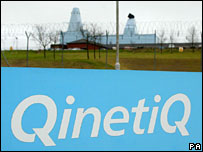 A battalion of former military bigwigs last night accused Gordon Brown of being tight-fisted on Britain’s defence. Which adds resonance to today’s judgement by the National Audit Office that taxpayers were short-changed in the sale by the Ministry of Defence of a stake in Qinetiq, the technology and defence business.
The charge which sticks against the MoD and the Treasury (which always oversees these deals) is that they made a schoolboy error in the sale-process. They ran an auction and identified the US private equity house, Carlyle, as the preferred bidder before nailing down all the financial variables.
Carlyle then succeeded in significantly negotiating down the price it would eventually pay, exploiting the absence of any rival acquirer. At the crucial moment, there was no competitive tension, which undermined the MoD’s bargaining position.
The deal was also done in the least favourable market conditions, when share prices were on their knees. So credit to Lord Moonie, who at the time was a defence minister, because he argued for the deal to be delayed. As he told me in an interview for the Ten O’Clock News last night, it was the Treasury which was as keen as mustard on a transaction and – no surprise here – the Treasury got its way.
That said, the uplift in the value of Qinetiq since Carlyle acquired its third stake has been a benefit to the taxpayer, because the MoD kept a majority holding. Realised and unrealised proceeds total about £800m for the public purse – which ain’t bad going for a research operation that may well have been a liability rather than an asset only ten years ago.
But let’s not overstate the gain for the Exchequer. For the Department, according to the NAO, the internal rate of return on this deal (the yardstick for success used by the private equity houses) was 14 per cent a year – which is respectable for the public sector, reason enough to open a good bottle of cider.
Carlyle’s internal rate of return was a staggering 112 per cent per annum. This wasn’t just a vintage deal for Carlyle, it was vintage Krug.
For those who ran Qinetiq, it was Krug in diamond-encrusted, solid gold goblets. The top ten executives in the business made £200 for every £1 of their own cash they invested in the business. Sir John Chisholm, Qinetiq’s chairman, turned £130,000 into £26m; Graham Love, the chief executive, scooped £21m from £110,000.
As it happens, they deserved to do pretty well, because they transformed a research cost-centre into an international hi-tech business with great prospects – and the UK has too few of those.
Did they “deserve” to do quite as well they did? Unanswerable question.
They benefited from the gullibility of the Treasury and the MoD, who sold off Carlyle’s equity at the least propitious moment in the stock-market cycle.
It’s spilt milk, lapped up by Sir John, Mr Love and a few other former civil servants at Qinetiq. And if there’s an unattractive sound from the NAO, it’s the mewling of public officials that there’s no cream for them.
The BBC is not responsible for the content of external internet sites
I'm Robert Peston, the BBC's business editor. This blog is my regular take on the business stories and issues that matter.
Click here for all the business news
The New Capitalism: Download a PDF [37Kb] with my thoughts on how the global crisis occurred and what the re-made economy will look like


Archives
« November 2007 »
| Sun | Mon | Tue | Wed | Thu | Fri | Sat |
|---|---|---|---|---|---|---|
| 1 | 2 | 3 | ||||
| 4 | 5 | 6 | 7 | 8 | 9 | 10 |
| 11 | 12 | 13 | 14 | 15 | 16 | 17 |
| 18 | 19 | 20 | 21 | 22 | 23 | 24 |
| 25 | 26 | 27 | 28 | 29 | 30 |
Being Discussed Now
- Will Thiam survive at Pru?(50)
- BP's financial pain is America's pain(407)
- Government cuts private pensions(137)
- Peston Picks is moving(46)
- HSBC banks on UK(61)
- What price a Greek haircut?(91)
- The big PPI lesson for banks(85)
- RBS opposes internal firewalls(97)
- Lloyds to settle PPI claims(136)
- Lloyds: back in the red?(27)
Websites linking here
- "Robert Peston at the BBC [gets blogging's] deepest utility: an essential intellectual tool as well as a means for distributing stories"
Website: Slugger O'Toole - "Peston, Murdoch and Marr sounds like a firm of dodgy solicitors, but they are, of course, the names of important prognosticators of our media future"
Website: Nick Baines - "Politicians really should be stepping up to make these arguments, but in their absence BBC reporter Robert Peston does a pretty good job of summing up"
Website: SqueezeBox - "I outline how blogging went from being an activity by a handful of journalists to being adopted by some of the BBC's biggest names, such as Business Editor Robert Peston, despite at times vehement opposition from within the corporation"
Website: Reportr
Robert's TV/Radio reports
- Rock criticised over risk taking
Broadcast: 20 March 2009 - Row over Sir Fred pension advance
Broadcast: 17 March 2009 - Testing times for China's economy
Broadcast: 12 March 2009 - Chinalco president on Rio Tinto deal
Broadcast: 06 March 2009 - China's factories 'in trouble'
Broadcast: 06 March 2009

Latest from BBC News blogs
Nick Robinson: |  |
Douglas Fraser: |  |
Brian Taylor: |  |
 |
Richard Black: |  |
Jonathan Amos: |  |
- News Editors
- Sport Editors
- Journalism Labs
- BBC Internet Blog
- Radio 4 Blog
- Peston's Picks
- Nick Robinson's Newslog
- Stephanomics
- Mark Easton's UK
- Mark Mardell's America
- Nick Bryant's Australia
- Andrew Harding on Africa
- Gavin Hewitt's Europe
- Soutik Biswas' India
- dot.Rory
- Science: Jonathan Amos
- Richard Black on environment
- Today: Tom Feilden
- Fergus Walsh's medical files
- Newsnight: Paul Mason
- Newsnight: Mark Urban
- Torin Douglas
- Will Gompertz's arts
- Phil Coomes on photojournalism
- Magazine Monitor
- Mark D'Arcy in Westminster
- NI: Mark Devenport
- Scotland: Brian Taylor
- Scotland: Douglas Fraser
- Wales: Betsan Powys
- Martin Rosenbaum on FOI
- 5 Live Breakfast
- Newsnight
- PM programme (iPM)
- World Tonight: Robin Lustig
