
With everything going on at Brookfield right now, Pip and Ruth were unable to attend the inaugural Women In Dairy Conference in Worcester this month. Happily though, the organisers have extended an invitation to join one of their regional groups, several of which are already set up around the UK...
Around 90 women including farmers, business people and others connected to Dairy, came together to learn, inspire and share ideas.
The Speakers:
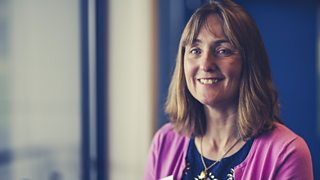
Tanya Robbins, Nuffield Scholar
Nuffield scholar and Gloucestershire NFU county chairman, Tanya Robbins urged delegates to take time out:
“Time away enables you to think more clearly about your farming business and your family; my eight week Nuffield study tour ‘Innovative Women in Today’s Agriculture’ to seven countries was a turning point and gave me a lot more confidence,” she said. “Overall, I found these women were prepared to work hard, they had a will to succeed in business even if it was against their culture, and they were willing to mentor others. For many, education, infrastructure and family were keys to their success.”
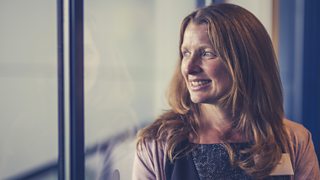
Di Wastenage - Finalist, Dairy Farmer of the Year Award 2015.
Di Wastenage, a director of a South West family farming business which includes four block calving units said:
“Succession planning should be the number one item on the ‘to do’ list that you cannot put off forever; get it right and it can harness your aims and ambitions and energise the next generation; ignore and it will stifle the farming business.
“Don’t be afraid of change. We’ve done everything from organic farming to milking bails. This year we’ve set up a training farm for extended grazing. Identify what you are good at and then stand back from the business, engage in training, travel and research together with mentoring; it’s never too late to learn.
“If you are passionate about your ideas, and think they are going to work, then go for it. Enjoy what you do, despite moments of panic. However don’t give up on an idea when things get tough, remember if it was easy, then everyone would be doing it…”
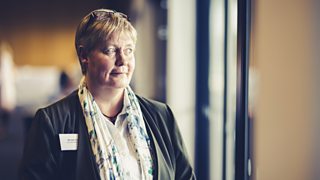
Miriam Parker - Director, Livestockwise Ltd
Miriam Parker is an Agricultural Scientist who has spent years in livestock management, and worked as Technical Director of the Humane Slaughter Association.
On a Nuffield Farming Scholarship she researched animal handling systems in the USA, and continued her work in New Zealand, before being awarded an MBE for services to farming.
Miriam listened with interest during our storyline which saw Tony Archer trampled by Otto the Bull, and while the attack was excrutiating to listen to, Miriam felt that we got this and our research spot on.
Miriam encouraged farmers to see the world through their cattle's eyes - literally, as she got volunteer Nessie to try on a special pair of glasses designed to give a true, and disorienting, sensory experience. In order to move around, Nessie has to look down with her head, which also moves from side to side. It’s noticeable that she can’t move around quickly...
Miriam said:
"You’re potentially dealing with a 600-700 kilo animal with a sight disability. Cattle only have really good ‘binocular’ vision to the front – so if you take a photo of a cow she’ll always try to turn to face you. They can see predator movement to the side and have a blind spot behind.
This has a serious implication in terms of teaching people, including kids, who come on to farms - a big animal may not understand or see what you see."
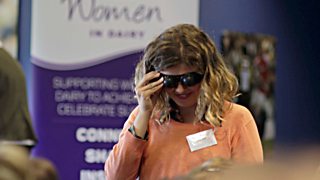
Seeing the world through the eyes of cattle
So, a few things we learned at the inaugural Women In Dairy Conference?...
- Women are involved at all ages - however, the average age looking around the room seemed lower that you might expect (with consensus that a male conference might look very different).
- Cattle are complex beings with thoughts and emotions, but just as with humans you shouldn't expect to know what they are thinking. Memory and learned behaviour play a significant role in cattle behaviour.
- Whilst the Dairy industry faces crisis and big challenges, change and experimentation is good. There are scholarships and initiatives out there - and whilst there's good and bad practice wherever you go, it's worth seeing how other operations work - in the UK and abroad.
- There may be gender barriers to pull down in any industry, but the women we met quite adamantly don't judge themselves as women - but by what they do!
