
The Great Northern Songbook - 7. Hill of Thieves

Cara Dillon is no stranger to the dance charts and to DJ trance sets. She has combined her talents with the likes of Mike Oldfield and she's sang with Paul Brady and other legends. If the job involves working with members of the Czech Philharmonic, that's something she can manage well, and during her years with the act called Equation she was also willing to take a chance or two.
But at significant moments, Cara returns to the wellspring of traditional music. That's how she first found recognition, winning the All Ireland Traditional Singing Trophy at the age of 14. The clarity of her voice and its emotional impact have never been questioned. It has taken her onto mainstream radio and exotic dancefloors, but the music of County Derry had been the regular draw, the significant homecoming.

She was living in Somerset with her partner Sam Lakeman and working out of the studio there. But Cara was also thinking about Dungiven and the music that had mapped out her childhood. Therefore she began to write her own response to the landscape. The result was a song called 'Hill Of Thieves'.
The song drew together bits of local mythology. There was mention of the O'Cahan Clan who had ruled this area between the 12th and 17th centuries. They had lived in the castle for some of this time, and when Cara mentioned The Hound Of The Plain, she was also referencing this family story.
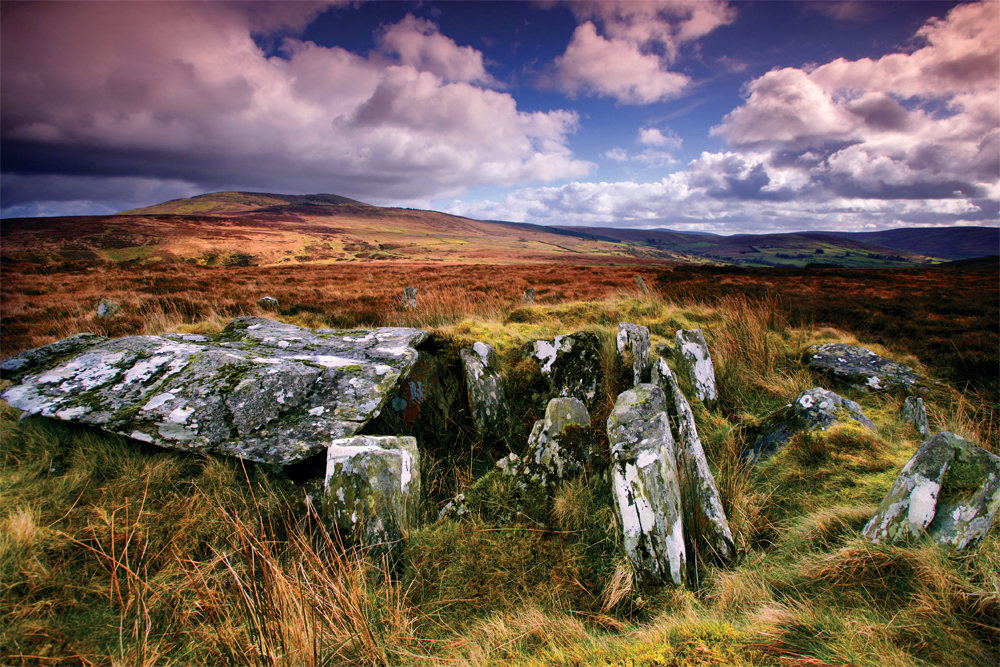
This is the area that had inspired the Londonderry Air and so many other memorable tunes. It was a site deep into Irish myth, traversed by Queen Medb and the epic cattle raid. So it wasn't enough for Cara and Seth to simply string together some place names. They had to compose something that would hold its own. No pressure, then.
What they came up with was something delicate and understated, the title track of Cara's 2009 album. Sure, there was a deal of homesickness in the lyric, but it wasn't overpowering. It was song about the solidity of place and the human impressions that surround it. History and fiction are part of the weave of the sentiments, in there with the rocks and the rain. She sang it freshly, but one of those ancient clan leaders might also have found a kinship with it. 'Hill Of Thieves' found Cara Dillon on an artistic high.

Comments Post your comment