
The Great Northern Songbook - 3. The Days of Pearly Spencer

In the autumn of 1967, there was no getting away from David McWilliams. There were double page adverts for his records in all the music papers, plus the front cover of the NME. You could hear his songs every hour on the pirate station, Radio Caroline. Londoners could even see his face on the side of the double decker buses. One publication tried to put a price on all this promotional extravagance. They reckoned that it was close to £20,000. Who could say? It certainly wasn't cheap.
Meantime the singer who was getting all this attention was walking around London without the pocket money to get on one of those buses. Like many showbiz stories, the reality didn't quite square up to the glamorous sell. But still the PR campaign moved on, urging the public to buy the product. "The single that will blow your mind," they claimed, "the album that will change the course of music".
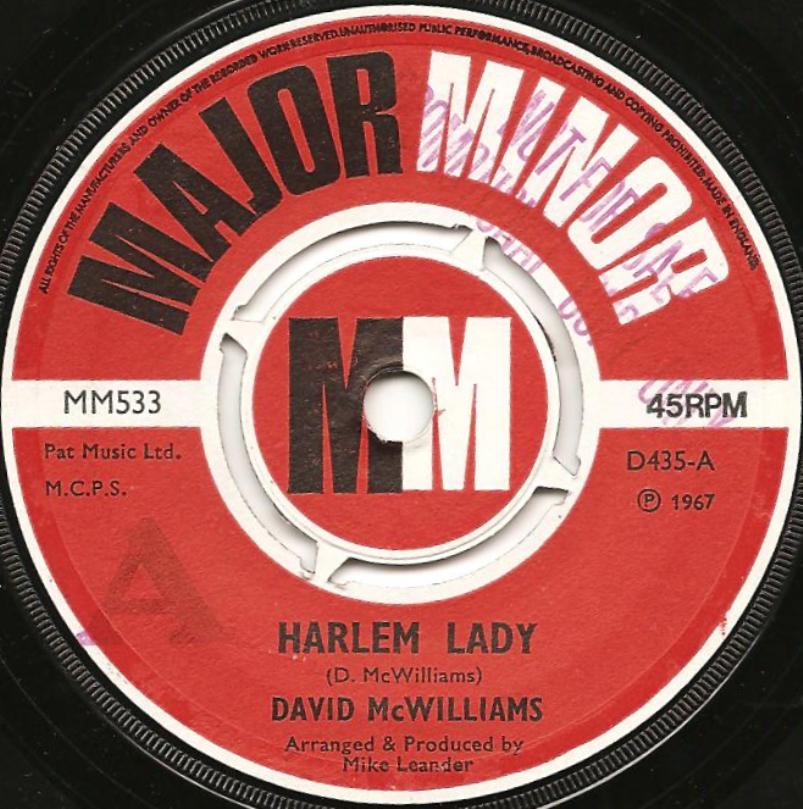
This really was a remarkable record. The song had a flickering, almost documentary style, as David took us to a pitiful side of the city and showed us the lives there. The people walked through the rubble in their bare feet while their faces had grown old ahead of their time. It's not clear if there is one character in the song, or a series of impressions, but the empathy of David McWilliams for his subject was beyond doubt.
The title of the song led people to believe that there was an individual in the lyric, his life shortened by cheap gin and a transient lifestyle. Apparently, David had written the song about a homeless guy that he'd met in Ballymena. This became the accepted version of the song, but some people close to the singer heard a different version - that he was actually writing about a couple of females in his hometown.
The string arrangement on the song was created by Mike Leander. He had previously graced records like 'She's Leaving Home' by The Beatles and Marianne Faithful's 'As Tears Go By'. Just to make the record more interesting the chorus line had a distorted vocal, as if David was singing through a megaphone.

There was some consolation in 1992 when the singer Marc Almond took a cover of 'Pearly Spencer' to number four in the UK charts. Other artists have recorded versions in French, Spanish and Italian. So it seems that David McWilliams left an important legacy in 1967. When the summer of love had cooled down, it was time to pause, and to consider all the lonely people.

Comments Post your comment