
Work in progress
 |10:04 UK time, Friday, 1 October 2010
I write to the accompaniment of drilling, having carefully negotiated my way around the decorator putting the finishing touches of white paint to the ceiling of our hotel entrance. Our hotel is a microcosm of the situation around Delhi, where work clearly began too late to be completed in time for the arrival of athletes, officials and visitors from around the world.
Roads are still being built and pavements are still being laid. Bushes and plants have been added to the side of the roads, but many are surrounded by rubble, which rather spoils the effect. That said, enormous progress has been made since Sportsworld's last visit to the city eighteen months ago. They have even painted the white lines on the pedestrian crossings - which will bring a smile to the face of anyone who has ever tried to cross a road in India - and refreshingly you can still stop and buy a samosa from one of the (technically illegal) street vendors or catch a lift back to the hotel on one of Delhi's famous three wheel tuk-tuks.
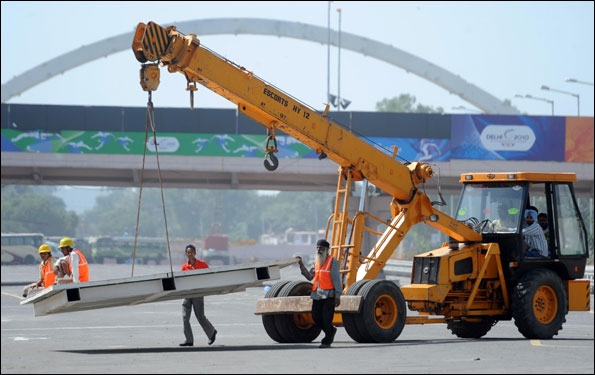
Last minute building work at the athletics stadium
"You have to be honest and candid about who you are," she told me, with a group of small children reciting the Hindi alphabet in the background. "Then people will accept you with a better heart."
"We had a gypsy colony, which had lived on the streets of Delhi since independence. Every six months, the authorities would come and threaten to raze their camp, but blood money was paid and the camps were not razed. In the meantime, politicians who saw a good vote bank gave them voting cards and a postal address. But then the Commonwealth Games came along, and they were bulldozed. What makes me very sad is that the shooters would have used the road to zip past the camp, so I don't see how thirty odd families beating the iron, children playing or women cooking would disturb the sensitivity of anybody."
It leads to the debate which is staged every time a developing nation holds a major sporting event. Should this money be spent elsewhere or does an event like the Commonwealth Games provide opportunities for this and future generations? Mike Fennell - the president of the Commonwealth Games Federation - is adamant that these Games will benefit India enormously.
"The whole face of the city has changed dramatically. The roads are better, the water supply is better, the electricity is better - and all because they were forced to do those improvements earlier. Who is really going to benefit from that? The citizens of Delhi will benefit from those improvements forever. And look at the metro, look at the new airport. Fantastic. All of that work provided employment for people so there are untold benefits which will filter down."
As the debate continues, it's over to the athletes. Even without the track and field stars who have stayed away in their droves, the competitors now have the chance to help people remember the Delhi Games for all the right reasons.
Sportsworld comes live from Delhi on the BBC World Service from 1400 GMT


Comment number 1.
At 15:48 1st Oct 2010, thecheckendon wrote:Sorry nothing new in your article, not surprised to see no comments. Wasted my time.
Complain about this comment (Comment number 1)
Comment number 2.
At 18:07 1st Oct 2010, LordProsperity wrote:"It leads to the debate which is staged every time a developing nation holds a major sporting event. Should this money be spent elsewhere or does an event like the Commonwealth Games provide opportunities for this and future generations?
Mike Fennell - the president of the Commonwealth Games Federation - is adamant that these Games will benefit India enormously. The whole face of the city has changed dramatically. The roads are better, the water supply is better, the electricity is better - and all because they were forced to do those improvements earlier. Who is really going to benefit from that? The citizens of Delhi will benefit from those improvements forever. And look at the metro, look at the new airport. Fantastic. All of that work provided employment for people so there are untold benefits which will filter down."
I disgree. The displaced people are anyway not going to use the newly built roads, sports facilities etc. So what we are trying to say is we will take the poor man's homes and build facilities for the middle-class or the rich. Does that sound good?
Complain about this comment (Comment number 2)
Comment number 3.
At 08:13 2nd Oct 2010, kingMangoLove wrote:I think government needs to understand its priority. It went for the bid against will of majority of Delhites. The benefits Mr. Fennel is talking about could have been achieved with other better projects as well.
But certainly, government will not have undertaken this projects unless forced, like in this case. So its good that it happened and hopefully it will end well, on positive note.
Complain about this comment (Comment number 3)