
Men Like Us: road building for Scottish men
Post categories: Events, Men Like Us
 |14:50 UK time, Tuesday, 14 June 2011
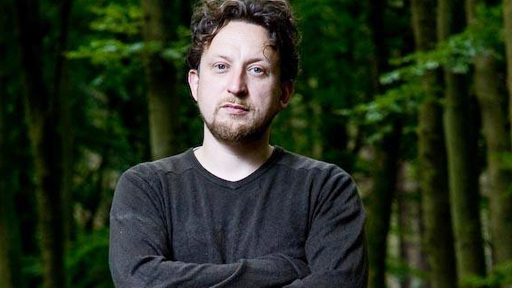
Author Ewan Morrison
A month ago I had an unexpected transformative experience: for the first time in a long time, I felt like a man. Not a bloke or a lad but a man. This 'Saul-on-the-Road-to-Damascus-type-transformation' actually occurred on a road. While repairing a road, in fact. I didn't do this all by myself however, I joined my neighbours in the act. There were also women and children involved and they too were transformed by the process into 'men'.
This may sound absurd, but I'm attempting to re-frame a more positive definition of what it is to 'be a man'. I'd like to go back to a very old definition that existed in Greek culture, when masculinity was not determined by the fact of being born male, but by commitment to place, by civic responsibility and by deeds. In this definition, to be 'a man' is to be 'a citizen'. It is not a given but a process of becoming.
But lets get back to the road. Picture if you will a small village in Argyll and Bute, and a row of eight 200 year old cottages, connected by a small communal road in a great state
of disrepair. Potholes so huge they damage car wheels, suspension systems, and undercarriage; puddles so large that wellies have to be worn to get in an out of your house. All in all a fine example of the modern privatised world, in which everyone fends for themselves, guards and locks their own doors and lets all communal connection and responsibility go to hell, while grumbling privately about how no one else lifts a damn finger and sniping about the worst offenders.
Then an accidental opportunity arises: A cheap deal on recycled road surface rubble. One of the community decides, enough is enough, he'll get a few tons and do his own patch, then his neighbour sees that it's a good idea, and buys another ton or two to cover his own. Suddenly, there is a vast pile hardcore road material and those who have not paid for any, chip in and buy some more, each to cover their own patch of road. Now the deal becomes that if you don't contribute, you're going to be in the minority so everyone chips in and more is delivered and the pile grows to twenty tons. Perhaps eight neighbours, for a moment, stare at the immense mound of industrial materials and realise, in horror, that they're going to have to spend the next six hours, doing back breaking work alongside relative strangers. Perhaps not.
There are people with wheelbarrows and people with spades, some work harder than others some have different techniques. A hundred yards of road has to be re-laid. To spare you the details of blisters and back pain, of the certain merits of one type of wheelbarrow against another, and the out-performance of one woman who put several men, including me, to shame - at the end of six hours, twenty tons of material had been shifted, laid, checked, topped up, levelled, and eight men women and children, stood back and looked at their work and witnessed a uniform surface stretching from the first house to the last, a surface that will last for years.
The process of the hard labour had brought us closer and let us set aside petty differences. We'd had a laugh. The most important thing of all though was grasping that my actions counted for something, that I had helped to build a collective project that would effect other's lives too. This was what made me feel like a citizen, like a man.
This was very different from the way I usually conceive of myself: as powerless, politically impotent, and emasculated - a set of symptoms that is very typical for modern men, and perhaps more so for Scottish men, who have historically come to take their downtrodden-ness as a badge of identity. A week after the road mending, back in Glasgow, that feeling of citizenship had all but gone. There is something endemic in the city of Glasgow that causes mass emasculation.
The city seethes with resentment as if its population have long been trained (by the old left) to do nothing for themselves, to not take matters into their own hands. When I got back, I could feel myself becoming that kind of person again. Self-protective, guarded,
negative, pessimistic. Most of all I felt powerless: there was nothing I could do to make life better in my street or even in the shared back garden. Nothing I could do about the potholes or the dogshit. The 'What's the f**king point' mentality had sunk back in. If no-one else on my block was going to be a citizen, then why the hell should I bother?
Some of the most emasculated men I have ever come across live in this city. Paradoxically, they could also be seen as the 'hardest', 'toughest', most 'macho'. I know a guy who hasn't worked in a decade, who lives in a council high rise that's about to be demolished, who drinks himself to sleep and spends his days watching football and playing Xbox. The imagery he consumes is all about power and masculinity - David Beckham football shirts, shoot-em-up computer games - he has tattoos to display his virility, he gets into fights and is in and out of trouble with the law. He lives his life blaming
others and consuming images of a power that is denied him. And it's not really his fault. He has had no opportunity to do anything in the world that will have any effect on anyone, other than negative actions that might hurt himself or others. He is one tough son-of-a-bitch, but he is not a man because he is not a citizen. He was never given the chance.
He cannot repair a road with others in his community, because his community has been fractured into pieces - the place where he lives was based on a failed plan and is about to be destroyed. Social fragmentation and state dependency have led him to a point where he cannot act or see how he could do anything meaningful in the real world other than consume. The consumption of media, fashion, images, intoxicants and computer games are the only options he's been given. He is an extraordinarily toxic meeting point of two apparently contradictory social phenomenon. The nanny state and consumerism. He is paid by the state to passively consume.
Many people I know in other countries see this kind of man as the Scottish cliché, others say that the cliché is true - that this is the archetypal Scottish male or at least Glaswegian male. I would agree to a degree, but there are also very real historical reasons as to why such a set of behaviours have come about. And you can't very well change the cliché without changing those socio-economic circumstances that first created it. So, how can we return to a role for men in this country which would give civic pride, personal responsibility and a sense of commitment to place, a sense of purpose to daily acts, a sense that such acts can amount to something? That ultimately is a political question. And neither consumerism nor the old socialism has the answer. The answer may be beneath our feet, it might be the very road we're walking on; but before we set about repairing that broken road we first have to reclaim it, collectively, as our own.
Listen to The Story of Scottish Men, part of the Men Like us Season on BBC Radio Scotland.

Comments Post your comment